UEG Week Recordings UEG Week Posters Online courses Guidelines Mistakes in... Podcasts Webinars
new
Gut Guide online
Visit ueg.eu Create myUEG account Log In

Filters:

UEG Mistakes In Articles
Share via Email Share on Facebook Share on X Share on LinkedIn Share on Bluesky

Log in to access this content.

Free for all myUEG account holders. Your access level is set automatically based on your occupation. Medical professionals get full access to all content. If you are a non-medical user, you can only access UEG Week content from congresses you attended.

Log In Create a free account

Not sure what you can access? Learn more about account types.
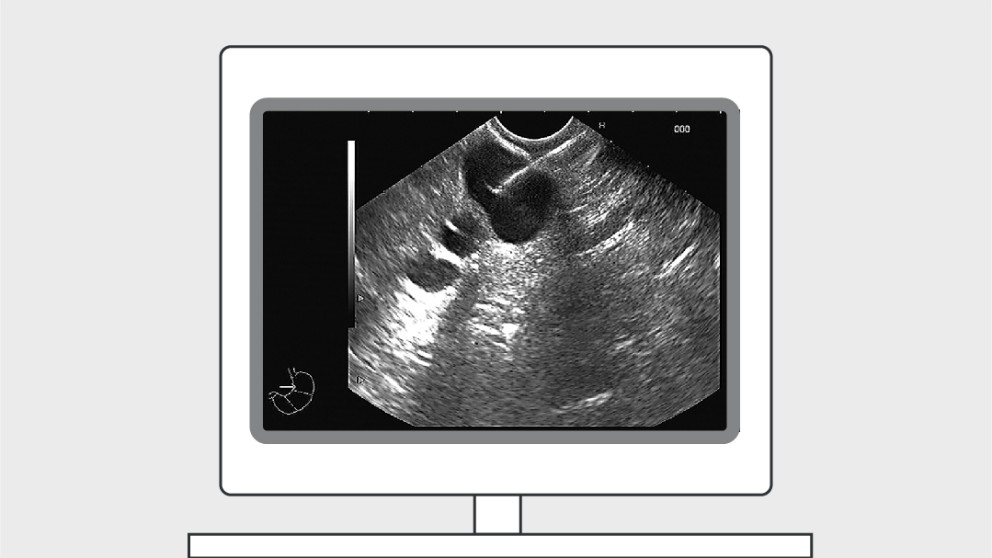
Pancreatic cystic neoplasms (PCN) are a frequent and clinically challenging condition. PCN prevalence increases with age and reports estimate that they may be present in 2–45% of the general population. In addition, the biological behaviour of the various types of PCN differs (ranging from benign to malignant [table 1]), requiring different surveillance and therapeutic approaches. Correct management of PCN is, therefore, critical for avoiding progression to cancer, but at the same time avoiding unneeded close and long-term follow-up, unnecessary invasive diagnostic procedures and overtreatment.

Mistakes in pancreatic cystic neoplasms and how to avoid them

Mistakes in pancreatic cystic neoplasms and how to avoid them

Marco Del Chiaro, Juan Enrique Dominguez-Munoz, Giovanni Marchegiani

Topics

Digestive Oncology Pancreas

Citation

  Domínguez-Muñoz J.E. and Del Chiaro M. Mistakes in pancreatic cystic neoplasms and how to avoid them. UEG Education 2018; 18: 35–37.

Published

2024
UEG Podcast Episode
New
UEG Podcast
Share via Email Share on Facebook Share on X Share on LinkedIn Share on Bluesky

Log in to access this content.

Free for all myUEG account holders. Your access level is set automatically based on your occupation. Medical professionals get full access to all content. If you are a non-medical user, you can only access UEG Week content from congresses you attended.

Log In Create a free account

Not sure what you can access? Learn more about account types.

Part 1: Nageshwar Reddy - How endoscopy has changed

Duvvur Nageshwar Reddy, Pradeep Mundre

Topics

Endoscopy

Published

2026
UEG Standards and Guidelines
Clinical Practice Guideline
Share via Email Share on Facebook Share on X Share on LinkedIn Share on Bluesky

Log in to access this content.

Free for all myUEG account holders. Your access level is set automatically based on your occupation. Medical professionals get full access to all content. If you are a non-medical user, you can only access UEG Week content from congresses you attended.

Log In Create a free account

Not sure what you can access? Learn more about account types.

Abstract

This Technical and Technology Review from the European Society of Gastrointestinal Endoscopy (ESGE) represents an update of the previous document on the technical aspects of endoscopic ultrasound (EUS)-guided sampling in gastroenterology, including the available types of needle, technical aspects of tissue sampling, new devices, and specimen handling and processing. Among the most important new recommendations are:

ESGE recommends end-cutting fine-needle biopsy (FNB) needles over reverse-bevel FNB or fine-needle aspiration (FNA) needles for tissue sampling of solid pancreatic lesions; FNA may still have a role when rapid on-site evaluation (ROSE) is available.

ESGE recommends EUS-FNB or mucosal incision-assisted biopsy (MIAB) equally for tissue sampling of subepithelial lesions ≥20 mm in size. MIAB could represent the first choice for smaller lesions (<20 mm) if proper expertise is available.

ESGE does not recommend the use of antibiotic prophylaxis before EUS-guided tissue sampling of solid masses and EUS-FNA of pancreatic cystic lesions.

Endoscopic ultrasound-guided tissue sampling: European Society of Gastrointestinal Endoscopy (ESGE) Technical and Technology Review

Endoscopic ultrasound-guided tissue sampling: European Society of Gastrointestinal Endoscopy (ESGE) Technical and Technology Review

Antonio Facciorusso

Publisher

European Society of Gastrointestinal Endoscopy logo
European Society of Gastrointestinal Endoscopy

Guideline

Clinical Practice Guideline

Topics

Endoscopy

Citation

Endoscopy 2025; 57(04): 390-418

Published

2025
Login to access
UEG Standards and Guidelines
Clinical Practice Guideline
Share via Email Share on Facebook Share on X Share on LinkedIn Share on Bluesky

Log in to access this content.

Free for all myUEG account holders. Your access level is set automatically based on your occupation. Medical professionals get full access to all content. If you are a non-medical user, you can only access UEG Week content from congresses you attended.

Log In Create a free account

Not sure what you can access? Learn more about account types.

Main Recommendations

At a population level, the European Society of Gastrointestinal Endoscopy (ESGE), the European Helicobacter and Microbiota Study Group (EHMSG), and the European Society of Pathology (ESP) suggest endoscopic screening for gastric cancer (and precancerous conditions) in high-risk regions (age-standardized rate [ASR] > 20 per 100 000 person-years) every 2 to 3 years or, if cost–effectiveness has been proven, in intermediate risk regions (ASR 10–20 per 100 000 person-years) every 5 years, but not in low-risk regions (ASR < 10).

ESGE/EHMSG/ESP recommend that irrespective of country of origin, individual gastric risk assessment and stratification of precancerous conditions is recommended for first-time gastroscopy.

ESGE/EHMSG/ESP suggest that gastric cancer screening or surveillance in asymptomatic individuals over 80 should be discontinued or not started, and that patients’ comorbidities should be considered when treatment of superficial lesions is planned.

ESGE/EHMSG/ESP recommend that a high quality endoscopy including the use of virtual chromoendoscopy (VCE), after proper training, is performed for screening, diagnosis, and staging of precancerous conditions (atrophy and intestinal metaplasia) and lesions (dysplasia or cancer), as well as after endoscopic therapy. VCE should be used to guide the sampling site for biopsies in the case of suspected neoplastic lesions as well as to guide biopsies for diagnosis and staging of gastric precancerous conditions, with random biopsies to be taken in the absence of endoscopically suspected changes. When there is a suspected early gastric neoplastic lesion, it should be properly described (location, size, Paris classification, vascular and mucosal pattern), photodocumented, and two targeted biopsies taken.

ESGE/EHMSG/ESP do not recommend routine performance of endoscopic ultrasonography (EUS), computed tomography (CT), magnetic resonance imaging (MRI), or positron emission tomography (PET)-CT prior to endoscopic resection unless there are signs of deep submucosal invasion or if the lesion is not considered suitable for endoscopic resection.

ESGE/EHMSG/ESP recommend endoscopic submucosal dissection (ESD) for differentiated gastric lesions clinically staged as dysplastic (low grade and high grade) or as intramucosal carcinoma (of any size if not ulcerated or ≤ 30 mm if ulcerated), with EMR being an alternative for Paris 0-IIa lesions of size ≤ 10 mm with low likelihood of malignancy.

ESGE/EHMSG/ESP suggest that a decision about ESD can be considered for malignant lesions clinically staged as having minimal submucosal invasion if differentiated and ≤ 30 mm; or for malignant lesions clinically staged as intramucosal, undifferentiated and ≤ 20 mm; and in both cases with no ulcerative findings.

ESGE/EHMSG/ESP recommends patient management based on the following histological risk after endoscopic resection:

Curative/very low-risk resection (lymph node metastasis [LNM] risk < 0.5 %–1 %): en bloc R0 resection; dysplastic/pT1a, differentiated lesion, no lymphovascular invasion, independent of size if no ulceration and ≤ 30 mm if ulcerated. No further staging procedure or treatment is recommended.

Curative/low-risk resection (LNM risk < 3 %): en bloc R0 resection; lesion with no lymphovascular invasion and: a) pT1b, invasion ≤ 500 µm, differentiated, size ≤ 30 mm; or b) pT1a, undifferentiated, size ≤ 20 mm and no ulceration. Staging should be completed, and further treatment is generally not necessary, but a multidisciplinary discussion is required.

Local-risk resection (very low risk of LNM but increased risk of local persistence/recurrence): Piecemeal resection or tumor-positive horizontal margin of a lesion otherwise meeting curative/very low-risk criteria (or meeting low-risk criteria provided that there is no submucosal invasive tumor at the resection margin in the case of piecemeal resection or tumor-positive horizontal margin for pT1b lesions [invasion ≤ 500 µm; well-differentiated; size ≤ 30 mm, and VM0]). Endoscopic surveillance/re-treatment is recommended rather than other additional treatment.

High-risk resection (noncurative): Any lesion with any of the following: (a) a positive vertical margin (if carcinoma) or lymphovascular invasion or deep submucosal invasion (> 500 µm from the muscularis mucosae); (b) poorly differentiated lesions if ulceration or size > 20 mm; (c) pT1b differentiated lesions with submucosal invasion ≤ 500 µm with size > 30 mm; or (d) intramucosal ulcerative lesion with size > 30 mm. Complete staging and strong consideration for additional treatments (surgery) in multidisciplinary discussion.

ESGE/EHMSG/ESP suggest the use of validated endoscopic classifications of atrophy (e. g. Kimura–Takemoto) or intestinal metaplasia (e. g. endoscopic grading of gastric intestinal metaplasia [EGGIM]) to endoscopically stage precancerous conditions and stratify the risk for gastric cancer.

ESGE/EHMSG/ESP recommend that biopsies should be taken from at least two topographic sites (2 biopsies from the antrum/incisura and 2 from the corpus, guided by VCE) in two separate, clearly labeled vials. Additional biopsy from the incisura is optional.

ESGE/EHMSG/ESP recommend that patients with extensive endoscopic changes (Kimura C3 + or EGGIM 5 +) or advanced histological stages of atrophic gastritis (severe atrophic changes or intestinal metaplasia, or changes in both antrum and corpus, operative link on gastritis assessment/operative link on gastric intestinal metaplasia [OLGA/OLGIM] III/IV) should be followed up with high quality endoscopy every 3 years, irrespective of the individual’s country of origin.

ESGE/EHMSG/ESP recommend that no surveillance is proposed for patients with mild to moderate atrophy or intestinal metaplasia restricted to the antrum, in the absence of endoscopic signs of extensive lesions or other risk factors (family history, incomplete intestinal metaplasia, persistent H. pylori infection). This group constitutes most individuals found in clinical practice.

ESGE/EHMSG/ESP recommend H. pylori eradication for patients with precancerous conditions and after endoscopic or surgical therapy.

ESGE/EHMSG/ESP recommend that patients should be advised to stop smoking and low-dose daily aspirin use may be considered for the prevention of gastric cancer in selected individuals with high risk for cardiovascular events.

Management of epithelial precancerous conditions and early neoplasia of the stomach (MAPS III): ESGE, EHMSG and ESP Guideline update 2025

Management of epithelial precancerous conditions and early neoplasia of the stomach (MAPS III): ESGE, EHMSG and ESP Guideline update 2025

Mario Dinis-Ribeiro

Publishers

European Society of Pathology logoEuropean Helicobacter and Microbiota Study Group logoEuropean Society of Gastrointestinal Endoscopy logo
European Society of Pathology, European Helicobacter and Microbiota Study Group, European Society of Gastrointestinal Endoscopy

Guideline

Clinical Practice Guideline

Topics

Endoscopy Stomach & H. Pylori

Citation

Endoscopy 2025; 57(05): 504-554

Published

2025
Login to access
UEG Standards and Guidelines
Clinical Practice Guideline
Share via Email Share on Facebook Share on X Share on LinkedIn Share on Bluesky

Log in to access this content.

Free for all myUEG account holders. Your access level is set automatically based on your occupation. Medical professionals get full access to all content. If you are a non-medical user, you can only access UEG Week content from congresses you attended.

Log In Create a free account

Not sure what you can access? Learn more about account types.

Abstract

Pancreatic exocrine insufficiency (PEI) is defined as a reduction in pancreatic exocrine secretion below the level that allows the normal digestion of nutrients. Pancreatic disease and surgery are the main causes of PEI. However, other conditions and upper gastrointestinal surgery can also affect the digestive function of the pancreas. PEI can cause symptoms of nutritional malabsorption and deficiencies, which affect the quality of life and increase morbidity and mortality. These guidelines were developed following the United European Gastroenterology framework for the development of high-quality clinical guidelines. After a systematic literature review, the evidence was evaluated according to the Oxford Center for Evidence-Based Medicine and the Grading of Recommendations Assessment, Development, and Evaluation methodology, as appropriate. Statements and comments were developed by the working groups and voted on using the Delphi method. The diagnosis of PEI should be based on a global assessment of symptoms, nutritional status, and a pancreatic secretion test. Pancreatic enzyme replacement therapy (PERT), together with dietary advice and support, are the cornerstones of PEI therapy. PERT is indicated in patients with PEI that is secondary to pancreatic disease, pancreatic surgery, or other metabolic or gastroenterological conditions. Specific recommendations concerning the management of PEI under various clinical conditions are provided based on evidence and expert opinions. This evidence-based guideline summarizes the prevalence, clinical impact, and general diagnostic and therapeutic approaches for PEI, as well as the specifics of PEI in different clinical conditions. Finally, the unmet needs for future research are discussed.

European guidelines for the diagnosis and treatment of pancreatic exocrine insufficiency: UEG, EPC, EDS, ESPEN, ESPGHAN, ESDO, and ESPCG evidence-based recommendations

European guidelines for the diagnosis and treatment of pancreatic exocrine insufficiency: UEG, EPC, EDS, ESPEN, ESPGHAN, ESDO, and ESPCG evidence-based recommendations

Juan Enrique Dominguez-Munoz

Publishers

European Society for Primary Care Gastroenterology logoEuropean Society of Digestive Oncology logoEuropean Society for Paediatric Gastroenterology, Hepatology and Nutrition logoThe European Society for Clinical Nutrition and Metabolism logoEuropean Digestive Surgery logoEuropean Pancreatic Club logo
European Society for Primary Care Gastroenterology, European Society of Digestive Oncology, European Society for Paediatric Gastroenterology, Hepatology and Nutrition, The European Society for Clinical Nutrition and Metabolism, European Digestive Surgery, European Pancreatic Club

Guideline

Clinical Practice Guideline

Topics

Pancreas

Citation

United European Gastroenterol J. 2024; 1–48. https://doi.org/10.1002/ueg2.12674

Published

2024
Login to access
UEG Podcast Episode
UEG Podcast
Share via Email Share on Facebook Share on X Share on LinkedIn Share on Bluesky

Log in to access this content.

Free for all myUEG account holders. Your access level is set automatically based on your occupation. Medical professionals get full access to all content. If you are a non-medical user, you can only access UEG Week content from congresses you attended.

Log In Create a free account

Not sure what you can access? Learn more about account types.

Best of UEG Week 2024 Roberta Maselli on &quot;Endoscopy&quot;

Roberta Maselli, Egle Dieninyte - Misiune

Topics

Endoscopy

Published

2024
UEG Podcast Episode
Journal Podcast
Share via Email Share on Facebook Share on X Share on LinkedIn Share on Bluesky

Log in to access this content.

Free for all myUEG account holders. Your access level is set automatically based on your occupation. Medical professionals get full access to all content. If you are a non-medical user, you can only access UEG Week content from congresses you attended.

Log In Create a free account

Not sure what you can access? Learn more about account types.

UEGJ Best Paper Award: Work productivity in DGBIs

Åsa Frändemark, Ahsen Ustaoglu, Haluk Tarik Kani

Published

2024

The global reference point for the digestive health community

Platform Publisher

United European Gastroenterology

Wickenburggasse 1 1080 Vienna, Austria

Contact us

support@ueg.eu

ueg.eu

T: +43 1 997 1639

Legal

Terms & Conditions

Imprint

Privacy Policy

Explore

My Bookmarks

My recommendations

My fields of interest

© 2026 United European Gastroenterology

Change fields of interest

These fields are selected based on the interests in your myUEG profile.
Click the item to unselect it. You can select multiple items.