UEG Week Recordings UEG Week Posters Online courses Guidelines Mistakes in... Podcasts Webinars
Visit ueg.eu Create myUEG account Log In

Filters:

UEG Online Course
accredited
Share via Email Share on Facebook Share on X Share on LinkedIn Share on Bluesky

Log in to access this content.

Free for all myUEG account holders. Your access level is set automatically based on your occupation. Medical professionals get full access to all content. If you are a non-medical user, you can only access UEG Week content from congresses you attended.

Log In Create a free account

Not sure what you can access? Learn more about account types.

Enteral nutrition is the most physiological type of artificial feeding and should be the first choice of nutritional support for malnourished patients if the gastrointestinal tract is functional. With a broad spectrum of clinical applications, enteral nutrition can decrease the length of hospital stay and rate of complications while positively impacting quality of life.

The course includes comprehensive PPT slides and bespoke video presentations, which were filmed in Zagreb in September 2021. The estimated time needed to complete the course, including the final assessment, is 60 minutes.

Learning objectives

  • To understand how to reach a conclusive diagnosis of GORD
  • To know how to reach a conclusive diagnosis of no GORD
  • To understand how to deal with an inconclusive diagnosis

Target audience

This course is suitable for gastroenterologists in training, nutrition nurses, dietitians, intensivists, medical students and other healthcare professionals looking after patients receiving enteral nutrition.

Enteral nutrition

Enteral nutrition

Zeljko Krznaric, Darija Vranesic Bender

Event

Enteral nutrition

Topics

Small Intestine & Nutrition

Accreditation status

accredited

Duration

1 hour

Published

2021
Login to access
UEG Online Course
accredited
Share via Email Share on Facebook Share on X Share on LinkedIn Share on Bluesky

Log in to access this content.

Free for all myUEG account holders. Your access level is set automatically based on your occupation. Medical professionals get full access to all content. If you are a non-medical user, you can only access UEG Week content from congresses you attended.

Log In Create a free account

Not sure what you can access? Learn more about account types.

Coeliac disease is a highly prevalent condition that, if left untreated, can be a major cause of morbidity worldwide. There is also increasing awareness of the role of a gluten-free diet in the management of patients with noncoeliac gluten sensitivity.

This online course provides the latest information on the diagnosis and management of coeliac disease and gluten-related disorders. Authors Stefania Chetcuti Zammit and David S. Sanders discuss the pathophysiology, epidemiology, symptoms, endoscopic features and extraintestinal manifestations of coeliac disease. They describe the general diagnostic approach to serology negative villous atrophy and present a diagnostic algorithm. Treatment options are also summarized, and awareness raised of the complications in patients with refractory coeliac disease.

The course includes comprehensive PPT slides and bespoke video presentations, which were filmed in June 2022. The estimated time needed to complete the course, including the final assessment, is 60 minutes

Target audience

This course is designed for gastroenterologists in training, other doctors with a special interest in coeliac disease, nurses (including nutrition nurses), dietitians, medical students and other health-care professionals looking after patients with coeliac disease or related disorders.

The diagnosis and management of coeliac disease and gluten-related disorders

The diagnosis and management of coeliac disease and gluten-related disorders

David S. Sanders, Stefania Chetcuti Zammit

Event

The diagnosis and management of coeliac disease and gluten-related disorders

Topics

Small Intestine & Nutrition

Accreditation status

accredited

Duration

50 minutes

Published

2022
Login to access
UEG Online Course
accredited
Share via Email Share on Facebook Share on X Share on LinkedIn Share on Bluesky

Log in to access this content.

Free for all myUEG account holders. Your access level is set automatically based on your occupation. Medical professionals get full access to all content. If you are a non-medical user, you can only access UEG Week content from congresses you attended.

Log In Create a free account

Not sure what you can access? Learn more about account types.

Proctologic disorders are a widespread problem—their high incidence means that many different healthcare professionals (e.g. gastroenterologists, surgeons, dermatologists, nurses, young residents, etc.) will be confronted by patients complaining about a proctologic disease.

This course by European Society of Coloproctology (ESCP) experts Harald Rosen, Janindra Warusavitarne and Nuha Yassin provides the most recent state-of-the-art information on the common proctologic disorders of haemorrhoids and perianal skin conditions.

Learning objectives

  • To understand how to reach a conclusive diagnosis of GORD
  • To know how to reach a conclusive diagnosis of no GORD
  • To understand how to deal with an inconclusive diagnosis

Target audience

This course is suitable for gastroenterologists and surgeons in training, but is also appropriate for other physicians, as well as nurses, biotechnicians and medical students who have an interest in coloproctology.

Proctology — haemorrhoids and perianal skin conditions

Proctology — haemorrhoids and perianal skin conditions

Harald Rosen, Janindra Warusavitarne, Nuha Yassin

Event

Proctology — haemorrhoids and perianal skin conditions

Topics

Surgery

Accreditation status

accredited

Duration

1 hour

Published

2021
Login to access
UEG Online Course
accredited
Share via Email Share on Facebook Share on X Share on LinkedIn Share on Bluesky

Log in to access this content.

Free for all myUEG account holders. Your access level is set automatically based on your occupation. Medical professionals get full access to all content. If you are a non-medical user, you can only access UEG Week content from congresses you attended.

Log In Create a free account

Not sure what you can access? Learn more about account types.

Perianal Crohn’s disease is a perianal complication of Crohn’s disease. It consists of inflammation near the anus in the form of skin tags, fistulas, abscesses and fissures. Affecting almost one in four Crohn’s patients, perianal Crohn’s disease needs to be assessed and treated in a multidisciplinary fashion.

This online course covers the definition and epidemiology of perianal Crohn’s disease. The diagnosis and assessment are divided into symptoms, clinical assessment and examination under anaesthesia. Various perianal Crohn’s disease treatment options are introduced, from initial medical to surgical management.

The course included comprehensive PPT slides and bespoke video presentations by Peter Irving and Amy Lightner, filmed in London and the United States in 2022. The combined material has a total duration of approximately 50 minutes. The estimated time needed to complete the course, including the final assessment, is 60 minutes.

Target audience

This course is suitable for gastroenterologists in training but is also appropriate for physicians and surgeons in other disciplines, as well as IBD clinical nurse specialists. 

Perianal Crohn's disease

Perianal Crohn's disease

Peter Irving, Amy Lightner

Event

Perianal Crohn's disease

Topics

IBD Surgery

Accreditation status

accredited

Duration

1 hour

Published

2023
Login to access
UEG Online Course
accredited
Share via Email Share on Facebook Share on X Share on LinkedIn Share on Bluesky

Log in to access this content.

Free for all myUEG account holders. Your access level is set automatically based on your occupation. Medical professionals get full access to all content. If you are a non-medical user, you can only access UEG Week content from congresses you attended.

Log In Create a free account

Not sure what you can access? Learn more about account types.

About this online course

Stem cells are primitive and undifferentiated cells in human tissues (foetal and adult) with self-renewal, multipotency and longevity properties. They are responsible for cellular regeneration within the gastrointestinal tract but also play an essential role in different GI pathologies (e.g., Barrett’s oesophagus).

A gastroenterologist’s guide to stem cells, by Simon Leedham and Stuart McDonalds, covers the basic definitions of stem cells and their different locations in the gastrointestinal tract, homeostasis, the role of stem cells in intestinal regeneration, metaplasia, and tumour heterogeneity. The course includes comprehensive PPT slides, and bespoke video presentations filmed in London in December 2022. Figures, schemes, and further readings are included for consideration. The combined material has a total duration of approximately 60 minutes. The estimated time needed to complete the course, including the final assessment, is 60 minutes.

Target audience

This course is suitable for gastroenterologists in training, but is also appropriate for nurses, basic scientist in gastroenterology, medical students with interest in gastroenterology as well as other physicians (oncology, regenerative medicine, research).

Gastroenterologist's guide to stem cells

Gastroenterologist's guide to stem cells

Simon Leedham, Stuart McDonald

Event

Gastroenterologist's guide to stem cells

Accreditation status

accredited

Duration

1 hour

Published

2024
Login to access
UEG Poster
Audio / Video Poster
Share via Email Share on Facebook Share on X Share on LinkedIn Share on Bluesky

Log in to access this content.

Free for all myUEG account holders. Your access level is set automatically based on your occupation. Medical professionals get full access to all content. If you are a non-medical user, you can only access UEG Week content from congresses you attended.

Log In Create a free account

Not sure what you can access? Learn more about account types.

Introduction

Eosinophilic oesophagitis (EoE) is a chronic, progressive type 2 inflammatory disease. Proton-pump inhibitors (PPIs), swallowed topical corticosteroids (STCs), and elimination diets have been used as standard treatments for EoE patients. However, the real-world evidence (RWE) highlighting disease burden in Europe are limited.

Aims & Methods

To assess disease burden and treatment patterns among adolescent and adult patients with EoE in real-world practice.
Medical records were retrospectively reviewed for patients (aged ≥12 years) who were newly diagnosed with EoE between 1 January 2009 and 31 December 2019 (index) in Germany, France, Spain, and the United Kingdom. Patients with a peak eosinophil (eos) count (PEC) of ≥15 eos/hpf within 90 days of the index date and ≥1 follow-up endoscopy within 24 months of the index date were included. Demographics, clinical features, treatment patterns, and health outcomes were assessed from the 12-month pre-index period to the last medical record entry or death. Disease progression was assessed via physician-defined (based on symptoms, endoscopy findings, histology, need for dilation, and food impaction) and proxy-reported outcomes (dilation performed, strictures, dysphagia, evidence of food impaction, treatment initiation in treatment-naïve patients and switching/augmentation).

Results

Overall, 385 patients were included, with 70.1%–78.1% being male; the mean age was 27.8 to 33.9 years. At EoE diagnosis, the PEC was 35.3–46.1 eos/hpf, the endoscopic appearance of the oesophagus was abnormal in 73.7%–85.6% of patients, and dysphagia was present in 59.8%–82.8% of patients. Most of the patients across all 4 countries were treated with PPIs (61.5%–91.8%), STCs (56.7%–82.3%) and elimination diets (41.4%–55.2%) after EoE diagnosis. Of the patients with available data, abnormal histology (≥15 eos/hpf) was reported in 44.8%–72.0% of patients during the first 5 years after EoE diagnosis. The abnormal endoscopic appearance of the oesophagus was observed in 34.6%–83.3% of patients after approximately 2 years of EoE diagnosis and dysphagia was present in 10.2%–25.0% of patients after 4 years of EoE diagnosis across all 4 countries. While physician-defined disease progression occurred in 6.1%–16.1% of patients, 19.4%–35.1% of patients experienced proxy-reported outcomes of potential disease progression (including oesophageal dilation performed in 10.8%–21.7% of patients) after EoE diagnosis. An overview of patient and clinical characteristics at EoE diagnosis and treatment patterns and disease progression (physician-defined and proxy-reported) after EoE diagnosis across Germany, France, Spain, and the United Kingdom is provided in the Table.

Patient and clinical characteristics at eosinophilic oesophagitis diagnosis
Germany
(N=96)
France
(N=99)
Spain
(N=97)
United Kingdom
(N=93)
Male, n (%) / Age, years, mean (standard deviation)
78.1 / 32.0 (14.9)
72.7 / 27.8 (13.4)
70.1 / 32.2 (14.1)
72.0 / 33.9 (13.5)
Peak eosinophil count/ high-power field, mean (standard deviation)
35.3 (29.1)
39.5 (46.3)
46.1 (41.7)
43.3 (56.7)
Treatment patterns and disease progression (physician-defined and proxy-reported) after eosinophilic oesophagitis diagnosis
Proton-pump inhibitors, n (%)
59 (61.5)
87 (87.9)
89 (91.8)
62 (66.7)
Swallowed topical corticosteroids (e.g., fluticasone budesonide), n (%) / Systemic (oral) corticosteroids, n (%)
79 (82.3) / 24 (25.0)
76 (76.8) / 7 (7.1)
55 (56.7) / 8 (8.3)
55 (59.1) / 4 (4.3)
Dietary modifications or eliminations, n (%)
53 (55.2)
41 (41.4)
46 (47.4)
41 (44.1)
Physician-defined disease progression, n (%)
12 (12.5)
6 (6.1)
7 (7.2)
15 (16.1)
Proxy-reported disease progression, n (%) / dilation performed, n (%)
26 (27.1) / 20 (20.8)
31 (31.3) / 16 (16.2)
34 (35.1) / 21 (21.7)
18 (19.4) / 10 (10.8)
Overall disease progression (Physician-defined OR Proxy-reported), n (%)
33 (34.4)
34 (34.3)
36 (37.1)
30 (32.3)

Conclusion

Adolescent and adult patients with EoE chronically experienced substantial disease burden. A subset demonstrated disease progression, perhaps underrecognised despite treatment with PPIs, STCs, and elimination diets. Hence, successful EoE management may include proactive disease monitoring, treating underlying pathophysiology and prescribing maintenance therapies to achieve long-term clinical remission.

References

​

Disclosure

Ulrike von Arnim: Consulting and/or speaker fees from Dr. Falk Pharma, Sanofi, Astra Zeneca, EsoCap, Abbvie, Janssen, Takeda, Pfizer, Bristol Myers Squibb.
Frank Zerbib: Consulting and/or speaker fees from Sanofi, Dr Falk pharma, Bristol Myers Squibb, Bioprojet, AstraZeneca.
Tiffany Pela, Juby A. Jacob-Nara, Gaelle Le-Bagousse-Bego, Sarette T. Tilton: Employees of Sanofi; may hold stocks and/or stock options in the company.
Bram P. Raphael, Amr Radwan, Ryan B. Thomas: Employees of Regeneron Pharmaceuticals, Inc.; may hold stocks and/or stock options in the company.
Rohan C. Parikh, Fareedat Bello: Employees of RTI Health Solutions, which received research funding from Sanofi to design and execute this study.
Funding: This study was sponsored by Sanofi and Regeneron Pharmaceuticals, Inc.
Acknowledgement: Medical writing support was provided by Akshata Rao and Ali Nasir Siddiqui, PhD, of Sanofi.

TREATMENT PATTERNS AND DISEASE PROGRESSION AMONG PATIENTS WITH EOSINOPHILIC OESOPHAGITIS IN EUROPE: A REAL-WORLD STUDY

TREATMENT PATTERNS AND DISEASE PROGRESSION AMONG PATIENTS WITH EOSINOPHILIC OESOPHAGITIS IN EUROPE: A REAL-WORLD STUDY

Ulrike von Arnim 1, Frank Zerbib 2, Tiffany Pela 3, Amr Radwan 4, Juby Jacob-Nara 3, Bram P. Raphael 4, Rohan C. Parikh 5, Fareedat Bello 5, Gaelle Le-Bagousse-Bego 6, Ryan Thomas 4, Sarette Tilton 3

1 University Hospital, Magdeburg, Germany

2 CHU de Bordeaux, Centre Médico-Chirurgical Magellan, Hôpital Haut-Levêque, Department of Gastroenterology, Université de Bordeaux, INSERM CIC 1401, Bordeaux, France

3 Sanofi, Cambridge, MA, United States

4 Regeneron Pharmaceuticals, Inc., Sleepy Hollow, NY, United States

5 RTI Health Solutions, Research Triangle Park, NC, United States

6 Sanofi, Chilly-Mazarin, France

Conference

UEG Week Vienna 2024

Topics

Oesophagus

Submission format

Abstract

Session

OESOPHAGEAL, GASTRIC AND DUODENAL (Posters)

Citation

United European Gastroenterology Journal 2024; 12 (Supplement 8)

Published

2024
UEG Presentation
Share via Email Share on Facebook Share on X Share on LinkedIn Share on Bluesky
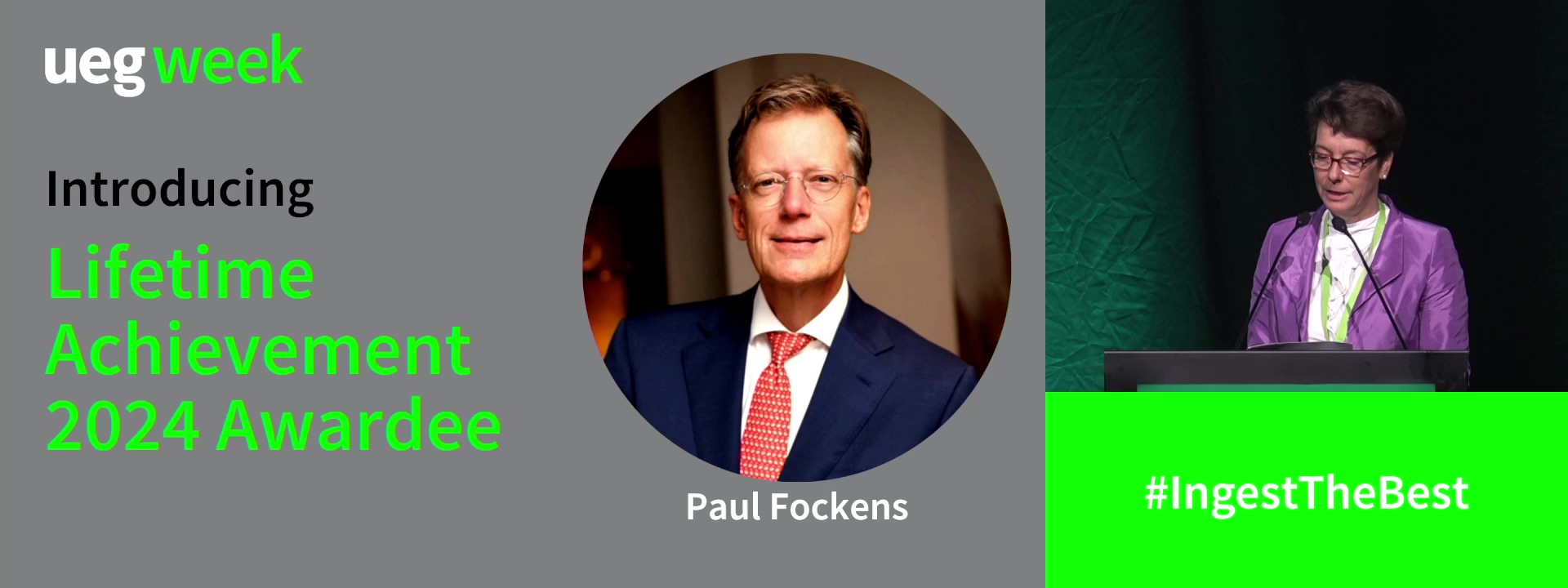
Laudatio UEG Lifetime Achievement Awardee

Log in to access this content.

Free for all myUEG account holders. Your access level is set automatically based on your occupation. Medical professionals get full access to all content. If you are a non-medical user, you can only access UEG Week content from congresses you attended.

Log In Create a free account

Not sure what you can access? Learn more about account types.

Laudatio UEG Lifetime Achievement Awardee

Jeanin van Hooft 1

1 Leiden University Medical Center, Leiden, Netherlands

Event

UEG Week Vienna 2024

Session

Opening Plenary

Citation

United European Gastroenterology Journal 2024; 12 (Supplement 8)

Published

2024

The global reference point for the digestive health community

Platform Publisher

United European Gastroenterology

Wickenburggasse 1 1080 Vienna, Austria

Contact us

support@ueg.eu

ueg.eu

T: +43 1 997 1639

Legal

Terms & Conditions

Imprint

Privacy Policy

Explore

My Bookmarks

My recommendations

My fields of interest

© 2026 United European Gastroenterology

Change fields of interest

These fields are selected based on the interests in your myUEG profile.
Click the item to unselect it. You can select multiple items.