UEG Week Recordings UEG Week Posters Online courses Guidelines Mistakes in... Podcasts Webinars
Visit ueg.eu Create myUEG account Log In

Filters:

UEG Presentation
Share via Email Share on Facebook Share on X Share on LinkedIn Share on Bluesky
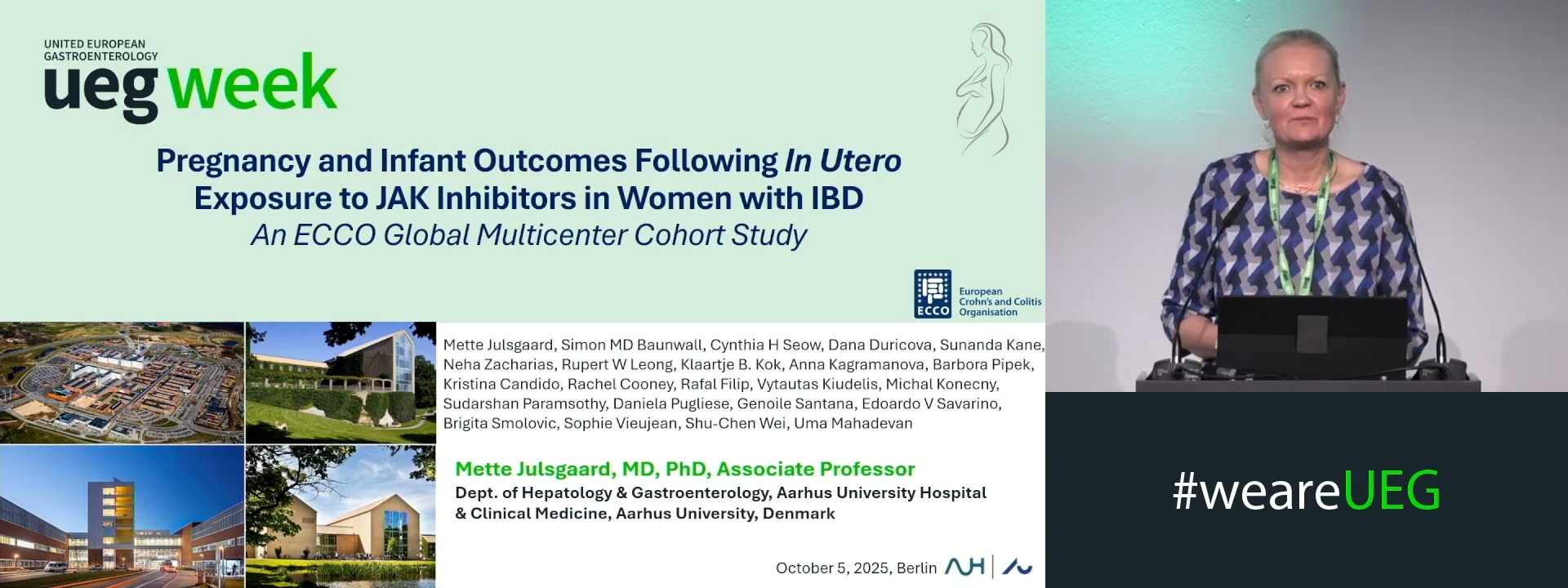
PREGNANCY AND INFANT OUTCOMES FOLLOWING IN UTERO EXPOSURE TO JAK INHIBITORS IN WOMEN WITH INFLAMMATORY BOWEL DISEASE: A GLOBAL MULTICENTER COHORT STUDY

Log in to access this content.

Free for all myUEG account holders. Your access level is set automatically based on your occupation. Medical professionals get full access to all content. If you are a non-medical user, you can only access UEG Week content from congresses you attended.

Log In Create a free account

Not sure what you can access? Learn more about account types.

Introduction

JAK inhibitors (JAKi) are small molecules capable of crossing the placenta via passive diffusion or active extracellular transport from early pregnancy.1 Data on the risks of in utero JAKi exposure are limited,2 particularly regarding pregnancy outcomes, infant infections, vaccine responses, and childhood development.

Aims & Methods

We conducted a multicenter retrospective JAKi and pregnancy observational study supported by the ECCO Collaborative Network for Exceptionally Rare Case Reports (CONFER). Pregnant women with inflammatory bowel disease (IBD) exposed to tofacitinib (TOFA), upadacitinib (UPA), or filgotinib (FILGO) during pregnancy were enrolled from 21 centers across 15 countries. Data collected included maternal demographics, IBD characteristics, disease activity, medication use - including timing and duration of JAKi exposure - along with maternal, pregnancy, and infant outcomes.

Results

Of 43 JAKi exposed pregnancies, 17 (39.5%) were unplanned. Disease activity was present in 22 (51.2%) of the pregnancies. One-in-five women initiated JAKi in pregnancy (n=8, 18.6%). Abortion occurred in 8 cases, at a median gestational age (GA) of 8.5 weeks (range 3-16). Of these, 3 (7.0%) were spontaneous and 5 (11.6%) induced, with two terminations due to concerns about potential adverse effects of JAKi treatment. Of the remaining 35 pregnancies 26 (74.3%) were exposed to TOFA (5 mg BID (n=9), 10 mg BID (n=17)), 8 (22.9%) to UPA (30 mg daily (n=2), 45 mg daily (n=6)) and one (2.9%) to FILGO (200 mg daily). The majority received JAKi treatment throughout pregnancy (n=24, 68.6%). Discontinuation of JAKi during the 1st or 2nd trimester was followed by disease activity in 7 of 11 cases (63.6%). Maternal complication risk was low: no cases of DVT or (pre)eclampsia; premature rupture of membranes (GA 34–37) occurred in 3 cases, and 4 women required hospitalization due to infection or other complications. Among 35 live births, one infant (2.9%) was preterm (GA 34), three (8.6%) were small for gestational age, one (2.9%) had an Apgar score <7 at 5 minutes, and no congenital abnormalities were reported. Follow-up infant data are shown in table 1. One-third of breastfeeding women continued JAKi treatment. A high adherence rate to the national immunization schedule was seen. Three (8.6%) skipped the live rotavirus vaccine due to in uteroJAKi exposure. No adverse effects were reported following live attenuated or inactivated vaccines, and no malignancies were observed.

Table 1. Follow-up in 31 infants after in utero exposure to JAK-inhibitors

n(%)Notes
Duration, months – median (range)
17(1-88)

Proportion of breastfeeding women (n=24) who continued JAKi treatment
7(29.2)

Infection resulting in hospitalization (age 0-4 months)
2(6.5)
Moderate-to-severe maternal disease activity treated with systemic corticosteroids and initiation of upadacitinib at gestational weeks 8 and 28, respectively. No infection-related sequelae.
Normal development
31(100)

Follow the national immunization program
26(74.3)

Live BCG vaccine provided (age 0-1 month)
5(16.1)
No adverse effects reported.
Live Rotavirus vaccine provided (age 1.5-6 months)
13(41.9)
No adverse effects reported.
Live MMR vaccine provided (age ≥ 12 months)
13(41.9)
No adverse effects reported.

Conclusion

In this global multicenter study of JAKi exposure during pregnancy in women with IBD, maternal complication rates were low, and no increased risk of adverse pregnancy outcome were observed among live births. While disease activity was common, particularly following early discontinuation of JAKi, infant outcomes - including development, infection risk, and vaccine response - were reassuring. These findings provide important preliminary safety data to guide decision-making regarding the use of JAKi in pregnancy, though further prospective studies are needed to confirm long-term safety.

References


1. Fein KC, Arral ML, Kim JS, et al. Placental drug transport and fetal exposure during pregnancy is determined by drug molecular size, chemistry, and conformation. J Control Release 2023;361:29-39.
2. Torres J, Chaparro M, Julsgaard M, et al. European Crohn's and Colitis Guidelines on Sexuality, Fertility, Pregnancy, and Lactation. J Crohns Colitis 2023;17:1-27.

Disclosure

M. Julsgaard: Advisory board for AbbVie. G. Santana: Speaker and advisory board for pfizer.

PREGNANCY AND INFANT OUTCOMES FOLLOWING IN UTERO EXPOSURE TO JAK INHIBITORS IN WOMEN WITH INFLAMMATORY BOWEL DISEASE: A GLOBAL MULTICENTER COHORT STUDY

Mette Julsgaard 1, Simon Mark Dahl Baunwall 2, Cynthia Seow 3, Dana Duricova 4, Sunanda Kane 5, Neha Zacharias 6, Rupert W Leong 7, Bel Klaartje Kok 8, Anna Kagramanova 9, Barbora Pipek 10, Kristina Candido 11, Rachel Cooney 12, Rafal Filip 13, Vytautas Kiudelis 14, Michal Konecny 15, Daniela Pugliese 16, Genoile Silva 17, Edoardo Vincenzo Savarino 18, Brigita Smolovic 19, Sophie Vieujean 20, Shu-Chen Wei 21, Uma Mahadevan 22

1 Aarhus University Hospital, Aarhus N, Denmark|||Aarhus University, Aarhus N, Denmark

2 Aarhus University Hospital, Aarhus N, Denmark

3 University of Calgary, Calgary, Canada

4 ISCARE I.V.F. a.s., Prague, Czechia

5 Mayo Clinic, Rochester, Rochester, United States

6 Hull University Teaching Hospitals, Hull, United Kingdom

7 Concord Repatriation General Hospital, Sydney, Australia|||Macquarie University, Sydney, Australia

8 Barts Health NHS Trust, London, United Kingdom

9 A. S. Loginov Moscow Clinical Scientific Center, Moscow, Balaschiha, Russian Federation|||Research Institute of Health Organization and Medical Management, Moscow, Russian Federation

10 Faculty of Medicine and Dentistry, Palacky University and University Hospital, Olomouc, Czechia|||Hospital AGEL Vitkovice, Ostrava, Czechia

11 McGill University, Montreal, Canada

12 University Hospital Birmingham NHS Trust, Birmingham, United Kingdom

13 Regional Hospital No. 2 in Rzeszow, Rzeszów, Poland|||University of Rzeszow, Rzeszow, Poland

14 Lithuanian University of Health Sciences, Kaunas, Lithuania

15 Palacky University and University Hospital Olomouc, Olomouc, Czechia

16 Fondazione Policlinico Universitario "A. Gemelli" IRCCS, Rome, Italy|||Università Cattolica del Sacro Cuore, Rome, Italy

17 Universidade do Estado da Bahia, Salvador, Bahia, Brazil

18 University of Padua, Division of Gastroenterology, Padua, Italy

19 Faculty of Medicine, University of Montenegro, Podgorica, Montenegro

20 University Hospital CHU of Liège, Liège, Belgium

21 National Taiwan University Hospital, Taipei City, Taiwan, Province of China

22 University of California, San Francisco, United States
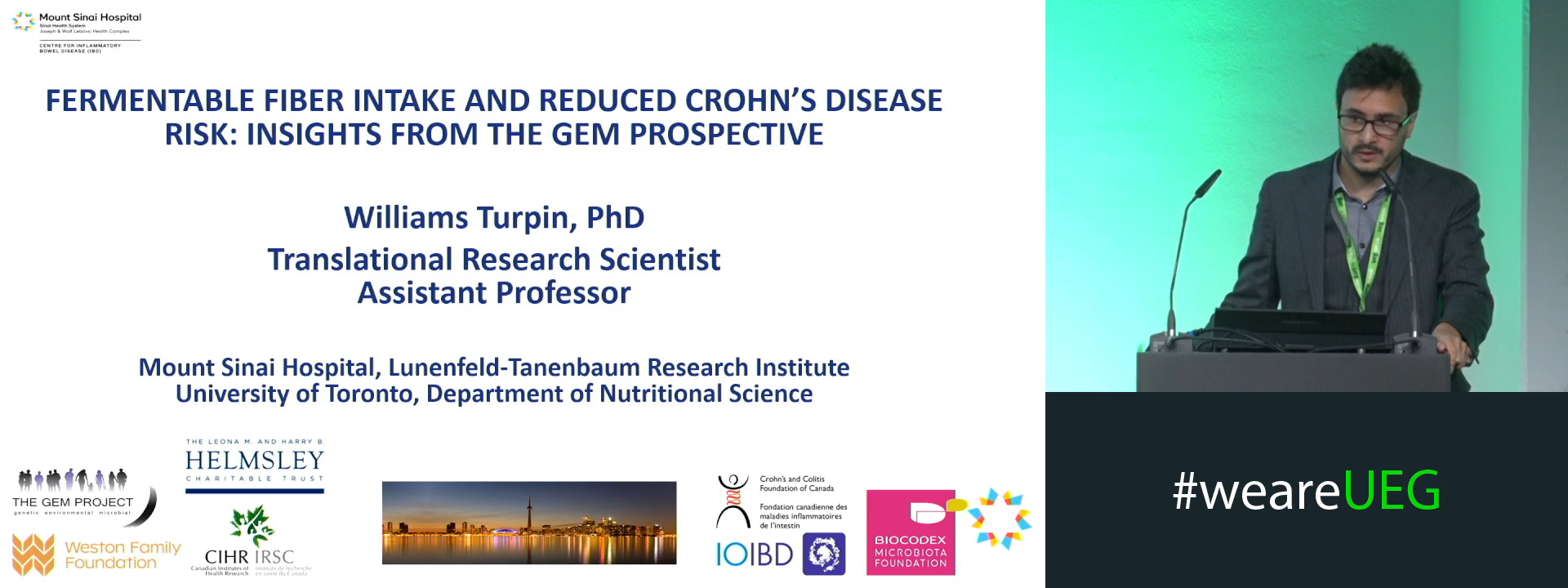
Event

UEG Week Berlin 2025

Topics

IBD Mechanisms & Personalised Medicine

Submission format

Abstract

Session

Clinical management of IBD

Citation

United European Gastroenterology Journal 2025; 13 (Supplement 8)

Published

2025
UEG Presentation
Share via Email Share on Facebook Share on X Share on LinkedIn Share on Bluesky
Appendectomy? The solution for ulcerative colitis

Log in to access this content.

Free for all myUEG account holders. Your access level is set automatically based on your occupation. Medical professionals get full access to all content. If you are a non-medical user, you can only access UEG Week content from congresses you attended.

Log In Create a free account

Not sure what you can access? Learn more about account types.

Appendectomy? The solution for ulcerative colitis

Eva Visser 1

1 Amsterdam University Medical Centre, Amsterdam, Netherlands
Event

UEG Week Berlin 2025

Topics

IBD Mechanisms & Personalised Medicine Paediatrics Surgery

Session

What's new in ulcerative colitis 2025?

Citation

United European Gastroenterology Journal 2025; 13 (Supplement 8)

Published

2025
UEG Presentation
Share via Email Share on Facebook Share on X Share on LinkedIn Share on Bluesky
The pregnant IBD patient (Complete Session)

Log in to access this content.

Free for all myUEG account holders. Your access level is set automatically based on your occupation. Medical professionals get full access to all content. If you are a non-medical user, you can only access UEG Week content from congresses you attended.

Log In Create a free account

Not sure what you can access? Learn more about account types.

The pregnant IBD patient (Complete Session)

Event

UEG Week Berlin 2025

Topics

IBD Paediatrics

Session

The pregnant IBD patient

Citation

United European Gastroenterology Journal 2025; 13 (Supplement 8)

Published

2025
UEG Presentation
Share via Email Share on Facebook Share on X Share on LinkedIn Share on Bluesky
Fistulising Crohn's disease: Underlying mechanism

Log in to access this content.

Free for all myUEG account holders. Your access level is set automatically based on your occupation. Medical professionals get full access to all content. If you are a non-medical user, you can only access UEG Week content from congresses you attended.

Log In Create a free account

Not sure what you can access? Learn more about account types.

Fistulising Crohn's disease: Underlying mechanism

Judy Chou 1

1 Icahn School of Medicine at Mount Sinai, New York, United States of America

Event

UEG Week Berlin 2025

Topics

IBD Primary Care Surgery

Session

Disease primer: From inflammation to restoration - wound healing in IBD

Citation

United European Gastroenterology Journal 2025; 13 (Supplement 8)

Published

2025
UEG Presentation
Share via Email Share on Facebook Share on X Share on LinkedIn Share on Bluesky
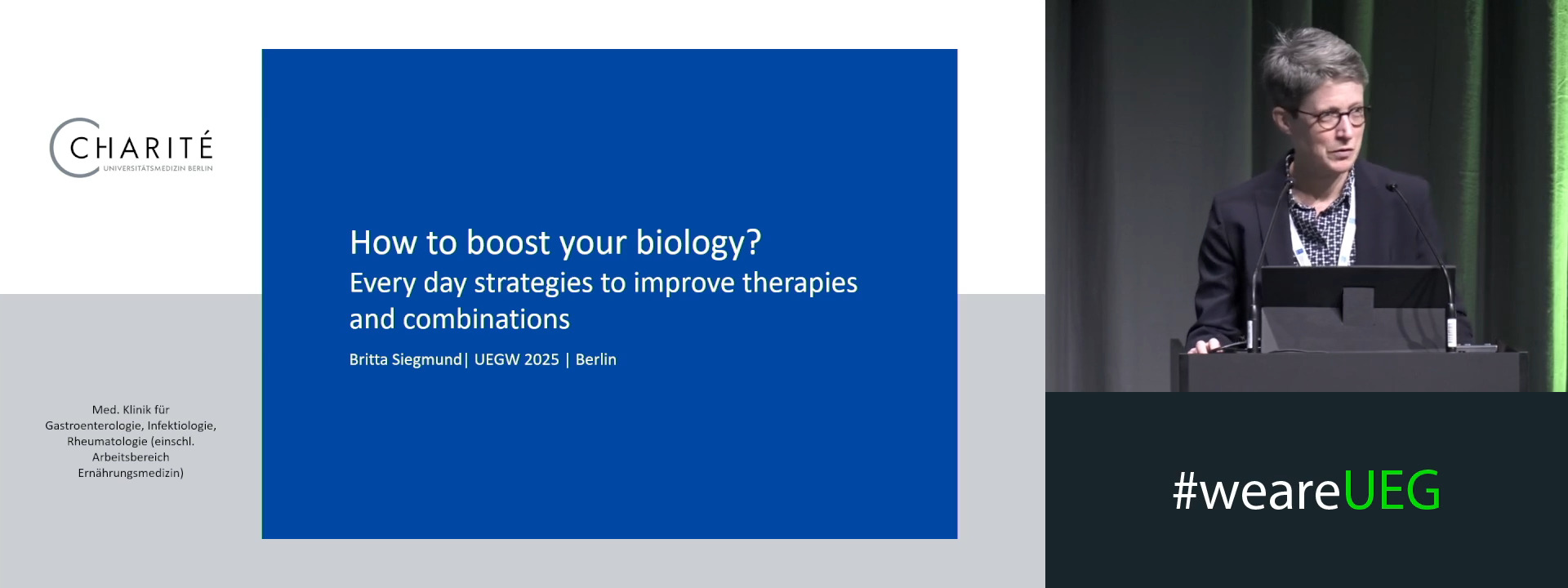
How to boost your biology? Every day strategies to improve therapies and combinations

Log in to access this content.

Free for all myUEG account holders. Your access level is set automatically based on your occupation. Medical professionals get full access to all content. If you are a non-medical user, you can only access UEG Week content from congresses you attended.

Log In Create a free account

Not sure what you can access? Learn more about account types.

How to boost your biology? Every day strategies to improve therapies and combinations

Britta Siegmund 1

1 Charité - Universitätsmedizin Berlin, Berlin, Germany
Event

UEG Week Berlin 2025

Topics

IBD Mechanisms & Personalised Medicine Surgery

Session

How to optimise success in IBD treatment

Citation

United European Gastroenterology Journal 2025; 13 (Supplement 8)

Published

2025
UEG Presentation
Share via Email Share on Facebook Share on X Share on LinkedIn Share on Bluesky
RANDOMIZED CONTROLLED TRIAL COMPARING ENDOSCOPIC BALLOON DILATION VERSUS ENDOSCOPIC STRICTUROTOMY FOR SHORT STRICTURES (&LT; 3 CM) RELATED TO CROHN’S DISEASE (THE BEST-CD TRIAL) (NCT05521867)

Log in to access this content.

Free for all myUEG account holders. Your access level is set automatically based on your occupation. Medical professionals get full access to all content. If you are a non-medical user, you can only access UEG Week content from congresses you attended.

Log In Create a free account

Not sure what you can access? Learn more about account types.

Introduction

Although endoscopic balloon dilation (EBD) remains the standard intervention for Crohn’s disease (CD)-associated strictures, its efficacy is limited by high recurrence and surgery rates. Retrospective analyses suggest endoscopic stricturotomy (ES) may offer superior outcomes, particularly in anastomotic strictures. However, no randomized trials have directly compared EBD and ES for short CD-related strictures.

Aims & Methods

This single-center, randomized controlled trial (August 2022–March 2025) enrolled adult CD patients (18–65 years) with symptomatic, predominantly fibrotic or mixed, short strictures (<3 cm), including both de novo and anastomotic types, accessible via standard endoscopy. Patients with multiple (>2) strictures, strictures beyond endoscopic reach, or prior stricturotomy were excluded. Participants were randomized to undergo either EBD or ES. The primary outcome was clinical recurrence at 1 year. Secondary outcomes included re-intervention, surgery, emergency visits, hospitalization, technical success, and adverse events.

Results

Out of 70 randomized patients, 69 were analyzed (EBD: 35; ES: 34). Baseline characteristics were comparable between groups. Technical success was similar (EBD: 91.4%, ES: 94.1%). On time to event analysis, clinical recurrence was significantly lower in the ES group (OR=0.343, 95% CI: 0.134–0.881; p=0.026). Re-intervention rates favored ES (EBD: 25.7%, ES: 8.8%; OR=0.337, 95% CI: 0.131–0.870; p=0.025). Surgery rates were numerically lower with ES (EBD: 11.4%, ES: 5.9%) but not statistically significant (p=0.581). Hospitalization was significantly more frequent in the EBD arm (OR=0.276, 95% CI: 0.091–0.840; p=0.023). ED visits also trended lower with ES, though not statistically significant (p=0.062) (see table). Adverse events occurred in 25.7% of EBD patients (bleeding n=3 [1 hemoclip], pain with admission n=3, micro-perforation n=1, post-procedure pain n=2) and 14.7% of ES patients (bleeding n=3 [1 self-limited, 1 coagrasper, 1 hemoclip], none required transfusion, suspected perforation n=1, mild pain n=1).

Outcome
EBD (n=35)
ES (n=34)
p-value
Odds Ratio (95% CI)
Technical Success (%)
91.4% (32/35)
94.1% (32/34)
0.70
-
Clinical Recurrence (%)
48.6%
23.5%
0.026
0.343 (0.134–0.881)
Re-intervention Rate (%)
25.7%
8.8%
0.025
0.337 (0.131–0.870)
Surgery (%)
11.4%
5.9%
0.581
0.707 (0.207–2.422)
Stricture-related ED Visits (%)
20.0%
11.8%
0.062
0.404 (0.156–1.047)
Stricture-related Hospitalizations (%)
25.7%
8.8%
0.023
0.276 (0.091–0.840)
Any Adverse Event (%)
25.7% (9/35)
14.7% (5/34)
0.45
-

Conclusion

In this interim analysis, ES was associated with significantly lower clinical recurrence, re-intervention, and hospitalization compared to EBD for short CD-related strictures, with similar safety outcomes. These findings support ES as a potentially superior first-line endoscopic strategy over EBD in selected patients with Crohn’s disease strictures. (NCT05521867)

References

Lan N, Shen B. Endoscopic Stricturotomy Versus Balloon Dilation in the Treatment of Anastomotic Strictures in Crohn's Disease. Inflamm Bowel Dis. 2018 Mar 19;24(4):897-907. doi: 10.1093/ibd/izx085. PMID: 29546384.

RANDOMIZED CONTROLLED TRIAL COMPARING ENDOSCOPIC BALLOON DILATION VERSUS ENDOSCOPIC STRICTUROTOMY FOR SHORT STRICTURES (&LT; 3 CM) RELATED TO CROHN’S DISEASE (THE BEST-CD TRIAL) (NCT05521867)

Partha Pal 1, Kanapuram Pooja 1, Rajesh Gupta 1, Manu Tandan 1, D. Nageshwar Reddy 1

1 Asian Institute of Gastroenterology, Hyderabad, India

Event

UEG Week Berlin 2025

Topics

Endoscopy Radiology & Imaging IBD

Submission format

Abstract

Session

Advances in the investigation of the small bowel

Citation

United European Gastroenterology Journal 2025; 13 (Supplement 8)

Published

2025
UEG Presentation
Share via Email Share on Facebook Share on X Share on LinkedIn Share on Bluesky
RISK OF RELAPSE AFTER CESSATION OF ANTI-TNF THERAPY IN ULCERATIVE COLITIS IN CORTICOSTEROID-FREE CLINICAL REMISSION: AN INDIVIDUAL PARTICIPANT DATA META-ANALYSIS (IPD-MA) ON 654 PATIENTS FROM 8 STUDIES

Log in to access this content.

Free for all myUEG account holders. Your access level is set automatically based on your occupation. Medical professionals get full access to all content. If you are a non-medical user, you can only access UEG Week content from congresses you attended.

Log In Create a free account

Not sure what you can access? Learn more about account types.

Introduction

Side effects, patient preference, and high costs may prompt cessation of anti-TNF therapy in ulcerative colitis (UC) patients in sustained remission. Given the risk of relapse, careful patient selection is essential. This study aimed to assess relapse rates and identify predictors of relapse following anti-TNF cessation in UC patients in remission.

Aims & Methods

A systematic search on cohort studies reporting relapse rates after cessation of anti-TNF therapy in ≥30 UC patients in clinical remission was performed 6 September 2024. Individual patient data was requested. We excluded patients with steroid use, ≤6 months anti-TNF therapy, ≤16 years, previous colectomy (n=4), golimumab as anti-TNF therapy (n=3) or without follow-up. Continuation of treatment with immunomodulators or mesalamine at cessation of anti-TNF was allowed. Relapse was defined as the need to (re)start treatment with steroids, anti-TNF or other advanced therapies, or the need for surgical treatment, as applied by the original author. Pooled relapse rates were computed using a random-effects model. A prediction model was built with a Cox proportional hazards model, performance assessed by iteratively leaving one study out (internal-external cross-validation, IECV). Missing covariate data were multiply imputed 100 times using the MICE algorithm. Variable selection was guided by three criteria: ≤20% missing data, a univariate p-value ≤ 0.2, and input from clinical experts.

Results

In total, 654 patients from 8 studies were included in the individual participant data meta-analysis. At anti-TNF cessation, median age was 40 years (IQR 31-51) with a median anti-TNF treatment of 18 months (IQR 18-36). The majority of patients were treated with infliximab (n = 610, 93%). Only 42 patients (9%) received a second-line anti-TNF therapy. The pooled relapse rate were 24% [95% CI 19-29%, I2 = 44%] and 34% [95% CI 29-40%, I2 = 39] at 1 and 2 years after cessation, respectively. Upon cessation, 211 patients (33%) continued mesalamine, 239 (39%) thiopurines, and 136 (22%) a combination of both. In our model, thiopurine therapy and older age at cessation were associated with a reduced risk of relapse, whereas immunomodulator refractoriness as an indication for starting anti-TNF therapy was associated with an increased risk. Other factors included in the prediction model were disease extent, type of anti-TNF therapy, history of anti-TNF therapy, fecal calprotectin level and endoscopic activity, leading to a c statistic of 0.55 [95% CI 0.51-0.59] (Table 1).

Table 1: Predictors of relapse in a pooled Cox regression analysis

VariableHazard Rate95% Confidence interval
Age at discontinuation, per 10 years0.800.72 – 0.88
Ulcerative colitis disease extent,
Proctitis vs. extensive
Left-sided vs. extensive

1.4
1.1

0.92 – 2.1
0.87 – 1.5
Type of anti-TNF therapy, adalimumab vs. infliximab0.910.55 – 1.5
≥1 previous anti-TNF, yes vs. no1.50.95 – 2.3
Indication anti-TNF therapy Immunomodulator refractoriness, yes vs no/unknown1.51.1 – 2.2
Concomitant treatment after anti-TNF therapy,
None vs thiopurine
Mesalamine vs. thiopurine
Combination of mesalamine and thiopurines vs thiopurine

1.8
1.2
1.2

1.1 – 3.0
0.86 – 1.6
0.81 – 1.7
Fecal Calprotectin (µg/g), per 1001.10.95 – 1.3
Endoscopic activity, yes (mild, moderate or severe) vs. no1.30.91 – 2.0

Conclusion

Approximately 1 in 4 patients experience a relapse of UC within 1 year after anti-TNF cessation, increasing to 1 in 3 within 2 years. Continuation of thiopurines is associated with a reduced risk. A prediction model for relapse was developed in this large IPD meta-analysis cohort and may aid in shared decision-making on anti-TNF cessation. However, its limited discriminative ability underscores the need for further refinement, incorporating data on microscopic remission and molecular and immunological markers to better capture deeper disease control.

RISK OF RELAPSE AFTER CESSATION OF ANTI-TNF THERAPY IN ULCERATIVE COLITIS IN CORTICOSTEROID-FREE CLINICAL REMISSION: AN INDIVIDUAL PARTICIPANT DATA META-ANALYSIS (IPD-MA) ON 654 PATIENTS FROM 8 STUDIES

Monique Devillers 1, Sebastiaan ten Bokkel Huinink 1, Toby Hackmann 2, Ewout Steyerberg 3, Bas Oldenburg 4, Remi Mahmoud 4, Pauliina Molander 5, Klaudia Farkas 6, Gionata Fiorino 7, María Chaparro 8, Javier Gisbert 8, María José Casanova 8, Sung-Noh Hong 9, Nikolas Dussias 10, Annemarie de Vries 1

1 Erasmus MC University Medical Center, Rotterdam, Netherlands

2 Leiden University Medical Center, Leiden, Netherlands

3 Utrecht University Medical Center, Utrecht, Netherlands

4 University Medical Center Utrecht, Utrecht, Netherlands

5 Helsinki University Hospital, Helsinki, Finland

6 University of Szeged 1st Dept. of Medicine, Szeged, Hungary

7 San Camillo-Forlanini Hospital, Rome, Italy

8 Hospital Universitario de La Princesa, Instituto de Investigación Sanitaria Princesa (IIS-Princesa), Universidad Autónoma de Madrid (UAM), Centro de Investigación Biomédica en Red de Enfermedades Hepáticas y Digestivas (CIBEREHD), Madrid, Spain

9 Samsung Medical Center, Seoul, Korea, Republic of

10 IRCCS Azienda Ospedaliero-Universitaria di Bologna, Bologna, Italy

Event

UEG Week Berlin 2025

Topics

Gut Microbiota IBD Immunology Mechanisms & Personalised Medicine

Submission format

Late-Breaking Abstract

Session

Late-breaking trials in IBD

Citation

United European Gastroenterology Journal 2025; 13 (Supplement 8)

Published

2025

The global reference point for the digestive health community

Platform Publisher

United European Gastroenterology

Wickenburggasse 1 1080 Vienna, Austria

Contact us

support@ueg.eu

ueg.eu

T: +43 1 997 1639

Legal

Terms & Conditions

Imprint

Privacy Policy

Explore

My Bookmarks

My recommendations

My fields of interest

© 2026 United European Gastroenterology

Change fields of interest

These fields are selected based on the interests in your myUEG profile.
Click the item to unselect it. You can select multiple items.