UEG Week Recordings UEG Week Posters Online courses Guidelines Mistakes in... Podcasts Webinars
Visit ueg.eu Create myUEG account Log In

Filters:

UEG Presentation
Share via Email Share on Facebook Share on X Share on LinkedIn Share on Bluesky
TL1a

Log in to access this content.

Free for all myUEG account holders. Your access level is set automatically based on your occupation. Medical professionals get full access to all content. If you are a non-medical user, you can only access UEG Week content from congresses you attended.

Log In Create a free account

Not sure what you can access? Learn more about account types.

TL1a

Silvio Danese 1

1 Vita-Salute San Raffaele University - IRCCS San Raffaele Scientific Institute, Milan, Italy
Event

UEG Week Berlin 2025

Topics

IBD Mechanisms & Personalised Medicine

Session

What's new in advanced therapies for IBD in 2025?

Citation

United European Gastroenterology Journal 2025; 13 (Supplement 8)

Published

2025
UEG Presentation
Share via Email Share on Facebook Share on X Share on LinkedIn Share on Bluesky
REAL-LIFE VS CLINICAL TRIAL ACCESS TO BIOLOGICAL THERAPY: FINDINGS FROM AN ITALIAN-AMERICAN STUDY ON INFLAMMATORY BOWEL DISEASE

Log in to access this content.

Free for all myUEG account holders. Your access level is set automatically based on your occupation. Medical professionals get full access to all content. If you are a non-medical user, you can only access UEG Week content from congresses you attended.

Log In Create a free account

Not sure what you can access? Learn more about account types.

Introduction

Treatment goals in inflammatory bowel disease (IBD) have evolved beyond symptom control to include mucosal healing, prevention of disease-related complications, improvement of health-related quality of life, and reduction of long-term disability, as outlined by the STRIDE II initiative¹. Despite significant progress in the development of advanced therapies (ADTs), up to 50% of IBD patients fail to respond to currently available treatments, underscoring the urgent need for new therapies, which are investigated in randomized clinical trials (RCTs). However, stringent eligibility criteria in RCTs limit the inclusion of real-world IBD patients, potentially compromising the generalizability of trial findings to daily clinical practice.

Aims & Methods

The aim of this study was to evaluate the proportion of real-life IBD patients who would be eligible for ongoing RCTs and to assess the representativeness of this population. Moreover, we aimed to identify the most frequently unmet eligibility criteria leading to patient exclusion and to characterize the clinical profiles that differentiate eligible from ineligible patients.
This prospective, observational, multicenter study was conducted between October 2023 and October 2024 at 2 tertiary IBD referral centers: the Fondazione Policlinico Universitario “A. Gemelli” in Rome, Italy, and the Crohn’s & Colitis Center at the University of Miami, USA. Consecutive patients with IBD indicated for a new ADT were enrolled. Each patient was systematically screened for inclusion and exclusion criteria across all actively recruiting phase 2b and 3 RCTs available at each center at the time of evaluation (6 RCTs in Rome: 4 UC and 2 CD; 5 RCTs in Miami: 3 UC and 2 CD).

Results

A total of 166 IBD patients (69 UC and 97 CD) were enrolled, with 129 patients from the Italian cohort and 37 from the American cohort. Among UC patients, only 16 (23.2%) met the eligibility criteria for at least 1 RCT, whereas 53 (76.8%) were deemed ineligible (p<0.001). In the CD group, just 10 patients (10.3%) were eligible for at least 1 RCT, compared to 87 (89.7%) who were not (p<0.001). The most common reasons for ineligibility among UC patients included: Modified Mayo score not within the required range of 5–9 (50.7%), absence of bowel urgency (63.8%), Mayo Endoscopic Subscore <2 (39.1%), failure to comply with ADT washout requirements (56.5%), insufficient number of prior ADT failures (39.0%), and recent use of topical 5-ASA or steroids within 4 weeks prior to screening (62.3%).
In CD patients, the most frequently unmet criterion was a CDAI between 220 and 450 (92.8%), followed by insufficiently liquid stool frequency (≥4 very soft or liquid stools/day; 75.3%), SES-CD<6 (39.2%), and the presence of CD-related complications such as strictures or fistulas (13.1%).

Conclusion

The majority of real-life IBD patients, particularly those with CD, are ineligible for participation in current RCTs—primarily due to relatively mild disease activity or ongoing need for concomitant therapies that are not permitted by trial protocols. Importantly, many real-world CD patients initiate new ADTs based on radiologic signs of disease activity, the presence of disease complications, or as prophylaxis for post-surgical recurrence, rather than clinical activity scores alone. Similarly, UC patients may require ADTs even in the context of corticosteroid dependence and low-grade disease activity. These findings underscore the need to revisit and broaden eligibility criteria in future RCTs to ensure greater external validity and alignment with the heterogeneity of real-life IBD population.

References

1. Turner D, Ricciuto A, Lewis A, D'Amico F, Dhaliwal J, Griffiths AM, Bettenworth D, Sandborn WJ, Sands BE, Reinisch W, Schölmerich J, Bemelman W, Danese S, Mary JY, Rubin D, Colombel JF, Peyrin-Biroulet L, Dotan I, Abreu MT, Dignass A; International Organization for the Study of IBD. STRIDE-II: An Update on the Selecting Therapeutic Targets in Inflammatory Bowel Disease (STRIDE) Initiative of the International Organization for the Study of IBD (IOIBD): Determining Therapeutic Goals for Treat-to-Target strategies in IBD. Gastroenterology. 2021 Apr;160(5):1570-1583. doi: 10.1053/j.gastro.2020.12.031. Epub 2021 Feb 19. PMID: 33359090.

REAL-LIFE VS CLINICAL TRIAL ACCESS TO BIOLOGICAL THERAPY: FINDINGS FROM AN ITALIAN-AMERICAN STUDY ON INFLAMMATORY BOWEL DISEASE

Federica Di Vincenzo 1, Stephanie Ioannou 2, Chiara Principessa 3, Ivan Capobianco 1, Antonio Gasbarrini 4, Lucrezia Laterza 4, Maria T. Abreu 5, Franco Scaldaferri 4

1 Fondazione Policlinico Universitario "A. Gemelli" IRCCS, Università Cattolica del Sacro Cuore, Roma, Italy

2 University of Miami - Jackson Health System, Miami, United States

3 Università Cattolica del Sacro Cuore, Roma, Italy

4 Fondazione Policlinico Universitario "A. Gemelli", IRCCS, Università Cattolica del Sacro Cuore, Rome, Italy

5 University of Miami Miller School of Medicine, Department of Medicine, Division of Gastroenterology, Miami, FL 33136; F. Widjaja Inflammatory Bowel Disease Institute, Cedars-Sinai Medical Center, Los Angeles, United States

Event

UEG Week Berlin 2025

Topics

IBD Mechanisms & Personalised Medicine

Submission format

Abstract

Session

Clinical management of IBD

Citation

United European Gastroenterology Journal 2025; 13 (Supplement 8)

Published

2025
UEG Poster
Standard Poster
Share via Email Share on Facebook Share on X Share on LinkedIn Share on Bluesky

Log in to access this content.

Free for all myUEG account holders. Your access level is set automatically based on your occupation. Medical professionals get full access to all content. If you are a non-medical user, you can only access UEG Week content from congresses you attended.

Log In Create a free account

Not sure what you can access? Learn more about account types.

Introduction

Glucagon-like peptide-2 (GLP-2) analogs stimulate adaptation of the remaining gut of patients with short bowel syndrome and intestinal failure (SBS-IF), resulting in increased intestinal absorption. Overall, preclinical data suggest intestinal permeability may be compromised in patients with SBS, which may contribute to fluid losses. However, it remains unclear whether this can be improved by GLP-2 analog treatment.

Aims & Methods

STARS Nutrition was a 52-week multicenter, open-label, phase 2 study in adult patients with SBS-IF and a colon-in-continuity (CiC) (Leuven n=7, Paris n=2) receiving weekly subcutaneous injections with the novel, long-acting GLP-2 analog apraglutide. Duodenal and sigmoid colon biopsies were collected at screening, 24 weeks, and 48 weeks of treatment. Ussing chamber experiments were performed (Leuven only) to measure the transepithelial electrical resistance (TEER) and passage of a 4 kDA fluorescently-labelled dextran molecule (FITC-D4). In addition, qRT-PCR experiments were performed for genes of tight junction- and intercellular adhesion-related proteins. Data are presented as median (min – max). Nominal p-values are calculated using Wilcoxon matched-pairs signed rank tests (significance ≤0.05).

Results

The baseline colonic TEER of 21.56 (12.50 – 28.33) Ω.cm² significantly increased to 27.22 (22.78 – 32.67) Ω.cm² (p=0.0156) at 48 weeks. In addition, the baseline FITC-D4 flux of 34.75 (19.35 – 59.03) pmol was significantly reduced to 17.42 (10.03 – 45.28) pmol (p=0.0469) at 48 weeks. There were no significant changes in gene expression in the duodenum or sigmoid colon.

Conclusion

Apraglutide in SBS-IF-CiC led to significantly improved colonic permeability, potentially contributing to its pro-adaptive effect.

Disclosure

This research was supported by VectivBio, now part of Ironwood Pharmaceuticals.

Astrid Verbiest, Joran Toth, Pauline Huyghe, Lise De Meyere, Lucas Wauters, Ricard Farré: no disclosures.
Palle Bekker Jeppesen: PBJ has received grants/research support/honoraria or consultation fees from Albumedix A/S, ArTara Therapeutics, Bainan Biotech, Baxter, Coloplast, Ferring, Fresenius Kabi, GLyPharma, Naia Pharma, NPS Pharmaceuticals, Shire, Takeda, The Novo Nordisk Foundation, Therachon, VectivBio and Zealand Pharma.
Francisca Joly: FJ has received grants/research support/honoraria or consultation fees from Baxter, Fresenius Kabi, Nestlé Health Sciences, BBraun, Theradial, Mayoli, Biocodex, mobile3e Consulting, Carembouche, NPS Pharmaceuticals, Shire, Takeda, Therachon, VectivBio and Zealand Pharma.
Tim Vanuytsel: TV has served on the speaker bureau for Fresenius Kabi, Remedus, Takeda, and VectivBio. TV has provided clinical advice to Baxter, Shire, Takeda, VectivBio, Zealand Pharma. TV has received research grants from Takeda and VectivBio.

THE GLP-2 ANALOG APRAGLUTIDE IMPROVES COLONIC BARRIER FUNCTION IN PATIENTS WITH SHORT BOWEL SYNDROME AND CHRONIC INTESTINAL FAILURE

THE GLP-2 ANALOG APRAGLUTIDE IMPROVES COLONIC BARRIER FUNCTION IN PATIENTS WITH SHORT BOWEL SYNDROME AND CHRONIC INTESTINAL FAILURE

Astrid Verbiest 1, Joran Toth 2, Pauline Huyghe 2, Lise De Meyere 1, Lucas Wauters 1, Palle Bekker Jeppesen 3, Ricard Farré 2, Francisca Joly 4, Tim Vanuytsel 1

1 University of Leuven, Leuven, Belgium|||University Hospitals Leuven, Leuven, Belgium

2 University of Leuven, Leuven, Belgium

3 Rigshospitalet, Copenhagen University Hospital, Copenhagen, Denmark

4 Hôpital Beaujon, University of Paris, Clichy, France

Conference

UEG Week Berlin 2025

Topics

Small Intestine & Nutrition

Submission format

Abstract

Session

Malabsorption, small intestinal pathology and failure (Posters)

Citation

United European Gastroenterology Journal 2025; 13 (Supplement 8)

Published

2025
UEG Poster
Standard Poster
Share via Email Share on Facebook Share on X Share on LinkedIn Share on Bluesky

Log in to access this content.

Free for all myUEG account holders. Your access level is set automatically based on your occupation. Medical professionals get full access to all content. If you are a non-medical user, you can only access UEG Week content from congresses you attended.

Log In Create a free account

Not sure what you can access? Learn more about account types.

Introduction

Few studies have evaluated the efficacy of butyric acid in treating children with inflammatory bowel disease (IBD).

Aims & Methods

In children and adolescents with recently diagnosed IBD, the purpose of this research was to assess the efficacy of oral sodium butyrate as an adjunct to conventional treatment.This trial was unicentric, prospective, randomised, and placebo controlled. 150 mg sodium butyrate single dose (group A) or a placebo (group B) were randomly assigned to patients with ulcerative colitis or Crohn's disease aged 7–18 years who were receiving conventional medication based on the severity of their conditions. Disease activity, C-reactive protein (CRP), and faecal calprotectin concentration differences between the two study groups at 12 weeks of the trial were the main outcomes.

Results

With 44 patients in group A and 44 in group B, 88 individuals with initially active illness finished the research. Most patients experienced remission by week 12 of the study (36 patients in Group A with sodium butyrate-82%, and 11 patients in Group B with placebo-48%). Between the two groups, a significant difference in disease activity was seen (p = 0.001), with a signifigant higher percent of cases in remission among those from lot A that received sodium butirate compared to placebo. The sodium butyrate group appeared to have less systemic inflammation than the other group, as evidenced by the significantly lower CRP levels in Group A (18.14 ± 11.19 mg/L) compared to Group B (57.00 ± 33.28 mg/L) at 12 weeks (T2) (P < 0.001). No negative effects were recorded by any of the patients. Fecal calprotectin in Group A dropped much more after 12 weeks (T2) (P < 0.001), suggesting that the sodium butyrate group was better able to regulate intestinal inflammation.

Conclusion

In newly diagnosed children and adolescents with IBD, a 12-week sodium butyrate supplementation did demonstrate effectiveness as an additional treatment and decreased the rate of relapsing cases.

Disclosure

Nothing to disclose

IS THERE A ROLE FOR SODIUM BUTYRATE IN THE TREATMENT OF PEDIATRIC INFLAMMATORY BOWEL DISEASES?

IS THERE A ROLE FOR SODIUM BUTYRATE IN THE TREATMENT OF PEDIATRIC INFLAMMATORY BOWEL DISEASES?

Oana Belei 1, Laura Olariu 1, Eugen-Adrian Goldis 1, Radu Dragomir 1, Marina Adriana Mercioni 1, Otilia Marginean 1

1 Victor Babes University of Medicine and Pharmacy, Timisoara, Romania

Conference

UEG Week Berlin 2025

Topics

IBD

Submission format

Abstract

Session

Assessing the effectiveness of IBD treatments: From clinical studies to real-world experience (Posters)

Citation

United European Gastroenterology Journal 2025; 13 (Supplement 8)

Published

2025
UEG Presentation
Share via Email Share on Facebook Share on X Share on LinkedIn Share on Bluesky
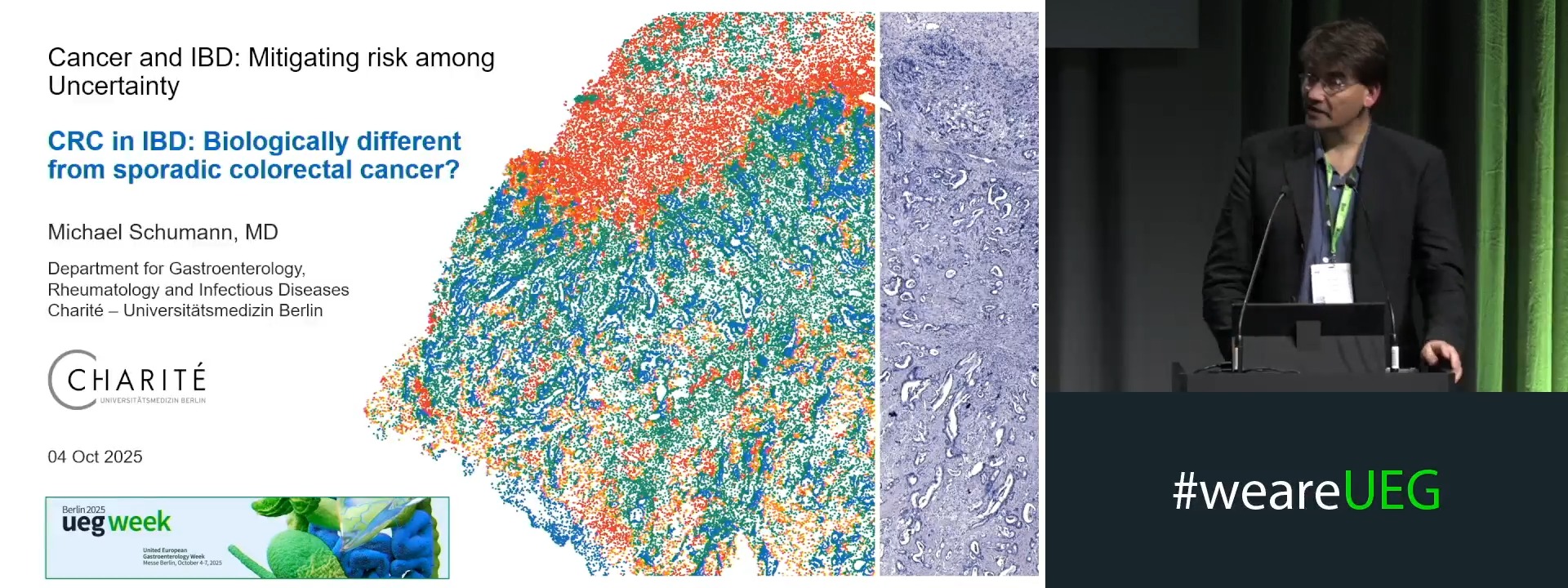
CRC in IBD: Biologically different from sporadic colorectal cancer?

Log in to access this content.

Free for all myUEG account holders. Your access level is set automatically based on your occupation. Medical professionals get full access to all content. If you are a non-medical user, you can only access UEG Week content from congresses you attended.

Log In Create a free account

Not sure what you can access? Learn more about account types.

CRC in IBD: Biologically different from sporadic colorectal cancer?

Michael Schumann 1

1 Charité Berlin, Berlin, Germany

Event

UEG Postgraduate Teaching Programme Berlin 2025

Topics

Digestive Oncology IBD

Session

Cancer and IBD: Mitigating risk among uncertainty

Citation

United European Gastroenterology Journal 2025; 13 (Supplement 8)

Published

2025
UEG Poster
Audio / Video Poster
Share via Email Share on Facebook Share on X Share on LinkedIn Share on Bluesky

Log in to access this content.

Free for all myUEG account holders. Your access level is set automatically based on your occupation. Medical professionals get full access to all content. If you are a non-medical user, you can only access UEG Week content from congresses you attended.

Log In Create a free account

Not sure what you can access? Learn more about account types.

Introduction

In the UK, FIT is offered to adults with symptoms suggestive of colorectal cancer (CRC). A positive result (>10µgHb/g) triggers a referral through a suspected colorectal cancer pathway for further investigation.1 IBD and CRC share many similar symptoms. However, there is very limited evidence assessing the use of FIT in predicting the onset of IBD, following exclusion of CRC.

Aims & Methods

We aimed to assess the association between abnormal FIT results in symptomatic patients and the risk of new IBD diagnosis within a year, and how this varies with age and faecal calprotectin (FCP) results. This was done through a population-based observational study of all symptomatic FIT recorded in the Clinical Practice Research Datalink (CPRD) between January 2019 and June 2023 with one year follow up.2 Patients with prior diagnoses of IBD or CRC were excluded. Kaplan-Meier estimates were used to assess cumulative 1-year IBD risk, stratified by age group, FIT results and FCP results.

Results

2762 (0.58%) of 473402 patients were diagnosed with IBD within 1-year of symptomatic FIT. The risk was 541/377485 (0.1%) in those with a FIT ≤10µgHb/g compared to 2221/95917 (2.3%) with FIT>10µgHb/g. A positive FIT is associated with increased risk of IBD diagnosis (p<0.001) . Table 1 summarises the 1-year risks of new IBD diagnoses within this symptomatic FIT population in strata of age and faecal calprotectin. As can be seen those with a negative FIT have a low risk of IBD diagnosis at all ages regardless of FCP. With rising FIT the risk rises in all age groups and is highest in the under 40s with a FIT >200µgHb/g and FCP >50µg/g at 38.9 % (95% CI: 34.62-43.07%). Even at this level of FIT, cumulative risk is only 3.8% (95% CI: 1.9-5.68%) when FCP ≤50µg/g. In contrast, the cumulative risk of IBD in patients age ≥70 is low, regardless of FIT levels, with 0.05% (95% CI: 0.04-0.07%) risk in those with FIT ≤10µgHb/g and 1.4% (95% CI: 1.16-1.65%) in FIT >200µgHb/g.

Table 1: 1-year cumulative risk of IBD (%)

FCP ≤50µg/g

FCP >50µg/g
FIT CategoriesAge Group (Years)
FIT Categories
Age Group (Years)

<40
40-49
50-59
60-69
≥70

<40
40-49
50-59
60-69≥70
>200
3.81
(1.9-5.68)
1.91
(0.24-3.55)
2.74
(0.34-5.08)
1.87
(0-4.41)
0
(0-0)
>200
38.99
(34.62-43.07)
25.91
(20.72-30.76)
19.06
(14.53-23.35)
13.58
(8.84-18.07)
4.52
(2.08-6.9)
100.1 - 200
2.02
(0-4.26)
0
(0-0)
6.47
(0.82-11.8)
0
(0-0)
0
(0-0)
100.1 - 200
34.18
(26.08-41.4)
18.12
(10.76-24.86)
7.43
(2.89-11.76)
6.15
(1.24-10.81)
4.56
(1.41-7.61)
40.1 - 100
2.54
(0.32-4.71)
1.31
(0-3.1)
0.62
(0-1.84)
0.85
(0-2.51)
0
(0-0)
40.1 - 100
21.45
(16-26.56)
12.38
(6.85-17.57)
5.8
(2.41-9.08)
3.2
(0.65-5.69)
1.44
(0.03-2.84)
20.1 - 40
0
(0-0)
0.47
(0-1.4)
0
(0-0)
0
(0-0)
0
(0-0)
20.1 - 40
11.58
(6.91-16.02)
6.64
(2.58-10.54)
1.99
(0.04-3.9)
2.72
(0.34-5.04)
1.96
(0.39-3.51)
10.1 - 20
0
(0-0)
0.69
(0-1.63)
0.35
(0-1.04)
0
(0-0)
0
(0-0)
10.1 - 20
7.75
(4.03-11.33)
4.73
(1.66-7.69)
2.65
(0.69-4.56)
2.39
(0.3-4.43)
0.85
(0-1.81)
≤10
0.1
(0.04-0.16)
0.13
(0.05-0.2)
0.09
(0.02-0.15)
0.11
(0.01-0.21)
0
(0-0)
≤10
2.17
(1.63-2.71)
1.37
(0.92-1.81)
1.17
(0.81-1.53)
0.82
(0.48-1.16)
0.43
(0.21-0.64)

Conclusion

A combination of symptomatic FIT and FCP can stratify the risk of IBD diagnosis. This should lead to prioritisation of those at high risk for early colonoscopy even among the young who are unlikely to have colorectal cancer. Those with low risk of either diagnosis could be spared invasive testing.

References

1. National Institute for Health and Care Excellence. Quantitative faecal immunochemical testing to guide colorectal cancer pathway referral in primary care [DG56]. 2023 24 August 2023 15 April 2025]; Available from: https://www.nice.org.uk/guidance/DG56.
2. Clinical Practice Research Datalink. CPRD Aurum December 2024 (Version 2024.12.001). [Data set] 2024 15/04/2025; Available from: https://www.cprd.com/doi/cprd-aurum-december-2024-dataset.

INFLAMMATORY BOWEL DISEASE (IBD) DIAGNOSIS FOLLOWING A SYMPTOMATIC FAECAL IMMUNOCHEMICAL TEST (FIT): A POPULATION BASED COHORT STUDY FROM ENGLAND

INFLAMMATORY BOWEL DISEASE (IBD) DIAGNOSIS FOLLOWING A SYMPTOMATIC FAECAL IMMUNOCHEMICAL TEST (FIT): A POPULATION BASED COHORT STUDY FROM ENGLAND

James Chean Khun Ng 1, Alastair Morton 2, Matthew Grainger 3, Colin Crooks 3, Joe West 3, Timothy R. Card 4, David James Humes 5

1 Nottingham University Hospital NHS Trust, Nottingham, United Kingdom

2 University Of Nottingham, Nottingham, United Kingdom

3 University of Nottingham, Nottingham, United Kingdom

4 University of Nottingham Department of Epidemiology and Public Health, Nottingham, United Kingdom

5 University of Nottingham Dept. of Surgery, Nottingham, United Kingdom

Conference

UEG Week Berlin 2025

Topics

IBD

Submission format

Abstract

Session

Treatment outcomes in IBD (Posters)

Citation

United European Gastroenterology Journal 2025; 13 (Supplement 8)

Published

2025
UEG Presentation
Share via Email Share on Facebook Share on X Share on LinkedIn Share on Bluesky
Advancing IBD precision medicine: The next frontier

Log in to access this content.

Free for all myUEG account holders. Your access level is set automatically based on your occupation. Medical professionals get full access to all content. If you are a non-medical user, you can only access UEG Week content from congresses you attended.

Log In Create a free account

Not sure what you can access? Learn more about account types.

Advancing IBD precision medicine: The next frontier

Bram Verstockt 1

1 University Hospitals Leuven and KU Leuven, Translational Research in Gastrointestinal Disorders - IB, Leuven, Belgium

Event

UEG Week Berlin 2025

Topics

IBD Mechanisms & Personalised Medicine

Session

The art of making clinical research precise: Predicting therapy response in IBD

Citation

United European Gastroenterology Journal 2025; 13 (Supplement 8)

Published

2025

The global reference point for the digestive health community

Platform Publisher

United European Gastroenterology

Wickenburggasse 1 1080 Vienna, Austria

Contact us

support@ueg.eu

ueg.eu

T: +43 1 997 1639

Legal

Terms & Conditions

Imprint

Privacy Policy

Explore

My Bookmarks

My recommendations

My fields of interest

© 2026 United European Gastroenterology

Change fields of interest

These fields are selected based on the interests in your myUEG profile.
Click the item to unselect it. You can select multiple items.