UEG Week Recordings UEG Week Posters Online courses Guidelines Mistakes in... Podcasts Webinars
Visit ueg.eu Create myUEG account Log In

Filters:

UEG Mistakes In Articles
Share via Email Share on Facebook Share on X Share on LinkedIn Share on Bluesky

Log in to access this content.

Free for all myUEG account holders. Your access level is set automatically based on your occupation. Medical professionals get full access to all content. If you are a non-medical user, you can only access UEG Week content from congresses you attended.

Log In Create a free account

Not sure what you can access? Learn more about account types.
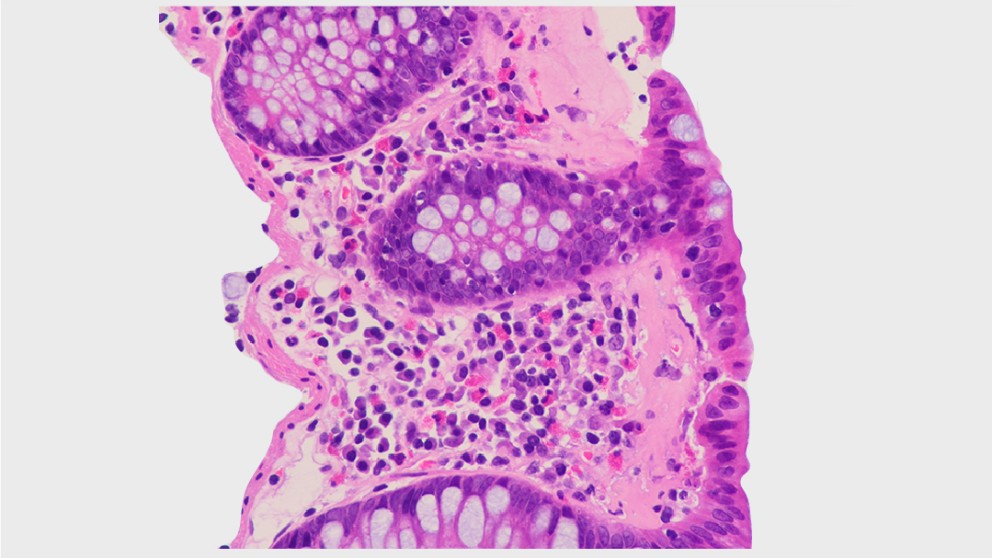
Microscopic colitis is an inflammatory bowel disease (IBD) that leads to chronic, watery diarrhoea. First believed to be rare, microscopic colitis has received more attention in recent decades, resulting in increasing incidence rates that exceed those of classic IBD in some countries. Hopefully, it is common practice nowadays to refer patients with chronic diarrhoea for a colonoscopy with biopsy samples taken, as this is the only way to diagnose microscopic colitis. Histology results distinguish between the subtypes of microscopic colitis — lymphocytic colitis, collagenous colitis and the more recently introduced incomplete microscopic colitis.


Mistakes in microscopic colitis and how to avoid them

Mistakes in microscopic colitis and how to avoid them

Andreas Münch

Topics

IBD

Citation

Münch A. Mistakes in microscopic colitis and how to avoid them. UEG Education 2021; 21: 10–13.

Published

2021
UEG Podcast Episode
UEG Podcast
Share via Email Share on Facebook Share on X Share on LinkedIn Share on Bluesky

Log in to access this content.

Free for all myUEG account holders. Your access level is set automatically based on your occupation. Medical professionals get full access to all content. If you are a non-medical user, you can only access UEG Week content from congresses you attended.

Log In Create a free account

Not sure what you can access? Learn more about account types.
Coeliac disease with David Sanders

David S. Sanders, Pradeep Mundre

Topics

Small Intestine & Nutrition

Published

2026
UEG Mistakes In Articles
Share via Email Share on Facebook Share on X Share on LinkedIn Share on Bluesky

Log in to access this content.

Free for all myUEG account holders. Your access level is set automatically based on your occupation. Medical professionals get full access to all content. If you are a non-medical user, you can only access UEG Week content from congresses you attended.

Log In Create a free account

Not sure what you can access? Learn more about account types.

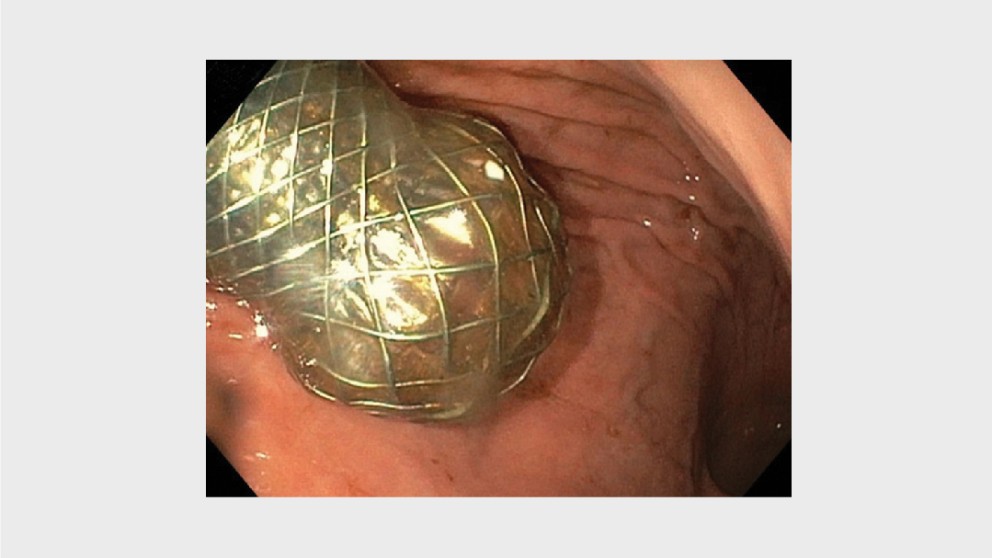
Adequate nutrition is essential for the homeostasis of fluids and nutrients, growth and thriving, especially in children. While the underlying principle of percutaneous endoscopic gastrostomy (PEG) placement is the same for both adults and children—providing a means of enteral feeding through the stomach—the indications, considerations and techniques differ owing to anatomical differences, age-dependent physiological concerns, and the age- and disease-specific needs of the child.

If feeding via nasogastric tube (NGT) or naso-jejunal tube (NJT) is necessary for a prolonged time, placement of a PEG or percutaneous endoscopic gastro-jejunal (PEG-J) tube should be considered. A PEG tube also allows the delivery of medications and venting of the stomach when needed. Nutrition via PEG facilitates the transition to out-of-hospital care and improves the quality of life (QoL) for children and families while improving the outcome of children with chronic diseases.

There are recent clinical guidelines providing guidance for PEG tube placement in children, but little advice on, e.g., choosing the right device for the right patient, details on postoperative management, removal of the PEG tube and other specific cases. The following article provides a combination of evidence-based data and the authors’ clinical experience.

Mistakes in gastrostomy insertion in children and adolescents and how to avoid them

Mistakes in gastrostomy insertion in children and adolescents and how to avoid them

Christos Tzivinikos, Ilse Broekaert, Jorge Amil Dias, Matjaz Homan

Topics

Paediatrics Small Intestine & Nutrition Stomach & H. Pylori

Citation

Broekaert I.J, Dias J.A, Homan M and Tzivinikos C. Mistakes in gastrostomy insertion in children and adolescents and how to avoid them. UEG Education 2024; 24: 34-38.

Published

2024
UEG Mistakes In Articles
Share via Email Share on Facebook Share on X Share on LinkedIn Share on Bluesky

Log in to access this content.

Free for all myUEG account holders. Your access level is set automatically based on your occupation. Medical professionals get full access to all content. If you are a non-medical user, you can only access UEG Week content from congresses you attended.

Log In Create a free account

Not sure what you can access? Learn more about account types.
Colorectal cancer (CRC) is a common and deadly disease. Advances in understanding the disease have improved diagnosis, prevention, and treatment. Genetic factors play a role in some cases of CRC, and identifying hereditary disorders has helped reduce morbidity and mortality. Serrated polyps are also precursors of CRC, and colonoscopy is crucial for screening and prevention. However, colonoscopy is not perfect, and some lesions may be missed. Here we discuss common mistakes in CRC diagnosis, prevention, and treatment, and how to avoid them.

Mistakes in colorectal cancer and how to avoid them

Mistakes in colorectal cancer and how to avoid them

Antoni Castells, Francesc Balaguer

Topics

Digestive Oncology

Citation

 Balaguer F and Castells A. Mistakes in colorectal cancer and how to avoid them. UEG Education 2016: 16: 7–10.

Published

2025
UEG Mistakes In Articles
Share via Email Share on Facebook Share on X Share on LinkedIn Share on Bluesky

Log in to access this content.

Free for all myUEG account holders. Your access level is set automatically based on your occupation. Medical professionals get full access to all content. If you are a non-medical user, you can only access UEG Week content from congresses you attended.

Log In Create a free account

Not sure what you can access? Learn more about account types.
Hepatitis C virus (HCV) infection remains an important global health concern. It is estimated that there are approximately 50 million people infected with HCV globally, with around 1 million new infections each year and about 242,000 deaths annually attributed to HCV-related complications. Most acute HCV infections (55–85%) become chronic due to the virus’s effective evasion strategies, with spontaneous clearance being rare once chronicity is established. This condition often progresses silently, with many individuals unaware of their infection until advanced liver damage has occurred. If left untreated, HCV can lead to severe complications, including liver cirrhosis and hepatocellular carcinoma (HCC). HCV transmission occurs mainly through percutaneous exposure to infected blood. HCV can also spread from mother to infant (vertical transmission) and, less frequently, via sexual contact.1,2 In recent years, the introduction of oral direct-acting antivirals (DAAs), with remarkable safety and effectiveness profiles, has led to a sustained virological response (SVR) in virtually all (>97%) HCV-infected patients, regardless of HCV genotype or disease stage. However, significant barriers remain, such as issues with diagnosis, access to treatment and awareness of the disease.

Here, we discuss some of the misconceptions in HCV management and provide a practical management approach grounded in evidence and clinical experience.

Mistakes in hepatitis C and how to avoid them

Mistakes in hepatitis C and how to avoid them

Ana Catarina Garcia, Gonçalo Alexandrino

Topics

Hepatobiliary

Citation

Garcia A.C and Alexandrino G. Mistakes in hepatits C and how to avoid them. UEG Education 2025; 25: 14-17.

Published

2025
UEG Mistakes In Articles
Share via Email Share on Facebook Share on X Share on LinkedIn Share on Bluesky

Log in to access this content.

Free for all myUEG account holders. Your access level is set automatically based on your occupation. Medical professionals get full access to all content. If you are a non-medical user, you can only access UEG Week content from congresses you attended.

Log In Create a free account

Not sure what you can access? Learn more about account types.

Chronic gastritis is a common condition that occurs when an inflammatory infiltrate is present in the gastric mucosa. Diverse factors can cause such inflammation to develop, including food, common bacteria (particularly Helicobacter pylori) and even some viruses. Although the inflammatory infiltrate itself may not cause a disease per se, in some cases gastritis will evolve into atrophic gastritis, ulcers or gastric cancer. Clinicians therefore need to be aware of when gastritis is a harmless condition that can be left alone and when further action is required. In addition, many patients and some clinicians use the term ‘chronic gastritis’ to describe symptoms, mostly those of dyspepsia. This misuse of the terminology can lead to the erroneous conclusion that a diagnosis is being discussed and not a symptom. Here we address these mistakes and some of the others that are frequently made when managing patients with chronic gastritis. We discuss how to avoid making the mistakes to ensure that patients are managed adequately while reducing over treatment.

Mistakes in the management of chronic gastritis and how to avoid them

Mistakes in the management of chronic gastritis and how to avoid them

Mario Dinis-Ribeiro, Pierluigi Fracasso

Topics

Stomach & H. Pylori

Citation

Fracasso P and Dinis-Ribeiro M. Mistakes in the management of chronic gastritis and how to avoid them. UEG Education 2022; 22: 8–10. 

Published

2022
UEG Standards and Guidelines
Clinical Practice Guideline
Share via Email Share on Facebook Share on X Share on LinkedIn Share on Bluesky

Log in to access this content.

Free for all myUEG account holders. Your access level is set automatically based on your occupation. Medical professionals get full access to all content. If you are a non-medical user, you can only access UEG Week content from congresses you attended.

Log In Create a free account

Not sure what you can access? Learn more about account types.

Summary

Vascular diseases of the liver include portal vein thrombosis (with or without cirrhosis), portosinusoidal vascular disorder, Budd-Chiari syndrome, sinusoidal obstruction syndrome, non-obstructive sinusoidal dilatation and peliosis, splanchnic artery aneurysms, and hepatic arteriovenous fistulas. Except for portal vein thrombosis in cirrhosis, these are all rare conditions. Since the last Clinical Practice Guidelines were issued by the European Association for the Study of the Liver in 2016, much data has been published on the diagnosis and management – medical and interventional – of patients with vascular liver diseases. Based on a thorough review of the relevant literature, recommendations are provided to address key clinical dilemmas. The document emphasises personalised care, considering individual risk factors and clinical presentation. Multidisciplinary management involving hepatologists, haematologists, pathologists, interventional radiologists and surgeons is essential in this area. Our aim is to provide guidance on the management of patients with vascular liver diseases based on the best available evidence.

EASL Clinical Practice Guidelines on vascular diseases of the liver

EASL Clinical Practice Guidelines on vascular diseases of the liver

Publisher

European Association for the Study of the Liver logo
European Association for the Study of the Liver

Guideline

Clinical Practice Guideline

Topics

Hepatobiliary

Citation

Journal of Hepatology; Volume 84, Issue 2, 399-456

Published

2025
Login to access

The global reference point for the digestive health community

Platform Publisher

United European Gastroenterology

Wickenburggasse 1 1080 Vienna, Austria

Contact us

support@ueg.eu

ueg.eu

T: +43 1 997 1639

Legal

Terms & Conditions

Imprint

Privacy Policy

Explore

My Bookmarks

My recommendations

My fields of interest

© 2026 United European Gastroenterology

Change fields of interest

These fields are selected based on the interests in your myUEG profile.
Click the item to unselect it. You can select multiple items.