UEG Week Recordings UEG Week Posters Online courses Guidelines Mistakes in... Podcasts Webinars
Visit ueg.eu Create myUEG account Log In

Filters:

UEG Mistakes In Articles
Share via Email Share on Facebook Share on X Share on LinkedIn Share on Bluesky

Log in to access this content.

Free for all myUEG account holders. Your access level is set automatically based on your occupation. Medical professionals get full access to all content. If you are a non-medical user, you can only access UEG Week content from congresses you attended.

Log In Create a free account

Not sure what you can access? Learn more about account types.

Constipation is a common condition that affects people of all ages worldwide. It's more prevalent in women and increases with age. The causes are multiple, and there are various diagnostic and treatment options available. However, due to its high frequency and chronic nature, managing constipation can lead to common mistakes. This article highlights ten common mistakes in managing constipation and how to avoid them based on recent studies and clinical guidelines.

Mistakes in constipation and how to avoid them

Mistakes in constipation and how to avoid them

Claudia Barber, Jordi Serra

Topics

Small Intestine & Nutrition

Citation

Barber C and Serra J. Mistakes in constipation and how to avoid them. UEG Education 2022; 22: 43-46.

Published

2022
UEG Mistakes In Articles
Share via Email Share on Facebook Share on X Share on LinkedIn Share on Bluesky

Log in to access this content.

Free for all myUEG account holders. Your access level is set automatically based on your occupation. Medical professionals get full access to all content. If you are a non-medical user, you can only access UEG Week content from congresses you attended.

Log In Create a free account

Not sure what you can access? Learn more about account types.

Around 11% of the worldwide population experience irritable bowel syndrome (IBS), making it one of the most frequent gastroenterological diagnoses.1 The symptoms of IBS include abdominal pain associated with unpredictable bowel habits and variable changes in the form and frequency of stool.2 While all patients with IBS suffer from recurrent bouts of abdominal pain, their bowel habits are varied: around one-third suffer predominantly with diarrhoea (IBS-D), one-fifth experience predominantly constipation (IBS-C) and half have an erratic mixed pattern of both diarrhoea and constipation (IBS-M).3 This very heterogeneous condition undoubtedly has multiple causes and an individualized approach to management and treatment is required. Here I discuss the mistakes most frequently made when diagnosing and managing IBS. The mistakes and discussion that follow are based, where possible, on published data and failing that on many years of my own clinical experience.

Mistakes in irritable bowel syndrome and how to avoid them

Mistakes in irritable bowel syndrome and how to avoid them

Robin Spiller

Topics

Neurogastroenterology & Motility Primary Care

Citation

Spiller R. Mistakes in irritable bowel syndrome and how to avoid them. UEG Education 2016: 16; 31–33.

Published

2024
UEG Podcast Episode
UEG Podcast
Share via Email Share on Facebook Share on X Share on LinkedIn Share on Bluesky

Log in to access this content.

Free for all myUEG account holders. Your access level is set automatically based on your occupation. Medical professionals get full access to all content. If you are a non-medical user, you can only access UEG Week content from congresses you attended.

Log In Create a free account

Not sure what you can access? Learn more about account types.
Management of gastric preneoplastic lesions (MAPS 3) - what’s new? With Mario Dinis-Ribeiro (Part 2)

Mario Dinis-Ribeiro, Pradeep Mundre

Topics

Stomach & H. Pylori

Published

2025
UEG Mistakes In Articles
Share via Email Share on Facebook Share on X Share on LinkedIn Share on Bluesky

Log in to access this content.

Free for all myUEG account holders. Your access level is set automatically based on your occupation. Medical professionals get full access to all content. If you are a non-medical user, you can only access UEG Week content from congresses you attended.

Log In Create a free account

Not sure what you can access? Learn more about account types.
Metabolic Dysfunction-Associated Steatotic Liver Disease (MASLD) is a subclassification of steatotic liver disease (SLD), defined as the presence of excess triglyceride storage in the liver in conjunction with at least one cardiometabolic risk factor and no other discernible cause.1 Cirrhosis secondary to MASH is the most common cause of liver disease in the world and is the fastest-growing indication for liver transplantation, but it also has a >50% recurrence rate post-transplantation.

Mistakes in metabolic dysfunction associated steatotic liver disease and how to avoid them

Mistakes in metabolic dysfunction associated steatotic liver disease and how to avoid them

Sarah Townsend, Philip Newsome

Topics

Hepatobiliary

Citation

Townsend SA and Newsome PN. Mistakes in nonalcoholic fatty liver disease and how to avoid them. UEG Education 2017; 17: 39–41.

Published

2024
UEG Mistakes In Articles
Share via Email Share on Facebook Share on X Share on LinkedIn Share on Bluesky

Log in to access this content.

Free for all myUEG account holders. Your access level is set automatically based on your occupation. Medical professionals get full access to all content. If you are a non-medical user, you can only access UEG Week content from congresses you attended.

Log In Create a free account

Not sure what you can access? Learn more about account types.
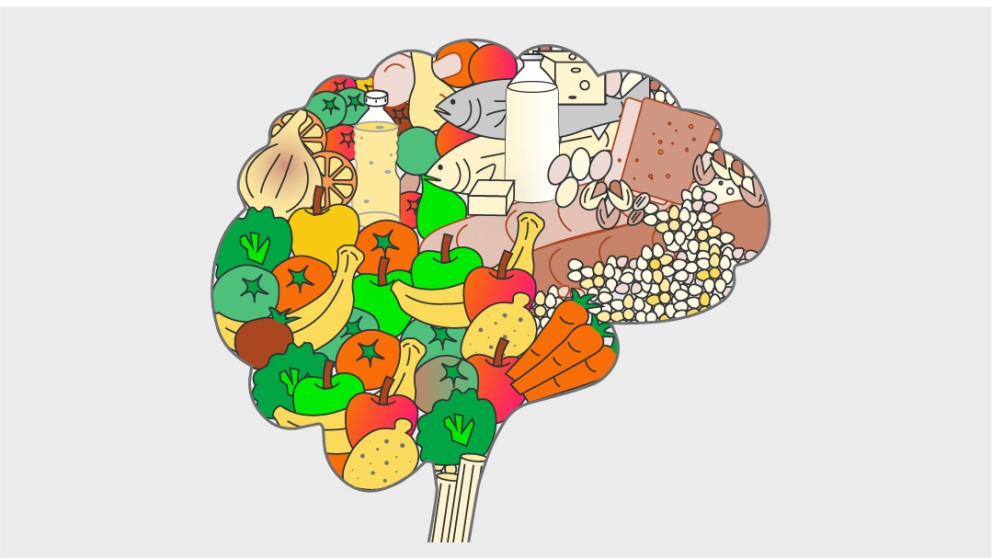
People with irritable bowel syndrome (IBS) experience chronic intermittent symptoms, such as abdominal pain, bloating and/or altered bowel movements. These symptoms may negatively impact their daily life, prohibiting participation in social activities or leading to work absenteeism, and they are associated with increased healthcare utilisation.More than 85% of people with IBS indicate that food is one of the triggers for their gastrointestinal symptoms. Many of them have also tried diets, eliminated certain foods, taken supplements or used over-the-counter remedies before consulting a doctor or dietitian.4 Somewhat contradictorily, according to surveys of patients’ expectations in primary care, patients with IBS expect their general practitioner to provide reassurance or drug treatments, but less than 10% value dietary intervention. This is despite the fact that almost 95% of general practitioners report that they start the treatment of IBS by giving nutritional advice.5 Dietary interventions are also given a prominent place in the guidelines as both first- and second-line treatments for IBS.


Mistakes in dietary management of IBS and how to avoid them

Mistakes in dietary management of IBS and how to avoid them

Jean W.M. Muris, Daniel Keszthelyi, Jenny Brouns, Zlatan Mujagic

Topics

Neurogastroenterology & Motility

Citation

Mujagic Z, Brouns J, Keszthelyi D and Muris JWM. Mistakes in dietary management of IBS and how to avoid them. UEG Education 2022; 22: 1–4.

Published

2022
UEG Standards and Guidelines
Consensus
Share via Email Share on Facebook Share on X Share on LinkedIn Share on Bluesky

Log in to access this content.

Free for all myUEG account holders. Your access level is set automatically based on your occupation. Medical professionals get full access to all content. If you are a non-medical user, you can only access UEG Week content from congresses you attended.

Log In Create a free account

Not sure what you can access? Learn more about account types.

ABSTRACT

Introduction

Chronic nausea and vomiting are symptoms of a wide range of gastrointestinal and non-gastrointestinal conditions. Diagnosis can be challenging and requires a systematic and well-structured approach. If the initial investigation for structural, toxic and metabolic disorders is negative, digestive motility and gut-brain interaction disorders should be assessed. United European Gastroenterology (UEG) and the European Society for Neurogastroenterology and Motility (ESNM) identified the need for an updated, evidence-based clinical guideline for the management of chronic nausea and vomiting.

Methods

A multidisciplinary team of experts in the field, including European specialists and national societies, participated in the development of the guideline. Relevant questions were addressed through a literature review and statements were developed and voted on according to a Delphi process.

Results

Ninety-eight statements were identified and voted following the Delphi process. Overall agreement was high, although the grade of scientific evidence was low in many areas. Disagreement was more evident for some pharmacological treatment options. A diagnostic algorithm was developed, focussing on the differentiating features between gastrointestinal motility and gut-brain interaction disorders with predominant nausea and vomiting.

Conclusion

These guidelines provide an evidence-based framework for the evaluation and treatment of patients with chronic nausea and vomiting.

European Guideline on Chronic Nausea and Vomiting—A UEG and ESNM Consensus for Clinical Management

European Guideline on Chronic Nausea and Vomiting—A UEG and ESNM Consensus for Clinical Management

Carolina Malagelada

Publisher

European Society of Neurogastroenterology and Motility logo
European Society of Neurogastroenterology and Motility

Guideline

Consensus

Topics

Neurogastroenterology & Motility Paediatrics Primary Care Stomach & H. Pylori

Citation

United European Gastroenterol J.

Published

2025
Login to access
UEG Mistakes In Articles
Share via Email Share on Facebook Share on X Share on LinkedIn Share on Bluesky

Log in to access this content.

Free for all myUEG account holders. Your access level is set automatically based on your occupation. Medical professionals get full access to all content. If you are a non-medical user, you can only access UEG Week content from congresses you attended.

Log In Create a free account

Not sure what you can access? Learn more about account types.

2024 update: Mark Fox
2016 version: Mark Fox

Dyspepsia refers to upper abdominal discomfort that can arise from the upper gastrointestinal tract, with symptoms including epigastric pain, bloating, early satiety, belching, nausea, and heartburn. It is commonly caused by functional dyspepsia, gastro-oesophageal reflux disease (GORD), peptic ulcer disease, or malignancy. Endoscopy is not always necessary for diagnosis, and clinical guidelines recommend considering clinical presentation without alarm symptoms. The management of dyspepsia is challenging due to its broad definition, lack of specific treatments, and psychosocial issues. Here, I discuss 10 common mistakes in diagnosis and treatment.

Mistakes in dyspepsia and how to avoid them

Mistakes in dyspepsia and how to avoid them

Mark Fox

Topics

Neurogastroenterology & Motility

Published

2024

The global reference point for the digestive health community

Platform Publisher

United European Gastroenterology

Wickenburggasse 1 1080 Vienna, Austria

Contact us

support@ueg.eu

ueg.eu

T: +43 1 997 1639

Legal

Terms & Conditions

Imprint

Privacy Policy

Explore

My Bookmarks

My recommendations

My fields of interest

© 2026 United European Gastroenterology

Change fields of interest

These fields are selected based on the interests in your myUEG profile.
Click the item to unselect it. You can select multiple items.