UEG Week Recordings UEG Week Posters Online courses Guidelines Mistakes in... Podcasts Webinars
new
Gut Guide online
Visit ueg.eu Create myUEG account Log In

Filters:

UEG Presentation
Share via Email Share on Facebook Share on X Share on LinkedIn Share on Bluesky
How to boost your biology? Every day strategies to improve therapies and combinations

Log in to access this content.

Free for all myUEG account holders. Your access level is set automatically based on your occupation. Medical professionals get full access to all content. If you are a non-medical user, you can only access UEG Week content from congresses you attended.

Log In Create a free account

Not sure what you can access? Learn more about account types.

How to boost your biology? Every day strategies to improve therapies and combinations

Britta Siegmund 1

1 Charité - Universitätsmedizin Berlin, Berlin, Germany
Event

UEG Week Berlin 2025

Topics

IBD Mechanisms & Personalised Medicine Surgery

Session

How to optimise success in IBD treatment

Citation

United European Gastroenterology Journal 2025; 13 (Supplement 8)

Published

2025
UEG Presentation
Share via Email Share on Facebook Share on X Share on LinkedIn Share on Bluesky
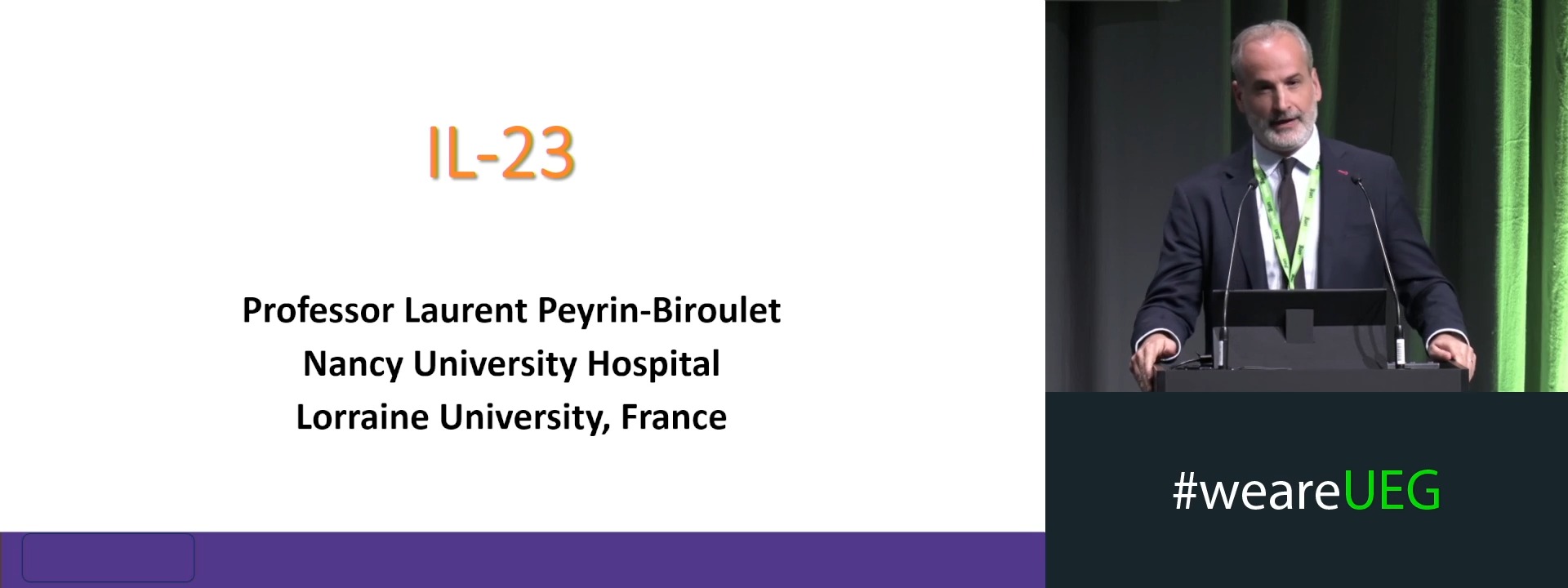
IL-23

Log in to access this content.

Free for all myUEG account holders. Your access level is set automatically based on your occupation. Medical professionals get full access to all content. If you are a non-medical user, you can only access UEG Week content from congresses you attended.

Log In Create a free account

Not sure what you can access? Learn more about account types.

IL-23

Laurent Peyrin-Biroulet 1

1 Inserm NGERE and University of Lorraine, Vandœuvre-lès-Nancy, France

Event

UEG Week Berlin 2025

Topics

IBD Mechanisms & Personalised Medicine

Session

What's new in advanced therapies for IBD in 2025?

Citation

United European Gastroenterology Journal 2025; 13 (Supplement 8)

Published

2025
UEG Presentation
Share via Email Share on Facebook Share on X Share on LinkedIn Share on Bluesky
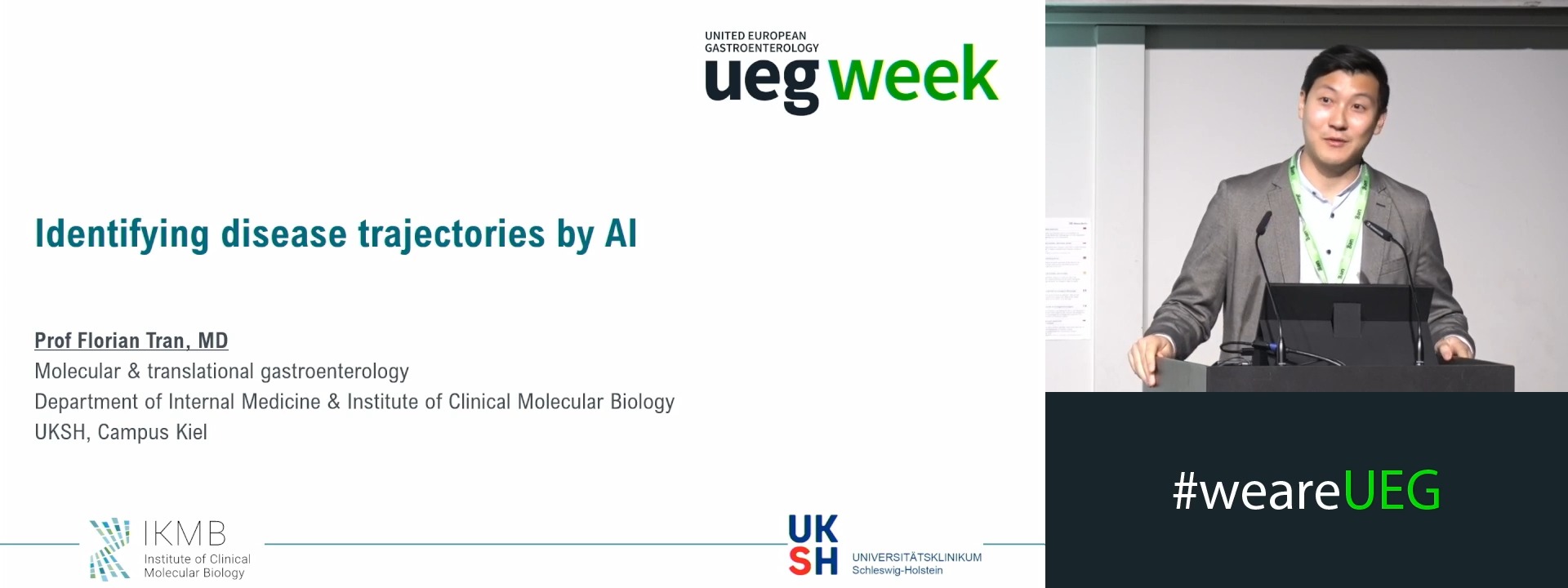
Identifying disease trajectories by AI

Log in to access this content.

Free for all myUEG account holders. Your access level is set automatically based on your occupation. Medical professionals get full access to all content. If you are a non-medical user, you can only access UEG Week content from congresses you attended.

Log In Create a free account

Not sure what you can access? Learn more about account types.

Identifying disease trajectories by AI

Florian Tran 1

1 University Medical Center Schleswig-holstein, Campus Kiel, Kiel, Germany

Event

UEG Week Berlin 2025

Topics

Histopathology IBD Nurses

Session

The art of making clinical research precise: AI – friend or foe?

Citation

United European Gastroenterology Journal 2025; 13 (Supplement 8)

Published

2025
UEG Presentation
Share via Email Share on Facebook Share on X Share on LinkedIn Share on Bluesky
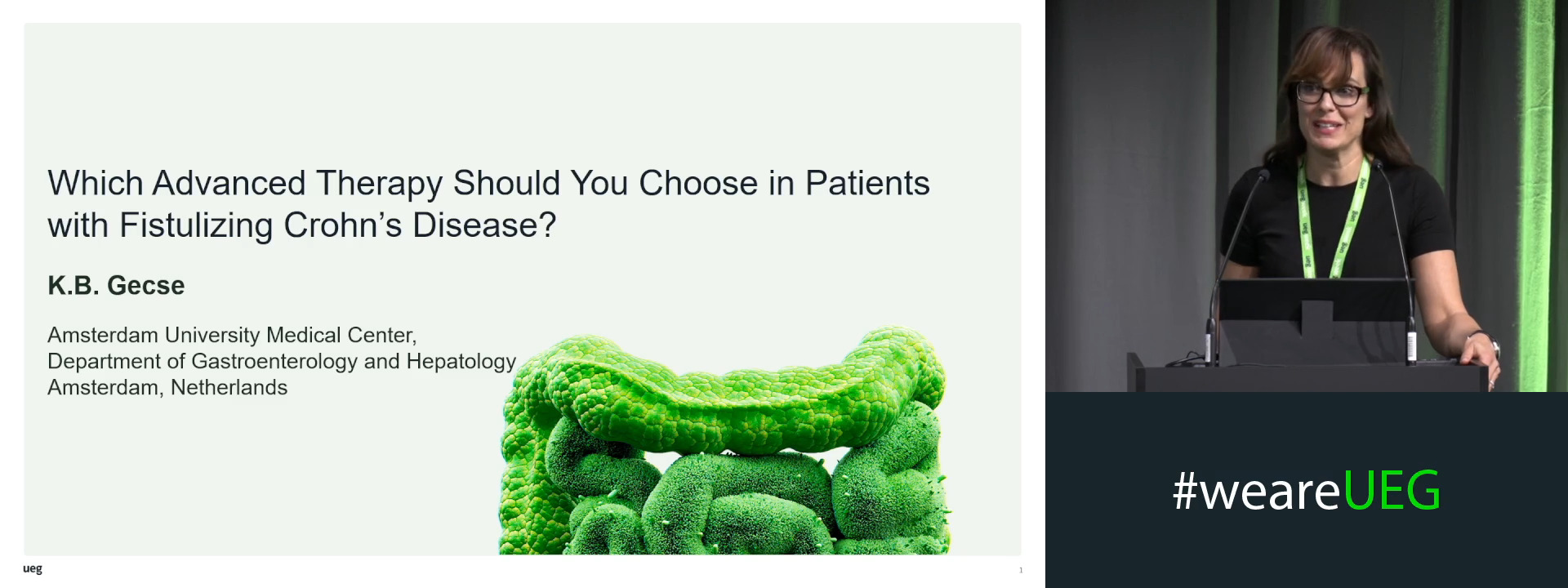
Which advanced therapy should you choose in patients with fistulising Crohn's disease?

Log in to access this content.

Free for all myUEG account holders. Your access level is set automatically based on your occupation. Medical professionals get full access to all content. If you are a non-medical user, you can only access UEG Week content from congresses you attended.

Log In Create a free account

Not sure what you can access? Learn more about account types.

Which advanced therapy should you choose in patients with fistulising Crohn's disease?

Krisztina Barbara Gecse 1

1 Amsterdam University Medical Center, Amsterdam, Netherlands
Event

UEG Week Berlin 2025

Topics

IBD Mechanisms & Personalised Medicine Surgery

Session

Focus on fistulising Crohn’s disease 

Citation

United European Gastroenterology Journal 2025; 13 (Supplement 8)

Published

2025
UEG Presentation
Share via Email Share on Facebook Share on X Share on LinkedIn Share on Bluesky
GLPs: What should gastroenterologists know about them?

Log in to access this content.

Free for all myUEG account holders. Your access level is set automatically based on your occupation. Medical professionals get full access to all content. If you are a non-medical user, you can only access UEG Week content from congresses you attended.

Log In Create a free account

Not sure what you can access? Learn more about account types.

GLPs: What should gastroenterologists know about them?

Prateek Sharma 1

1 University of Kansas School of Medicine Dept. of Gastroenterology, Leawood, United States of America

Event

UEG Week Berlin 2025

Topics

Endoscopy Mechanisms & Personalised Medicine Surgery

Session

Obesity in Pan America

Citation

United European Gastroenterology Journal 2025; 13 (Supplement 8)

Published

2025
UEG Presentation
Share via Email Share on Facebook Share on X Share on LinkedIn Share on Bluesky
MICROPLASTIC-INDUCED ALTERATIONS IN GUT MICROBIOME AND METABOLISM: INSIGHTS FROM AN EX VIVO BIOREACTOR MODEL​​​​​​​​

Log in to access this content.

Free for all myUEG account holders. Your access level is set automatically based on your occupation. Medical professionals get full access to all content. If you are a non-medical user, you can only access UEG Week content from congresses you attended.

Log In Create a free account

Not sure what you can access? Learn more about account types.

Introduction

Microplastic particles (MPs), defined as plastic fragments smaller than 5 mm, are pervasive pollutants that accumulate in ecosystems and the human food chain (1). Literature points at various health risks, including the induction of carcinogenesis (2). Emerging evidence from animal models (3) suggests that MPs may influence the gut microbiome, but the impact on the human gut microbiome remains poorly understood.

Aims & Methods

This study aimed to evaluate how various MP types influence gut microbial composition and metabolism using an ex vivo bioreactor model, with a focus on exploring potential carcinogenic effects arising from MP–microbiome interactions.
Stool samples from healthy donors were used to inoculate bioreactor cultures, which were maintained under anaerobic conditions for five days with daily nutrient feeding. These cultures were exposed to five common MP types—polystyrene (PS), polypropylene (PP), low-density polyethylene (LDPE), poly(methyl methacrylate) (PMMA), and polyethylene terephthalate (PET)—at concentrations mimicking both estimated human exposure (4) and higher doses to assess dose-dependence. Cell viability and total bacterial counts, as well as culture pH, were measured throughout the experiment. To further explore potential microbiome and metabolic alterations, 16S rRNA gene sequencing and targeted metabolomics were performed.

Results

MP exposure did not lead to significant changes in total or viable bacterial cell counts. However, MP-treated cultures exhibited a consistent and significant decrease in pH compared to controls, suggesting changes in microbial metabolic activity. Microbiome sequencing revealed plastic-type-dependent alterations in microbial composition, with certain bacterial taxa increasing or decreasing in abundance depending on the MP type. These shifts occurred across multiple genera within diverse families, including Lachnospiraceae, Oscillospiraceae, Enterobacteriaceae, and Ruminococcaceae, with the majority of changes occurring withing the phylum Bacillota. These compositional changes were accompanied by shifts in the metabolomic profiles, some of which correlated with the observed pH changes. Several plastic types induced changes in valeric acid levels, while individual MP types were associated with alterations in distinct metabolites such as uracil, lactic acid, and acetic acid.

Conclusion

This study demonstrates that MPs can affect gut microbial activity and metabolism without significantly altering overall bacterial abundance in the short term. The variation in microbiome response across plastic types highlights the complexity of MP-microbiome interactions. Changes in faecal pH are known to be associated with various gastrointestinal diseases (5). Interestingly, some of the MP-induced changes in microbial composition resembled patterns linked to diseases such as depression and colorectal cancer. In contrast, other changes showed patterns that differed from those typically associated with conditions like Parkinson’s disease and irritable bowel syndrome, highlighting the complexity of these associations and the dependency on the context. The bioreactor model provided a controlled environment for identifying direct MP-microbiome interactions; however, in humans, additional factors like diet, immune response, and individual microbiome variations play a role in determining long-term effects. Exposure duration may also play a critical role in shaping the extent and nature of microbiome alterations (6), underscoring the need for further research into the effects of chronic MP exposure and associated health risks.

References

(1) Mamun, A. A., Prasetya, T. A. E., Dewi, I. R., & Ahmad, M. (2023). Microplastics in human food chains: Food becoming a threat to health safety. The Science of the total environment, 858(Pt 1), 159834. https://doi.org/10.1016/j.scitotenv.2022.159834
(2) Kumar, R., Manna, C., Padha, S., Verma, A., Sharma, P., Dhar, A., Ghosh, A., & Bhattacharya, P. (2022). Micro(nano)plastics pollution and human health: How plastics can induce carcinogenesis to humans?. Chemosphere, 298, 134267. https://doi.org/10.1016/j.chemosphere.2022.134267
(3) Hirt, N., & Body-Malapel, M. (2020). Immunotoxicity and intestinal effects of nano- and microplastics: a review of the literature. Particle and fibre toxicology, 17(1), 57. https://doi.org/10.1186/s12989-020-00387-7
(4) Senathirajah, K., Attwood, S., Bhagwat, G., Carbery, M., Wilson, S., & Palanisami, T. (2021). Estimation of the mass of microplastics ingested - A pivotal first step towards human health risk assessment. Journal of hazardous materials, 404(Pt B), 124004. https://doi.org/10.1016/j.jhazmat.2020.124004
(5) Yamamura, R., Inoue, K. Y., Nishino, K., & Yamasaki, S. (2023). Intestinal and fecal pH in human health. Frontiers in Microbiomes, 2, 1192316.
(6) Yin, L., Yang, M., Teng, A., Ni, C., Wang, P., & Tang, S. (2025). Unraveling Microplastic Effects on Gut Microbiota across Various Animals Using Machine Learning. ACS nano, 19(1), 369–380. https://doi.org/10.1021/acsnano.4c07885

MICROPLASTIC-INDUCED ALTERATIONS IN GUT MICROBIOME AND METABOLISM: INSIGHTS FROM AN EX VIVO BIOREACTOR MODEL​​​​​​​​

Christian Pacher-Deutsch 1, Kristina Žukauskaitė 1, Cigdem Akar 2, Maximilian Nepel 2, Lukas Kogler 3, Hansjörg Habisch 2, Serena Ducoli 4, Stefania Federici 4, Tobias Madl 5, Verena Pichler 6, Angela Horvath 1, Vanessa Stadlbauer 7

1 Center for Biomarker Research in Medicine (CBmed), Graz, Austria|||Medical University of Graz, Graz, Austria

2 Medical University of Graz, Graz, Austria

3 Center for Biomarker Research in Medicine (CBmed), Graz, Austria|||University of Vienna, Vienna, Austria|||Medical University of Vienna, Vienna, Austria

4 University of Brescia, Brescia, Italy

5 Medical University of Graz, Graz, Austria|||BioTechMed-Graz, Graz, Austria

6 Center for Biomarker Research in Medicine (CBmed), Graz, Austria|||University of Vienna, Vienna, Austria

7 Center for Biomarker Research in Medicine (CBmed), Graz, Austria|||Medical University of Graz, Graz, Austria|||BioTechMed-Graz, Graz, Austria

Event

UEG Week Berlin 2025

Topics

Gut Microbiota Colorectal

Submission format

Abstract

Session

The gut ecosystem: From pathogenesis to treatment

Citation

United European Gastroenterology Journal 2025; 13 (Supplement 8)

Published

2025
UEG Presentation
Share via Email Share on Facebook Share on X Share on LinkedIn Share on Bluesky
Artifical intelligence in pancreatic imaging

Log in to access this content.

Free for all myUEG account holders. Your access level is set automatically based on your occupation. Medical professionals get full access to all content. If you are a non-medical user, you can only access UEG Week content from congresses you attended.

Log In Create a free account

Not sure what you can access? Learn more about account types.

Artifical intelligence in pancreatic imaging

Adrian Săftoiu 1

1 University of Medicine and Pharmacy Craiova, Craiova, Romania

Event

UEG Week Berlin 2025

Topics

Nurses Pancreas Radiology & Imaging

Session

Hot topics in European gastroenterology

Citation

United European Gastroenterology Journal 2025; 13 (Supplement 8)

Published

2025

The global reference point for the digestive health community

Platform Publisher

United European Gastroenterology

Wickenburggasse 1 1080 Vienna, Austria

Contact us

support@ueg.eu

ueg.eu

T: +43 1 997 1639

Legal

Terms & Conditions

Imprint

Privacy Policy

Explore

My Bookmarks

My recommendations

My fields of interest

© 2026 United European Gastroenterology

Change fields of interest

These fields are selected based on the interests in your myUEG profile.
Click the item to unselect it. You can select multiple items.