UEG's educational platform for gastroenterology education bringing recordings, courses, guidelines, and more together in one place.
Most popular content
Rate for better recommendations!
Your feedback helps us show you more of what you like and less of what you dislike!
Log in to access this content.
Free for all myUEG account holders. Your access level is set automatically based on your occupation. Medical professionals get full access to all content. If you are a non-medical user, you can only access UEG Week content from congresses you attended.
Not sure what you can access? Learn more about account types.
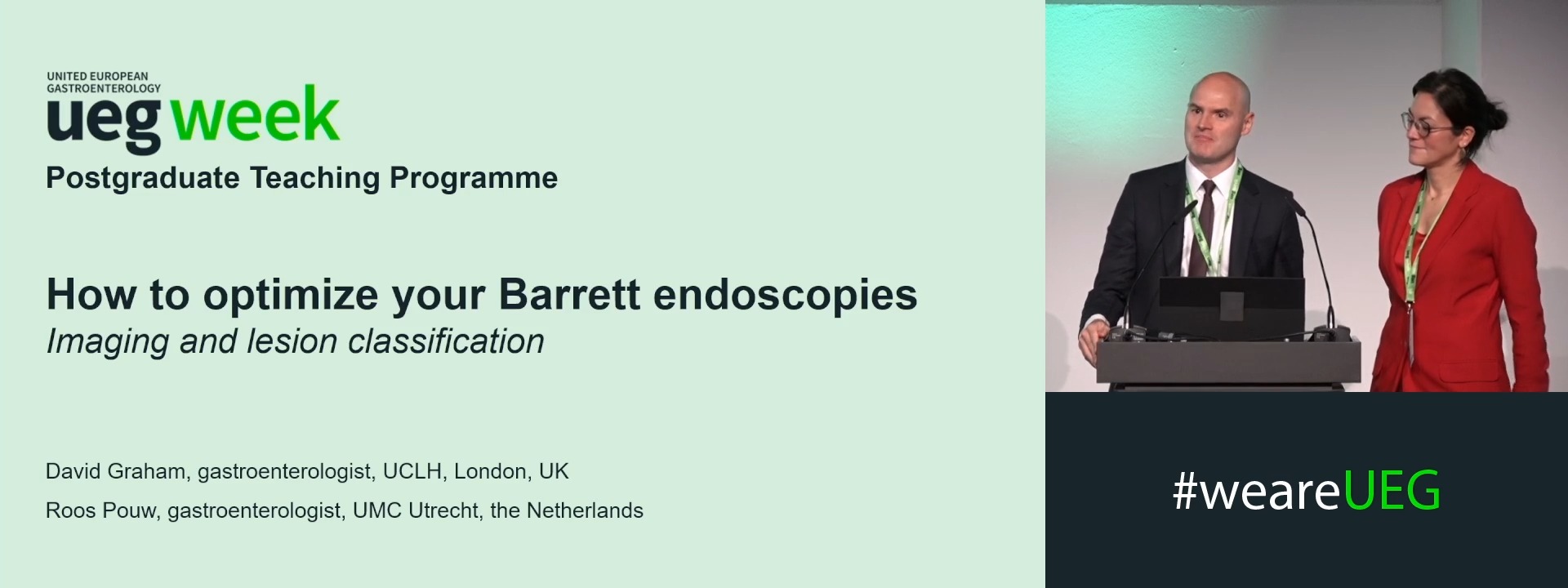
How to optimise your Barrett's endoscopies and report your imaging techniques and lesion classification
1 University College London Hospital, London, United Kingdom
2 Amsterdam UMC, Amsterdam, Netherlands
Event
Session
Citation
Published
Log in to access this content.
Free for all myUEG account holders. Your access level is set automatically based on your occupation. Medical professionals get full access to all content. If you are a non-medical user, you can only access UEG Week content from congresses you attended.
Not sure what you can access? Learn more about account types.
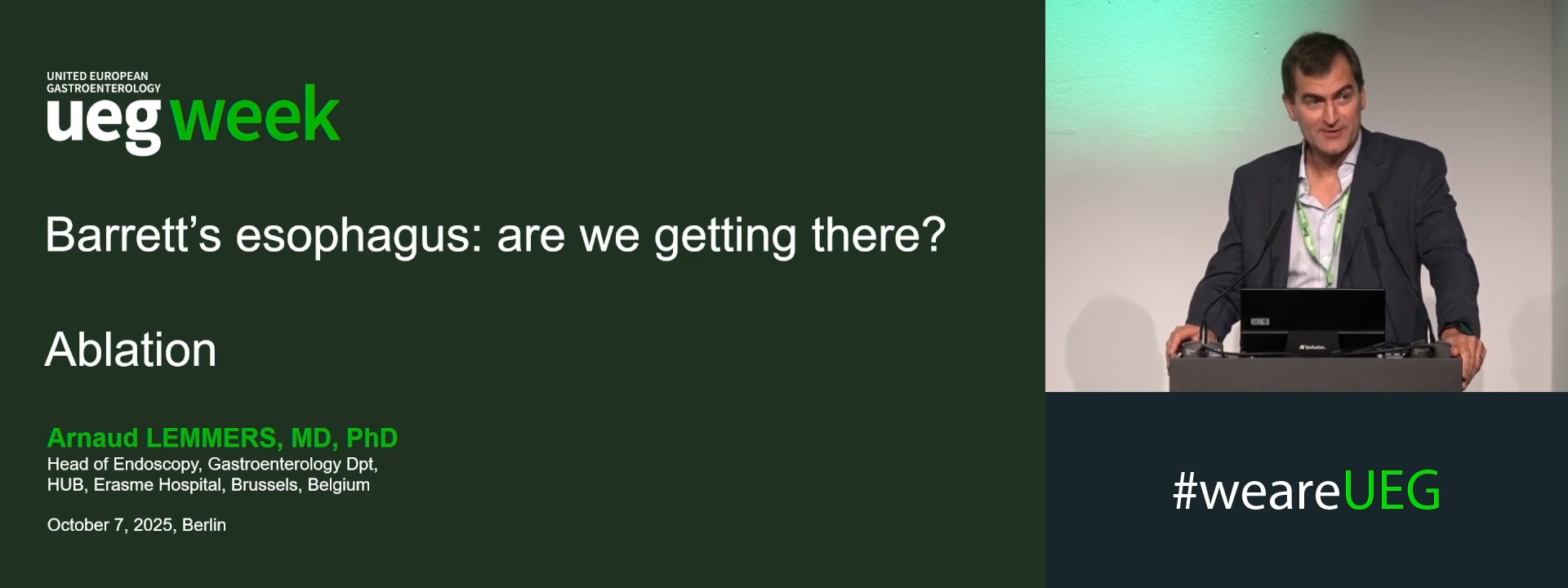
Ablation
1 Hôpital Univ. Erasme (Gastro), Bruxelles, Belgium
Event
Topics
Citation
Published
Log in to access this content.
Free for all myUEG account holders. Your access level is set automatically based on your occupation. Medical professionals get full access to all content. If you are a non-medical user, you can only access UEG Week content from congresses you attended.
Not sure what you can access? Learn more about account types.
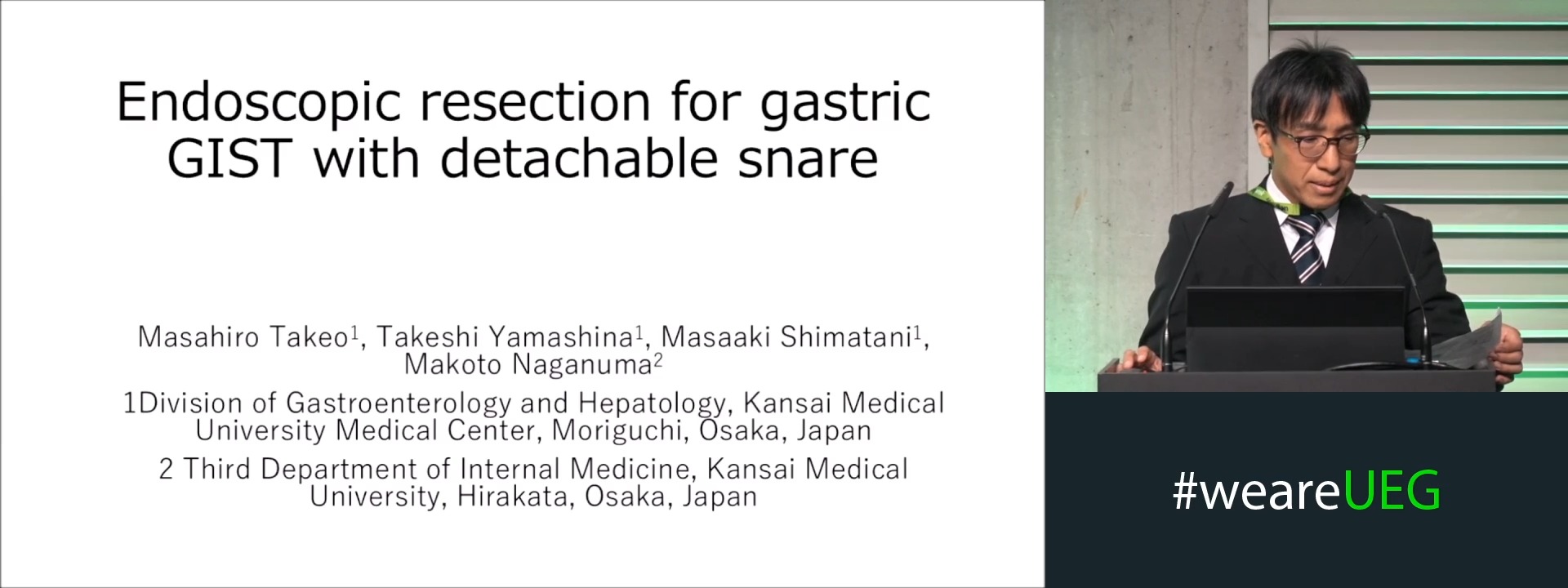
ENDOSCOPIC RESECTION FOR GASTRIC GASTROINTESTINAL STROMAL TUMORS WITH DETACHABLE SNARE
1 Kansai Medical University Medical Center, Moriguchi, Japan
2 Kansai Medical University 3rd Dept. of Internal Medicine, Hirakata, Japan
Event
Submission format
Citation
Published
Log in to access this content.
Free for all myUEG account holders. Your access level is set automatically based on your occupation. Medical professionals get full access to all content. If you are a non-medical user, you can only access UEG Week content from congresses you attended.
Not sure what you can access? Learn more about account types.
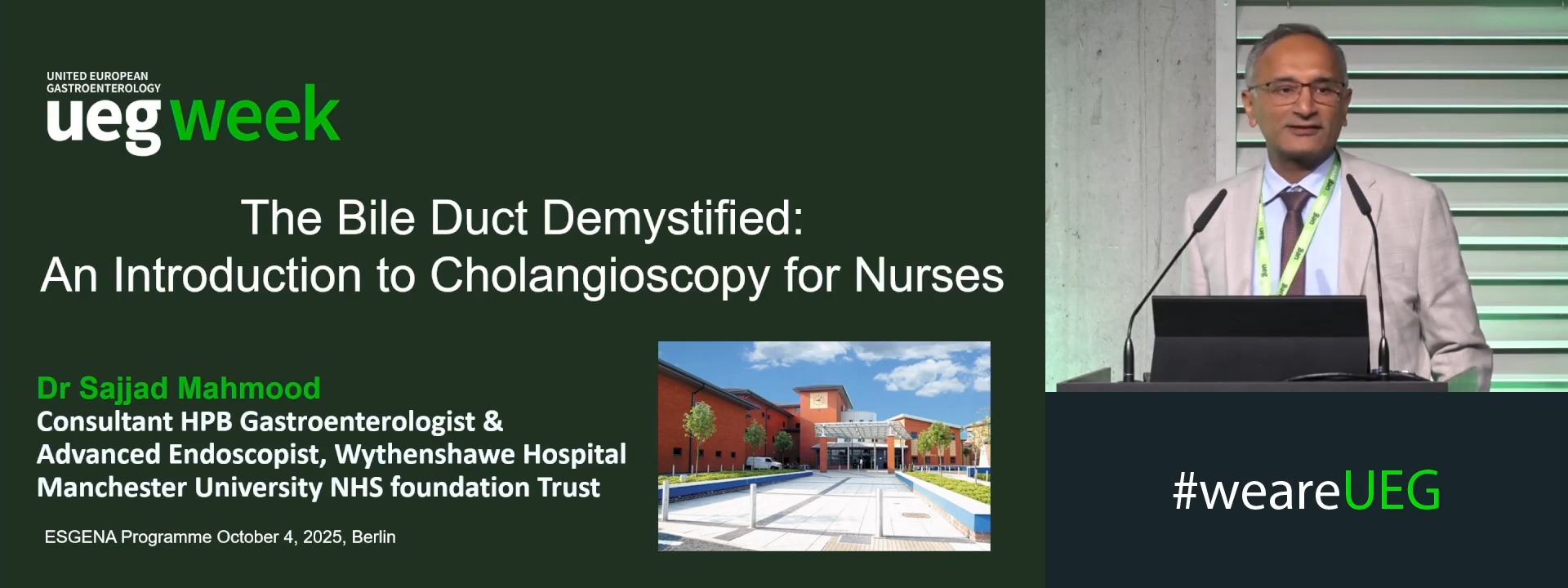
The bile duct demysitified: An introduction to cholangioscopy for nurses
1 royal liverpool university hospital, Manchester, United Kingdom
Event
Topics
Citation
Published
Log in to access this content.
Free for all myUEG account holders. Your access level is set automatically based on your occupation. Medical professionals get full access to all content. If you are a non-medical user, you can only access UEG Week content from congresses you attended.
Not sure what you can access? Learn more about account types.
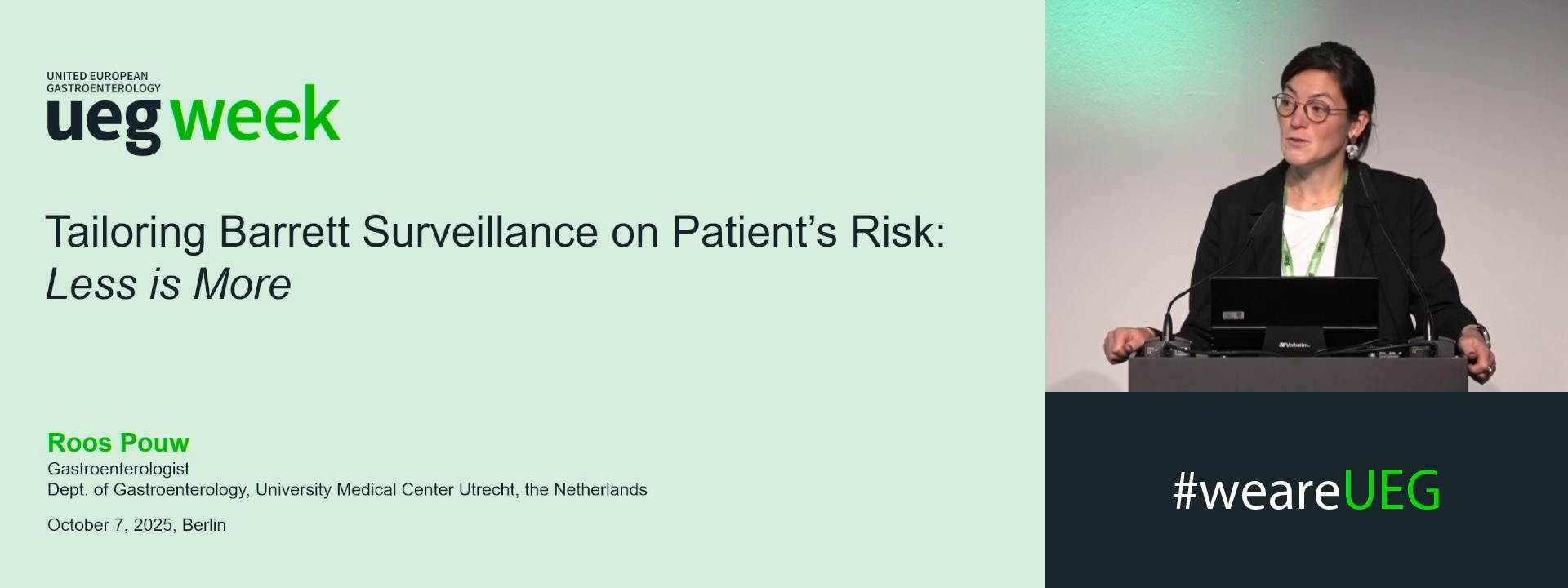
Tailoring surveillance on patient's risk: Less is more
1 Amsterdam UMC, Amsterdam, Netherlands
Event
Topics
Citation
Published
Log in to access this content.
Free for all myUEG account holders. Your access level is set automatically based on your occupation. Medical professionals get full access to all content. If you are a non-medical user, you can only access UEG Week content from congresses you attended.
Not sure what you can access? Learn more about account types.
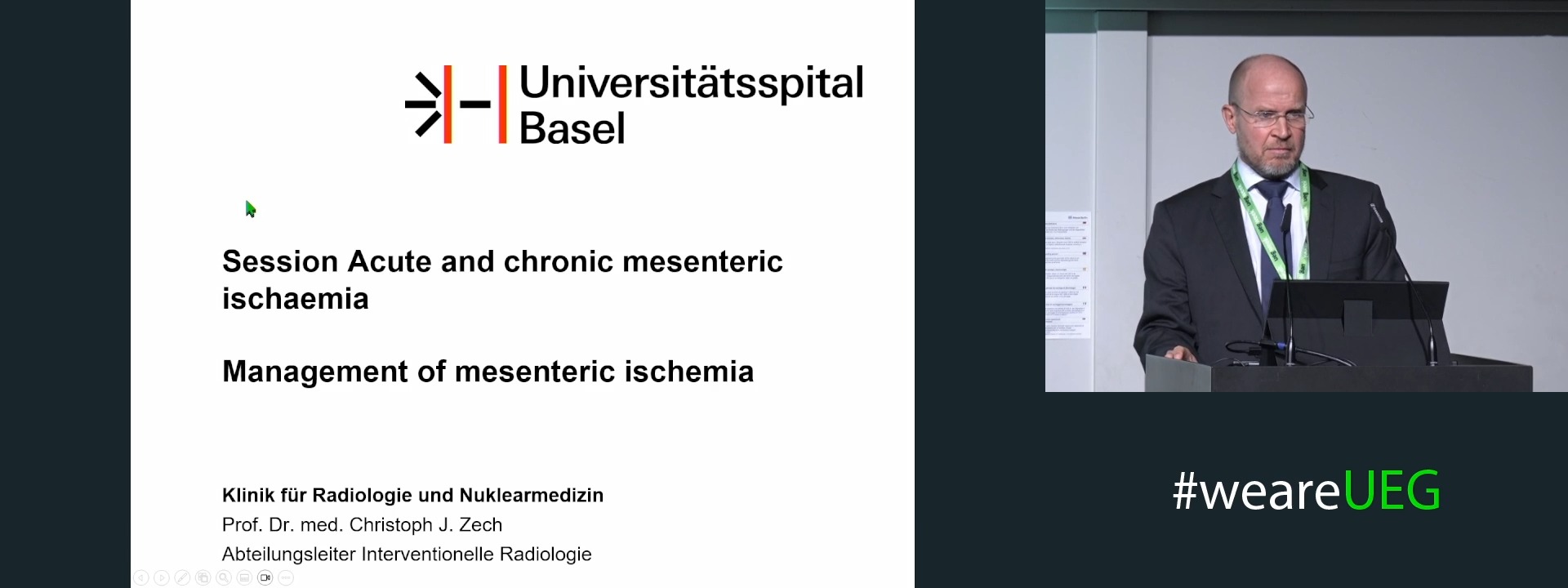
Management of mesenteric ischemia
1 University Hospital Basel, Basel, Switzerland
Event
Citation
Published
Log in to access this content.
Free for all myUEG account holders. Your access level is set automatically based on your occupation. Medical professionals get full access to all content. If you are a non-medical user, you can only access UEG Week content from congresses you attended.
Not sure what you can access? Learn more about account types.
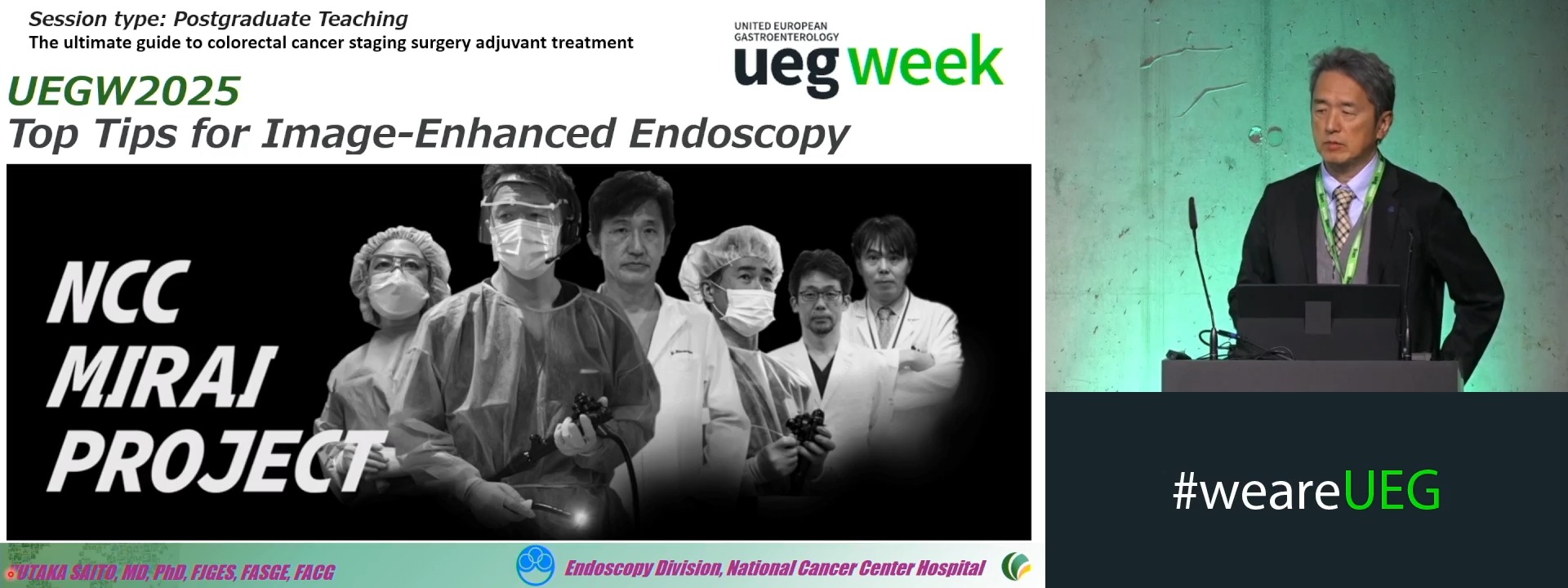
How to diagnose early CRC using JNET & Pit pattern and how to choose EMR/ESD/Surgery
1 National Cancer Center Hospital Endoscopy Division, Tokyo, Japan
Event
Topics