UEG's content platform for gastroenterology education bringing recordings, courses, guidelines, and more together in one place.
Trending on Gutflix
Rate for better recommendations!
Your feedback helps us show you more of what you like and less of what you dislike!
Log in to continue.
This content is part of Gutflix. Log in with your myUEG account, or create one free, to watch it.
Not sure what you can access? Learn more about account types.
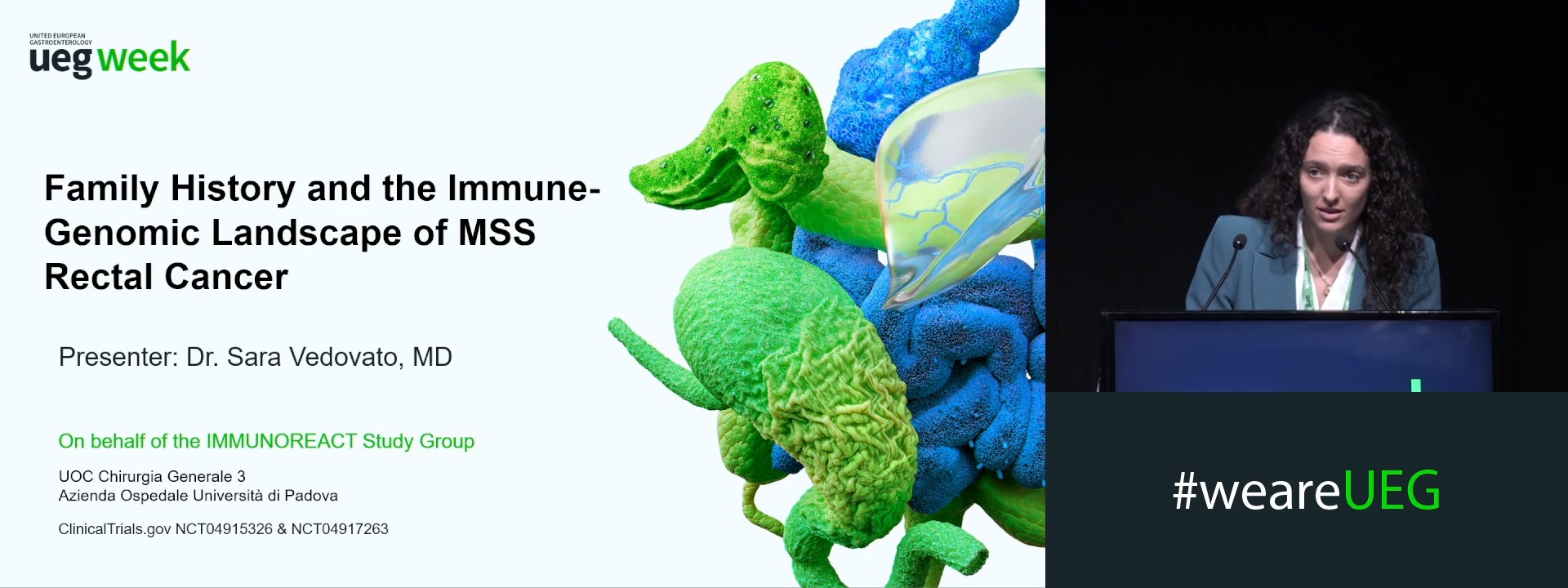
FAMILIAL COLORECTAL CANCER HISTORY IS ASSOCIATED WITH A DISTINCT IMMUNE–GENOMIC PHENOTYPE IN MICROSATELLITE-STABLE RECTAL CANCER: A PROSPECTIVE MULTICENTRE COHORT STUDY
Silvia Negro 1, Melania Scarpa 2, Francesca Galuppini 3, Sara Vedovato 4, Roberta Salmaso 3, Andromachi Kotsafti 2, Valerio Pellegrini 5, Luca Maria Saadeh 4, Antonio Rosato 2, Gaya Spolverato 1, Imerio Angriman 1, Cesare Ruffolo 4, Quoc Riccardo Bao 4, Anna Matteazzi 4, Lorenzo Dell'Atti 6, Dario Gregori 3, Ignazio CASTAGLIUOLO 3, Matteo Fassan 7, Angelo Paolo Dei Tos 3, Marco Scarpa 1
Affiliations
1 DISCOG, University of Padova, Padova, Italy
2 Veneto Institute of Oncology IOV-IRCCS, Padova, Italy
3 University of Padova, Padova, Italy
4 Azienda Ospedale Università di Padova, Padova, Italy
5 AULSS 2 Marca Trevigiana, Treviso, Italy
6 Azienda Unità Sanitaria Locale - IRCCS Reggio Emilia, Reggio Emilia, Italy
7 University of Padova, Treviso, Italy
Log in to continue.
This content is part of Gutflix. Log in with your myUEG account, or create one free, to watch it.
Not sure what you can access? Learn more about account types.
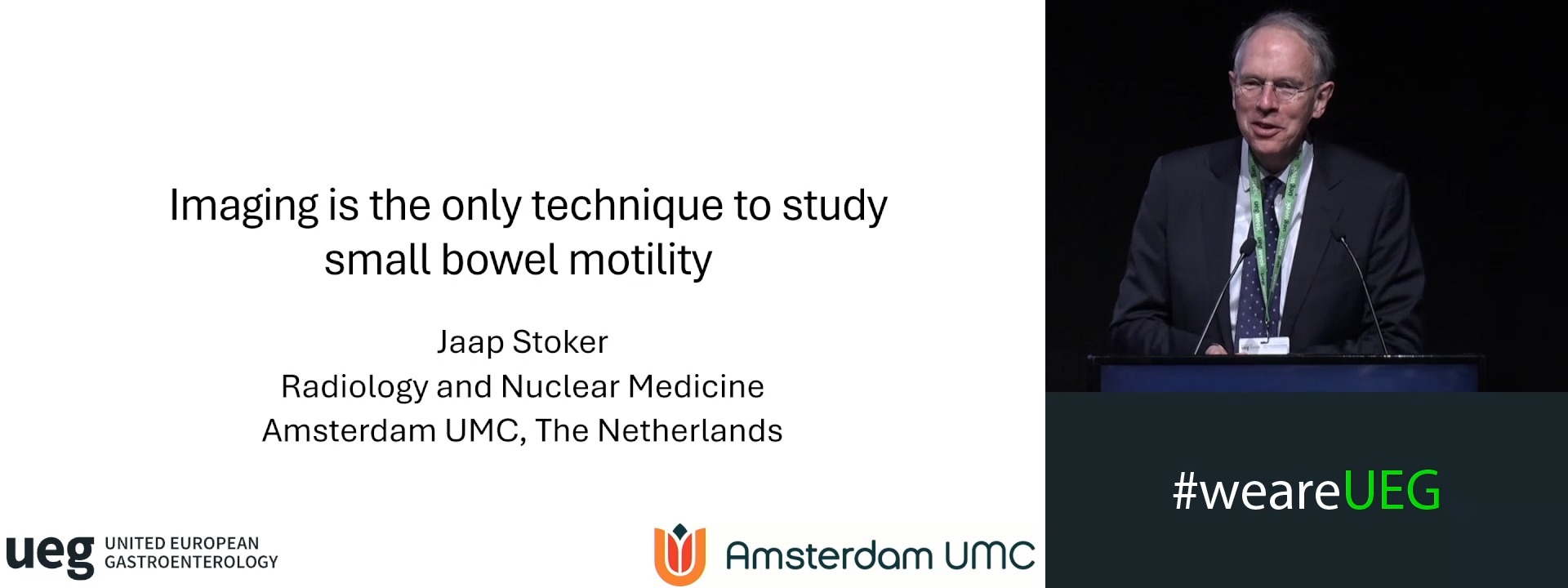
Imaging is the only technique to study small bowel motility
Affiliations
1 Amsterdam UMC, Amsterdam, Netherlands
Log in to continue.
This content is part of Gutflix. Log in with your myUEG account, or create one free, to watch it.
Not sure what you can access? Learn more about account types.
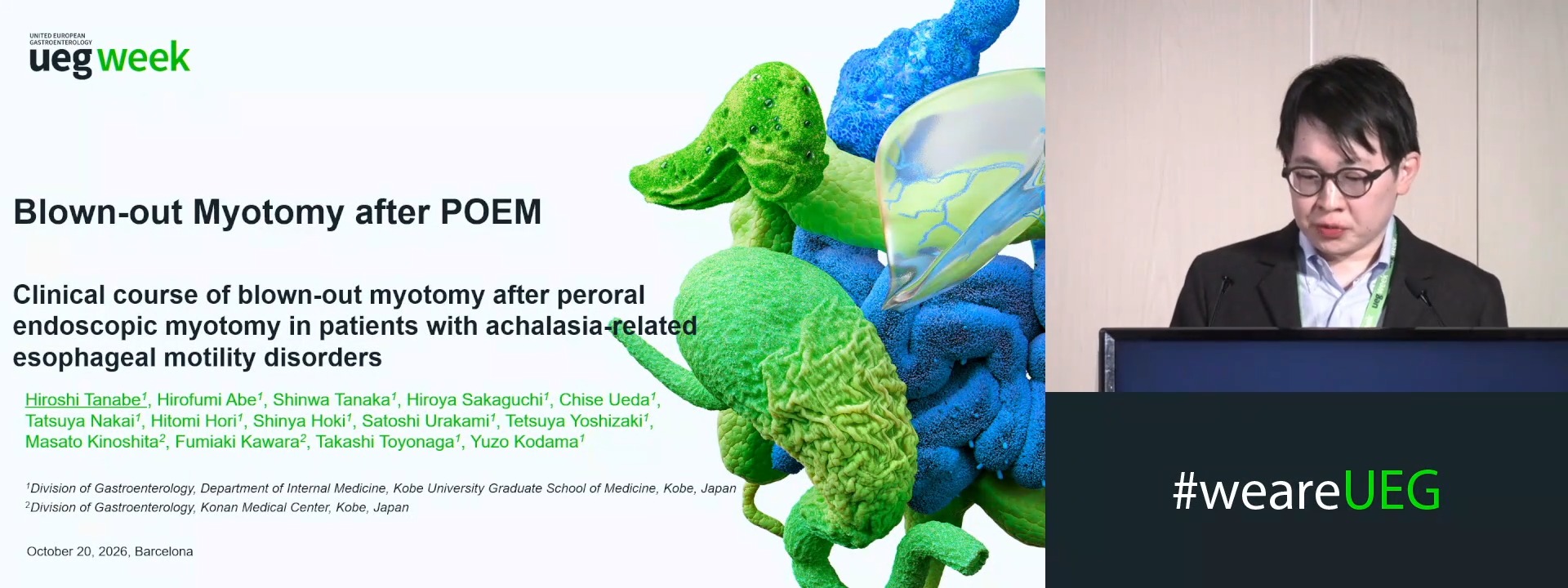
CLINICAL COURSE OF BLOWN-OUT MYOTOMY AFTER PERORAL ENDOSCOPIC MYOTOMY IN PATIENTS WITH ESOPHAGEAL MOTILITY DISORDERS
Hiroshi Tanabe 1, Hirofumi Abe 1, Shinwa Tanaka 1, Hiroya Sakaguchi 1, Chise Ueda 1, Tatsuya Nakai 1, Hitomi Hori 1, Shinya Hoki 1, Satoshi Urakami 1, Tetsuya Yoshizaki 1, Masato Kinoshita 1, Fumiaki Kawara 2, Takashi Toyonaga 3, Yuzo Kodama 1
Affiliations
1 Kobe University Graduate School of Medicine, Kobe-City, Japan
2 Konan Medical Center, Kobe-City, Japan
3 Kobe University Hospital, Kobe, Japan
Log in to continue.
This content is part of Gutflix. Log in with your myUEG account, or create one free, to watch it.
Not sure what you can access? Learn more about account types.
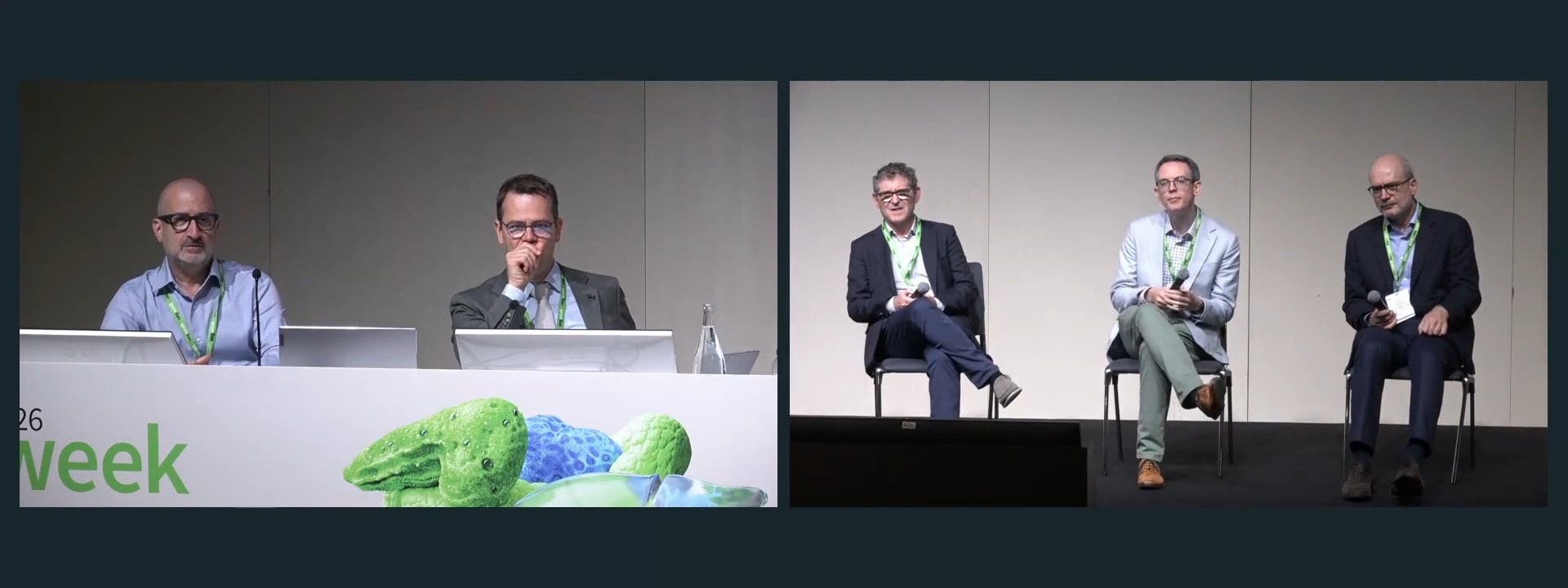
Panel discussion: Cross-cutting: Diagnostic - invasive or not invasive
Log in to continue.
This content is part of Gutflix. Log in with your myUEG account, or create one free, to watch it.
Not sure what you can access? Learn more about account types.
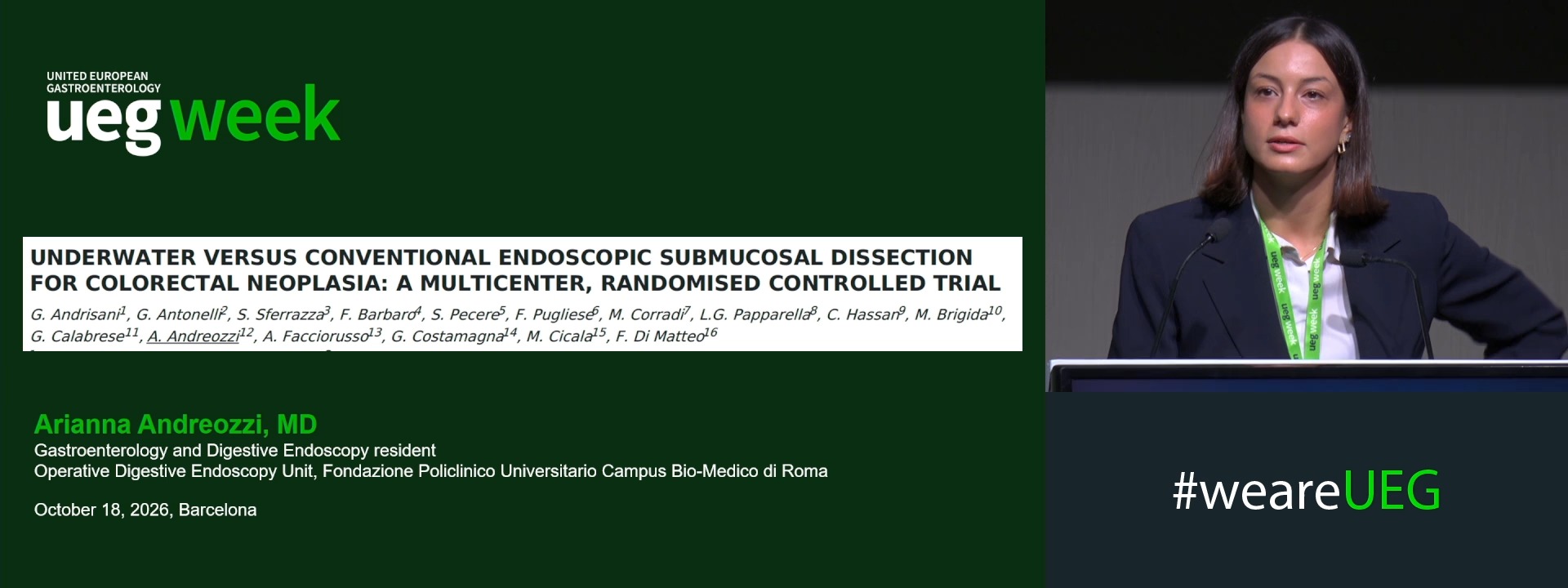
UNDERWATER VERSUS CONVENTIONAL ENDOSCOPIC SUBMUCOSAL DISSECTION FOR COLORECTAL NEOPLASIA: A MULTICENTER, RANDOMISED CONTROLLED TRIAL
Gianluca Andrisani 1, Giulio Antonelli 2, Sandro Sferrazza 3, Federico Barbaro 4, Silvia Pecere 4, Francesco Pugliese 5, Mattia Corradi 6, Luigi Giovanni Papparella 7, Cesare Hassan 8, Mattia Brigida 9, Giulio Calabrese 3, Arianna Andreozzi 10, Antonio Facciorusso 11, Guido Costamagna 12, Michele Cicala 13, Francesco Di Matteo 14
Affiliations
1 Campus Biomedico Roma, Rome, Italy
2 Gastroenterology and Digestive Endoscopy Unit, Ospedale dei Castelli (N.O.C.), Roma, Italy
3 Gastroenterology and Endoscopy Unit, ARNAS Civico Hospital, Palermo, Italy
4 Digestive Endoscopy Unit, Fondazione Policlinico Universitario Agostino Gemelli IRCCS, Università Cattolica del Sacro Cuore di Roma, Center for Endoscopic Research Therapeutics and Training, Roma, Italy
5 ASST NIGUARDA, Milano, Italy
6 Digestive Endoscopy Unit, ASST Niguarda, Milan, Italy
7 Digestive Endoscopy, Ospedale Isola Tiberina - Gemelli Isola, Rome, Italy
8 Endoscopy Unit, Humanitas Clinical and Research Center IRCCS, Pieve Emanuele MI, Italy
9 Department of Experimental Medicine, Università del Salento, Palermo, Italy
10 Digestive Endoscopy Unit, University Campus Bio-Medico, Rome, Italy
11 Department of Experimental Medicine, Università del Salento, Lecce, Italy
12 Digestive Endoscopy, Ospedale Isola Tiberina - Gemelli Isola, Roma, Italy
13 Università Campus Bio Medico, Roma, Italy
14 Digestive Endoscopy Unit, University Campus Bio-Medico, Roma, Italy