UEG's educational platform for gastroenterology education bringing recordings, courses, guidelines, and more together in one place.
Most popular content
Rate for better recommendations!
Your feedback helps us show you more of what you like and less of what you dislike!
Log in to access this content.
Free for all myUEG account holders. Your access level is set automatically based on your occupation. Medical professionals get full access to all content. If you are a non-medical user, you can only access UEG Week content from congresses you attended.
Not sure what you can access? Learn more about account types.

APRI , FIB -4 AN ALTERNATIVE TO TRANSIENT ELASTOGRAPHY IN OBESE PATIENTS WITH NAFLD
amira abdelmoula 1, Lassoued Khouloud 1, Berriche Olfa 2, raja Tlili 1, Dalhoum Meriam 2, Belhadj Ammar Leila 1, soumaya nsibi 1, Jamoussi Henda 2, Lamia Kallel 1
1 Mahmoud El Matri Hospital, Tunis, Tunisia
2 Institute of Nutrition of Tunis, Tunis, Tunisia
Conference
Topics
Submission format
Session
Citation
Published
Log in to access this content.
Free for all myUEG account holders. Your access level is set automatically based on your occupation. Medical professionals get full access to all content. If you are a non-medical user, you can only access UEG Week content from congresses you attended.
Not sure what you can access? Learn more about account types.
DIAGNOSTIC ACCURACY OF APRI AND FIB-4 IN STAGING LIVER FIBROSIS AND CIRRHOSIS
Raluca Avram 1, Laura Huiban 1, Irina Girleanu 1, Cristina Maria Muzica 1, Ioana Roxana Damian 1, Mihaela Cornelia Muset 1, Horia-Octav Minea 1, Adrian Rotaru 1, Remus Stafie 1, Stratina Ermina 1, Robert Nastasa 1, Ana Maria Singeap 1, Carol Stanciu 1, Anca-Victorita Trifan 1
1 "Grigore T. Popa" University of Medicine and Pharmacy Iași, Iasi, Romania|||Institute of Gastroenterology and Hepatology, Iasi, Romania
Conference
Topics
Submission format
Session
Citation
Published
Log in to access this content.
Free for all myUEG account holders. Your access level is set automatically based on your occupation. Medical professionals get full access to all content. If you are a non-medical user, you can only access UEG Week content from congresses you attended.
Not sure what you can access? Learn more about account types.
OPERATOR VARIABILITY IN TRANSIENT ELASTOGRAPHY ANALYSIS OF OVERWEIGHT/OBESE PATIENTS WITH NONALCOHOLIC FATTY LIVER DISEASE: A REAL CHALLENGE
Sahar Hamza 1, raja Tlili 1, Olfa Berriche 2, Khouloud Lassoued 1, Meriam Dalhoum 2, Leila Belhajammar 1, soumaya nsibi 1, Henda Jamoussi 2, Lamia Kallel 1
1 Mahmoud El Matri Hospital, Ariana, Tunisia
2 Institute of Nutrition of Tunis, Tunis, Tunisia
Conference
Topics
Submission format
Session
Citation
Published
Log in to access this content.
Free for all myUEG account holders. Your access level is set automatically based on your occupation. Medical professionals get full access to all content. If you are a non-medical user, you can only access UEG Week content from congresses you attended.
Not sure what you can access? Learn more about account types.
WHEN THE LIVER TALKS TO THE HEART: SUBCLINICAL CARDIAC DYSFUNCTION IN NAFLD PATIENTS ASSESSED USING SPECKLE TRACKING ECHOCARDIOGRAPHY – A SYSTEMATIC REVIEW AND META-ANALYSIS
Micha Gruber 1, Rania Abdulredha 1, Malaz Almasri 1, Daniel-Corneliu Leucuta 2, Popa Stefan-Lucian 2, Dan Lucian Dumitrascu 2, Abdulrahman Ismaiel 2
1 "Iuliu Hatieganu" University of Medicine and Pharmacy, Cluj‐Napoca, Romania
2 "Iuliu Hatieganu" University of Medicine and Pharmacy, Cluj-Napoca, Romania
Conference
Topics
Submission format
Citation
Published
Log in to access this content.
Free for all myUEG account holders. Your access level is set automatically based on your occupation. Medical professionals get full access to all content. If you are a non-medical user, you can only access UEG Week content from congresses you attended.
Not sure what you can access? Learn more about account types.
ELIFT AND BARD SCORE COMPARED TO TRANSIENT ELASTOGRAPHY FOR THE ASSESSMENT OF HEPATIC FIBROSIS IN OBESE PATIENTS WITH NON-ALCOHOLIC FATTY LIVER DISEASE
Sahar Hamza 1, raja Tlili 1, Olfa Berriche 2, Khouloud Lassoued 2, Meriam Dalhoum 2, Leila Bel Haj Ammar 1, soumaya nsibi 1, Henda Jamoussi 2, Lamia Kallel 1
1 Mahmoud El Matri Hospital, Ariana, Tunisia
2 Institute of Nutrition of Tunis, Tunis, Tunisia
Conference
Topics
Submission format
Session
Citation
Published
Log in to access this content.
Free for all myUEG account holders. Your access level is set automatically based on your occupation. Medical professionals get full access to all content. If you are a non-medical user, you can only access UEG Week content from congresses you attended.
Not sure what you can access? Learn more about account types.
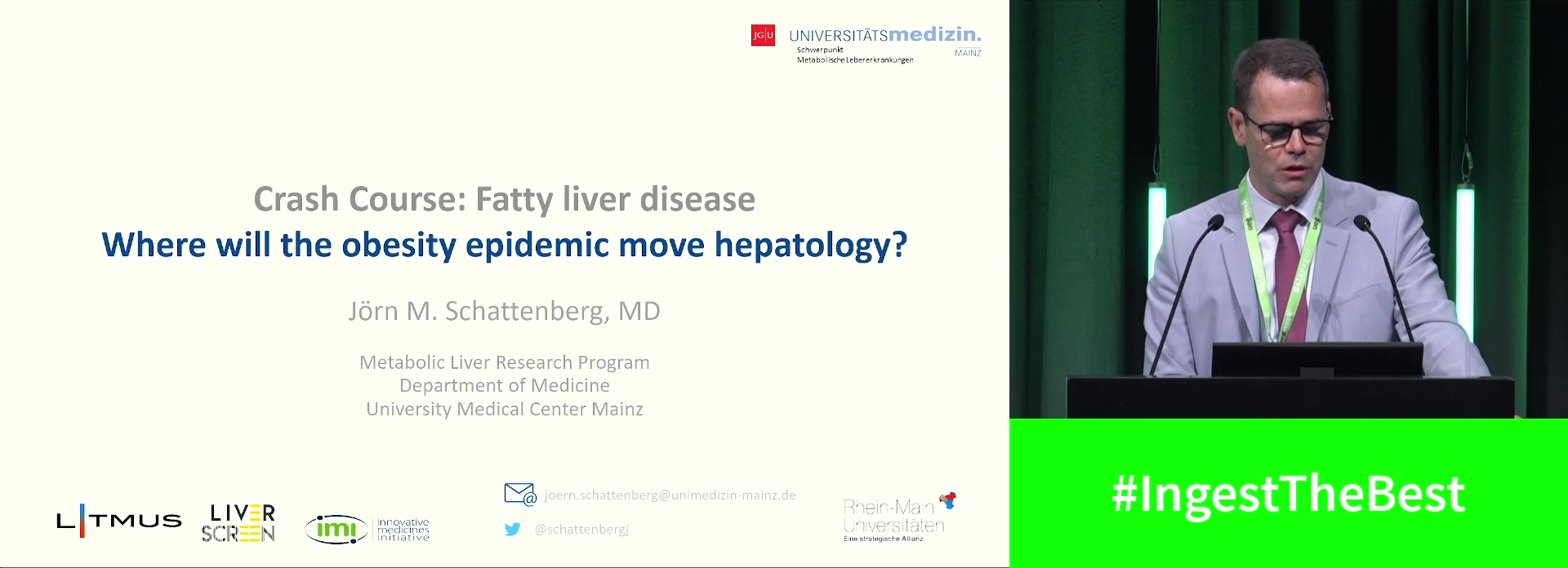
NAFLD: Where will the obesity epidemic move hepatology?
1 Universitätsmedizin Mainz, Mainz, Germany
Event
Topics
Published
Log in to access this content.
Free for all myUEG account holders. Your access level is set automatically based on your occupation. Medical professionals get full access to all content. If you are a non-medical user, you can only access UEG Week content from congresses you attended.
Not sure what you can access? Learn more about account types.
PREVALENCE AND MEANING OF AN ELEVATED FIB-4 IN PATIENTS REFERRED TO A TERTIARY HOSPITAL
Inês Rodrigues 1, Raquel Ortigão 2, Daniel Nunes 1, Carlos Lemos 1, Miguel Moura 1, Sofia Carvalhana 1, Helena Cortez-Pinto 3
1 Centro Hospitalar e Universitário de Lisboa Norte, Lisboa, Portugal
2 Institute Portuguese of Oncology, Porto, Portugal
3 Faculdade de Medicina de Lisboa, Lisbon, Portugal|||Centro Hospitalar e Universitário de Lisboa Norte, Lisboa, Portugal
Conference
Topics
Submission format
Session