UEG's educational platform for gastroenterology education bringing recordings, courses, guidelines, and more together in one place.
Trending on Gutflix
Rate for better recommendations!
Your feedback helps us show you more of what you like and less of what you dislike!
Log in to continue.
This content is part of Gutflix. Log in with your myUEG account, or create one free, to watch it.
Not sure what you can access? Learn more about account types.
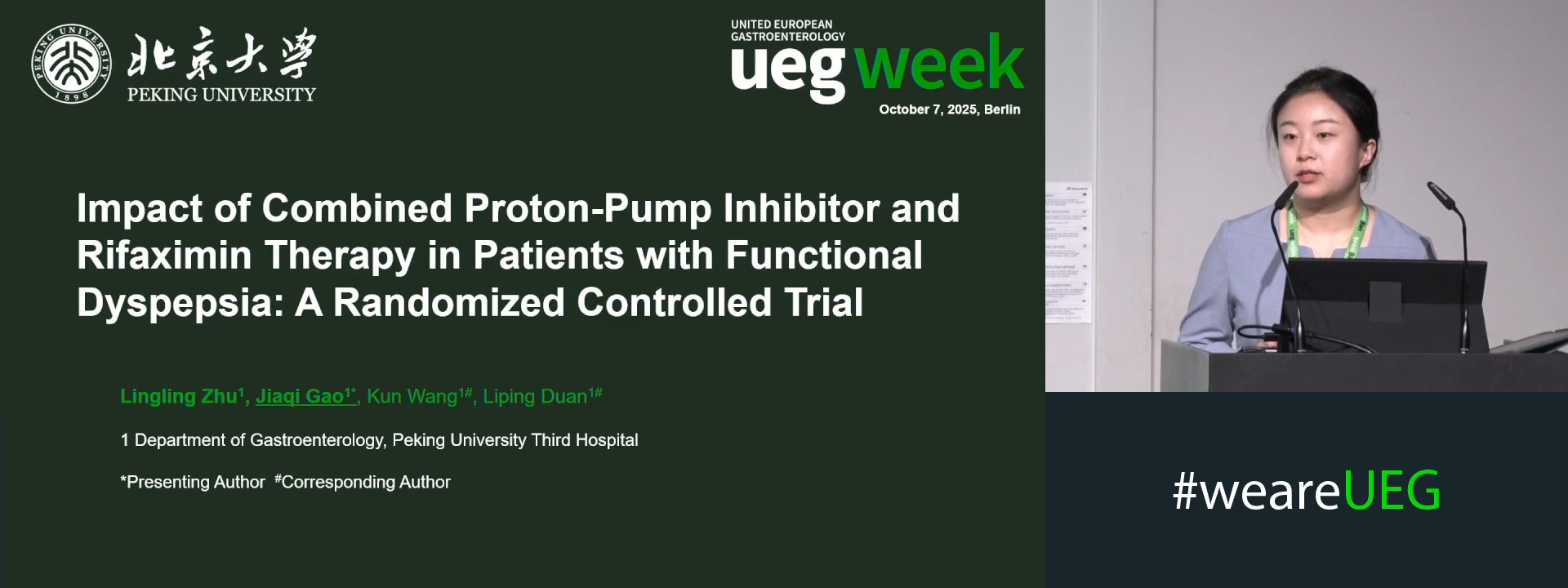
IMPACT OF COMBINED PROTON-PUMP INHIBITOR AND RIFAXIMIN THERAPY IN PATIENTS WITH FUNCTIONAL DYSPEPSIA: A RANDOMIZED CONTROLLED TRIAL
Lingling Zhu 1, Huaizhu Guo 1, Jiaqi Gao 1, Siqi Lu 1, Zuojing Liu 1, Chen Chen 1, Kun Wang 1, Liping Duan 1
Affiliations
1 Peking University Third Hospital, Beijing, China
Log in to continue.
This content is part of Gutflix. Log in with your myUEG account, or create one free, to watch it.
Not sure what you can access? Learn more about account types.
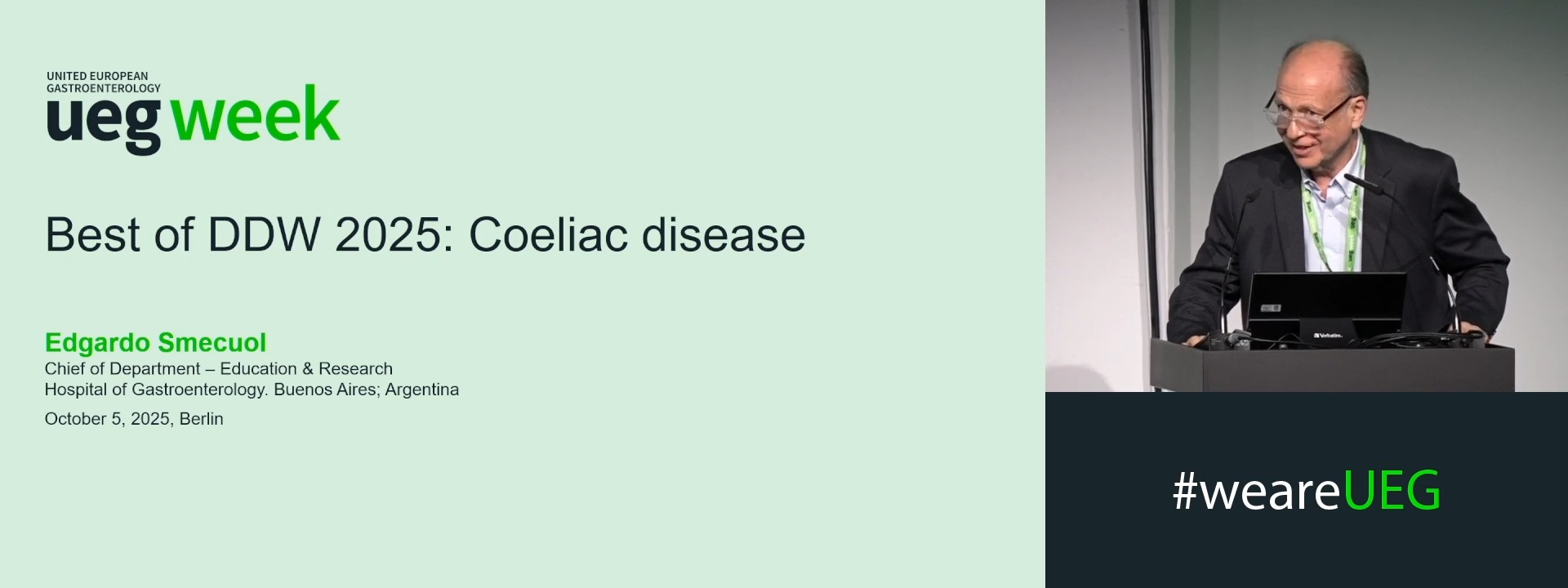
Coeliac disease
Affiliations
1 Hospital de Gastroenterologia, Buenos Aires, Argentina
Log in to continue.
This content is part of Gutflix. Log in with your myUEG account, or create one free, to watch it.
Not sure what you can access? Learn more about account types.
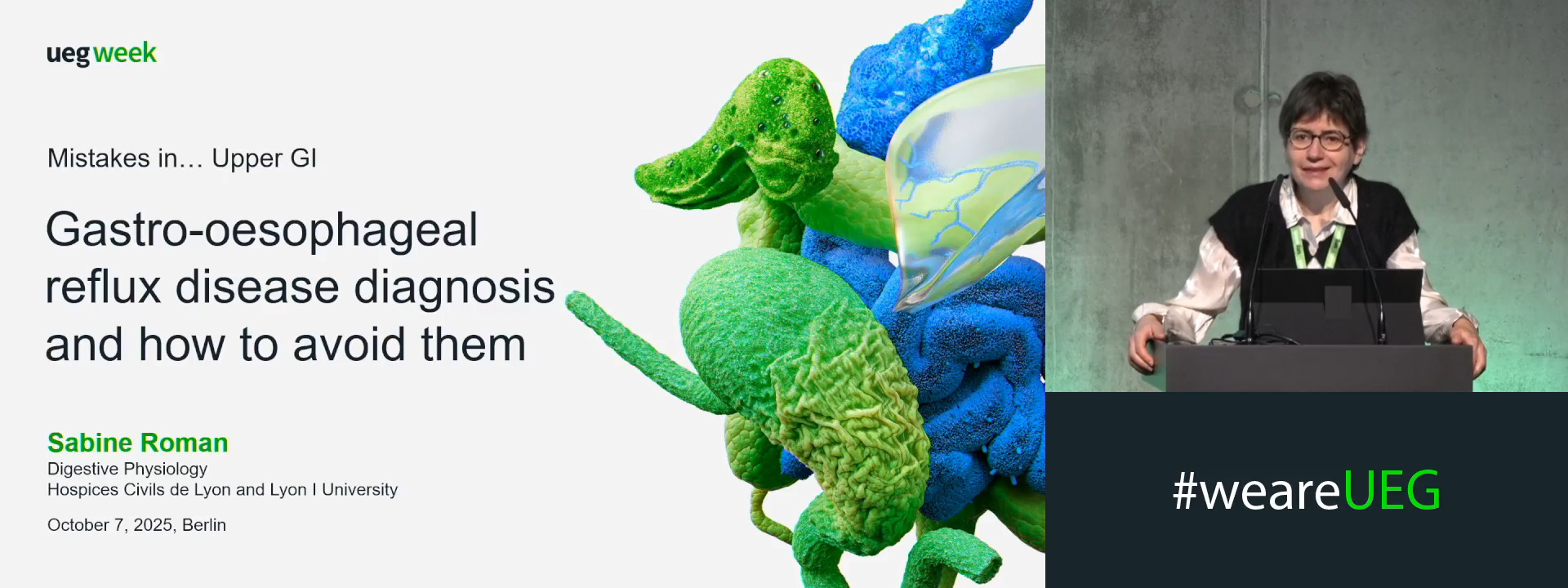
Gastro-oesophageal reflux disease diagnosis and how to avoid them
Affiliations
1 Hôpital Edouard Herriot, Lyon, France
Log in to continue.
This content is part of Gutflix. Log in with your myUEG account, or create one free, to watch it.
Not sure what you can access? Learn more about account types.
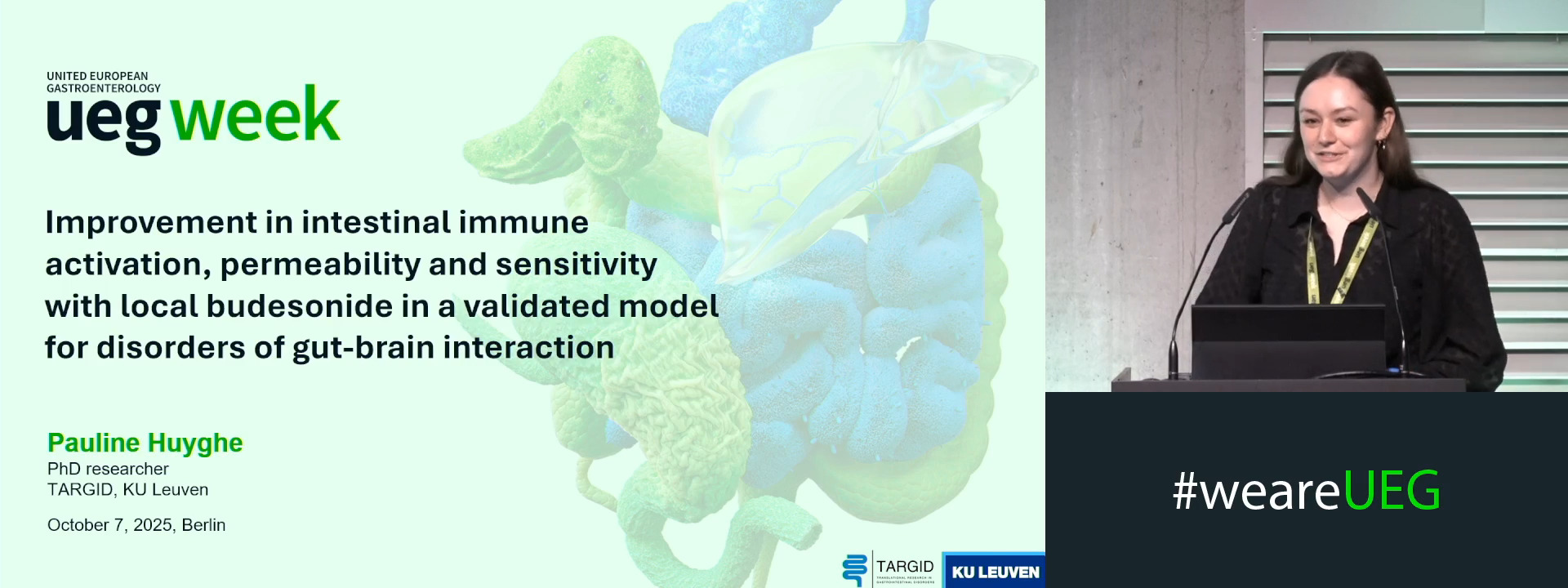
IMPROVEMENT IN INTESTINAL IMMUNE ACTIVATION, PERMEABILITY AND SENSITIVITY WITH LOCAL BUDESONIDE IN A VALIDATED MODEL FOR DISORDERS OF GUT-BRAIN INTERACTION
Pauline Huyghe 1, Alison Accarie 1, Mathieu Meleine 1, Karen Van den Houte 1, Joran Toth 1, Lucas Wauters 2, Jan Tack 2, Ricard Farré 1, Tim Vanuytsel 2
Affiliations
1 KU Leuven, Leuven, Belgium
2 University of Leuven, University Hospital Gasthuisberg, Leuven, Belgium|||KU Leuven, Leuven, Belgium
Log in to continue.
This content is part of Gutflix. Log in with your myUEG account, or create one free, to watch it.
Not sure what you can access? Learn more about account types.
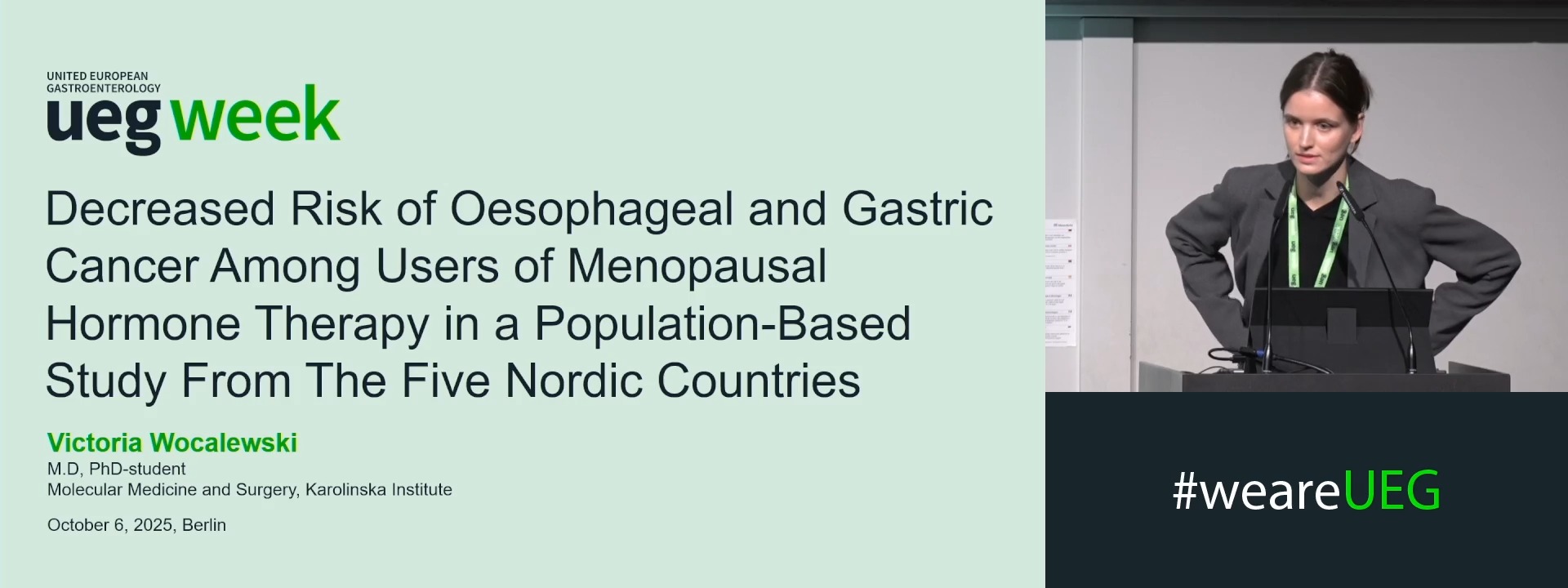
DECREASED RISK OF OESOPHAGEAL AND GASTRIC CANCER AMONG USERS OF MENOPAUSAL HORMONE THERAPY IN A POPULATION-BASED STUDY FROM THE FIVE NORDIC COUNTRIES
Victoria Wocalewski 1, Giola Santoni 1, Helgi Birgisson 2, My von Euler-Chelpin 3, Joonas Kauppila 4, Eivind Ness-Jensen 5, Shao-Hua Xie 1, Jesper Lagergren 6
Affiliations
1 Karolinska Institutet, Stockholm, Sweden
2 The Icelandic Cancer Registry, Reykjavik, Iceland
3 University of Copenhagen, Copenhagen, Denmark
4 Karolinska Institutet, Stockholm, Sweden|||Oulu University Hospital and University of Oulu, Oulu, Finland
5 Karolinska Institutet, Stockholm, Sweden|||Levanger Hospital, Levanger, Norway|||NTNU, Norwegian University of Science and Technology, Levanger, Norway
6 Karolinska Institutet, Stockholm, Sweden|||Kings College London, London, United Kingdom