UEG's content platform for gastroenterology education bringing recordings, courses, guidelines, and more together in one place.
Trending on Gutflix
Rate for better recommendations!
Your feedback helps us show you more of what you like and less of what you dislike!
Log in to continue.
This content is part of Gutflix. Log in with your myUEG account, or create one free, to watch it.
Not sure what you can access? Learn more about account types.
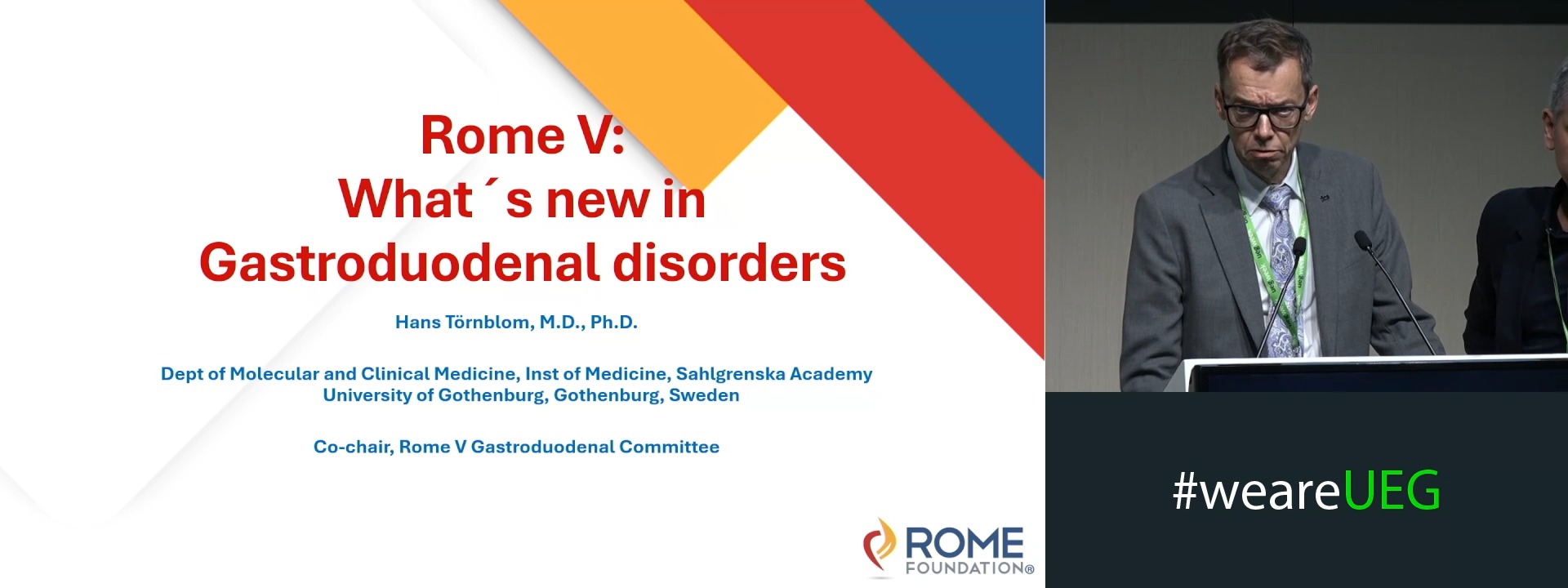
Upper GI disorders
Affiliations
1 Inst of medicine, Gothenburg, Sweden
Log in to continue.
This content is part of Gutflix. Log in with your myUEG account, or create one free, to watch it.
Not sure what you can access? Learn more about account types.
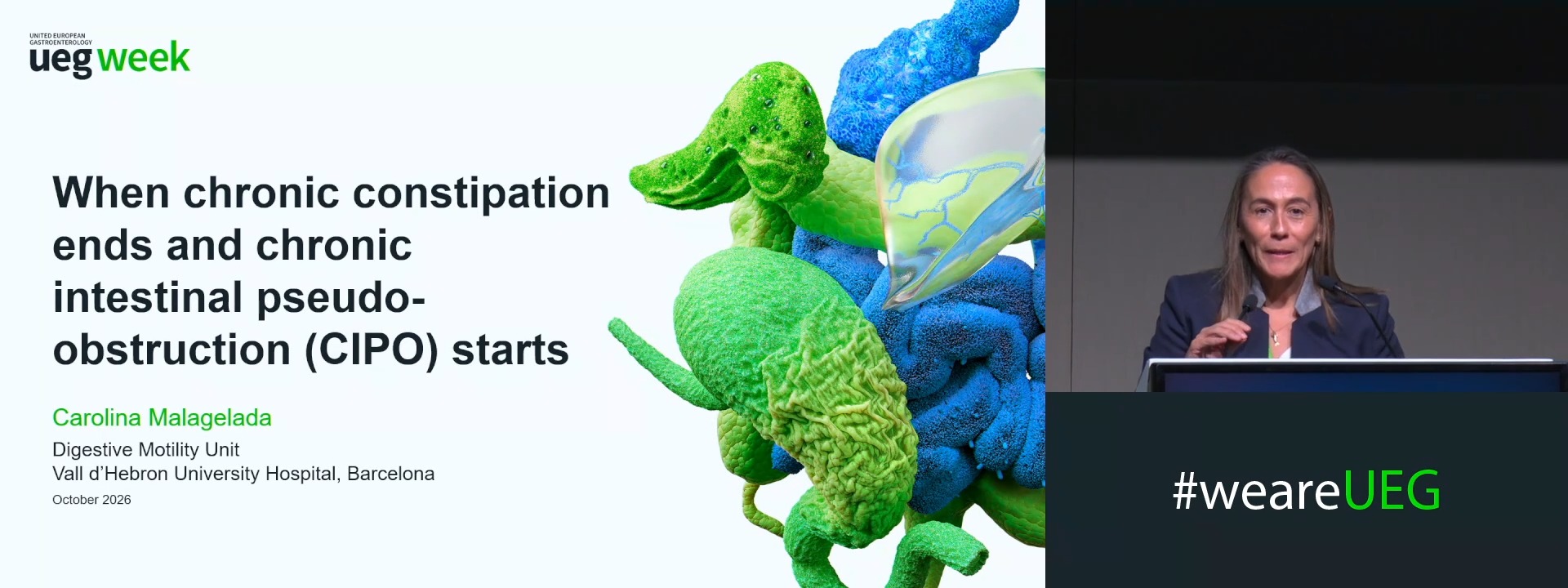
When chronic constipation ends and chronic intestinal pseudo-obstruction (CIPO) starts
Affiliations
1 Hospital Universitari Vall d`Hebron, Barcelona, Spain
Log in to continue.
This content is part of Gutflix. Log in with your myUEG account, or create one free, to watch it.
Not sure what you can access? Learn more about account types.
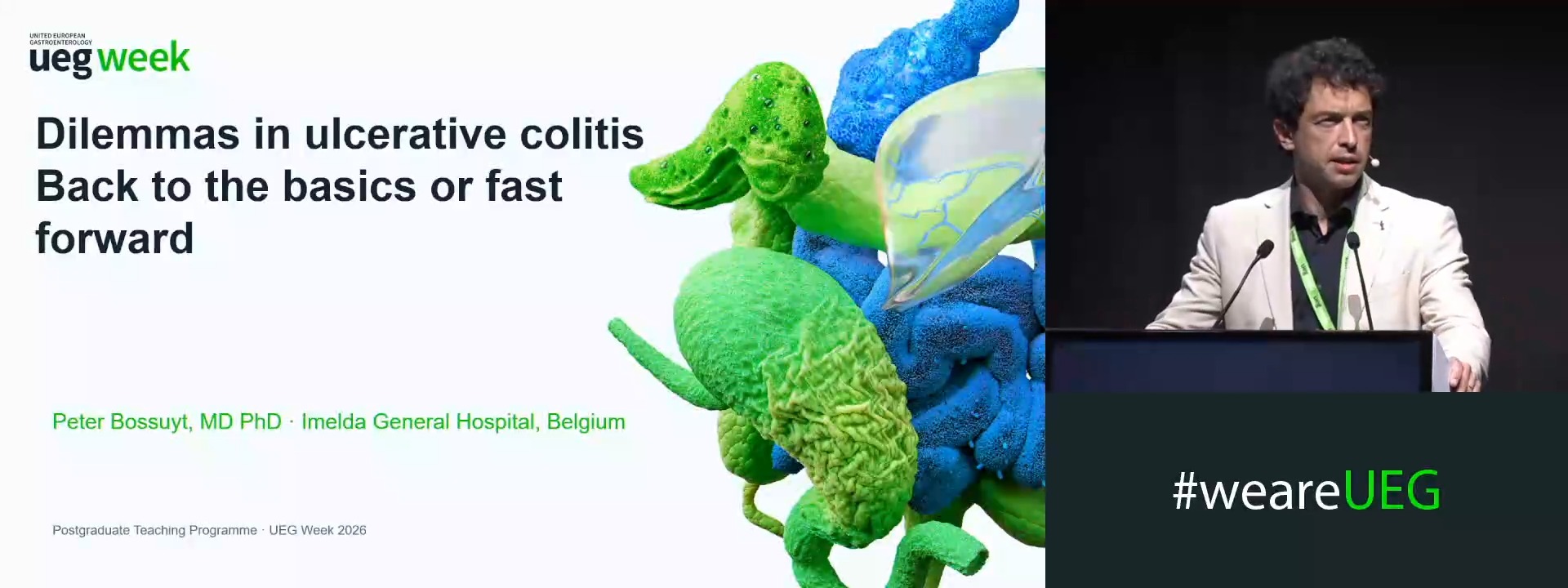
Introduction: Dilemmas in ulcerative colitis: Back to the basics or fast forward
Affiliations
1 Imelda General Hospital, Bonheiden, Belgium
Log in to continue.
This content is part of Gutflix. Log in with your myUEG account, or create one free, to watch it.
Not sure what you can access? Learn more about account types.
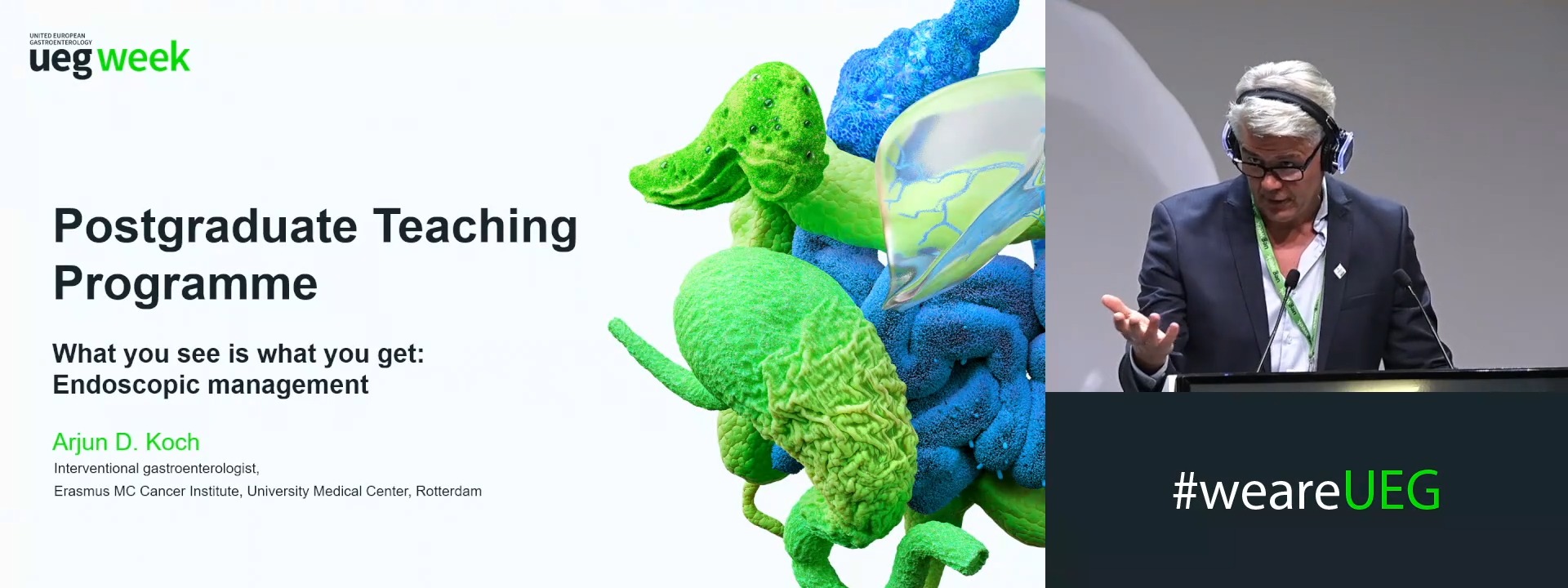
What you see is what you get: Endoscopic management
Affiliations
1 Erasmus MC - University Medical center, Rotterdam, Netherlands

Log in to continue.
This content is part of Gutflix. Log in with your myUEG account, or create one free, to watch it.
Not sure what you can access? Learn more about account types.
Paediatric disorders
Affiliations
1 Academisch Medisch Centrum Onderzoekschool Oncologie Pediatrics and Pediat. Surgery - Dep. Of Pediat, AZ Amsterdam, Netherlands
Log in to continue.
This content is part of Gutflix. Log in with your myUEG account, or create one free, to watch it.
Not sure what you can access? Learn more about account types.
Cross-sectional imaging for IBD monitoring
Affiliations
1 Department of Gastroenterology and Hepatology, Amsterdam, Netherlands
Log in to continue.
This content is part of Gutflix. Log in with your myUEG account, or create one free, to watch it.
Not sure what you can access? Learn more about account types.
A PHASE 2B RANDOMIZED CLINICAL TRIAL OF NARONAPRIDE IN PATIENTS WITH IDIOPATHIC AND DIABETIC GASTROPARESIS
Jan Tack 1, Joerg David Ulrich 2, Iwona Trznadel-Morawska 3, Marek Horynski 4, Krzysztof Groszewski 5, Artur Soltysiak 6, Carlos Ramos 7, Marina Raikhel 8, Jorge Santander 9, Florian Höschle 10, Tanju Nacak 11, Ralph Mueller 11, Jutta Keller 12
Affiliations
1 University of Leuven, University Hospital Gasthuisberg, Leuven, Belgium
2 Klinikum rechts der Isar, Technical University of Munich, Munich, Germany
3 Centermed Krakow, Krakow, Poland
4 Endoskopia Sp. z o.o., Sopot, Poland
5 Szpital Miejski sw Jana Pawla II, Malbork, Poland
6 Centrum Medyczne Lukamed, Chojnice, Poland
7 A Positive Research, Miami, United States
8 Torrance Clinical Research Institute, Lomita, United States
9 USA and International Research Inc., Doral, United States
10 Dr. Falk Pharma Gmbh, Freiburg, Germany
11 Dr. Falk Pharma GmbH, Freiburg, Germany
12 Israelitisches Krankenhaus Hamburg, Hamburg, Germany