UEG's content platform for gastroenterology education bringing recordings, courses, guidelines, and more together in one place.
Trending on Gutflix
Rate for better recommendations!
Your feedback helps us show you more of what you like and less of what you dislike!
Log in to continue.
This content is part of Gutflix. Log in with your myUEG account, or create one free, to watch it.
Not sure what you can access? Learn more about account types.
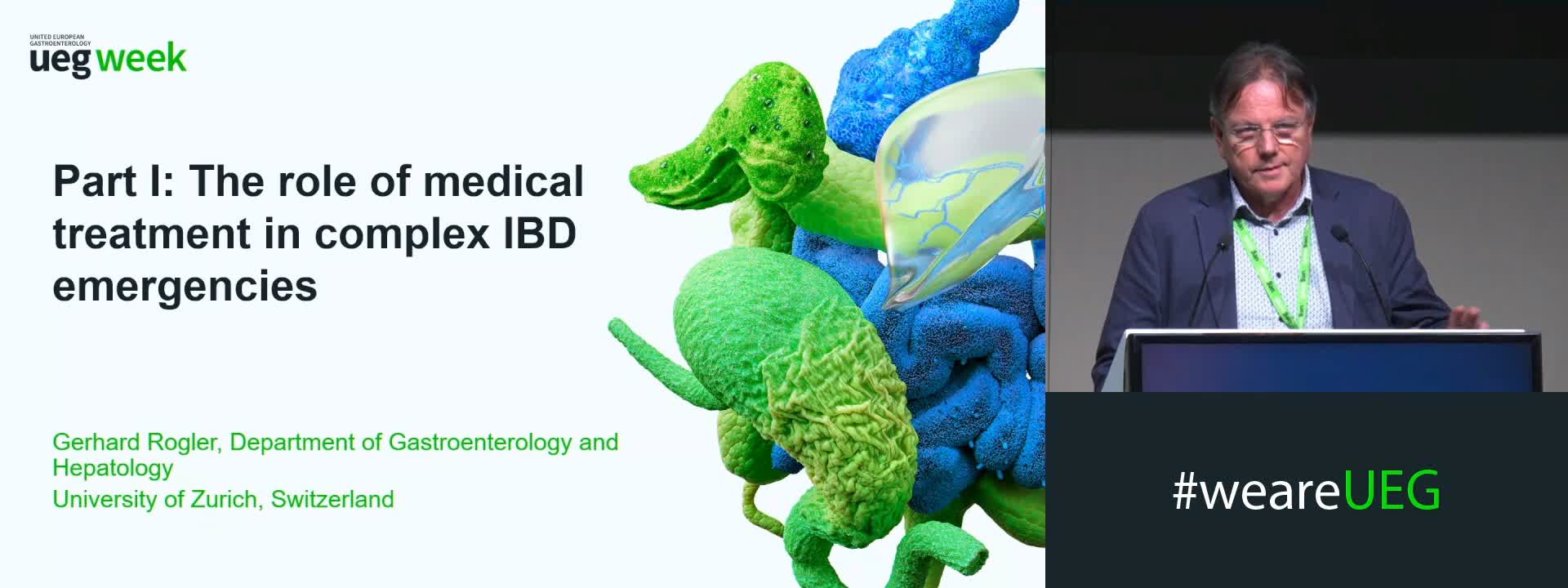
Medical treatment or surgery: What is the solution to complex IBD emergencies?
Affiliations
1 UniversitätsSpital Zürich, Zurich, Switzerland
2 IJsselland Hospital, Capell a/d IJssel, Netherlands
Log in to continue.
This content is part of Gutflix. Log in with your myUEG account, or create one free, to watch it.
Not sure what you can access? Learn more about account types.
Introduction: The acute abdomen: The good, bad and the ugly
Affiliations
1 St Mark'S Hospital, London, London, United Kingdom

Log in to continue.
This content is part of Gutflix. Log in with your myUEG account, or create one free, to watch it.
Not sure what you can access? Learn more about account types.
BAE-endoscopic balloon dilatation of small-bowel strictures and outcomes
Affiliations
1 Royal Free Hospital & UCL School of Medicine, London, United Kingdom
Log in to continue.
This content is part of Gutflix. Log in with your myUEG account, or create one free, to watch it.
Not sure what you can access? Learn more about account types.
Panel discussion: The ultimate guide to colorectal cancer staging surgery adjuvant treatment

Log in to continue.
This content is part of Gutflix. Log in with your myUEG account, or create one free, to watch it.
Not sure what you can access? Learn more about account types.
Dysplastic lesions: Challenges and pitfalls for the endoscopist and the surgeon
Affiliations
1 Portsmouth University Hospital, Portsmouth, United Kingdom
2 UZ Leuven, None, Belgium
Log in to continue.
This content is part of Gutflix. Log in with your myUEG account, or create one free, to watch it.
Not sure what you can access? Learn more about account types.
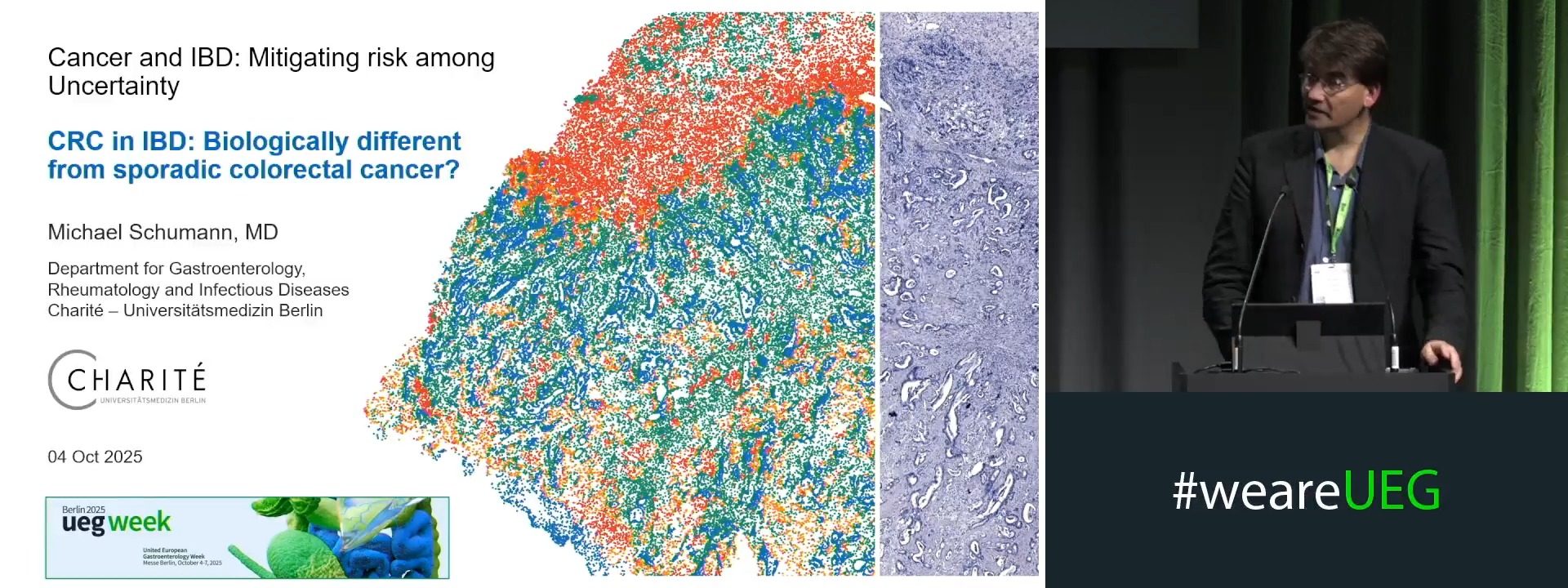
CRC in IBD: Biologically different from sporadic colorectal cancer?
Affiliations
1 Charité Berlin, Berlin, Germany