UEG's content platform for gastroenterology education bringing recordings, courses, guidelines, and more together in one place.
Trending on Gutflix
Rate for better recommendations!
Your feedback helps us show you more of what you like and less of what you dislike!
Log in to continue.
This content is part of Gutflix. Log in with your myUEG account, or create one free, to watch it.
Not sure what you can access? Learn more about account types.
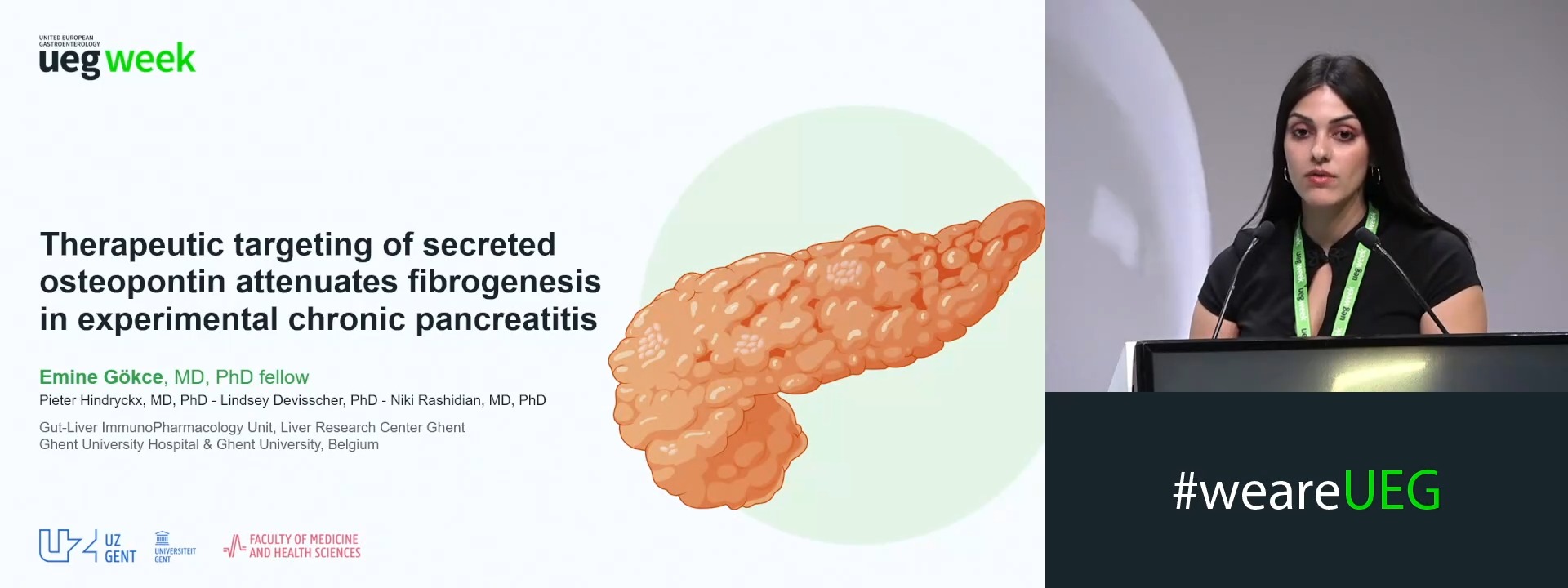
THERAPEUTIC TARGETING OF SECRETED OSTEOPONTIN ATTENUATES THE FIBROTIC PHENOTYPE IN EXPERIMENTAL CHRONIC PANCREATITIS
Affiliations
1 Ghent University Hospital, Ghent, Belgium
2 Ghent University, Ghent, Belgium
Log in to continue.
This content is part of Gutflix. Log in with your myUEG account, or create one free, to watch it.
Not sure what you can access? Learn more about account types.
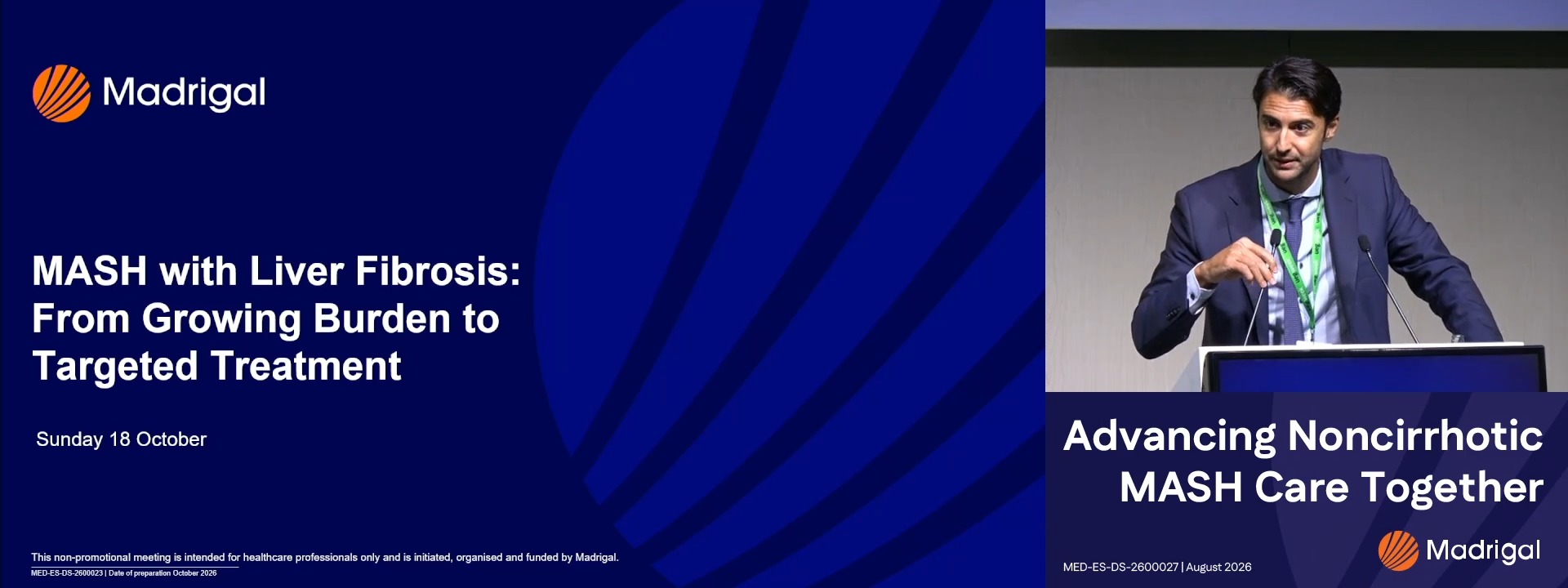
MASH with Liver Fibrosis: From Growing Burden to Targeted Treatment (Madrigal Pharmaceutical) (Complete Session)
Affiliations
1 Hôpital Beaujon - Service d’Hépatologie, Hôpital Beaujon; Clichy/FR, Clichy, France
2 Charité - Universitätsmedizin, Berlin, Germany
3 Hospital Clínico Universitario de Valencia, Valencia, Spain

Log in to continue.
This content is part of Gutflix. Log in with your myUEG account, or create one free, to watch it.
Not sure what you can access? Learn more about account types.
ONCOGENIC GNAS AND KRAS SIGNALING COLLECTIVELY DRIVE DYSPLASIA IN AN IPSC-DERIVED ORGANOID MODEL FOR CYSTIC PANCREATIC NEOPLASIA
Affiliations
1 University Hospital Ulm, Ulm, Germany
Log in to continue.
This content is part of Gutflix. Log in with your myUEG account, or create one free, to watch it.
Not sure what you can access? Learn more about account types.
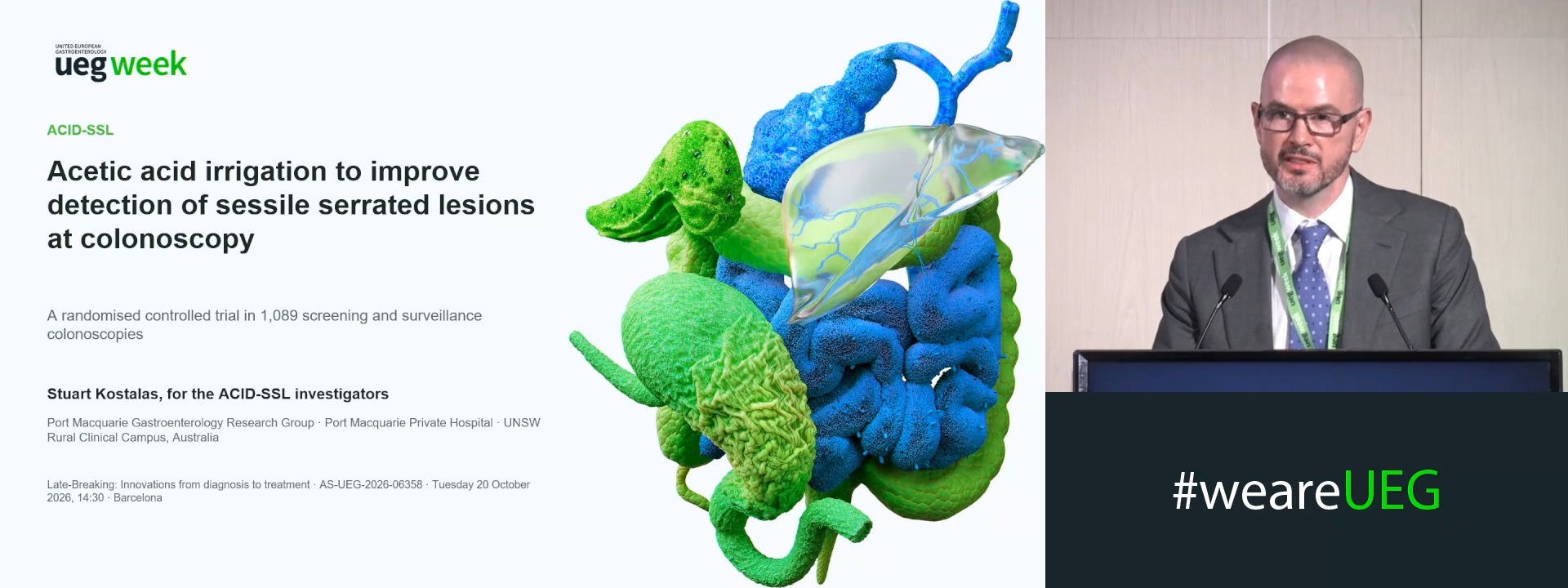
ACETIC ACID IRRIGATION VERSUS CONTROL IRRIGATION TO IMPROVE DETECTION OF SESSILE SERRATED LESIONS DURING COLONOSCOPY IN AN AVERAGE-RISK POPULATION: A PROSPECTIVE RANDOMISED CONTROLLED TRIAL (ACID-SSL)
Natalie Dierick 1, Kirsten McIntosh 2, Sue Myers 2, Christina Lee 1, Michael Wu 1, Joshua McCarthy 1,2, Praka Sundaralingam 1, Stuart Kostalas 1,3,2
Affiliations
1 Port Macquarie Gastroenterology Research Group, Thrumster, Australia
2 Port Macquarie Private Hospital, Port Macquarie, Australia
3 University of NSW, Port Macquarie, Australia