UEG's content platform for gastroenterology education bringing recordings, courses, guidelines, and more together in one place.
Trending on Gutflix
Rate for better recommendations!
Your feedback helps us show you more of what you like and less of what you dislike!
Log in to continue.
This content is part of Gutflix. Log in with your myUEG account, or create one free, to watch it.
Not sure what you can access? Learn more about account types.
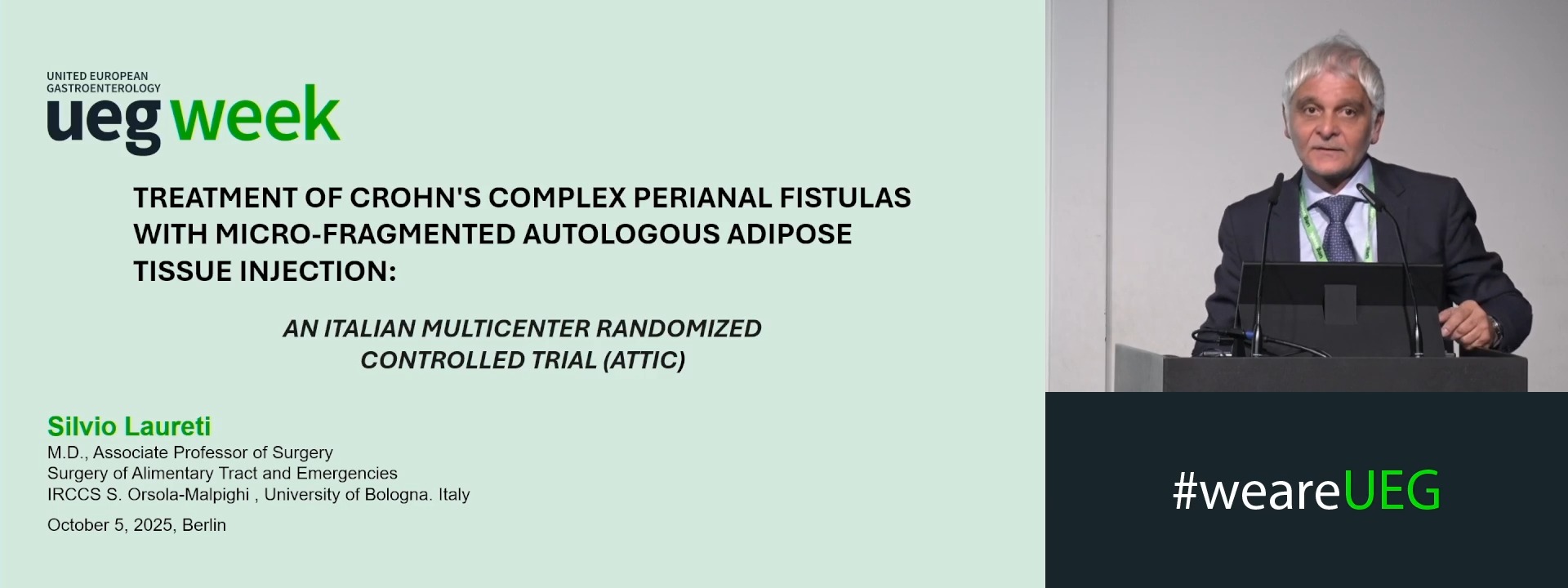
TREATMENT OF CROHN'S COMPLEX PERIANAL FISTULAS WITH MICRO-FRAGMENTED AUTOLOGOUS ADIPOSE TISSUE INJECTION: AN ITALIAN MULTICENTER RANDOMIZED CONTROLLED TRIAL (ATTIC)
Silvio Laureti 1, Luigi Sofo 2, Alberta Cappelli 1, Francesco Colombo 3, Gaetano Luglio 4, Stefano Scaringi 5, Claudio Isopi 1, Franco Sacchetti 2, Giuseppe Clerico 6, Pier Giorgio Danelli 7, Michele Cricrì 4, Ferdinando Ficari 5, Lorenzo Gentilini 1, Alessandra Menon 8, Paolo Gionchetti 1, Gilberto Poggioli 1, Antonino Spinelli 9
Affiliations
1 IRCCS Azienda Ospedaliero-Universitaria di Bologna, Bologna, Italy
2 Policlinico Universitario Fondazione Agostino Gemelli IRCCS, Roma, Italy
3 L.Sacco University Hospital General Surgery II, Milano, Italy
4 Università Federico II, Napoli, Italy
5 Azienda Ospedaliero-Universitaria Careggi, Firenze, Italy
6 IRCCS Humanitas Research Hospital, Rozzano, Italy
7 Università degli studi La Statale, Milano, Italy
8 Università degli Studi di Milano, Milan, Italy
9 Humanitas University, Rozzano Milano, Italy
Log in to continue.
This content is part of Gutflix. Log in with your myUEG account, or create one free, to watch it.
Not sure what you can access? Learn more about account types.
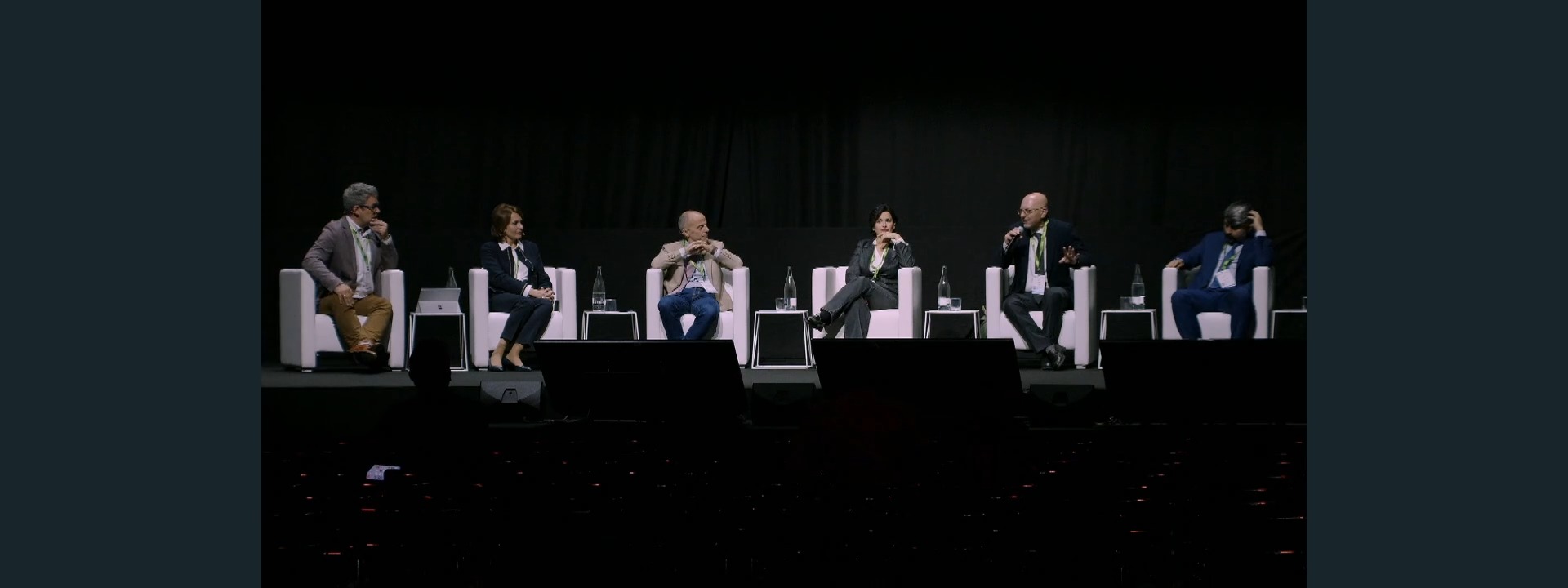
Panel discussion: Are you stuck in the biliary cannulation nightmare: Wake up, here comes the sun
Log in to continue.
This content is part of Gutflix. Log in with your myUEG account, or create one free, to watch it.
Not sure what you can access? Learn more about account types.
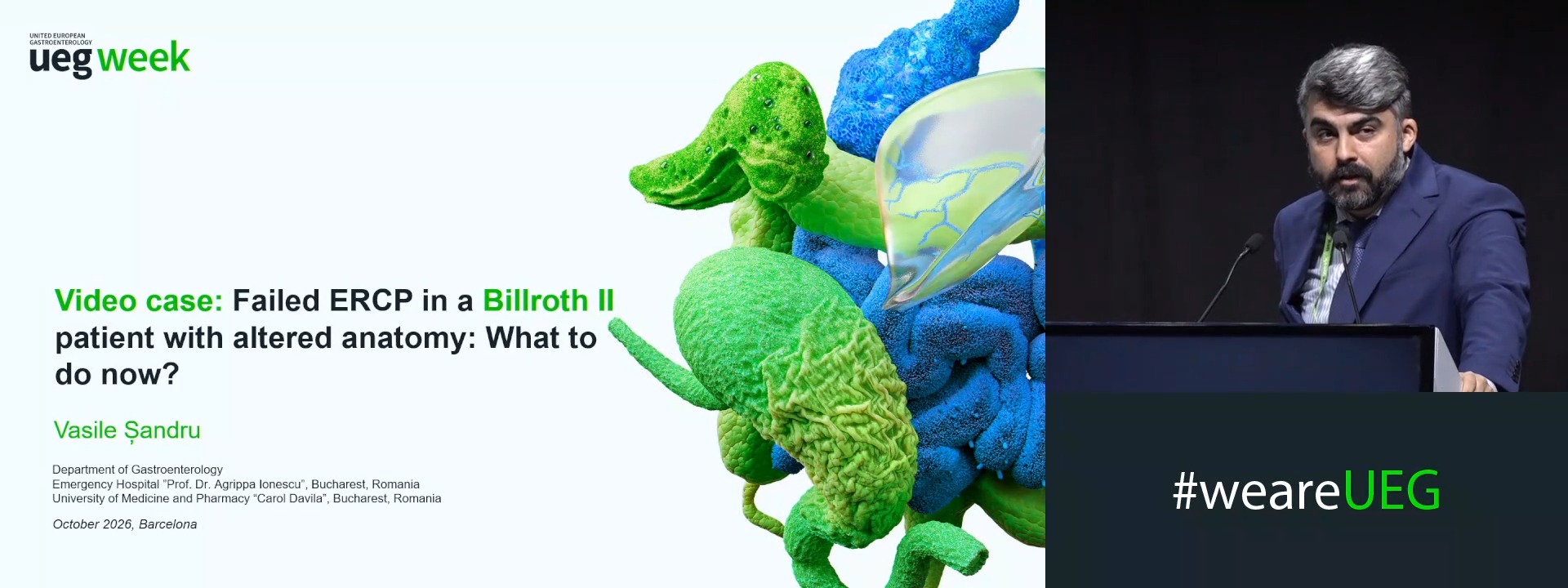
Video case: Failed ERCP in a Billroth II patient with altered anatomy: What to do now?
Affiliations
1 Bucharest Emergency Hospital, Bucharest, Romania
Log in to continue.
This content is part of Gutflix. Log in with your myUEG account, or create one free, to watch it.
Not sure what you can access? Learn more about account types.
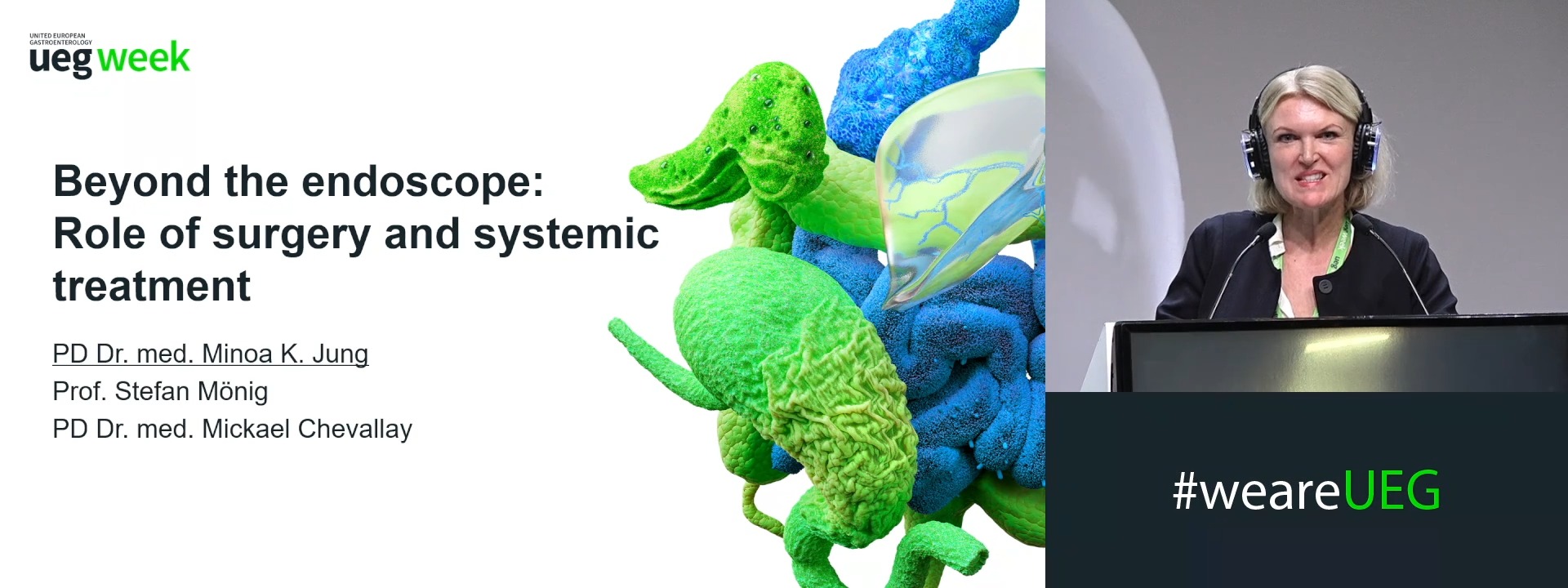
Beyond the endoscope: Role of surgery and systemic treatment
Affiliations
1 University Hospitals of Geneva, Geneva, Switzerland
Log in to continue.
This content is part of Gutflix. Log in with your myUEG account, or create one free, to watch it.
Not sure what you can access? Learn more about account types.
How to identify coeliac disease early: Prevention and screening vs case finding
Affiliations
1 UNIVERSITY FEDERICO II, NAPLES, Naples, Italy
2 Royal Hallamshire Hospital - NHS Trust, Royal Hallamshire Hospital; Sheffield/GB, Sheffield, United Kingdom
Log in to continue.
This content is part of Gutflix. Log in with your myUEG account, or create one free, to watch it.
Not sure what you can access? Learn more about account types.
EARLY SERUM METABOLOMIC SHIFTS DURING INFLIXIMAB TREATMENT PREDICT 12-MONTH ENDOSCOPIC OUTCOMES IN INFLAMMATORY BOWEL DISEASE
Tommaso Innocenti 1,2, Federico Scolari 1, Beatrice Menicacci 1, Andrea Bernini 3, Valentina Balloni 3, Rocco Gabriele Iamello 1, Lucia Picariello 1, Armando Curto 1, Elisabetta Ceni 1, Siro Bagnoli 2, Simone Polvani 1, Tommaso Mello 1, Andrea Galli 1, Gabriele Dragoni 2,1, Serena Pillozzi 1
Affiliations
1 University of Florence, Florence, Italy
2 Careggi University Hospital, Florence, Italy
3 University of Siena, Siena, Italy
Log in to continue.
This content is part of Gutflix. Log in with your myUEG account, or create one free, to watch it.
Not sure what you can access? Learn more about account types.
Medical treatment
Affiliations
1 Royal Hallamshire Hospital - NHS Trust, Royal Hallamshire Hospital; Sheffield/GB, Sheffield, United Kingdom