UEG's content platform for gastroenterology education bringing recordings, courses, guidelines, and more together in one place.
Trending on Gutflix
Rate for better recommendations!
Your feedback helps us show you more of what you like and less of what you dislike!
Log in to continue.
This content is part of Gutflix. Log in with your myUEG account, or create one free, to watch it.
Not sure what you can access? Learn more about account types.
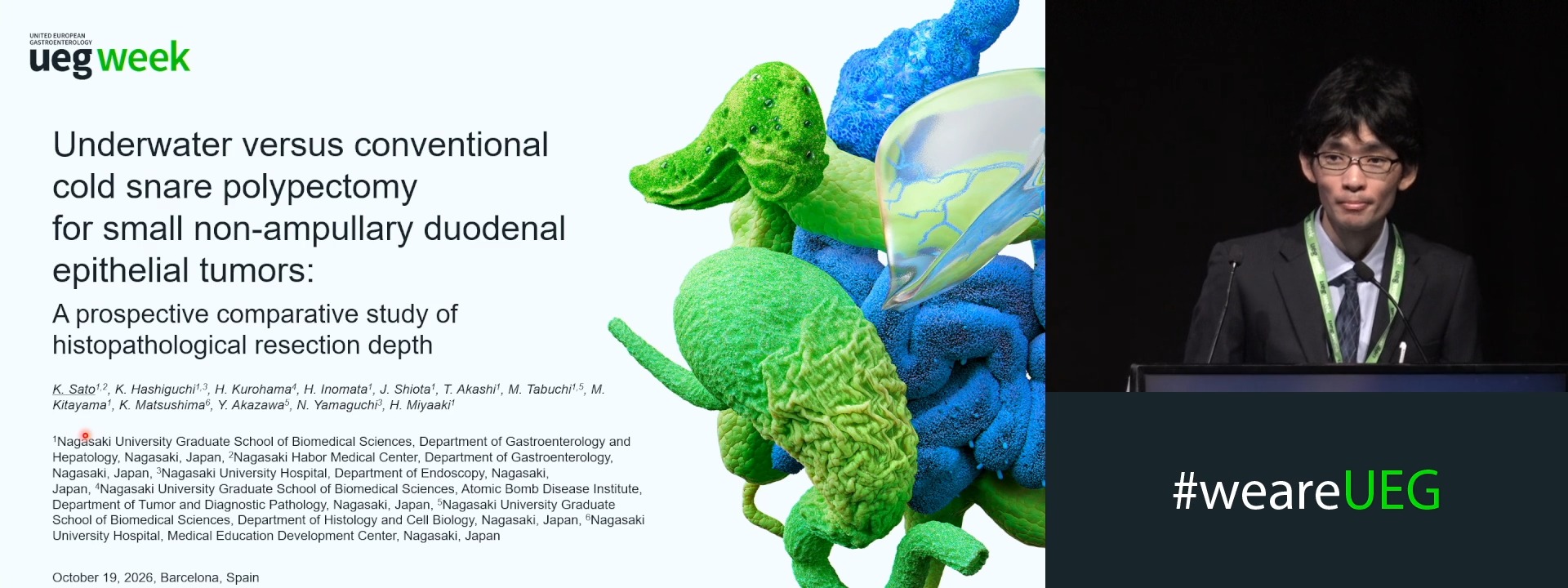
UNDERWATER VERSUS CONVENTIONAL COLD SNARE POLYPECTOMY FOR SMALL NON-AMPULLARY DUODENAL EPITHELIAL TUMORS: A PROSPECTIVE COMPARATIVE STUDY OF HISTOPATHOLOGICAL RESECTION DEPTH
Kohei Sato 1,2, Keiichi Hashiguchi 1,3, Hirokazu Kurohama 4, Hiroko Inomata 1, Junya Shiota 1, Taro Akashi 1, Maiko Tabuchi 1, Moto Kitayama 1, Kayoko Matsushima 3, Yuko Akazawa 1, Naoyuki Yamaguchi 3, Hisamitsu Miyaaki 1
Affiliations
1 Nagasaki University Graduate School of Biomedical Sciences, Nagasaki, Japan
2 Nagasaki Habor Medical Center, Nagasaki, Japan
3 Nagasaki University Hospital, Nagasaki, Japan
4 Nagasaki University Graduate School of Biomedical Sciences, Atomic Bomb Disease Institute, Nagasaki, Japan
Log in to continue.
This content is part of Gutflix. Log in with your myUEG account, or create one free, to watch it.
Not sure what you can access? Learn more about account types.
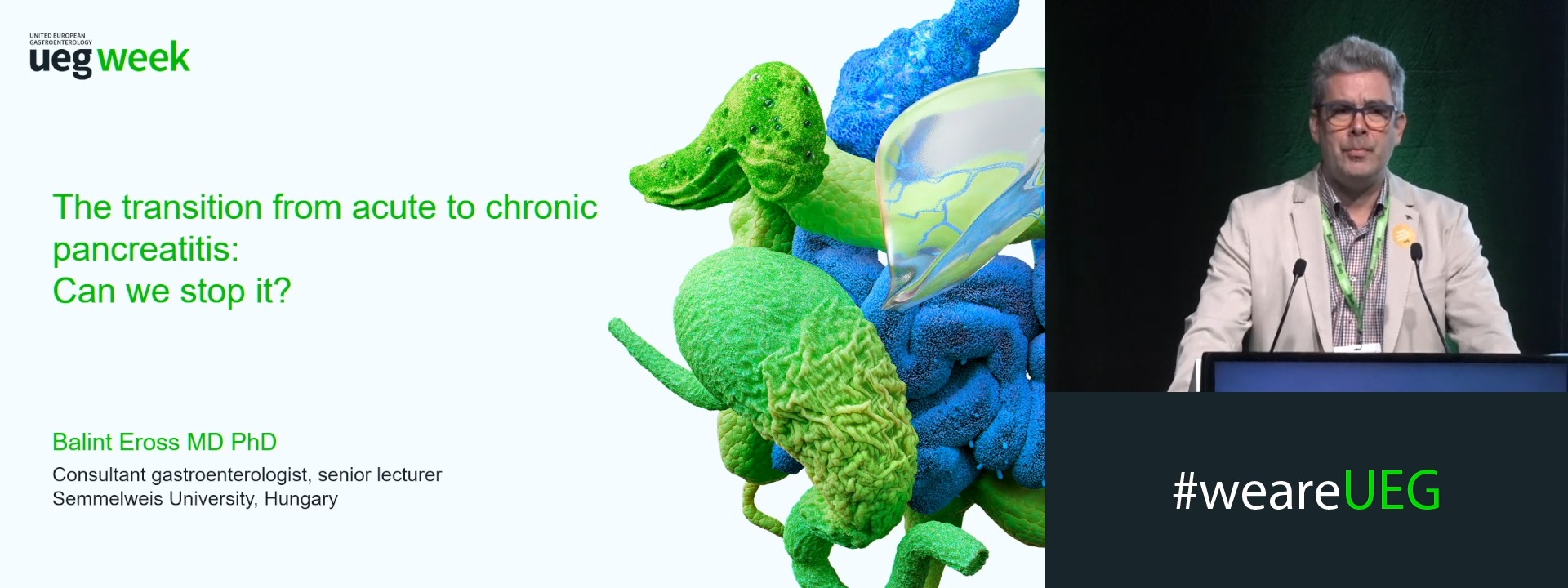
The transition from acute to chronic pancreatitis: Can we stop it?
Affiliations
1 Semmelweis University, Budapest, Hungary
Log in to continue.
This content is part of Gutflix. Log in with your myUEG account, or create one free, to watch it.
Not sure what you can access? Learn more about account types.
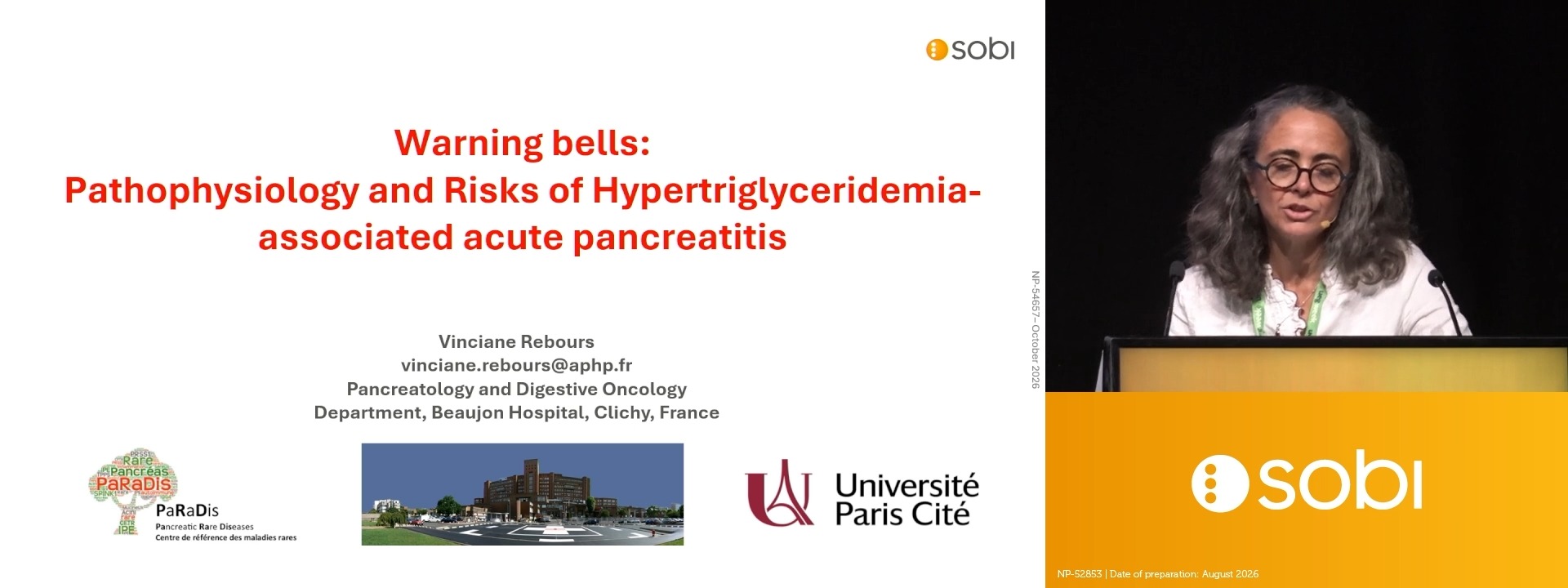
Guiding the care of hypertriglyceridemia-induced acute pancreatitis: Multidisciplinary care and the role of new therapies through apoC-III inhibition (Sobi (Swedish Orphan Biovitrum)) (Complete Session)
Affiliations
1 Hopital Beaujon, Clichy, France
2 San Raffaele Scientific Institute Irccs, Rome, Italy
3 Clínic Barcelona, Barcelona, Spain
Log in to continue.
This content is part of Gutflix. Log in with your myUEG account, or create one free, to watch it.
Not sure what you can access? Learn more about account types.
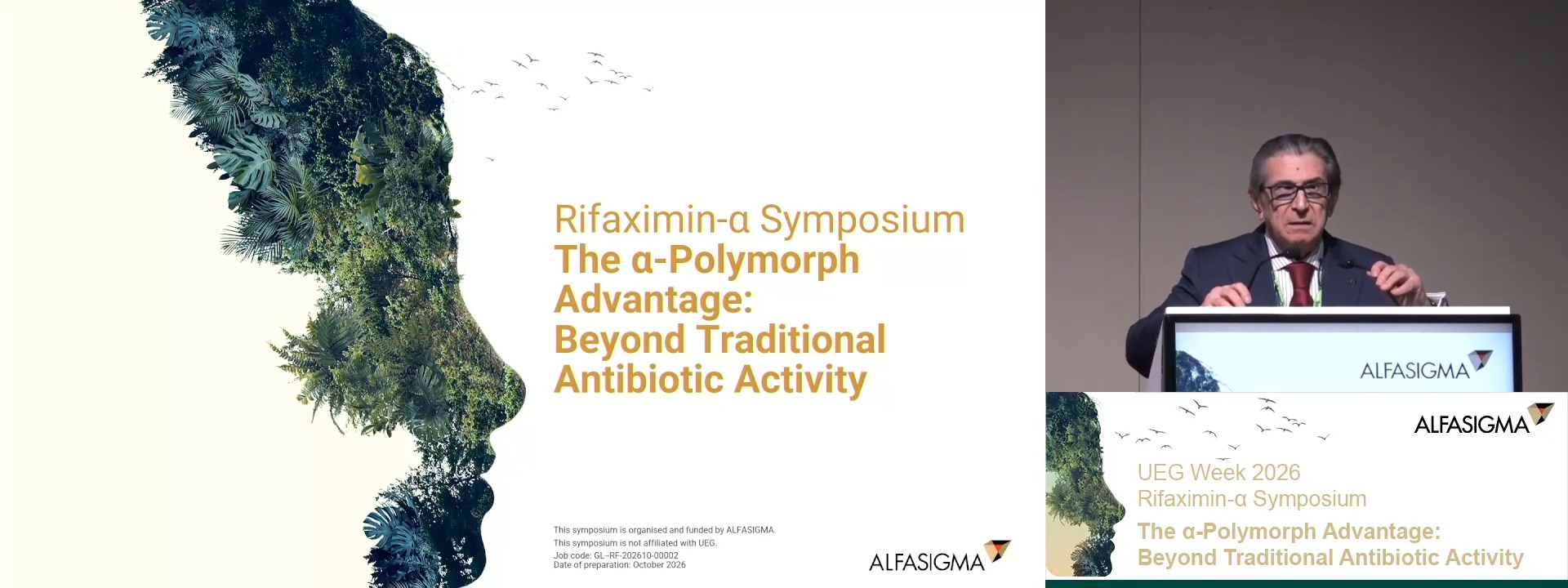
The α‑Polymorph Advantage: Beyond Traditional Antibiotic Activity (ALFASIGMA) (Complete Session)
Affiliations
1 Clinical Pharmacologist & Gastroenterologist, University of Parma, Parma, Italy
2 Hospital da Luz Lisboa, Lisbon, Portugal
3 GI Department, National Medical Institute of the Ministry of the Interior and Administration, Warsaw, Poland
Log in to continue.
This content is part of Gutflix. Log in with your myUEG account, or create one free, to watch it.
Not sure what you can access? Learn more about account types.
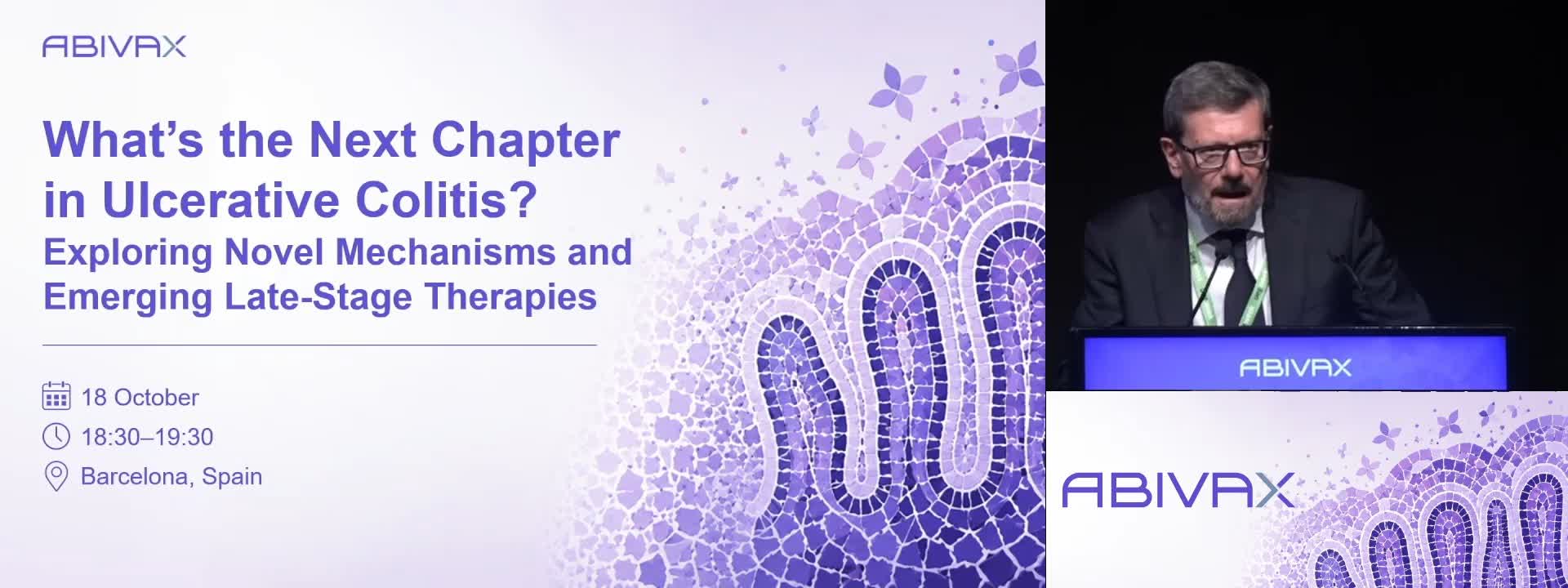
What’s the Next Chapter in Ulcerative Colitis? Exploring Novel Mechanisms and Emerging Late-Stage Therapies (Abivax) (Complete Session)
Affiliations
1 University of Calgary, Calgary, Canada
2 IBD Center, IRCCS Humanitas Research Hospital, Rozzano, Milan, Italy
3 Friedrich-Alexander-Universität Erlangen-Nürnberg, Erlangen, Germany
Log in to continue.
This content is part of Gutflix. Log in with your myUEG account, or create one free, to watch it.
Not sure what you can access? Learn more about account types.
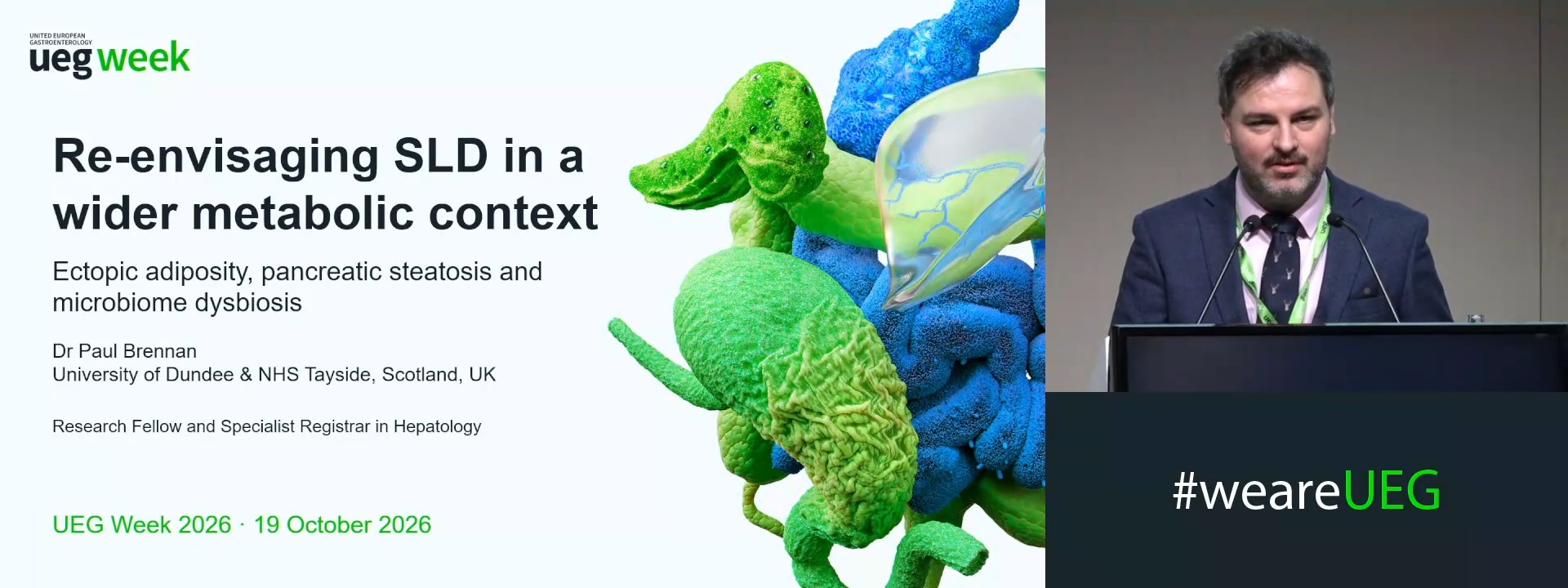
Re‑envisaging SLD in a wider metabolic context: ectopic adiposity, pancreatic steatosis and microbiome dysbiosis
Affiliations
1 Royal Infirmary of Edinburgh, Edinburgh, United Kingdom