UEG's content platform for gastroenterology education bringing recordings, courses, guidelines, and more together in one place.
Trending on Gutflix
Rate for better recommendations!
Your feedback helps us show you more of what you like and less of what you dislike!
Log in to continue.
This content is part of Gutflix. Log in with your myUEG account, or create one free, to watch it.
Not sure what you can access? Learn more about account types.
Autoimmunity in HPB (Complete Session)
Log in to continue.
This content is part of Gutflix. Log in with your myUEG account, or create one free, to watch it.
Not sure what you can access? Learn more about account types.
Targeting cancer in the era of next-generation agents
Affiliations
1 Technical University of Munich Clinic Rechts der Isar, München, Germany
Log in to continue.
This content is part of Gutflix. Log in with your myUEG account, or create one free, to watch it.
Not sure what you can access? Learn more about account types.
The role of AI in GI oncology: Complementing or replacing the clinician?
Affiliations
1 Universitätsklinikum Ulm - Klinik für Innere Medizin I, Ulm, Germany
Log in to continue.
This content is part of Gutflix. Log in with your myUEG account, or create one free, to watch it.
Not sure what you can access? Learn more about account types.
Immunodeficiency-associated enteropathy
Affiliations
1 Vrije Universiteit Medical Center, Amsterdam, Netherlands
Log in to continue.
This content is part of Gutflix. Log in with your myUEG account, or create one free, to watch it.
Not sure what you can access? Learn more about account types.
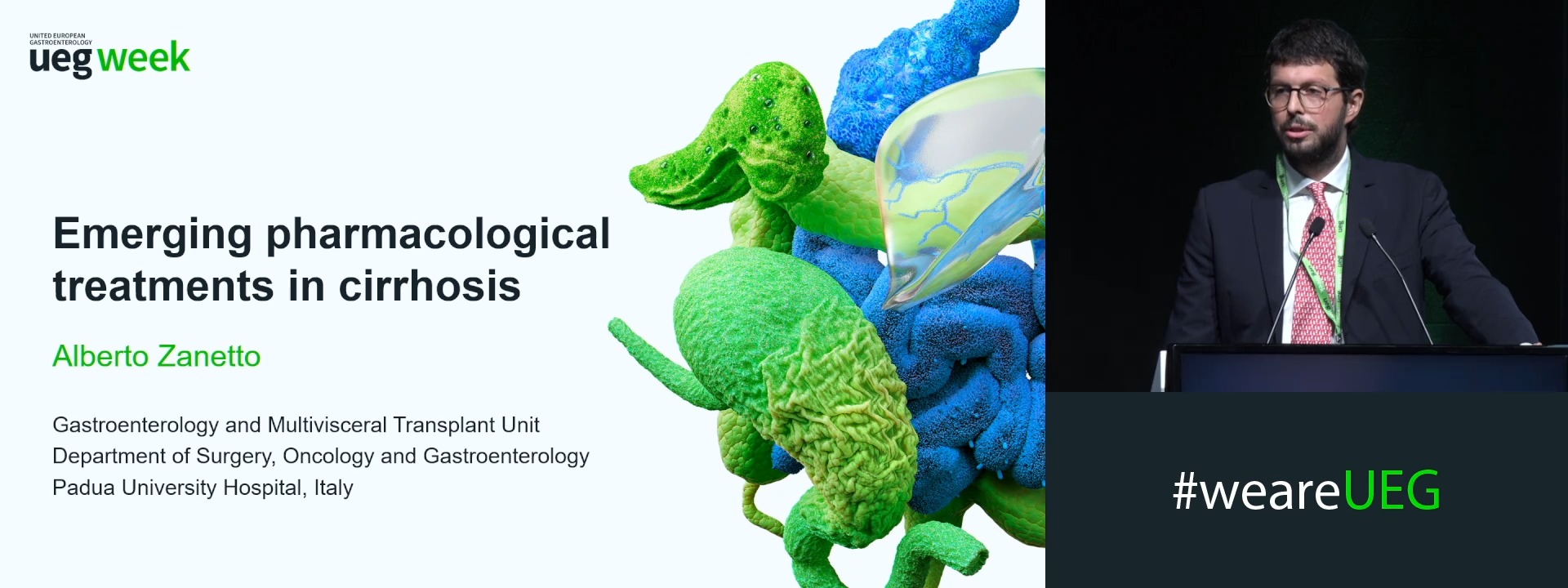
Emerging pharmacological treatments in cirrhosis
Affiliations
1 Department of Surgery, Oncology and Gastroenterology, University of Padua, Padua, Italy
Log in to continue.
This content is part of Gutflix. Log in with your myUEG account, or create one free, to watch it.
Not sure what you can access? Learn more about account types.
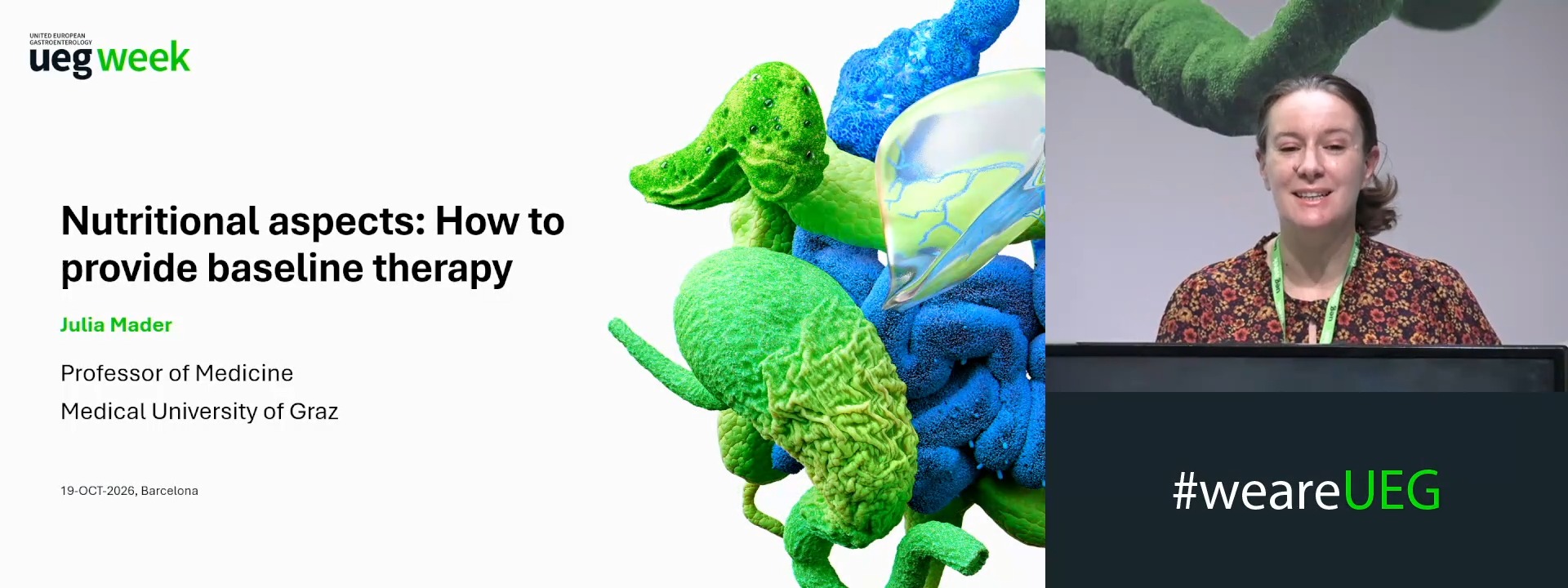
Nutritional aspects: How to provide baseline therapy
Affiliations
1 Medizinsiche Universität Graz, Graz, Austria
Log in to continue.
This content is part of Gutflix. Log in with your myUEG account, or create one free, to watch it.
Not sure what you can access? Learn more about account types.
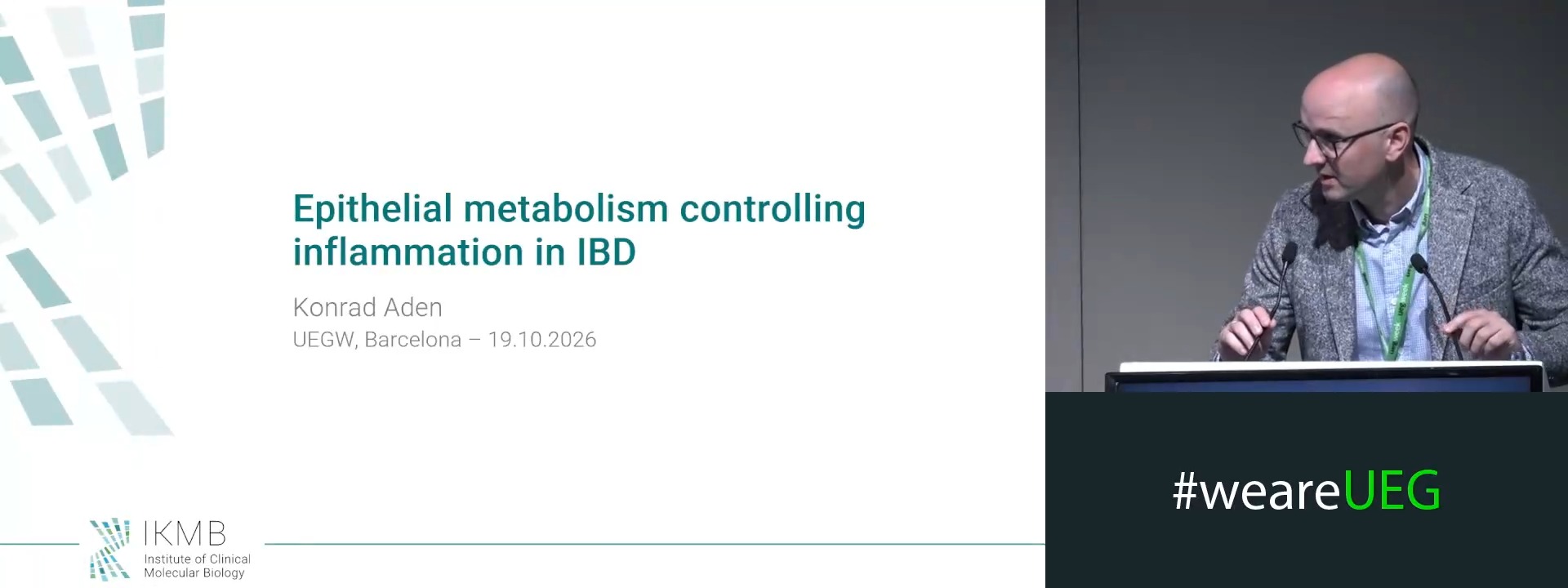
Epithelial metabolism controlling inflammation in IBD
Affiliations
1 IKMB + First Medical Department, Kiel, Germany