UEG's educational platform for gastroenterology education bringing recordings, courses, guidelines, and more together in one place.
Most popular content
Rate for better recommendations!
Your feedback helps us show you more of what you like and less of what you dislike!
Log in to access this content.
Free for all myUEG account holders. Your access level is set automatically based on your occupation. Medical professionals get full access to all content. If you are a non-medical user, you can only access UEG Week content from congresses you attended.
Not sure what you can access? Learn more about account types.

IMPACT OF CMV DETECTION IN COLONIC BIOPSIES ON CLINICAL OUTCOMES IN ACUTE SEVERE ULCERATIVE COLITIS
1 Royal North Shore Hospital, St Leonards, Australia
Conference
Topics
Submission format
Citation
Published
Log in to access this content.
Free for all myUEG account holders. Your access level is set automatically based on your occupation. Medical professionals get full access to all content. If you are a non-medical user, you can only access UEG Week content from congresses you attended.
Not sure what you can access? Learn more about account types.
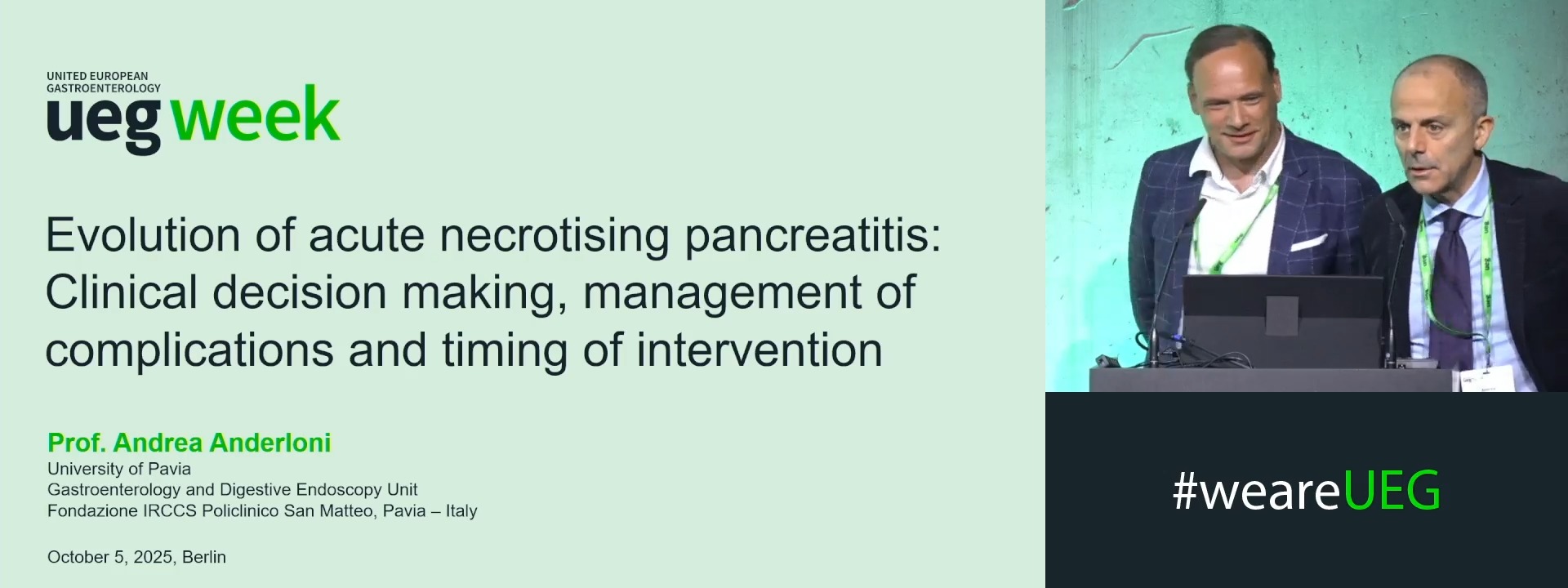
Evolution of acute necrotising pancreatitis: Imaging, clinical decision-making, and management of complications
1 San Matteo Hospital, Pavia, Italy
2 St. Antonius Ziekenhuis, Nieuwegein, Netherlands
Event
Citation
Published
Log in to access this content.
Free for all myUEG account holders. Your access level is set automatically based on your occupation. Medical professionals get full access to all content. If you are a non-medical user, you can only access UEG Week content from congresses you attended.
Not sure what you can access? Learn more about account types.
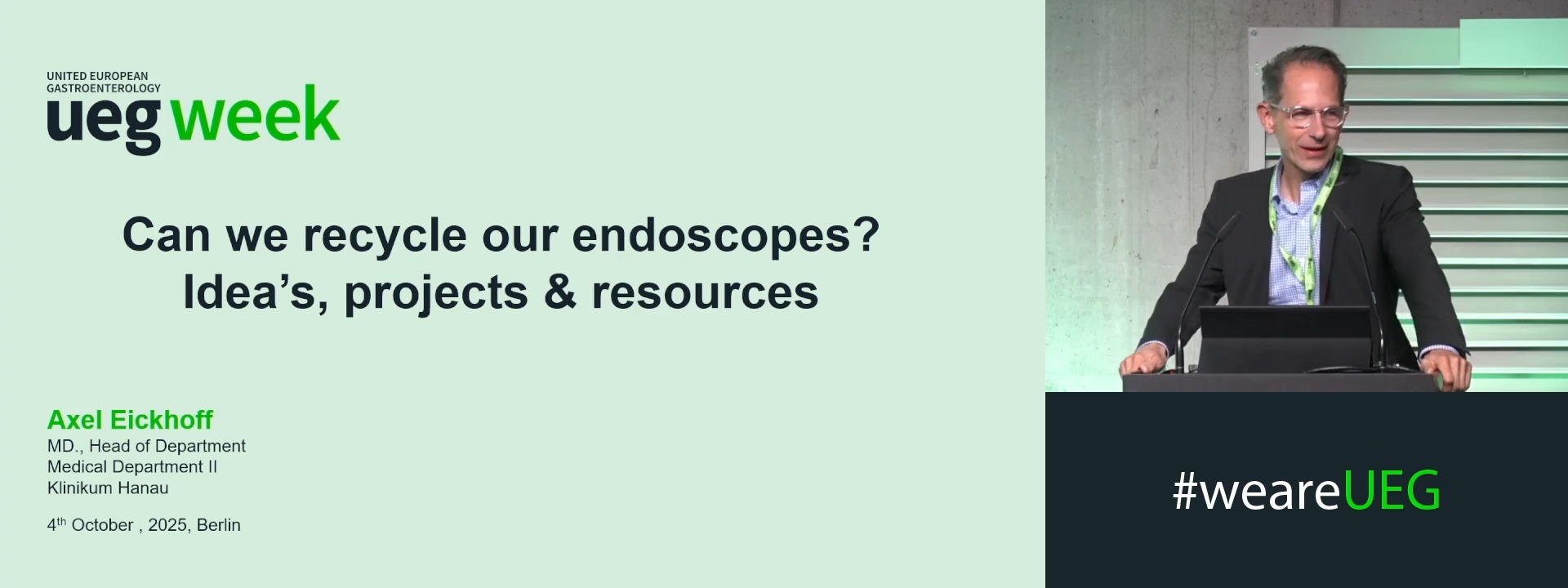
Can we recycle our endoscopes? Ideas, Projects and resources
1 Klinikum Hanau, None, Germany
Event
Topics
Citation
Published
Log in to access this content.
Free for all myUEG account holders. Your access level is set automatically based on your occupation. Medical professionals get full access to all content. If you are a non-medical user, you can only access UEG Week content from congresses you attended.
Not sure what you can access? Learn more about account types.
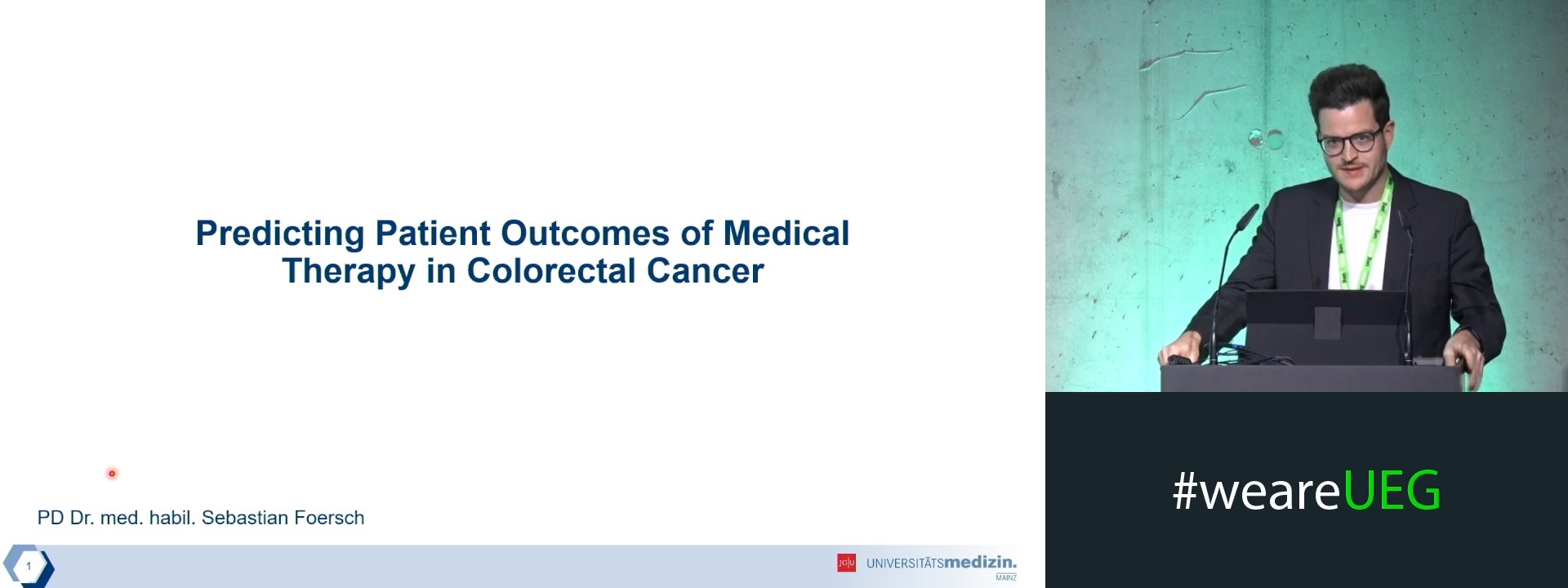
... for medical therapy in colorectal cancer
1 University Medical Center Mainz, Mainz, Germany
Event
Topics
Session
Citation
Published
Log in to access this content.
Free for all myUEG account holders. Your access level is set automatically based on your occupation. Medical professionals get full access to all content. If you are a non-medical user, you can only access UEG Week content from congresses you attended.
Not sure what you can access? Learn more about account types.
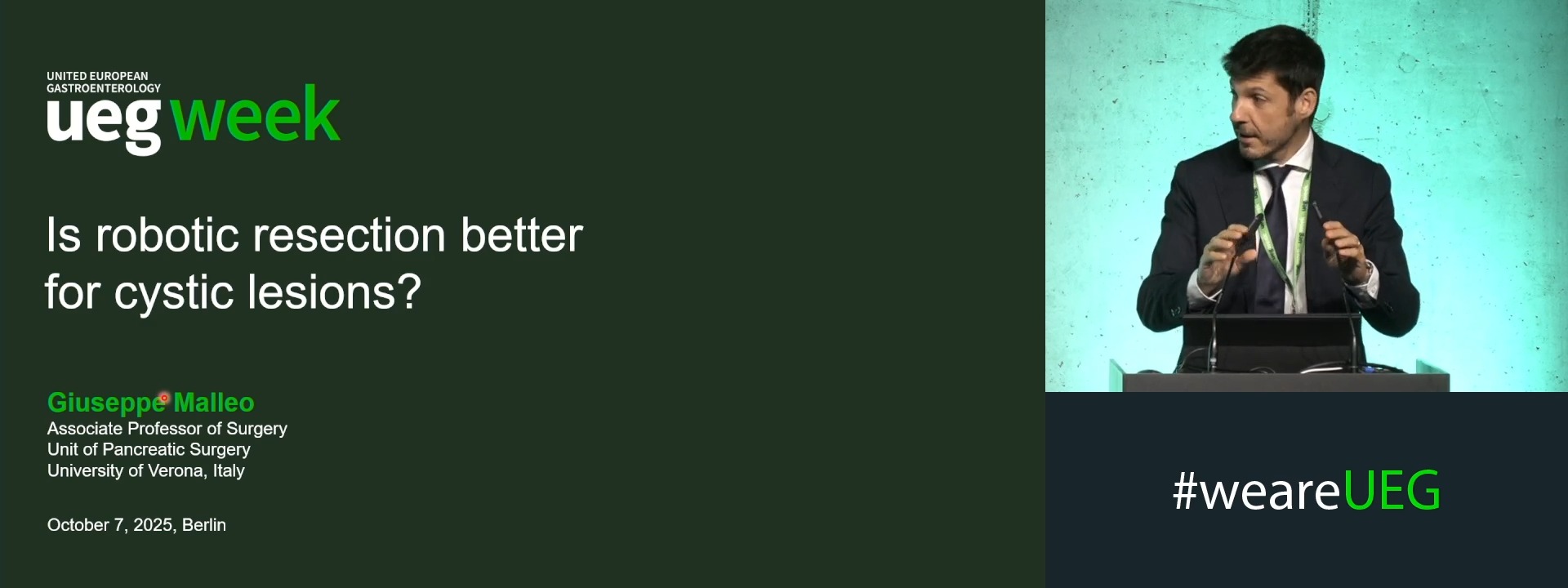
Is robotic resection better for cystic lesions?
1 Unit of General and Pancreatic Surgery, University of Verona Hospital Trust, Verona, Italy
Event
Session
Citation
Published
Log in to access this content.
Free for all myUEG account holders. Your access level is set automatically based on your occupation. Medical professionals get full access to all content. If you are a non-medical user, you can only access UEG Week content from congresses you attended.
Not sure what you can access? Learn more about account types.
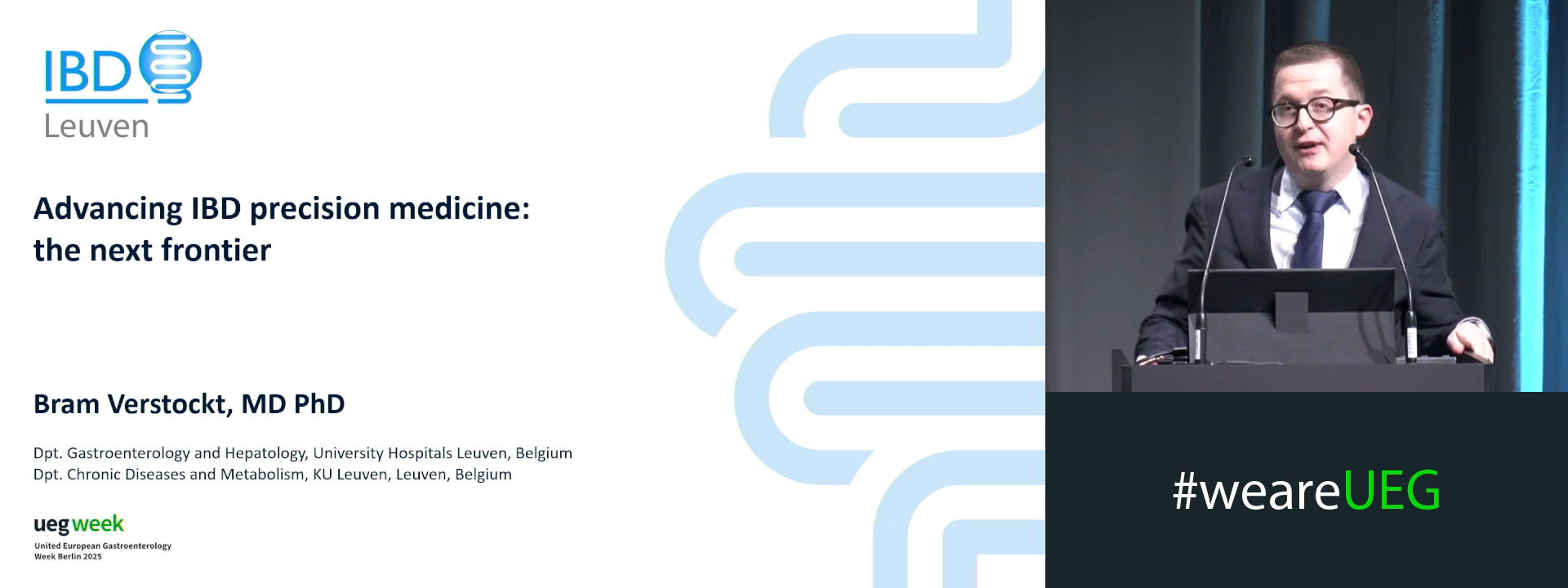
Advancing IBD precision medicine: The next frontier
1 University Hospitals Leuven and KU Leuven, Translational Research in Gastrointestinal Disorders - IB, Leuven, Belgium
Event
Citation
Published
Log in to access this content.
Free for all myUEG account holders. Your access level is set automatically based on your occupation. Medical professionals get full access to all content. If you are a non-medical user, you can only access UEG Week content from congresses you attended.
Not sure what you can access? Learn more about account types.
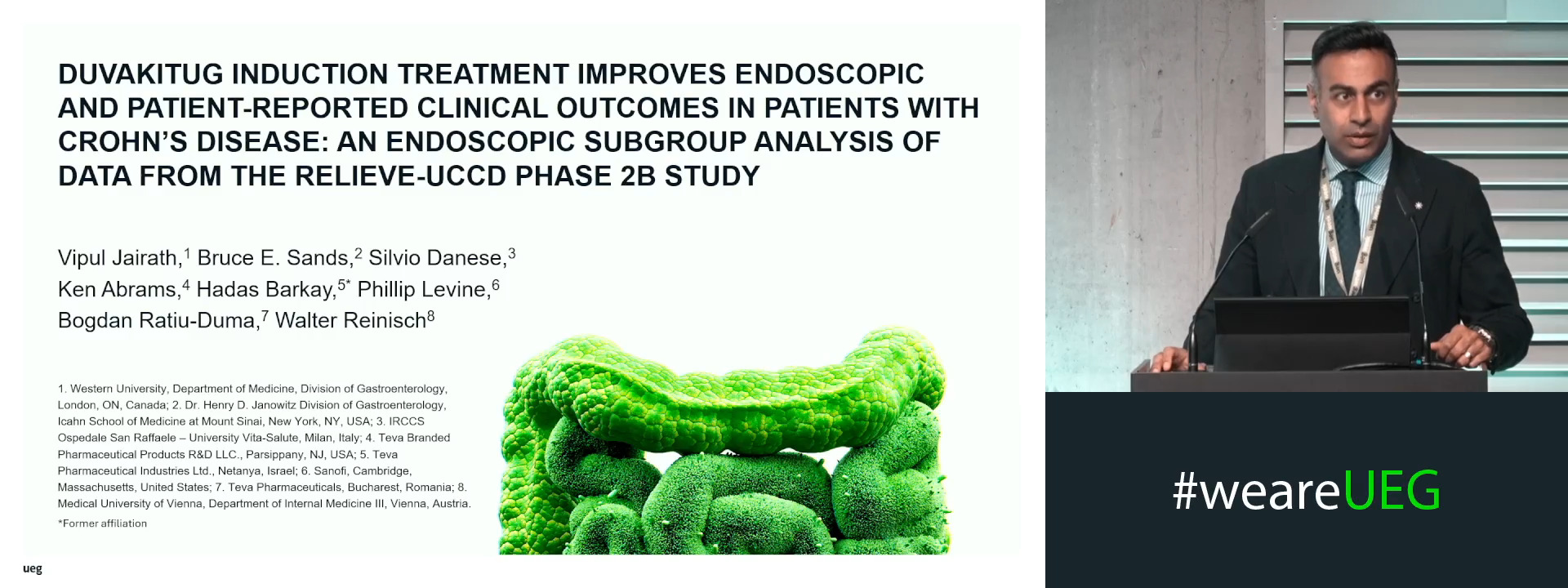
DUVAKITUG INDUCTION TREATMENT IMPROVES ENDOSCOPIC AND PATIENT-REPORTED CLINICAL OUTCOMES IN PATIENTS WITH CROHN’S DISEASE: AN ENDOSCOPIC SUBGROUP ANALYSIS OF DATA FROM THE RELIEVE-UCCD PHASE 2B STUDY
Vipul Jairath 1, Bruce E. Sands 2, Silvio Danese 3, Ken Abrams 4, Hadas Barkay 5, Phillip Levine 6, Bogdan Ratiu-Duma 7, Walter Reinisch 8
1 Western University, London, Canada
2 Icahn School of Medicine at Mount Sinai, New York, United States
3 Vita-Salute San Raffaele University - IRCCS San Raffaele Scientific Institute, Milan, Italy
4 Teva Branded Pharmaceutical Products R&D LLC, Parsippany, United States
5 Teva Pharmaceutical Industries Ltd, Netanya, Israel
6 Sanofi, Cambridge, United States
7 Teva Pharmaceuticals, Bucharest, Romania
8 Medical University of Vienna, Wien, Austria
Event
Submission format
Session