UEG's educational platform for gastroenterology education bringing recordings, courses, guidelines, and more together in one place.
Most popular content
Rate for better recommendations!
Your feedback helps us show you more of what you like and less of what you dislike!
Log in to access this content.
Free for all myUEG account holders. Your access level is set automatically based on your occupation. Medical professionals get full access to all content. If you are a non-medical user, you can only access UEG Week content from congresses you attended.
Not sure what you can access? Learn more about account types.
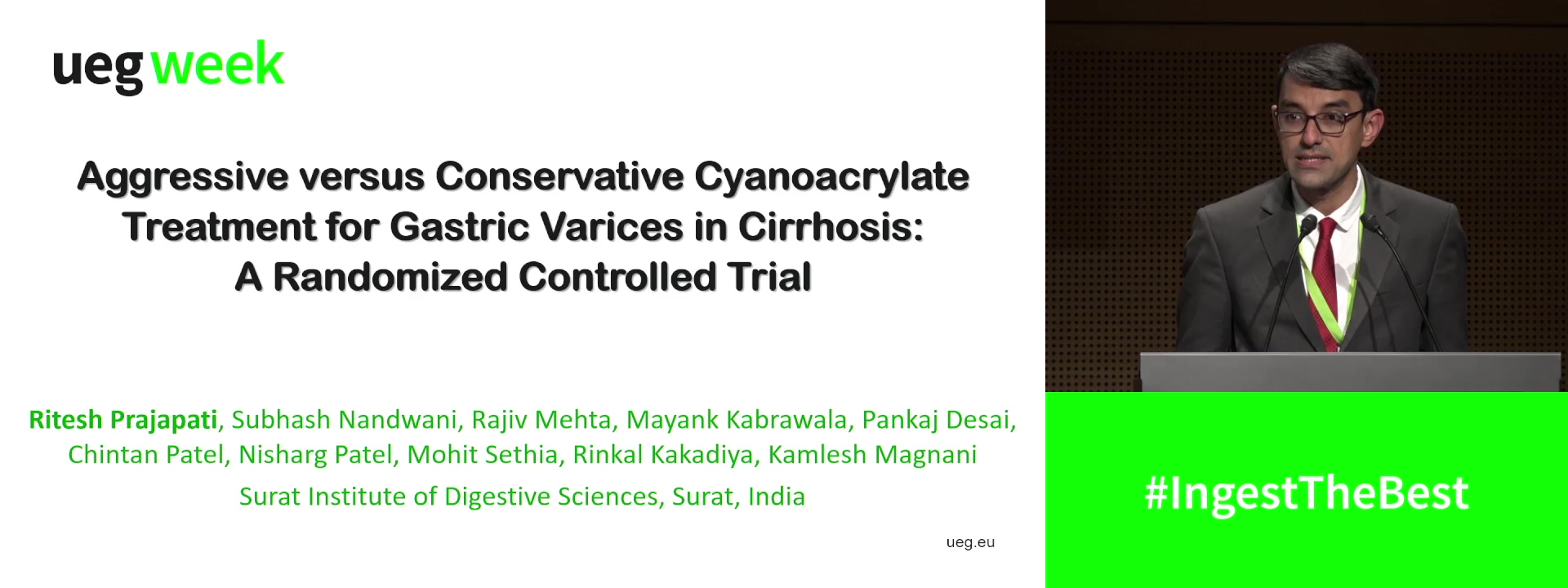
A PROSPECTIVE, SINGLE-CENTER, RANDOMIZED, OPEN-LABEL STUDY TO INVESTIGATE EFFICACY AND LONG-TERM OUTCOME OF CYANOACRYLATE GLUE FOR ALL GASTRIC VARICES (GOV1, GOV2, IGV1, IGV2) VERSUS ITS USE ONLY GOV 2 AND IGV 1 GASTRIC VARICES WITH STIGMA OF RECENT HAEMO
Pankaj Desai 1, Chintan Patel 1, Mayank V Kabrawala 1, Ritesh Prajapati 1, Rinkalben Kakadiya 1, Mohit Sethia 1, Nisharg Patel 1
1 SIDS Hospital & Research Centre, Surat, India
Event
Submission format
Citation
Published
Log in to access this content.
Free for all myUEG account holders. Your access level is set automatically based on your occupation. Medical professionals get full access to all content. If you are a non-medical user, you can only access UEG Week content from congresses you attended.
Not sure what you can access? Learn more about account types.
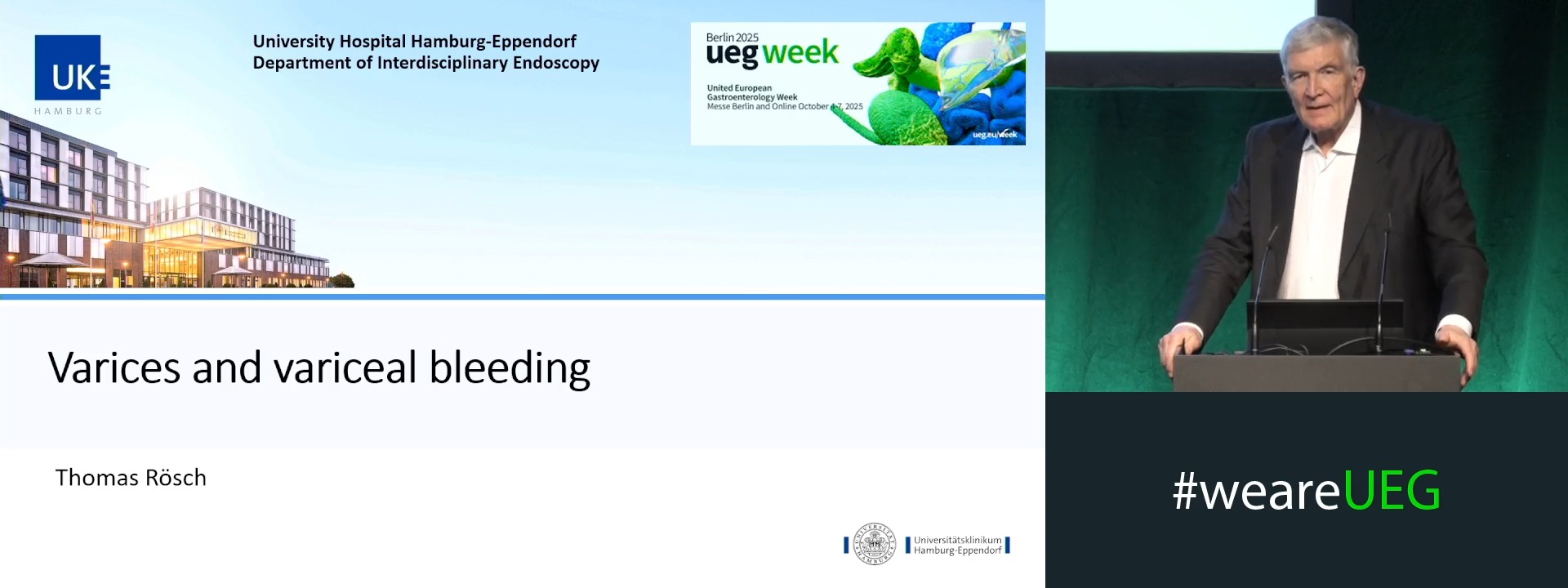
Variceal bleeding from Ligation to Sengstaken
1 Clinic for Interdisciplinary Endoscopy, Hamburg, Germany
Event
Topics
Citation
Published
Log in to access this content.
Free for all myUEG account holders. Your access level is set automatically based on your occupation. Medical professionals get full access to all content. If you are a non-medical user, you can only access UEG Week content from congresses you attended.
Not sure what you can access? Learn more about account types.
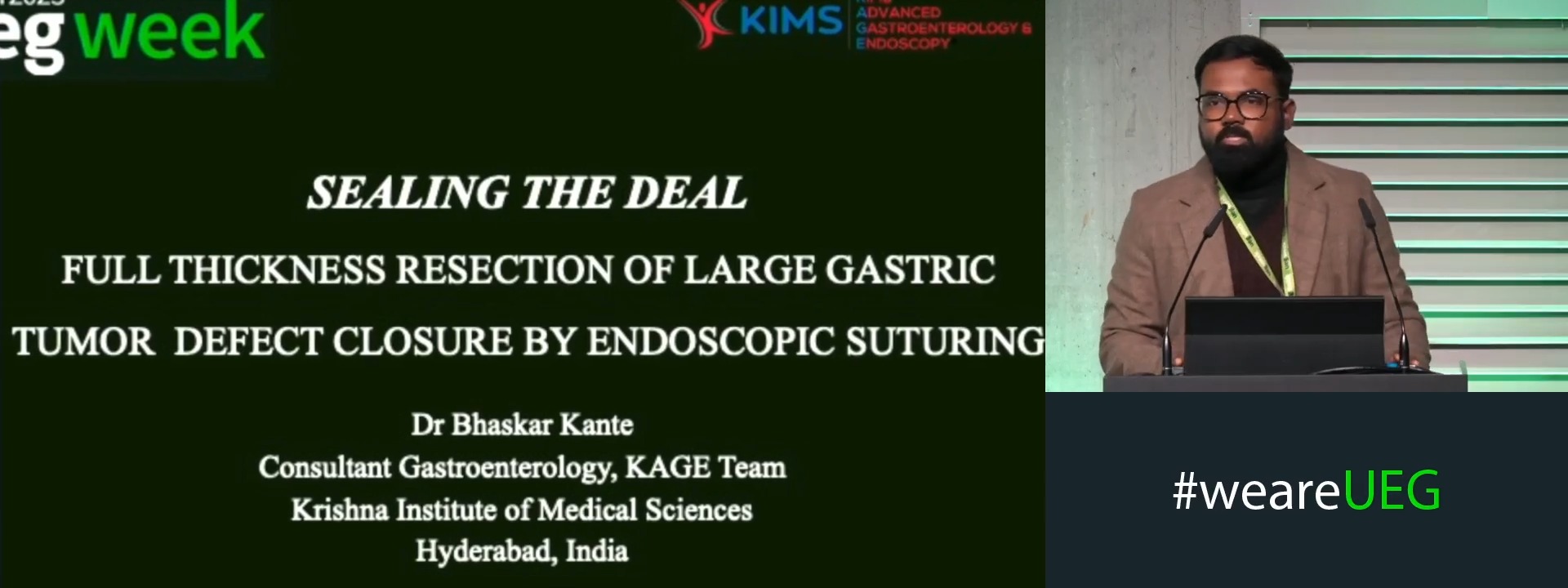
SEALING THE DEAL: FULL THICKNESS RESECTION AND ENDOSCOPIC SUTURING OF A LARGE GASTRIC TUMOUR
bhaskar kante 1, Sreekanth Appasani 1, Harshavardhan Reddy G 1, Venu Gongati 1, Spoorthi Kolla 1, Viswanath Kamisetty 1, Harshavardhan Telaprolu 1
1 Krishna Institute of Medical Sciences, Hyderabad, India
Event
Submission format
Citation
Published
Log in to access this content.
Free for all myUEG account holders. Your access level is set automatically based on your occupation. Medical professionals get full access to all content. If you are a non-medical user, you can only access UEG Week content from congresses you attended.
Not sure what you can access? Learn more about account types.
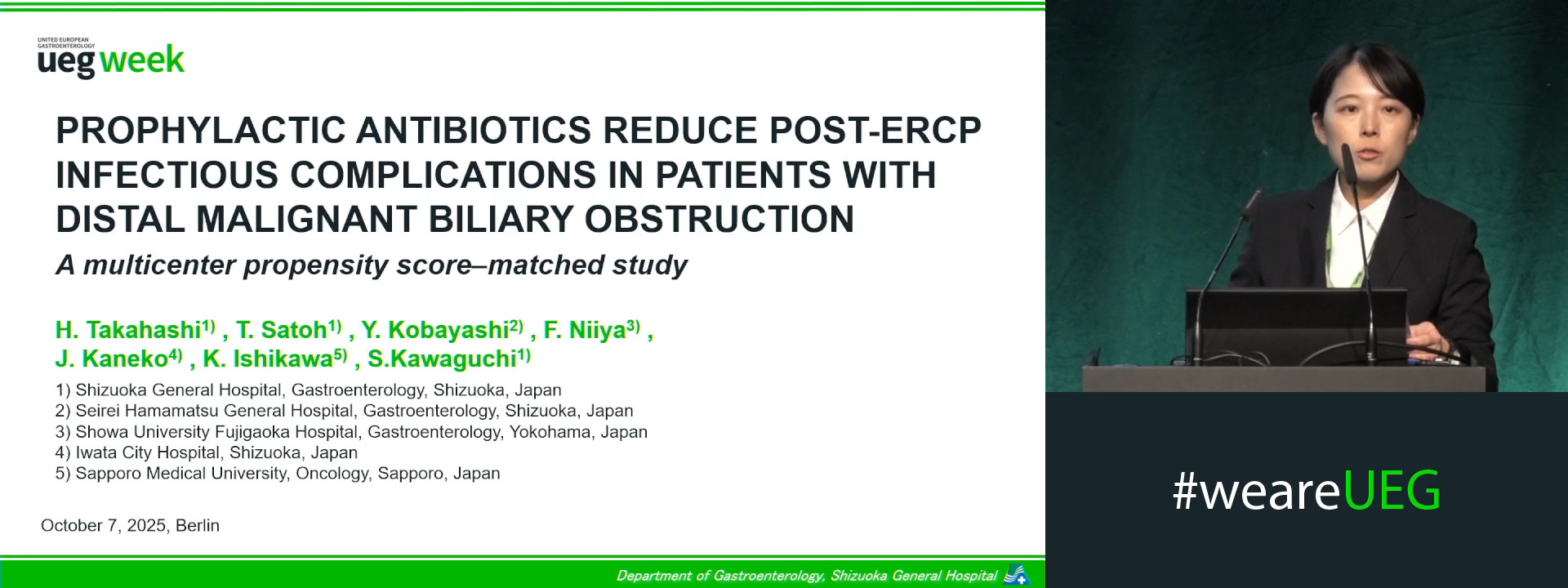
PROPHYLACTIC ANTIBIOTICS REDUCE POST ENDOSCOPIC RETROGRADE CHOLANGIOPANCREATOGRAPHY INFECTIOUS COMPLICATIONS IN PATIENTS WITH DISTAL MALIGNANT BILIARY OBSTRUCTION: A MULTICENTER PROPENSITY SCORE MATCHED STUDY
Haruna Takahashi 1, Tatsunori Satoh 1, Yosuke Kobayashi 2, Fumitaka Niiya 3, Junichi Kaneko 4, Kazuma Ishikawa 5, Shinya Kawaguchi 1
1 Shizuoka General Hospital, Shizuoka, Japan
2 Seirei Hamamatsu General Hospital, Shizuoka, Japan
3 Showa University Fujigaoka Hospital, Yokohama, Japan
4 Iwata City Hospital, Shizuoka, Japan
5 Sapporo Medical University, Sapporo, Japan
Event
Topics
Submission format
Citation
Published
Log in to access this content.
Free for all myUEG account holders. Your access level is set automatically based on your occupation. Medical professionals get full access to all content. If you are a non-medical user, you can only access UEG Week content from congresses you attended.
Not sure what you can access? Learn more about account types.
RIFAXIMIN FOR SMALL INTESTINAL BACTERIAL OVERGROWTH. CAN WE PREDICT THE RESPONSE?
1 Cambridge University Hospitals NHS Foundation Trust, Cambridge, United Kingdom
2 University of Cambridge, Cambridge, United Kingdom
Conference
Topics
Submission format
Session
Citation
Published

Log in to access this content.
Free for all myUEG account holders. Your access level is set automatically based on your occupation. Medical professionals get full access to all content. If you are a non-medical user, you can only access UEG Week content from congresses you attended.
Not sure what you can access? Learn more about account types.
Summary: Houston we have a problem! GI bleeding and endoscopic therapy of endoscopic and surgical complications
1 Humanitas Research Hospital IRCCS, Milan, Italy
Event
Citation
Published
Log in to access this content.
Free for all myUEG account holders. Your access level is set automatically based on your occupation. Medical professionals get full access to all content. If you are a non-medical user, you can only access UEG Week content from congresses you attended.
Not sure what you can access? Learn more about account types.
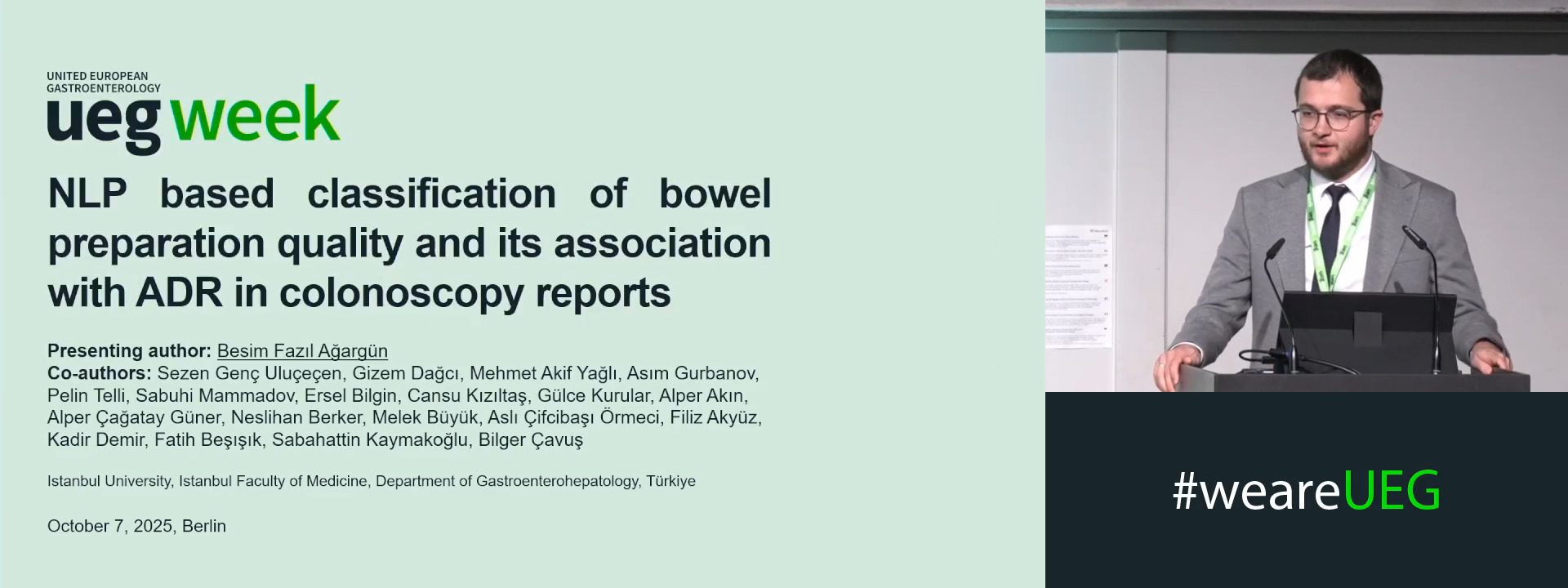
NATURAL LANGUAGE PROCESSING BASED CLASSIFICATION OF BOWEL PREPARATION QUALITY AND ITS ASSOCIATION WITH ADENOMA DETECTION IN >11,000 COLONOSCOPY REPORTS: A LATE-BREAKING REAL-WORLD ANALYSIS
Besim Fazıl Ağargün 1, Sezen Genç Uluçeçen 1, Gizem Dağcı 1, Mehmet Akif Yagli 1, Asim Gurbanov 1, Pelin Telli 1, Sabuhi Mammadov 1, Ersel Bilgin 1, Cansu Kiziltas 1, Gülce Kurular 1, Alper Akın 1, Beyza Bozan 1, Asli Cifcibasi Ormeci 1, Filiz Akyüz 1, Kadir Demir 1, Fatih Besisik 1, Sabahattin Kaymakoglu 1, Bilger Cavus 1
1 Istanbul Faculty of Medicine- Istanbul University, Istanbul, Türkiye
Event
Topics
Submission format
Session