UEG's content platform for gastroenterology education bringing recordings, courses, guidelines, and more together in one place.
Trending on Gutflix
Rate for better recommendations!
Your feedback helps us show you more of what you like and less of what you dislike!
Log in to continue.
This content is part of Gutflix. Log in with your myUEG account, or create one free, to watch it.
Not sure what you can access? Learn more about account types.
Panel discussion: Pancreatic and small bowel neuroendocrine tumours
Log in to continue.
This content is part of Gutflix. Log in with your myUEG account, or create one free, to watch it.
Not sure what you can access? Learn more about account types.
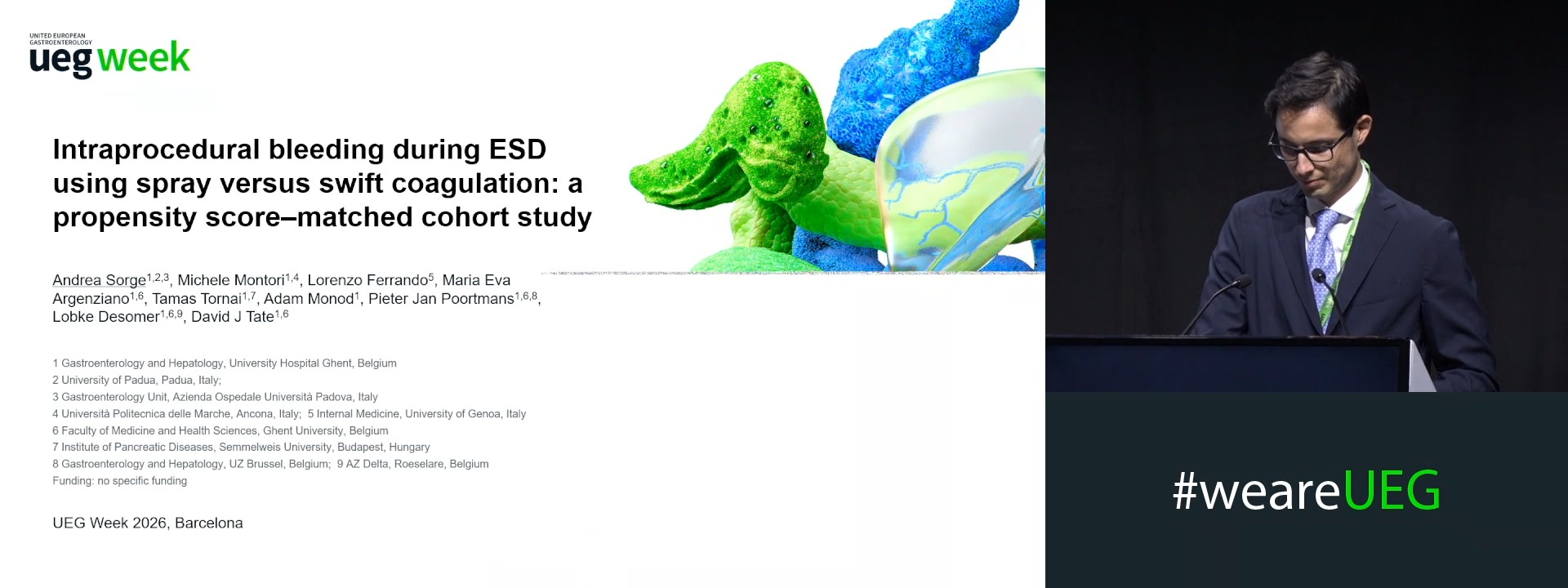
SPRAY COAGULATION REDUCES INTRAPROCEDURAL BLEEDING DURING ENDOSCOPIC SUBMUCOSAL DISSECTION COMPARED TO SWIFT COAGULATION: A PROPENSITY SCORE–MATCHED COHORT STUDY
Andrea Sorge 1,2, Michele Montori 2, Maria Eva Argenziano 2, Tamás Tornai 3, Adam Monod 2, Pieter Jan Poortmans 4, Lobke Desomer 5, David James Tate 6
Affiliations
1 University of Padua, Padua, Italy
2 University Hospital Ghent, Ghent, Belgium
3 Semmelweis University, Budapest, Hungary
4 University Hospital Ghent, University Hospital Brussels, Asse, Belgium
5 Az Delta, Drongen, Belgium
6 University Hospital Ghent, Gent, Belgium
Log in to continue.
This content is part of Gutflix. Log in with your myUEG account, or create one free, to watch it.
Not sure what you can access? Learn more about account types.
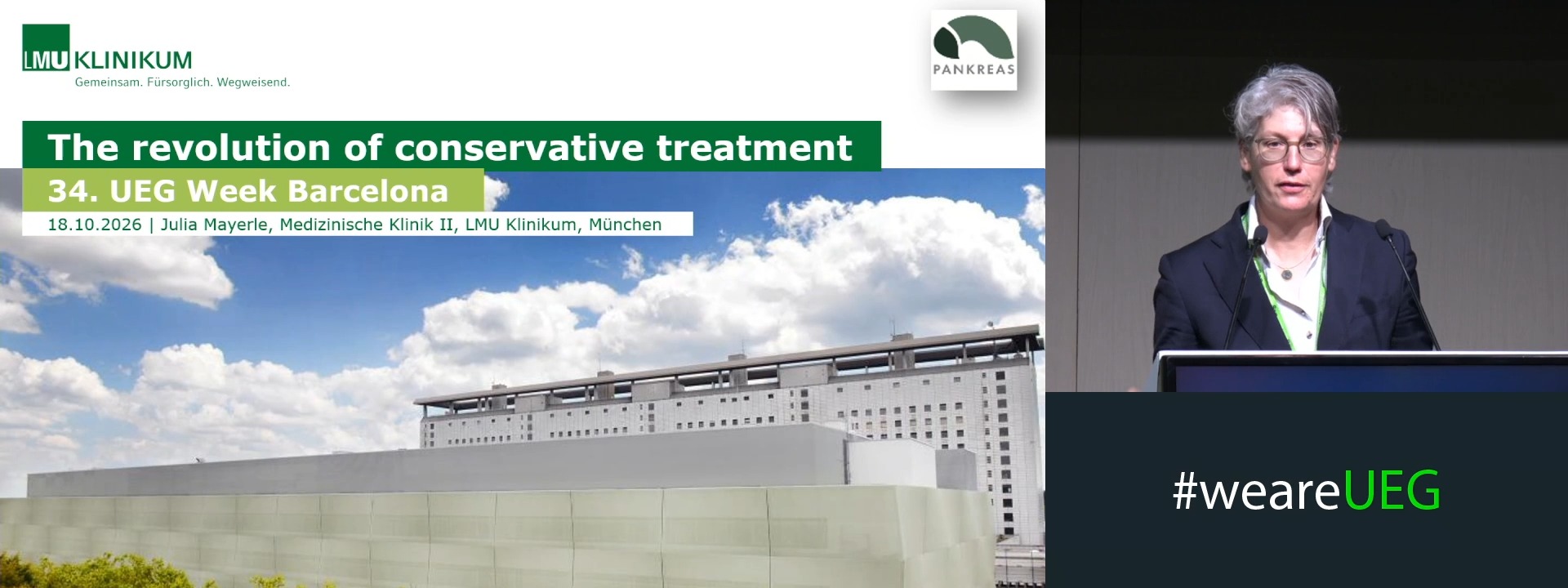
The revolution of conservative treatment
Affiliations
1 Klinikum der LMU München-Grosshadern, München, Germany
Log in to continue.
This content is part of Gutflix. Log in with your myUEG account, or create one free, to watch it.
Not sure what you can access? Learn more about account types.
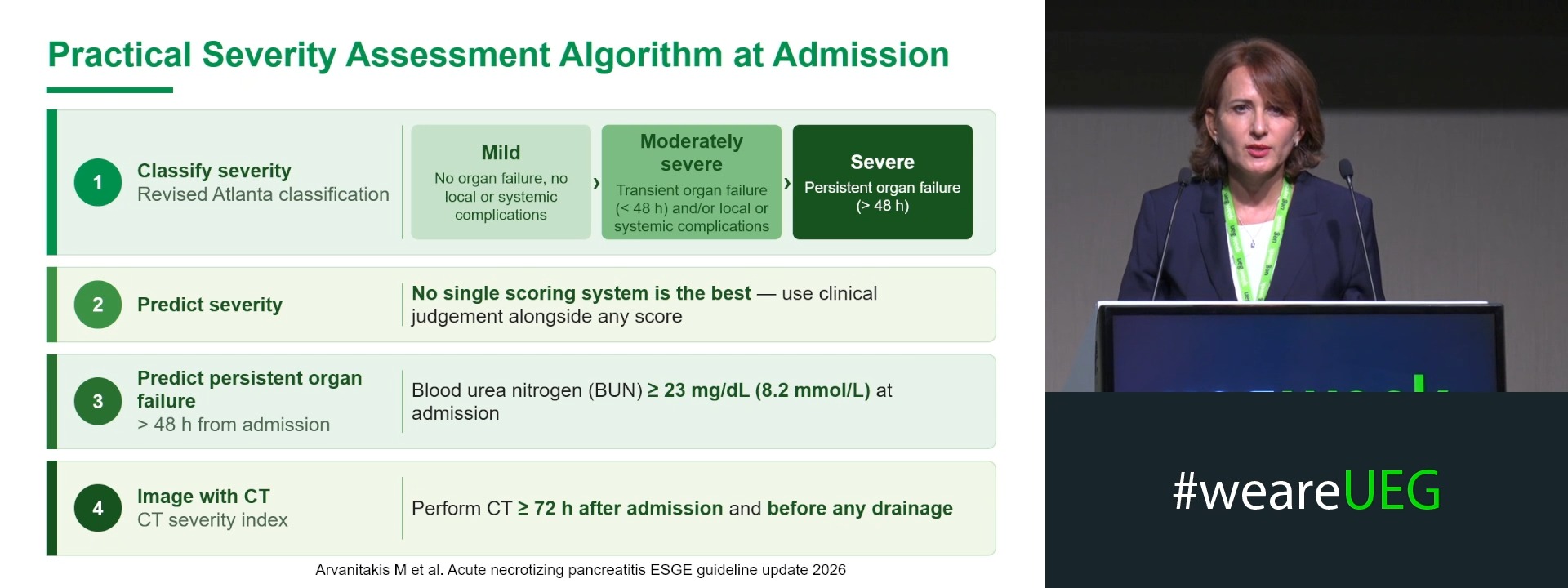
Summary: Acute pancreatitis: Are we still innocent bystanders?
Affiliations
1 University of Medicine and Pharmacy Iuliu Hatieganu Cluj-Napoca, Romania, Cluj Napoca, Romania
Log in to continue.
This content is part of Gutflix. Log in with your myUEG account, or create one free, to watch it.
Not sure what you can access? Learn more about account types.
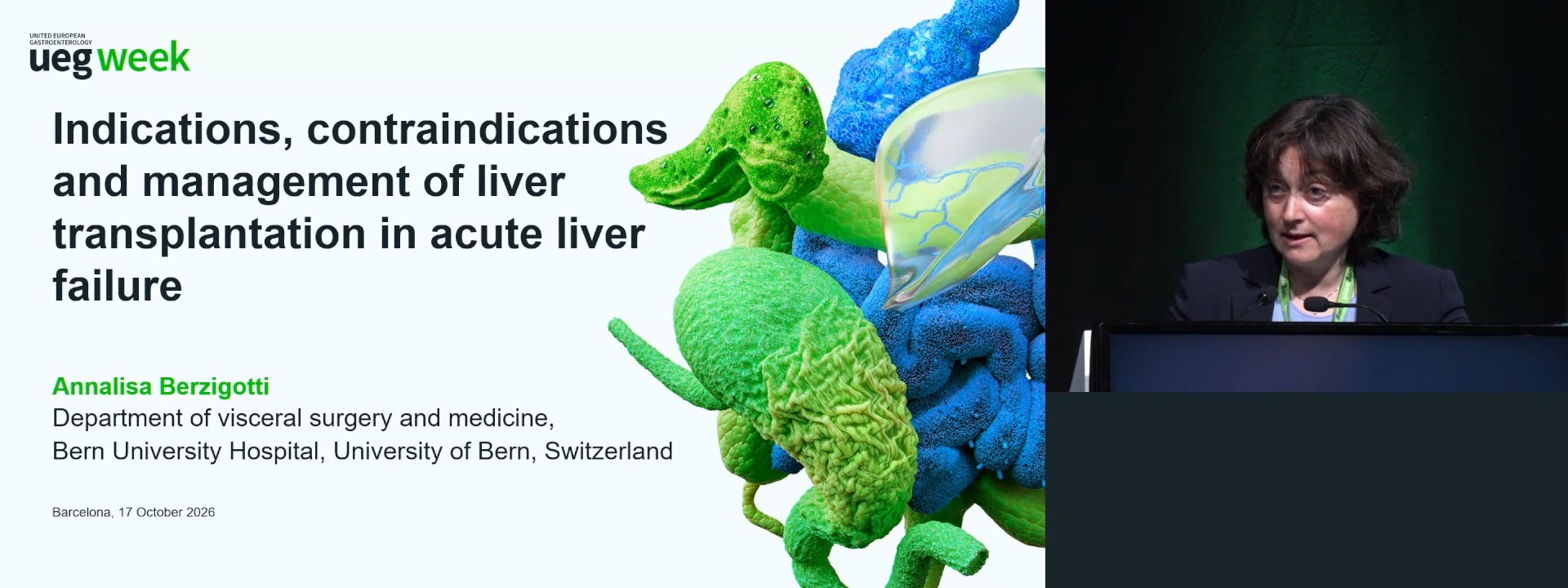
Indications, contraindications and management of liver transplantation in acute liver failure
Affiliations
1 Inselspital, University Hospital of Berne, Berne, Switzerland