UEG's content platform for gastroenterology education bringing recordings, courses, guidelines, and more together in one place.
Trending on Gutflix
Rate for better recommendations!
Your feedback helps us show you more of what you like and less of what you dislike!
Log in to continue.
This content is part of Gutflix. Log in with your myUEG account, or create one free, to watch it.
Not sure what you can access? Learn more about account types.
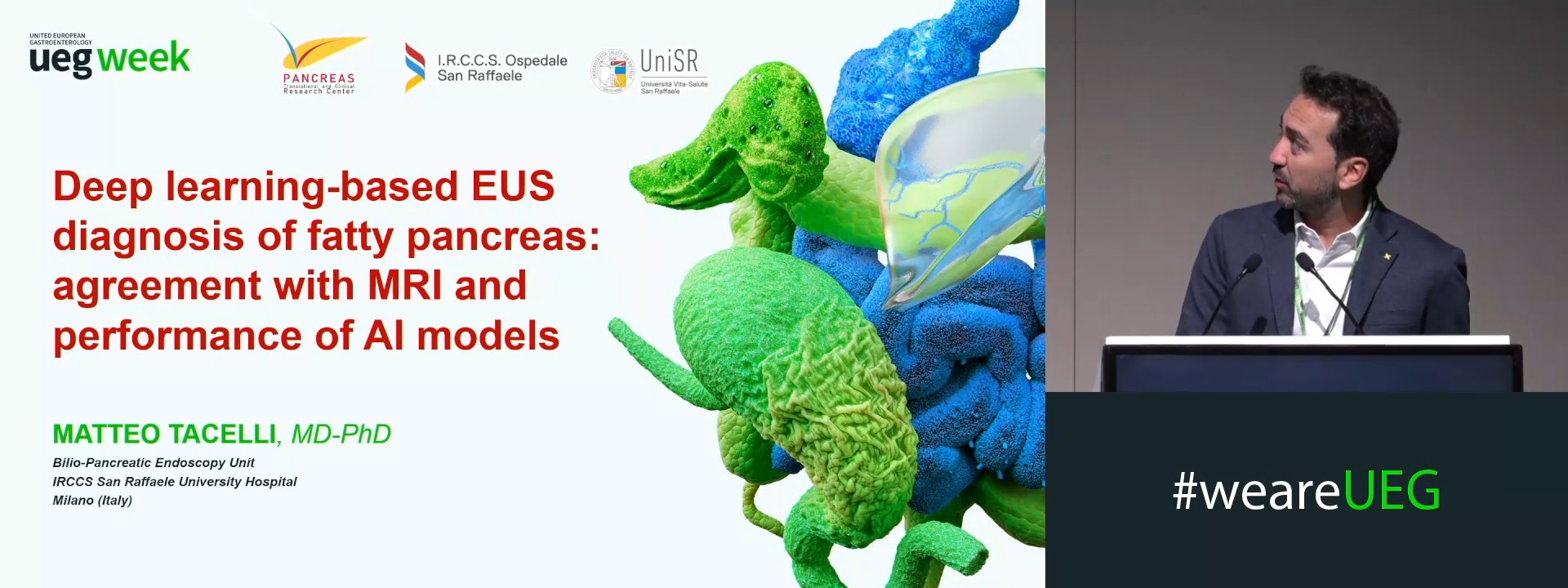
DEEP LEARNING-BASED ENDOSCOPIC ULTRASOUND DIAGNOSIS OF FATTY PANCREAS: AGREEMENT WITH MRI AND PERFORMANCE OF AI MODELS
Matteo Tacelli 1, Alberta De monti 2, Maria Chiara Petrone 1, Piera Zaccari 1, Gemma Rossi 1, Francesco Prato 1, Diego Palumbo 1, Francesco De Cobelli 1, Paolo Giorgio Arcidiacono 1
Affiliations
1 San Raffaele Scientific Institute IRCCS, Milano, Italy
2 Lecco Hospital, Milano, Italy
Log in to continue.
This content is part of Gutflix. Log in with your myUEG account, or create one free, to watch it.
Not sure what you can access? Learn more about account types.
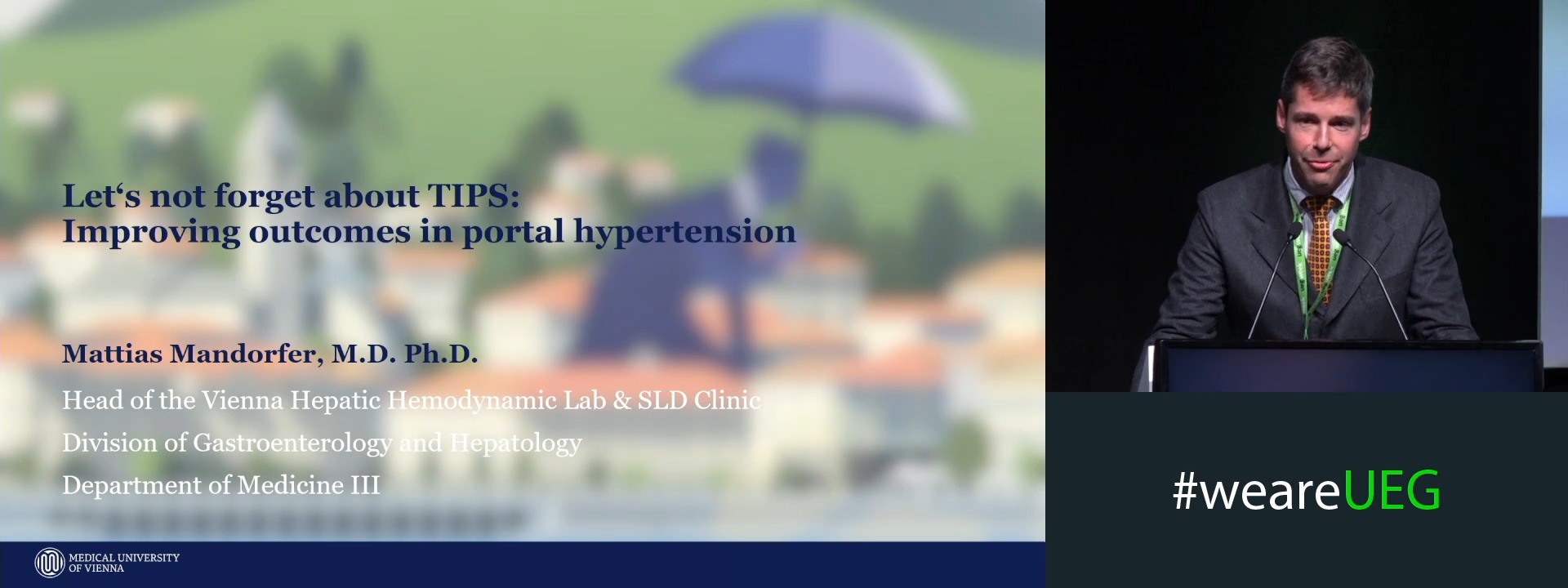
Let’s not forget about TIPS: Improving outcomes in portal hypertension
Affiliations
1 Medical University of Vienna, Vienna, Austria
Log in to continue.
This content is part of Gutflix. Log in with your myUEG account, or create one free, to watch it.
Not sure what you can access? Learn more about account types.
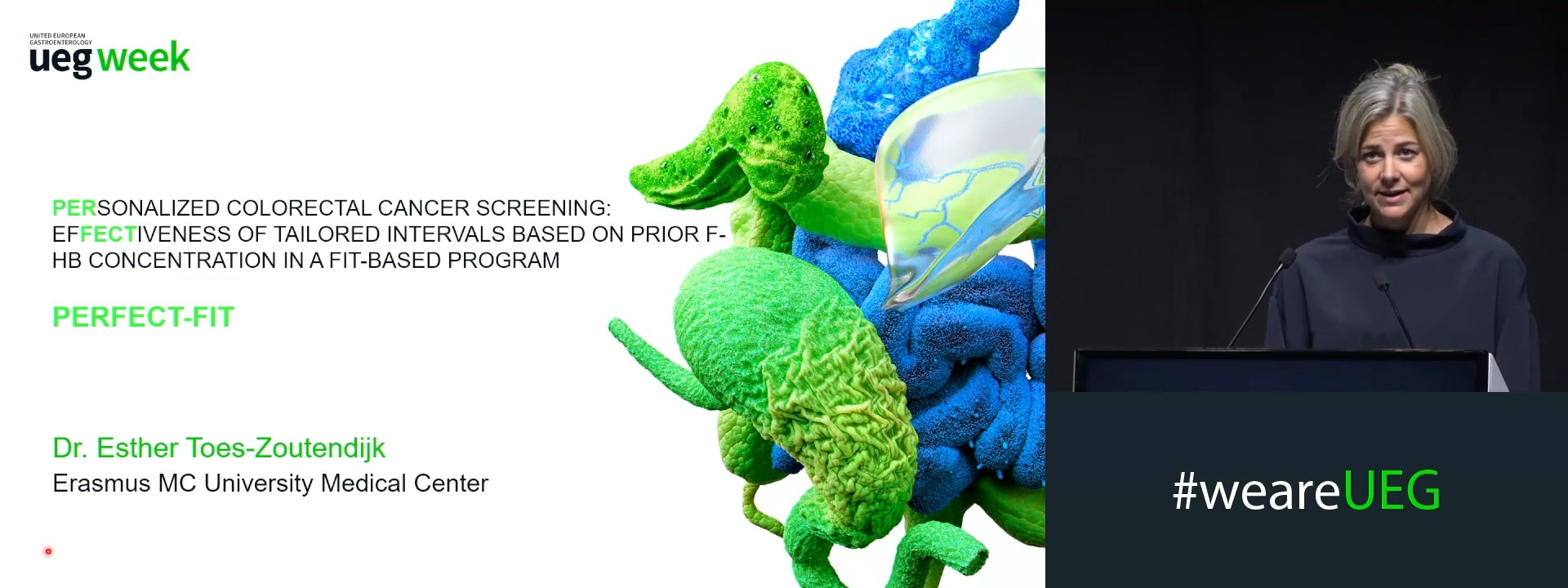
EFFECTIVENESS OF TAILORED SCREENING INTERVALS BASED ON PRIOR FECAL HEMOGLOBIN CONCENTRATION IN FIT-BASED COLORECTAL CANCER SCREENING: RESULTS OF THE RANDOMIZED CONTROLLED TRIAL PERFECT-FIT
Esther Toes-Zoutendijk 1, Lucie de Jonge 1, Emilie Breekveldt 1, Manon C.W. Spaander 1, Evelien Dekker 2, Folkert J. van Kemenade 1, Unknown Unknown 1, Iris Nagtegaal 3, Marc Thelen 4, Monique van leerdam 5, Iris Lansdorp-Vogelaar 6
Affiliations
1 Erasmus MC University Medical Center, Rotterdam, Netherlands
2 AMC, Amsterdam, Netherlands
3 Radboud University Nijmegen Medical Center Dept. of Pathology, Nijmegen, Netherlands
4 Radboud University Nijmegen Medical Center, Nijmegen, Netherlands
5 Netherlands Cancer Institute, Amstelveen, Netherlands
6 Erasmus MC University Medical Center Rotterdam, Rotterdam, Netherlands
Log in to continue.
This content is part of Gutflix. Log in with your myUEG account, or create one free, to watch it.
Not sure what you can access? Learn more about account types.
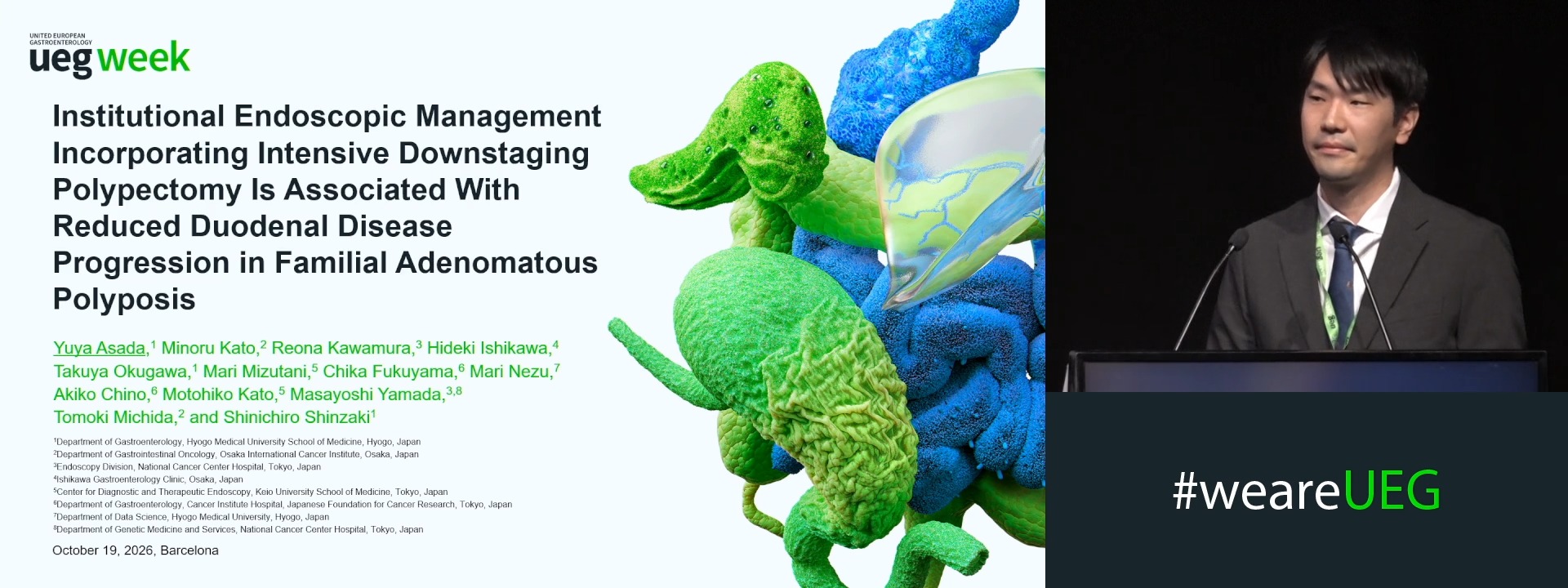
INSTITUTIONAL ENDOSCOPIC MANAGEMENT INCORPORATING INTENSIVE DOWNSTAGING POLYPECTOMY IS ASSOCIATED WITH REDUCED DUODENAL DISEASE PROGRESSION IN FAMILIAL ADENOMATOUS POLYPOSIS
Yuya Asada 1, Minoru Kato 2, Reona Kawamura 3, Hideki Ishikawa 4, Takuya Okugawa 1, Mari Mizutani 5, Chika Fukuyama 6, Mari Nezu 7, Akiko Chino 6, Motohiko Kato 5, Masayoshi Yamada 3, Tomoki Michida 2, Shinichiro Shinzaki 1
Affiliations
1 Hyogo Medical University School of Medicine, Hyogo, Japan
2 Osaka International Cancer Institute, Osaka, Japan
3 National Cancer Center Hospital, Tokyo, Japan
4 Ishikawa Gastroenterology Clinic, Osaka, Japan
5 Keio University School of Medicine, Tokyo, Japan
6 Cancer Institute Hospital, Japanese Foundation for Cancer Research, Tokyo, Japan
7 Hyogo Medical University, Hyogo, Japan
Log in to continue.
This content is part of Gutflix. Log in with your myUEG account, or create one free, to watch it.
Not sure what you can access? Learn more about account types.
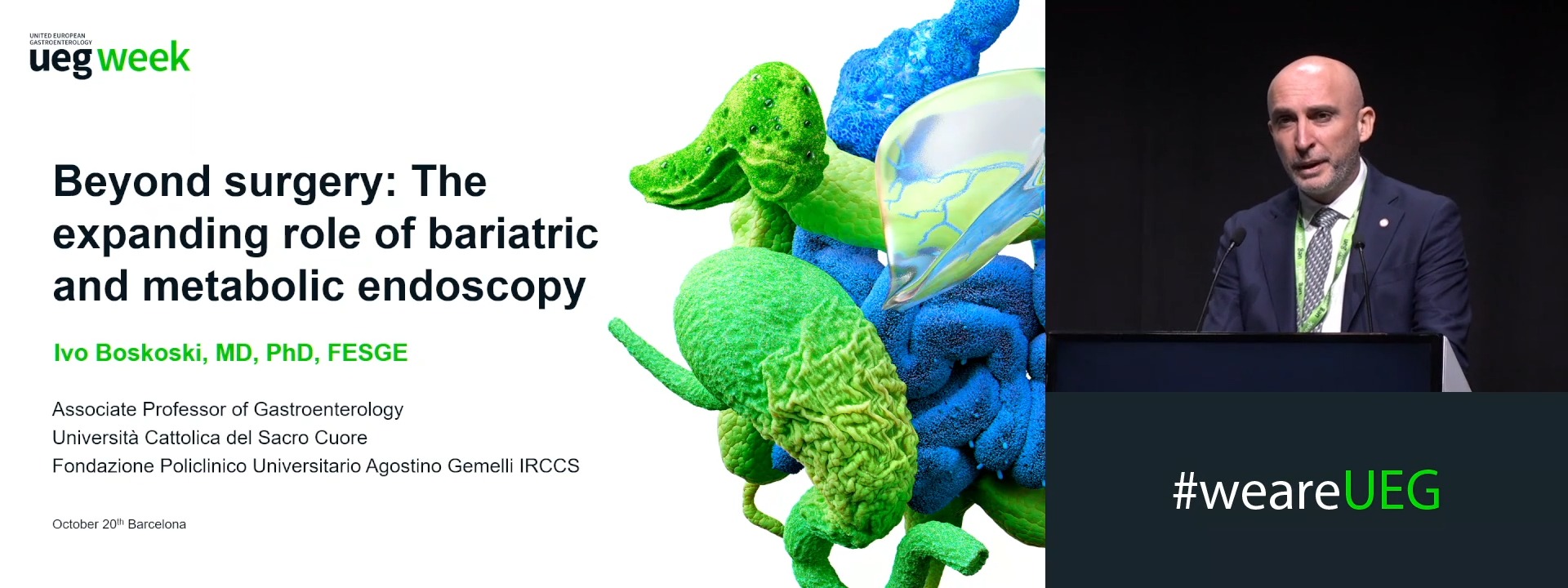
Beyond surgery: The expanding role of bariatric and metabolic endoscopy
Affiliations
1 Catholic University of Rome Digestive Endoscopy Unit, Rome, Italy
Log in to continue.
This content is part of Gutflix. Log in with your myUEG account, or create one free, to watch it.
Not sure what you can access? Learn more about account types.
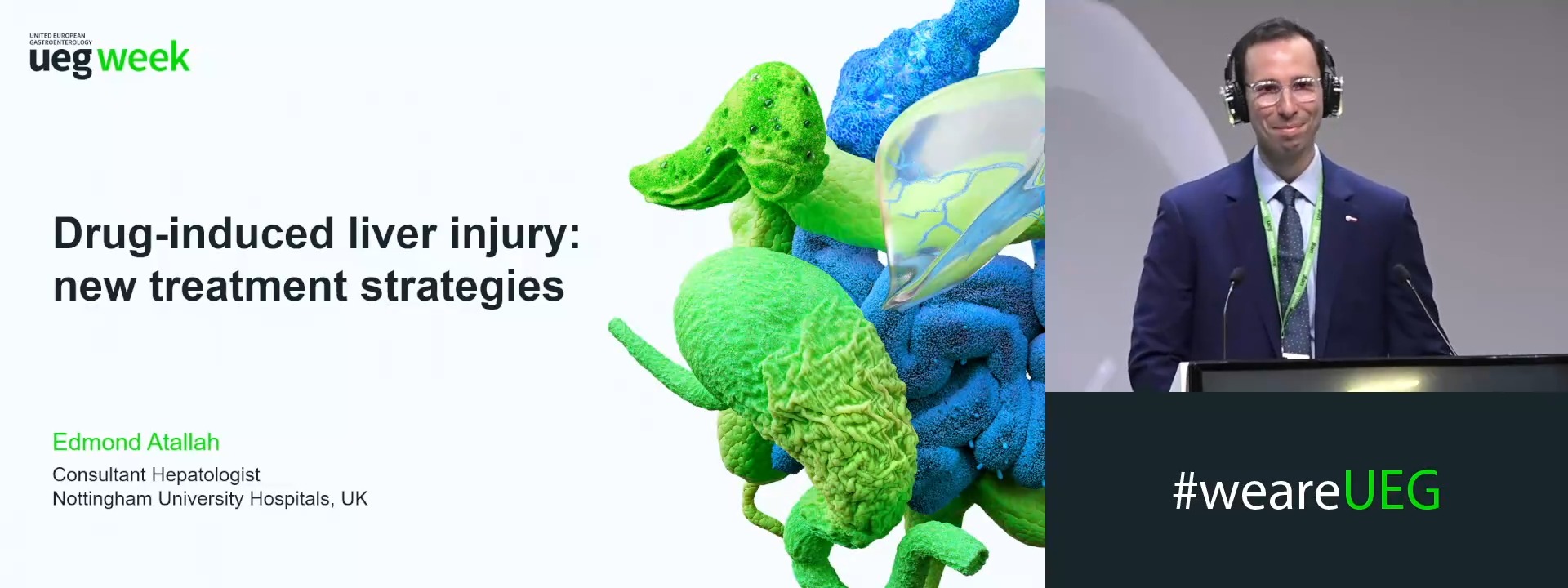
Drug-induced liver injury: new treatment strategies
Affiliations
1 NIHR Nottingham Biomedical Research Centre & Nottingham University Hospitals NHS Trust, Nottingham, United Kingdom