UEG's content platform for gastroenterology education bringing recordings, courses, guidelines, and more together in one place.
Trending on Gutflix
Rate for better recommendations!
Your feedback helps us show you more of what you like and less of what you dislike!
Log in to continue.
This content is part of Gutflix. Log in with your myUEG account, or create one free, to watch it.
Not sure what you can access? Learn more about account types.
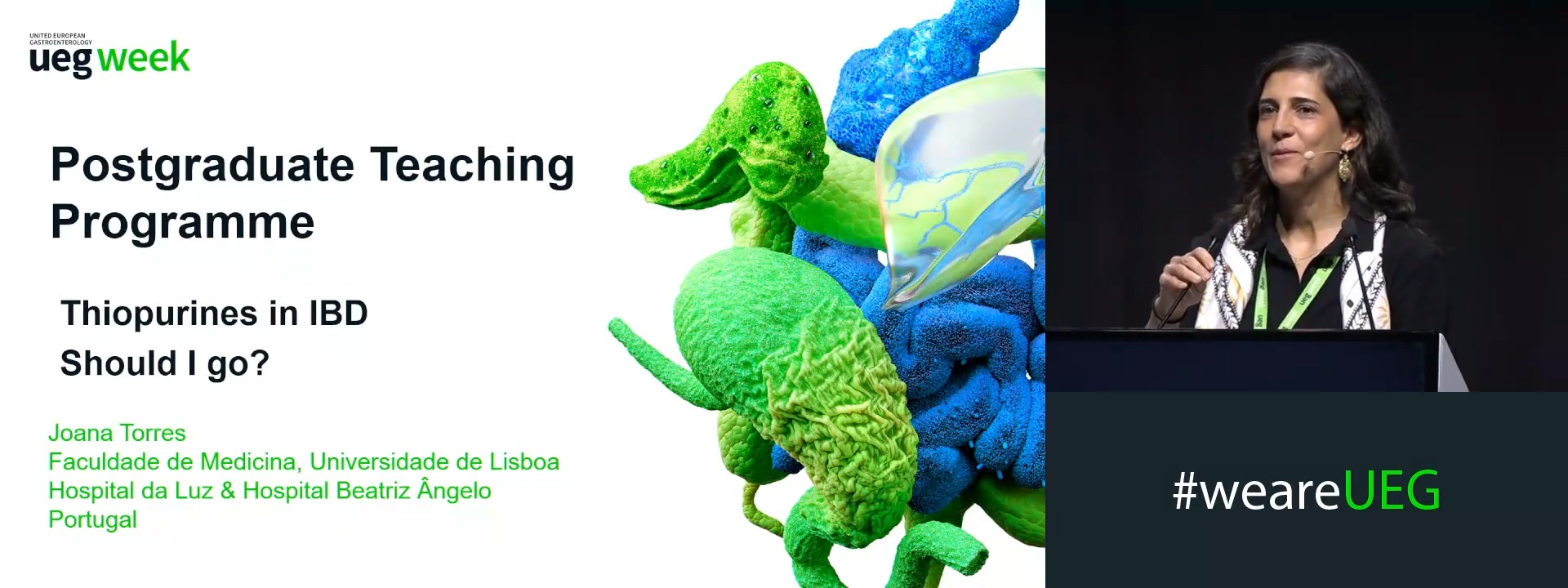
Current role for thiopurines in the management of IBD: Should I go?
Affiliations
1 Hospital Beatriz Ângelo & Hospital da Luz, Lisbon, Portugal
Log in to continue.
This content is part of Gutflix. Log in with your myUEG account, or create one free, to watch it.
Not sure what you can access? Learn more about account types.
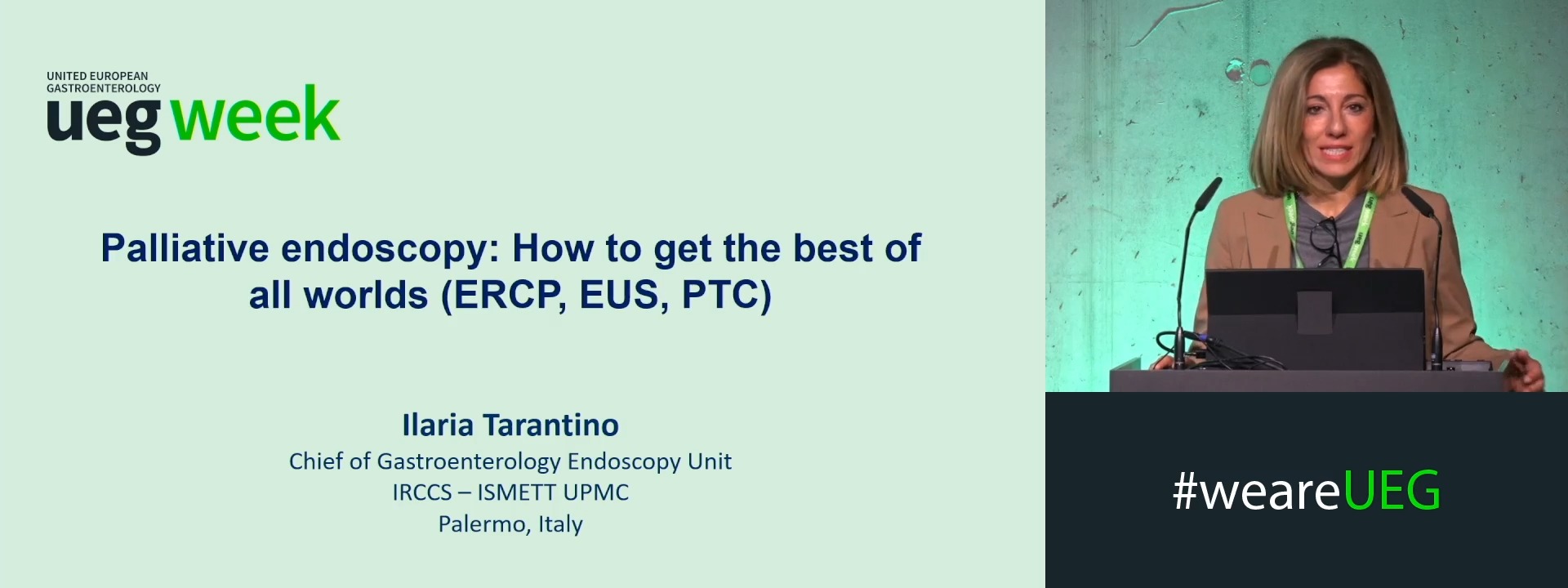
Palliative endoscopy: How to get the best of all worlds (ERCP, EUS, PTC)
Affiliations
1 ISMETT, Palermo, Italy
Log in to continue.
This content is part of Gutflix. Log in with your myUEG account, or create one free, to watch it.
Not sure what you can access? Learn more about account types.
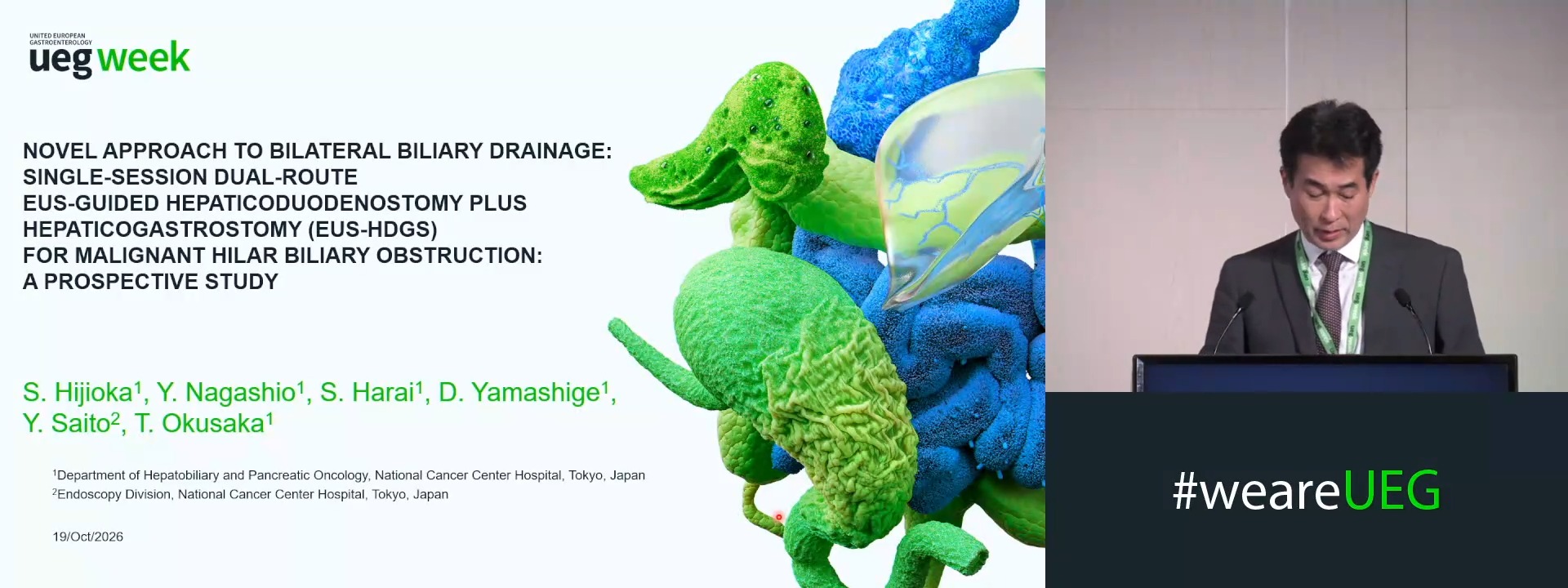
NOVEL APPROACH TO BILATERAL BILIARY DRAINAGE: SINGLE-SESSION DUAL-ROUTE EUS-GUIDED HEPATICODUODENOSTOMY PLUS HEPATICOGASTROSTOMY FOR MALIGNANT HILAR BILIARY OBSTRUCTION: A PROSPECTIVE STUDY
SUSUMU HIJIOKA 1, Yoshikuni Nagashio 1, Shota Harai 1, Daiki Yamashige 1, Yutaka Saito 2, Takuji Okusaka 1
Affiliations
1 National Cancer Center Hospital, Tokyo, Japan
2 National Cancer Center Hospital Endoscopy Division, Tokyo, Japan
Log in to continue.
This content is part of Gutflix. Log in with your myUEG account, or create one free, to watch it.
Not sure what you can access? Learn more about account types.
EUS-guided biliary drainage (Complete Session)
Log in to continue.
This content is part of Gutflix. Log in with your myUEG account, or create one free, to watch it.
Not sure what you can access? Learn more about account types.
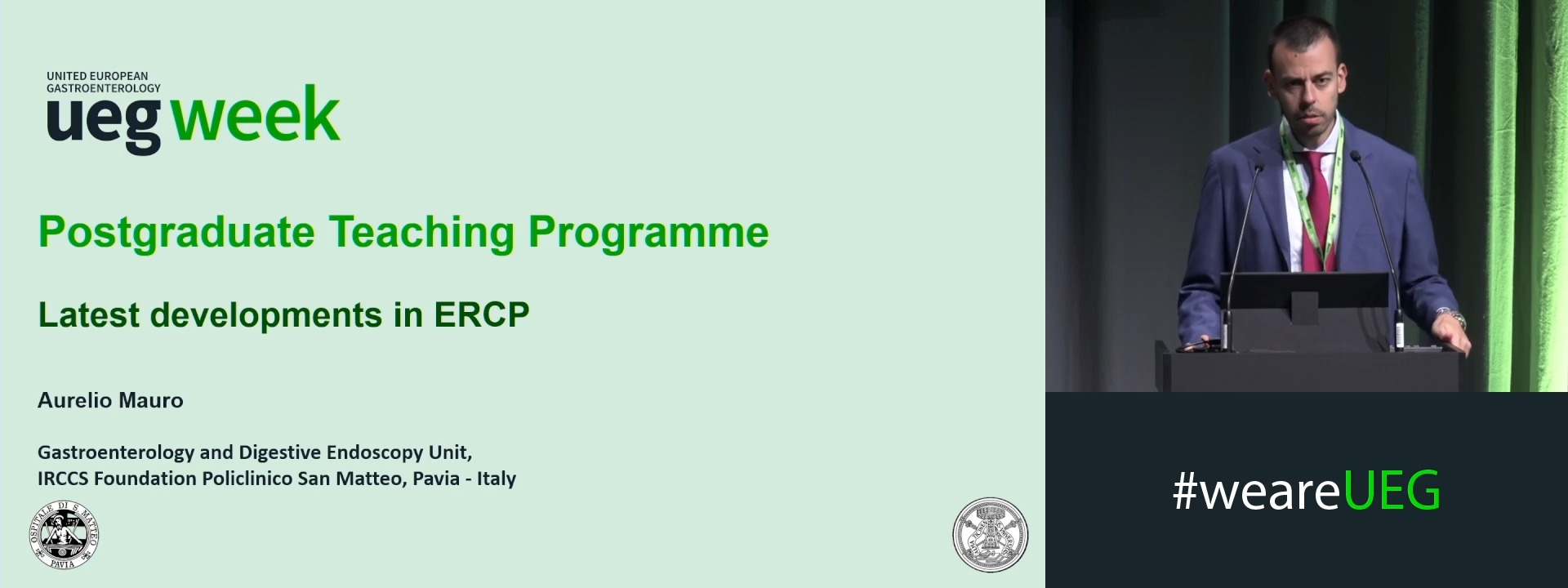
Latest developments in ERCP
Affiliations
1 IRCCS Foundation San Matteo Hospital, Pavia, Italy