UEG's educational platform for gastroenterology education bringing recordings, courses, guidelines, and more together in one place.
Trending on Gutflix
Rate for better recommendations!
Your feedback helps us show you more of what you like and less of what you dislike!
Log in to continue.
This content is part of Gutflix. Log in with your myUEG account, or create one free, to watch it.
Not sure what you can access? Learn more about account types.
Nurse Programme (Complete Session)
Log in to continue.
This content is part of Gutflix. Log in with your myUEG account, or create one free, to watch it.
Not sure what you can access? Learn more about account types.
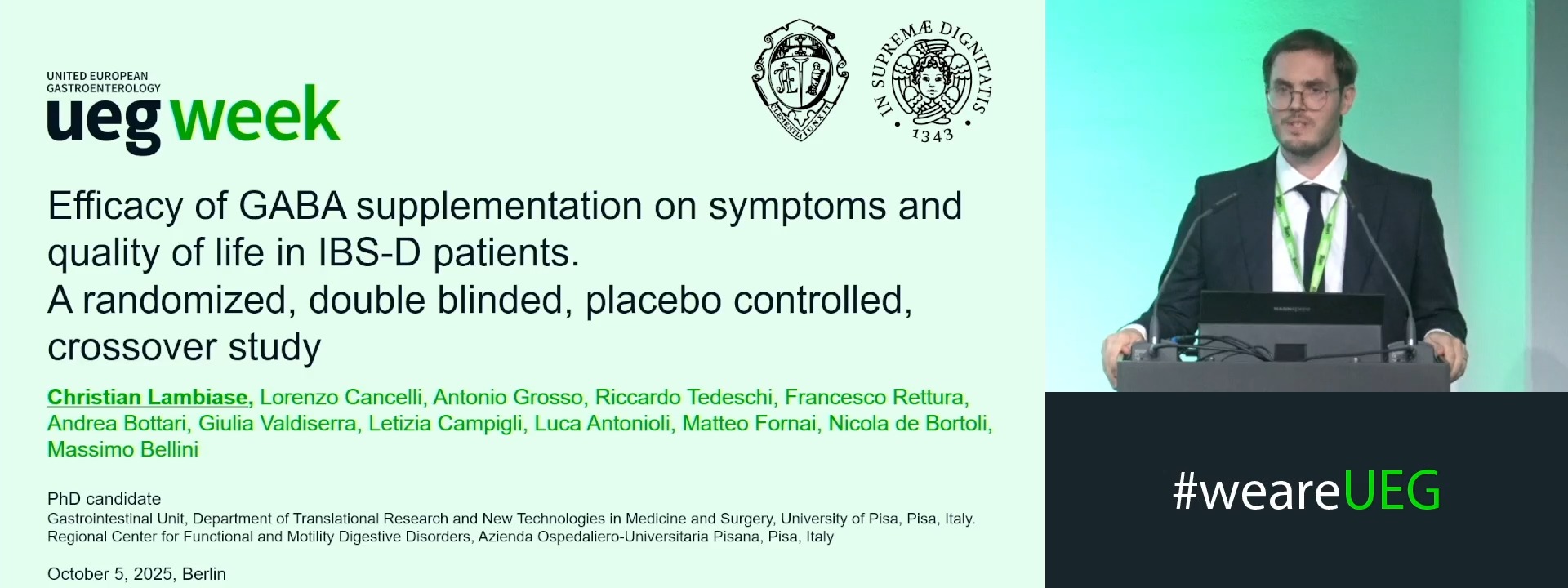
EFFECTS OF GAMMA-AMINOBUTYRIC ACID SUPPLEMENTATION ON SYMPTOMS AND QUALITY OF LIFE IN IBS-D PATIENTS. PRELIMINARY RESULTS FROM A RANDOMIZED, DOUBLE BLINDED, PLACEBO CONTROLLED, CROSSOVER STUDY
Christian Lambiase 1, Lorenzo Cancelli 1, Antonio Grosso 1, Riccardo Tedeschi 1, Francesco Rettura 1, Andrea Bottari 1, Giulia Valdiserra 2, Letizia Campigli 2, Luca Antonioli 2, Matteo Fornai 2, Nicola de Bortoli 1, Massimo Bellini 1
Affiliations
1 University of Pisa, Pisa, Italy|||Azienda Ospedaliero-Universitaria Pisana, Pisa, Italy
2 University of Pisa, Pisa, Italy
Log in to continue.
This content is part of Gutflix. Log in with your myUEG account, or create one free, to watch it.
Not sure what you can access? Learn more about account types.
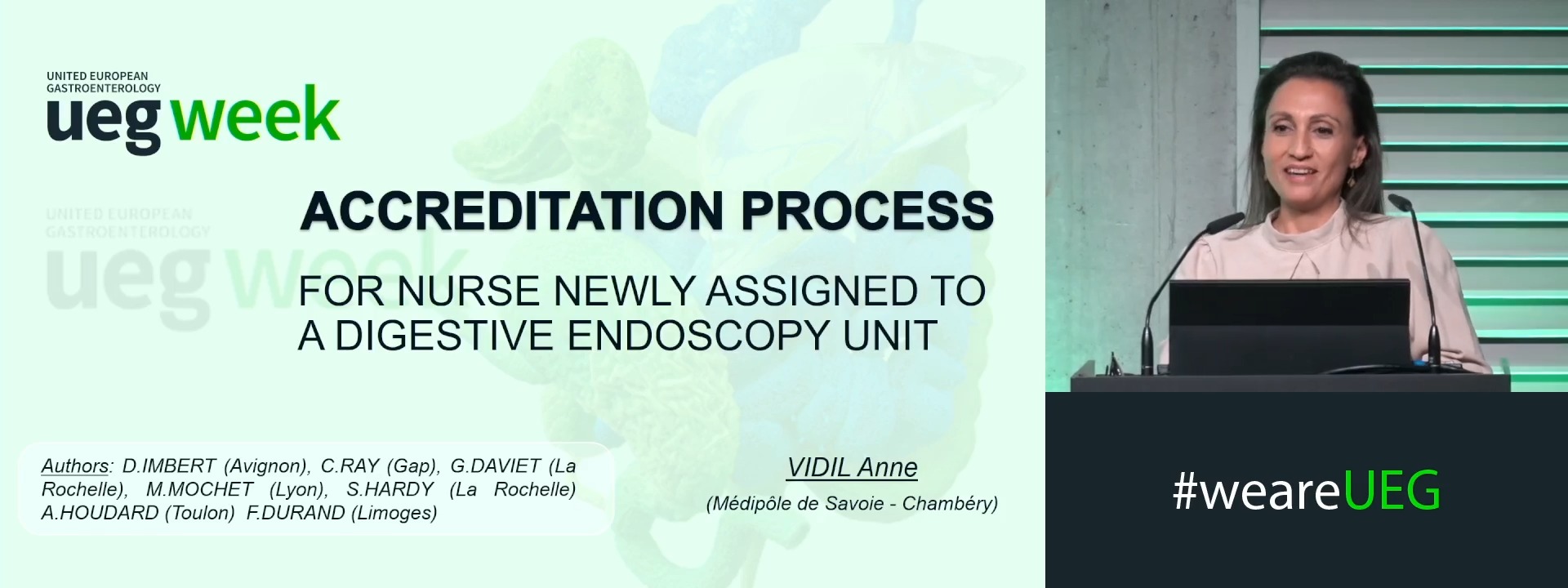
Accreditation for a newly recruited endoscopy nurse
Affiliations
1 None, None, France
Log in to continue.
This content is part of Gutflix. Log in with your myUEG account, or create one free, to watch it.
Not sure what you can access? Learn more about account types.
Laudatio UEG Lifetime Achievement Awardee
Affiliations
1 IPO Porto, Porto, Portugal