UEG's content platform for gastroenterology education bringing recordings, courses, guidelines, and more together in one place.
Trending on Gutflix
Rate for better recommendations!
Your feedback helps us show you more of what you like and less of what you dislike!
Log in to continue.
This content is part of Gutflix. Log in with your myUEG account, or create one free, to watch it.
Not sure what you can access? Learn more about account types.
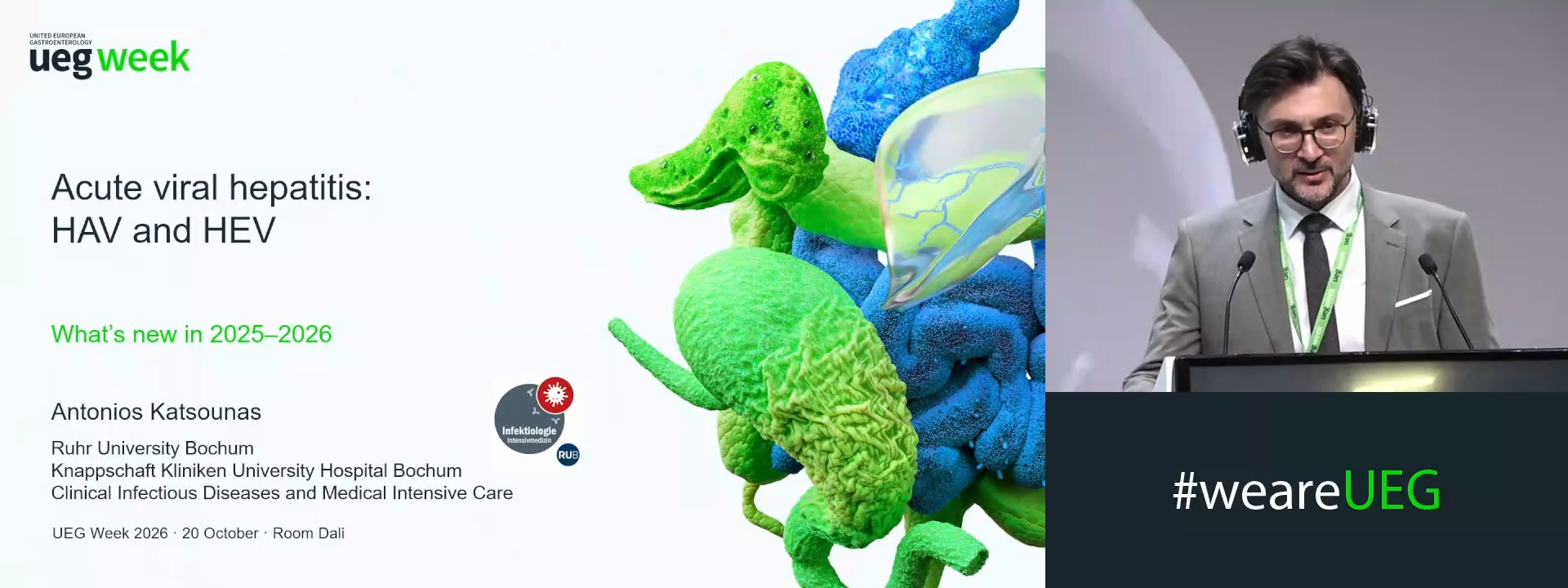
Acute viral hepatitis: HAV and HEV
Affiliations
1 University Hospital Knappschaftskrankenhaus., Bochum, Germany
Log in to continue.
This content is part of Gutflix. Log in with your myUEG account, or create one free, to watch it.
Not sure what you can access? Learn more about account types.
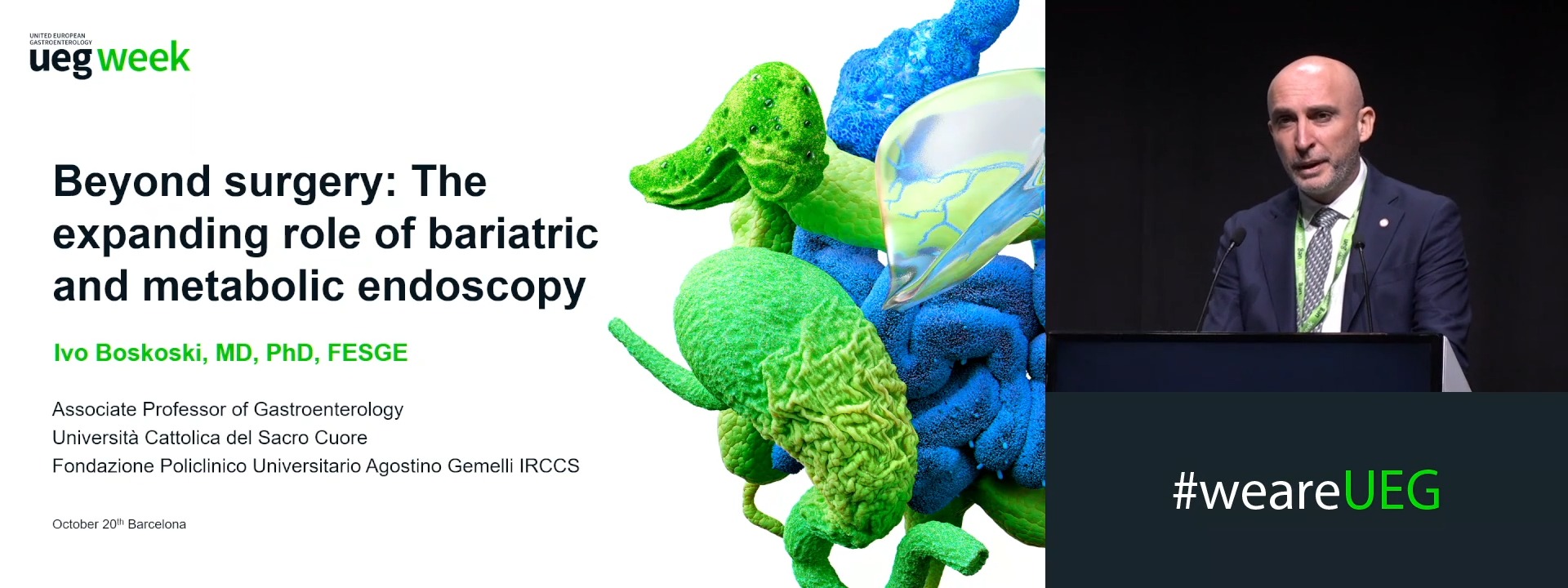
Beyond surgery: The expanding role of bariatric and metabolic endoscopy
Affiliations
1 Catholic University of Rome Digestive Endoscopy Unit, Rome, Italy
Log in to continue.
This content is part of Gutflix. Log in with your myUEG account, or create one free, to watch it.
Not sure what you can access? Learn more about account types.
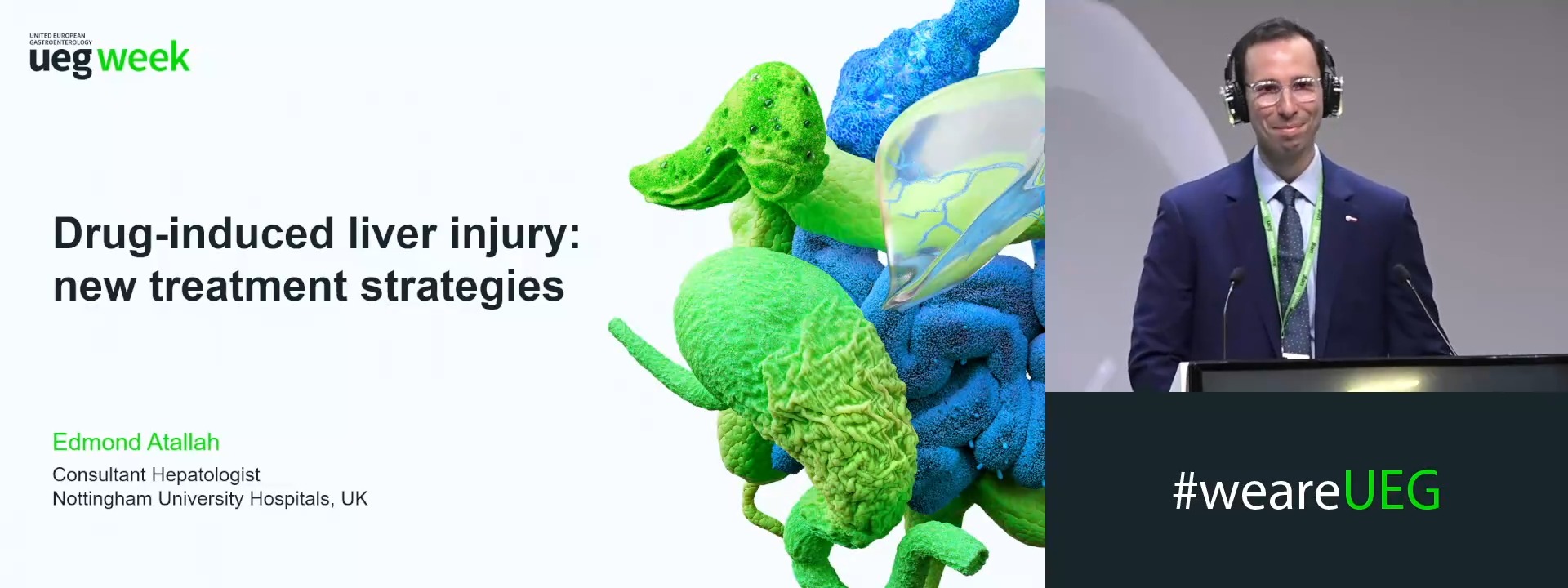
Drug-induced liver injury: new treatment strategies
Affiliations
1 NIHR Nottingham Biomedical Research Centre & Nottingham University Hospitals NHS Trust, Nottingham, United Kingdom
Log in to continue.
This content is part of Gutflix. Log in with your myUEG account, or create one free, to watch it.
Not sure what you can access? Learn more about account types.
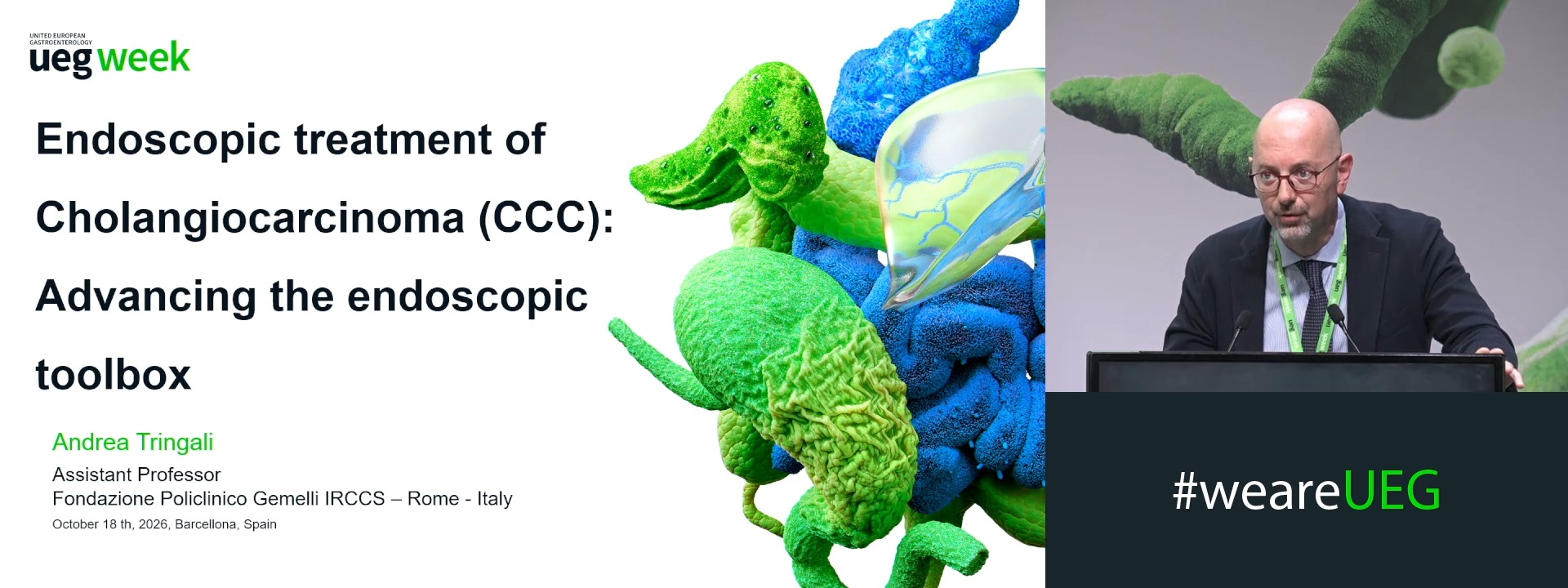
Endoscopic treatment of cholangiocarcinoma (CCC): Advancing the endoscopic toolbox
Affiliations
1 Catholic University of the Sacred Heart, Rome, Italy