UEG's content platform for gastroenterology education bringing recordings, courses, guidelines, and more together in one place.
Trending on Gutflix
Rate for better recommendations!
Your feedback helps us show you more of what you like and less of what you dislike!
Log in to continue.
This content is part of Gutflix. Log in with your myUEG account, or create one free, to watch it.
Not sure what you can access? Learn more about account types.
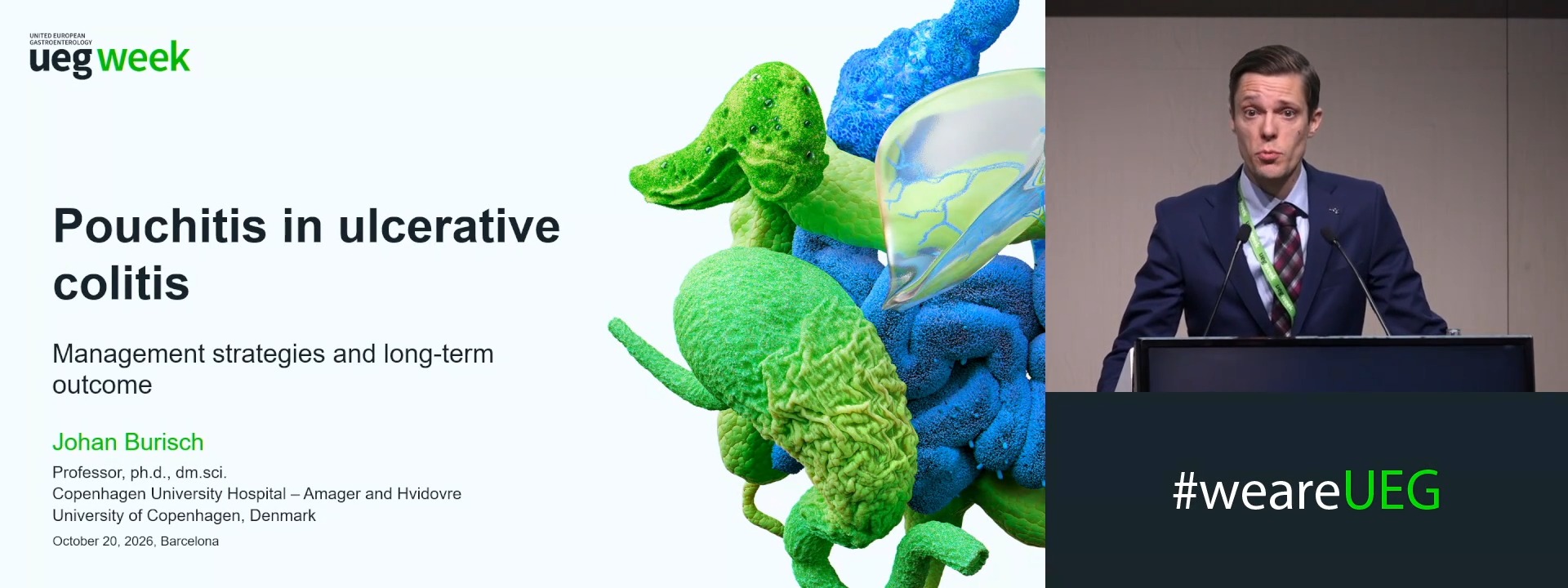
Pouchitis in ulcerative colitis - management strategies and long-term outcome
Affiliations
1 Hvidovre University Hospital, Virum, Denmark
Log in to continue.
This content is part of Gutflix. Log in with your myUEG account, or create one free, to watch it.
Not sure what you can access? Learn more about account types.
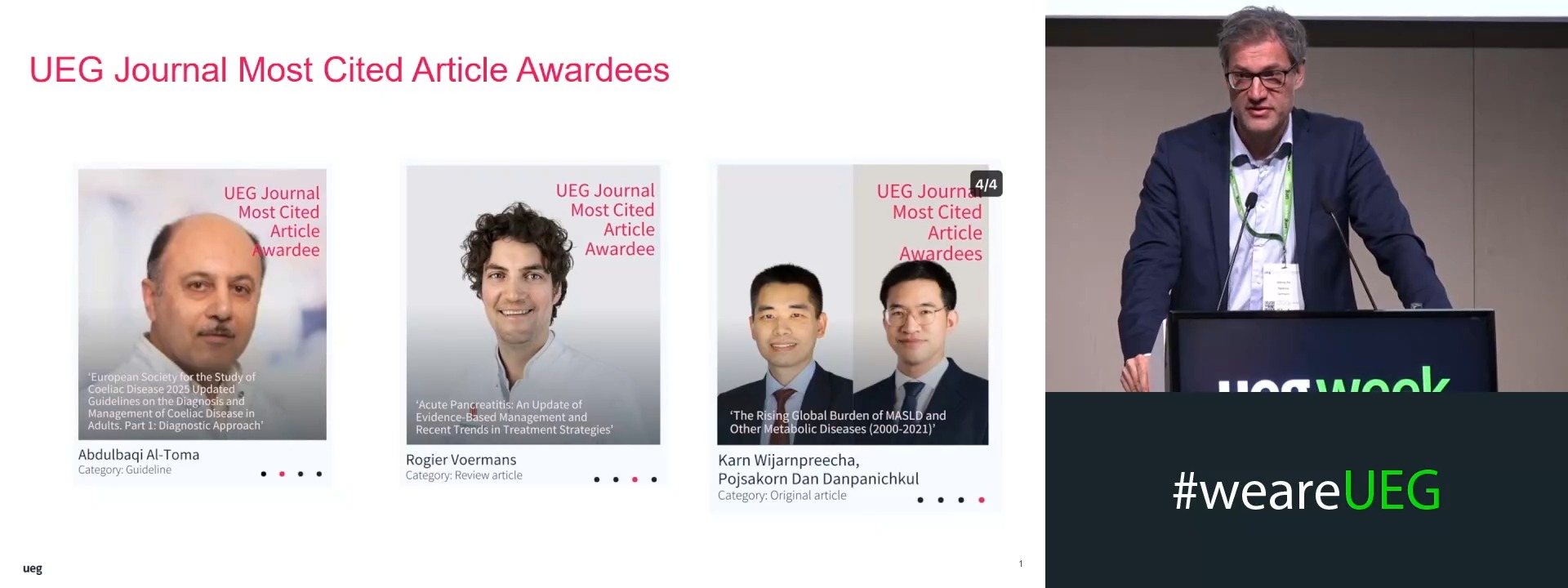
Introduction: Hot topics in European Gastroenterology
Affiliations
1 Universitätsklinikum Göttingen, Göttingen, Germany

Log in to continue.
This content is part of Gutflix. Log in with your myUEG account, or create one free, to watch it.
Not sure what you can access? Learn more about account types.
Panel discussion: Advancing endoscopic resections in the colon
Log in to continue.
This content is part of Gutflix. Log in with your myUEG account, or create one free, to watch it.
Not sure what you can access? Learn more about account types.
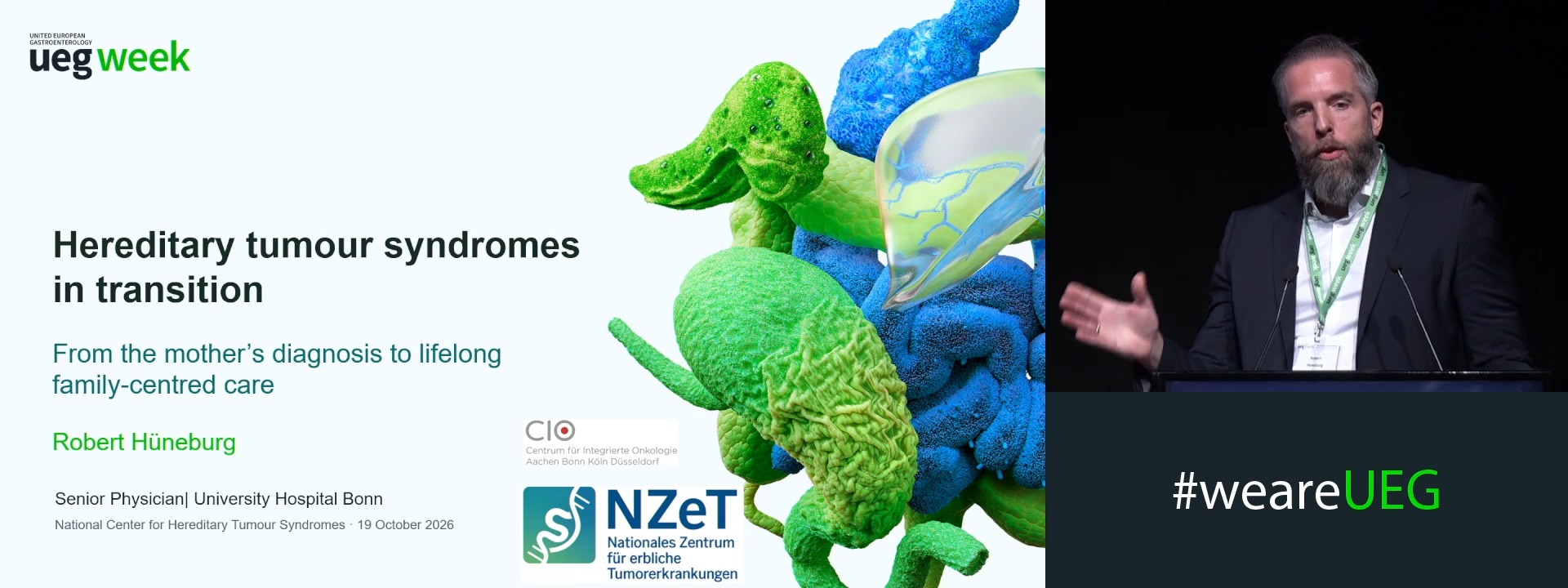
Hereditary tumour syndromes in transition
Affiliations
1 University Hospital Bonn, Bonn, Germany
Log in to continue.
This content is part of Gutflix. Log in with your myUEG account, or create one free, to watch it.
Not sure what you can access? Learn more about account types.
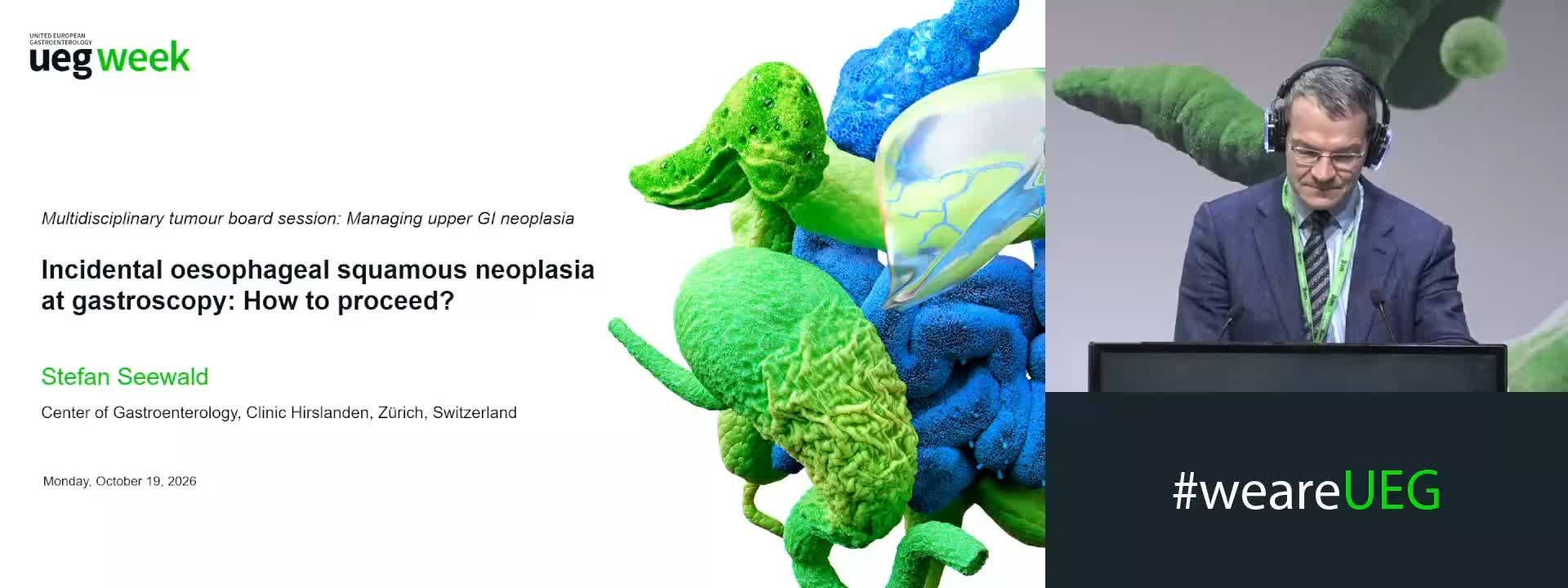
Incidental oesophageal squamous neoplasia at gastroscopy: How to proceed?
Affiliations
1 GastroZentrum Hirslanden, Zurich, Switzerland
Log in to continue.
This content is part of Gutflix. Log in with your myUEG account, or create one free, to watch it.
Not sure what you can access? Learn more about account types.
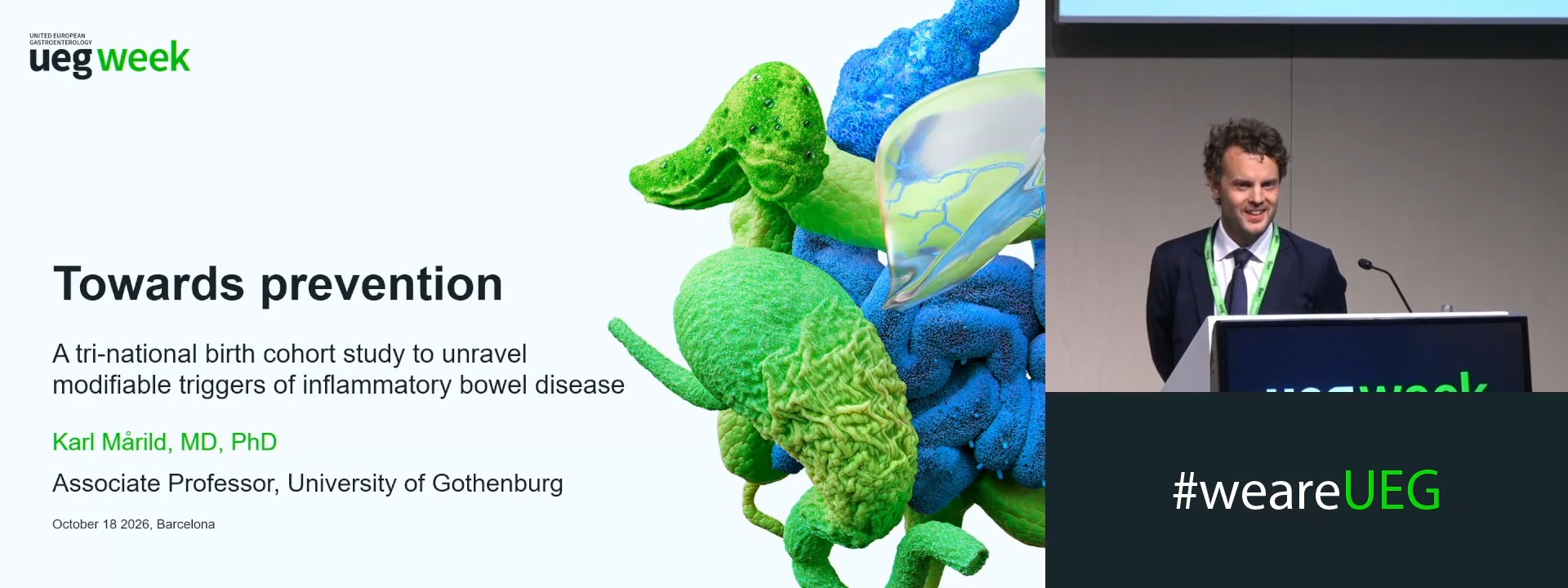
Towards prevention: A trinational birth cohort study to unravel modifiable triggers of inflammatory bowel disease
Affiliations
1 University of Gothenburg, Gothenburg, Sweden