UEG's educational platform for gastroenterology education bringing recordings, courses, guidelines, and more together in one place.
Trending on Gutflix
Rate for better recommendations!
Your feedback helps us show you more of what you like and less of what you dislike!
Log in to continue.
This content is part of Gutflix. Log in with your myUEG account, or create one free, to watch it.
Not sure what you can access? Learn more about account types.
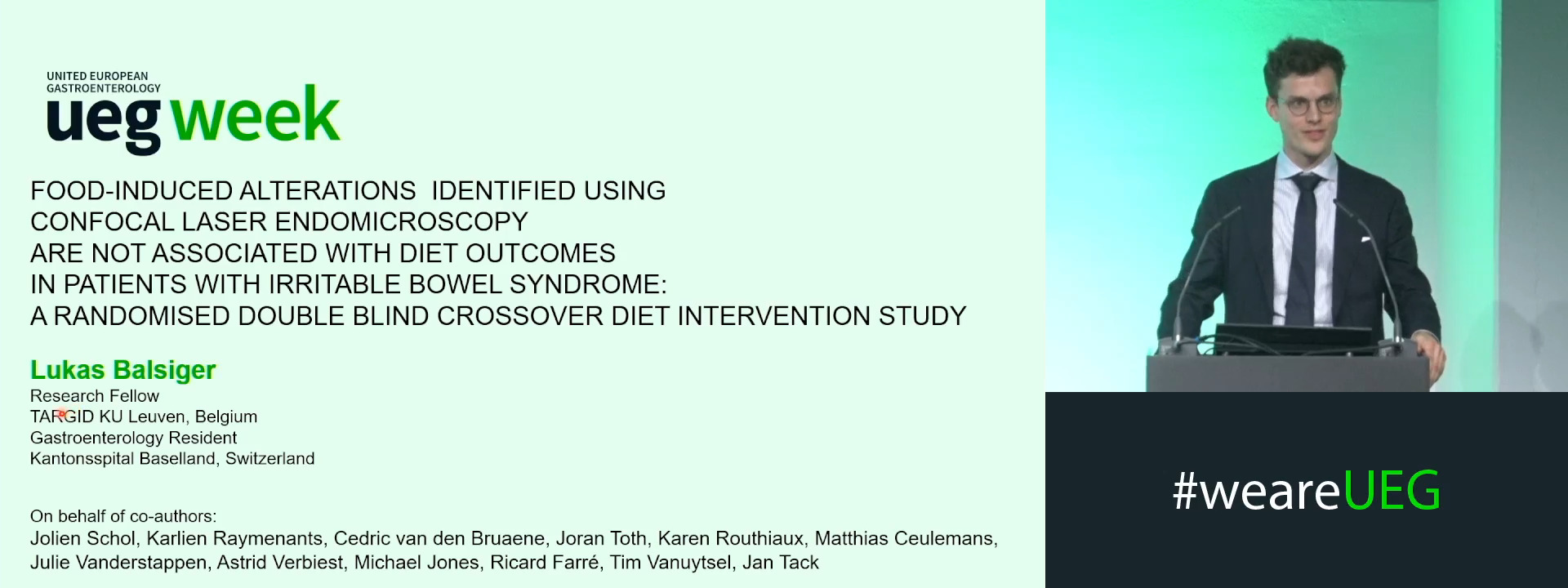
FOOD-INDUCED ALTERATIONS IDENTIFIED USING CONFOCAL LASER ENDOMICROSCOPY ARE NOT ASSOCIATED WITH DIET OUTCOMES IN PATIENTS WITH IRRITABLE BOWEL SYNDROME: A RANDOMISED DOUBLE BLIND CROSSOVER DIET INTERVENTION STUDY
Lukas Balsiger 1, Jolien Schol 2, Karlien Raymenants 2, Cedric Van de Bruaene 2, Joran Toth 1, Karen Routhiaux 1, Matthias Ceulemans 3, Julie Vanderstappen 4, Astrid Verbiest 1, Michael P. Jones 5, Ricard Farré 1, Tim Vanuytsel 6, Jan Tack 2
Affiliations
1 TARGID KU Leuven, Leuven, Belgium
2 TARGID KU Leuven, Leuven, Belgium|||University Hospitals Leuven, Leuven, Belgium
3 Icahn School of Medicine at Mount Sinai, New York, United States
4 University Hospitals Leuven, Leuven, Belgium
5 Macquarie University, North Ryde, Australia
6 University Hospitals Leuven, Leuven, Belgium|||TARGID KU Leuven, Leuven, Belgium
Log in to continue.
This content is part of Gutflix. Log in with your myUEG account, or create one free, to watch it.
Not sure what you can access? Learn more about account types.
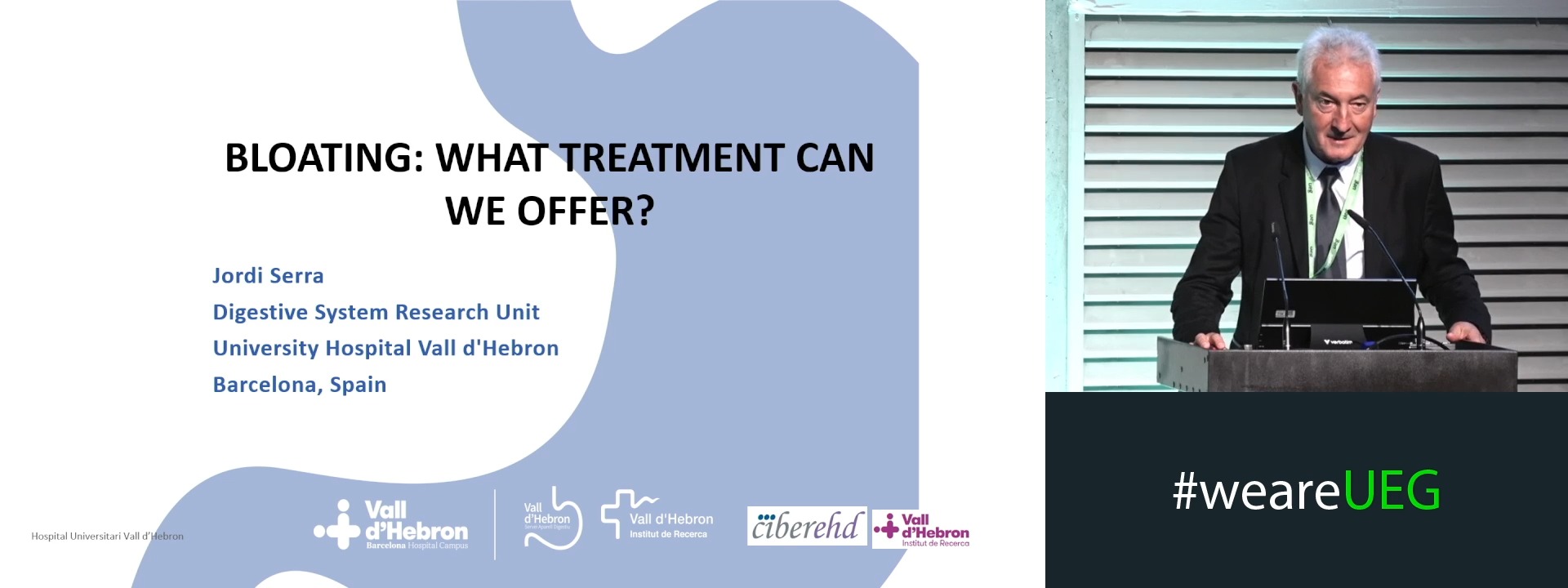
What treatment can we offer?
Affiliations
1 University Hospital Vall d'Hebron, Barcelona, Spain
Log in to continue.
This content is part of Gutflix. Log in with your myUEG account, or create one free, to watch it.
Not sure what you can access? Learn more about account types.
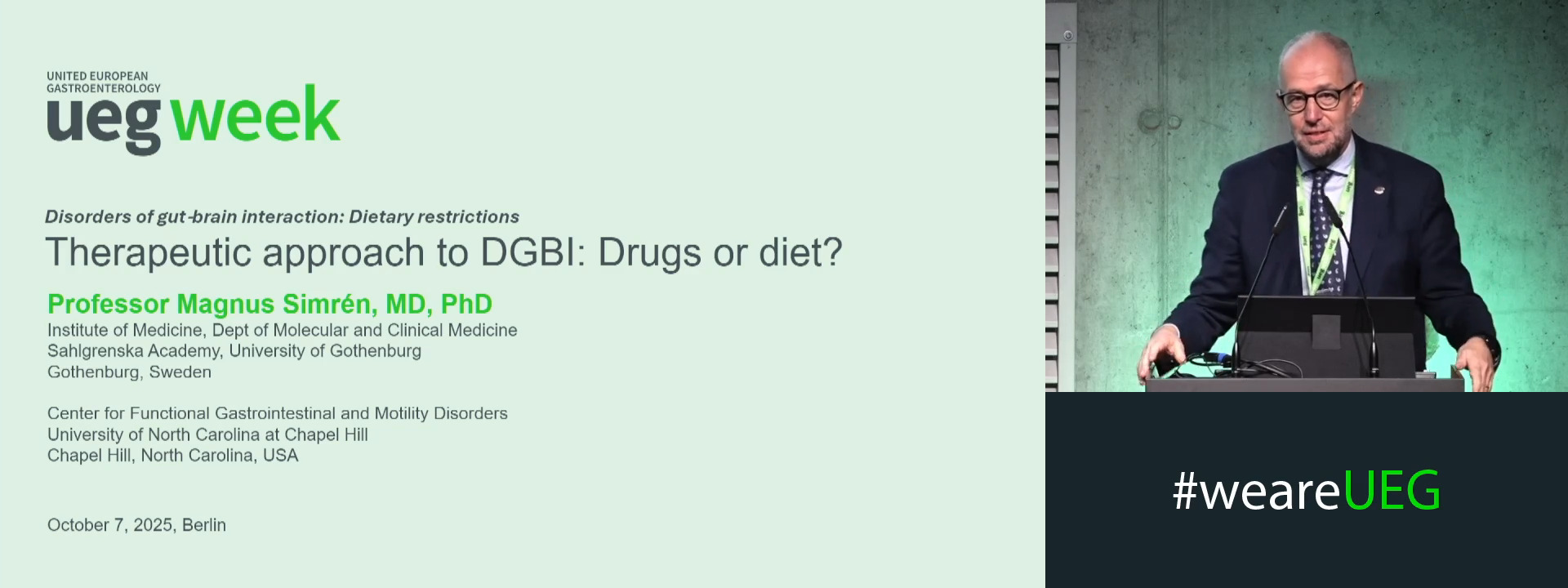
Therapeutic approach to DGBI: Drugs or diet?
Affiliations
1 Sahlgrenska University Hospital - Dept of Internal Medicine, Sahlgrenska University Hospital ; Gothe, Gothenburg, Sweden
Log in to continue.
This content is part of Gutflix. Log in with your myUEG account, or create one free, to watch it.
Not sure what you can access? Learn more about account types.
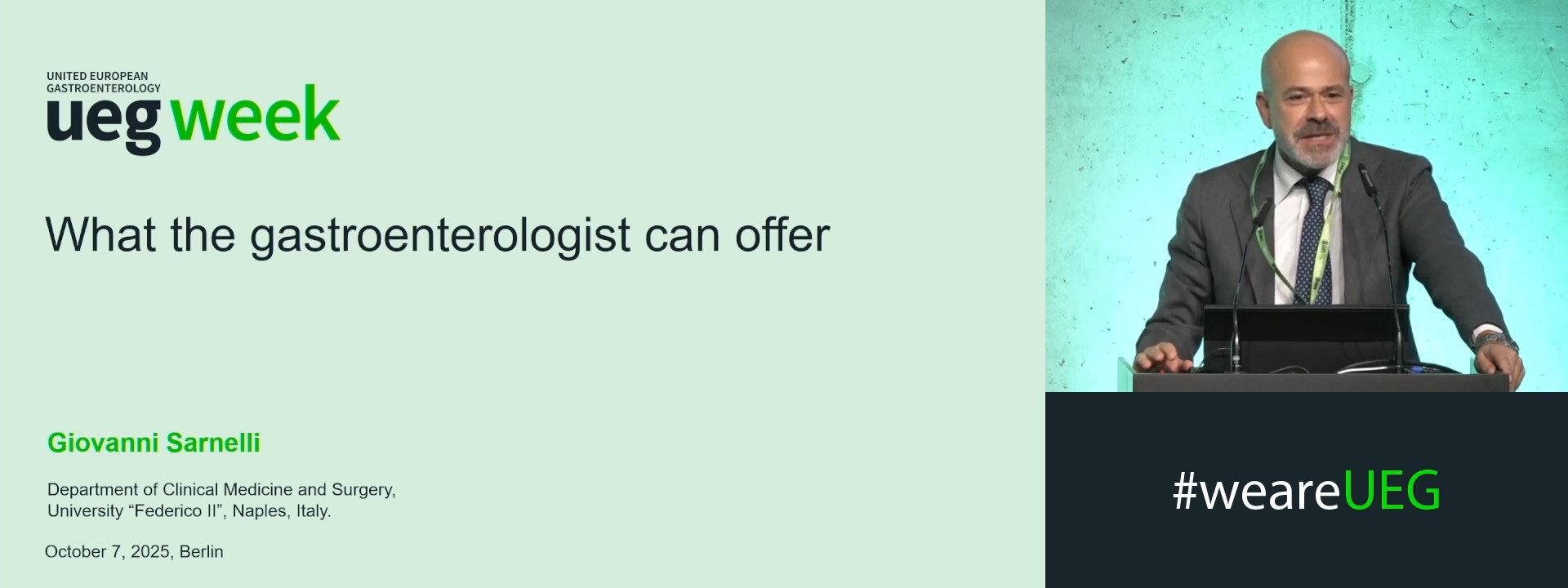
What the gastroenterologist can offer
Affiliations
1 University of Naples 'Federico II', Pozzuoli NA, Italy
Log in to continue.
This content is part of Gutflix. Log in with your myUEG account, or create one free, to watch it.
Not sure what you can access? Learn more about account types.
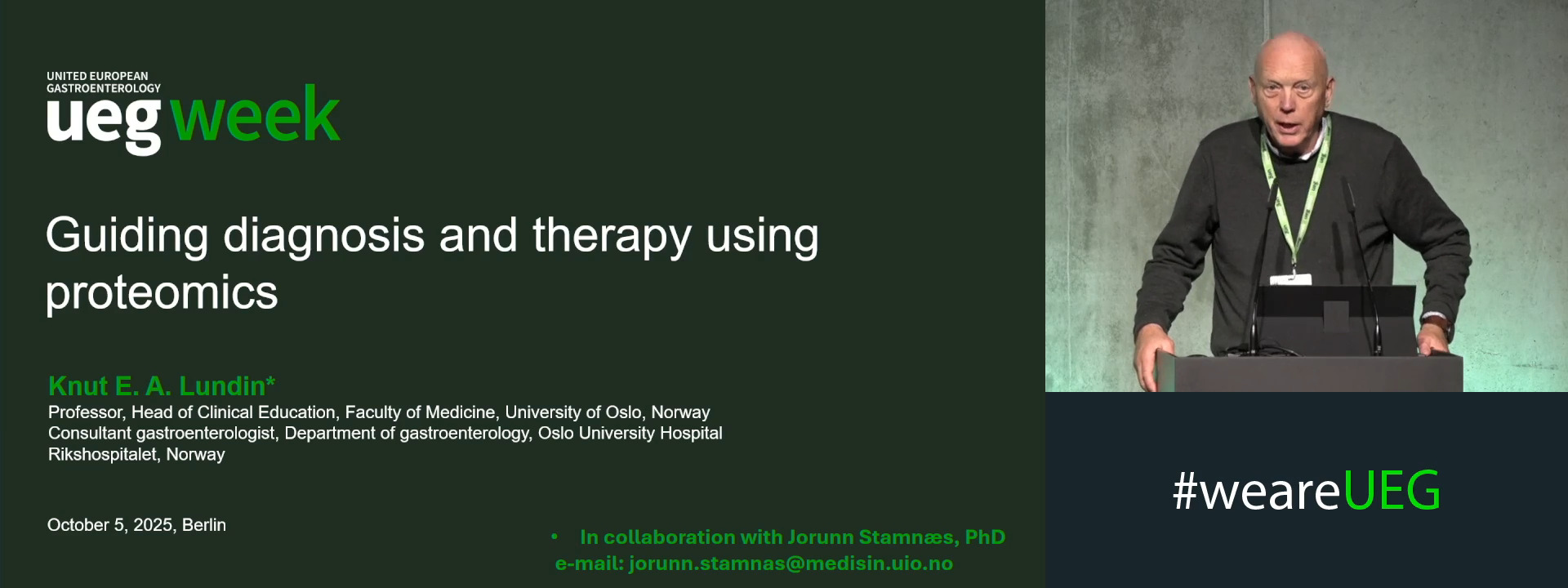
Guiding diagnosis and therapy using proteomics
Affiliations
1 Norwegian Coeliac Disease Research Centre, University of Oslo and Oslo University Hospital, Oslo, Norway