UEG's content platform for gastroenterology education bringing recordings, courses, guidelines, and more together in one place.
Trending on Gutflix
Rate for better recommendations!
Your feedback helps us show you more of what you like and less of what you dislike!
Log in to continue.
This content is part of Gutflix. Log in with your myUEG account, or create one free, to watch it.
Not sure what you can access? Learn more about account types.
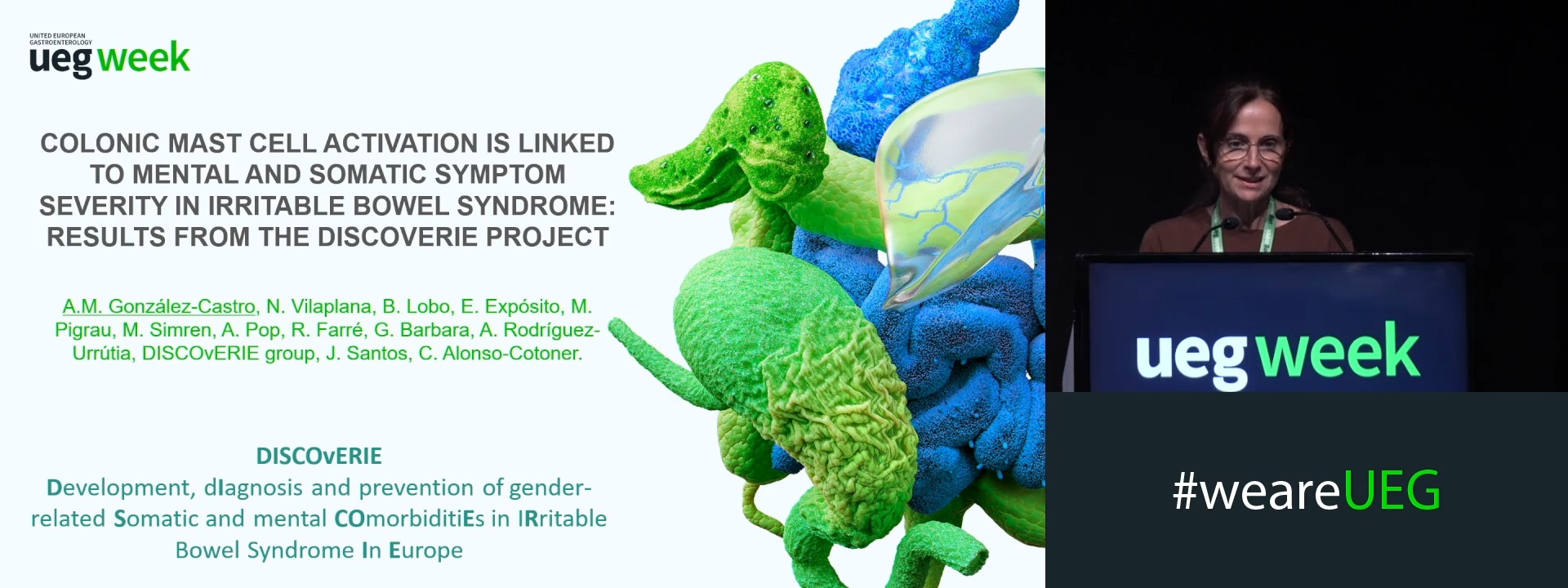
COLONIC MAST CELL ACTIVATION IS LINKED TO MENTAL AND SOMATIC SYMPTOM SEVERITY IN IRRITABLE BOWEL SYNDROME: RESULTS FROM THE DISCOVERIE PROJECT (EU-FUNDED PROJECT Nº: 848228)
Ana Maria González 1,2, Núria Vilaplana 1, Beatriz Lobo Alvarez 1,2,3, Elba Expósito 1, Marc Pigrau Pastor 3, Irina Midenfjord 4, Magnus Simrén 4, Andrei Pop 5, Ricard Farré 6, Giovanni Barbara 7, Amanda Rodriguez 8,9, Javier Santos 3,2,1, Carmen Alonso-Cotoner 3,2,1
Affiliations
1 Vall d’Hebron Institut de Recerca, Barcelona, Spain
2 Centro de Investigación Biomédica en Red en Enfermedades Hepáticas y Digestivas (CIBER-EHD), Madrid, Spain
3 Hospital Universitari Vall d'Hebron, Barcelona, Spain
4 Institute of Medicine, University of Gothenburg, Gothenburg, Sweden
5 University of Medicine and Pharmacy Cluj-Napoca, Cluj-Napoca, Romania
6 KU Leuven, Leuven, Belgium
7 University of Bologna and IRCCS Azienda Ospedaliero Universitaria di Bologna, Bologna, Italy
8 University Hospital Vall d’Hebron, Barcelona, Spain
9 CIBERSAM, Madrid, Spain
Log in to continue.
This content is part of Gutflix. Log in with your myUEG account, or create one free, to watch it.
Not sure what you can access? Learn more about account types.
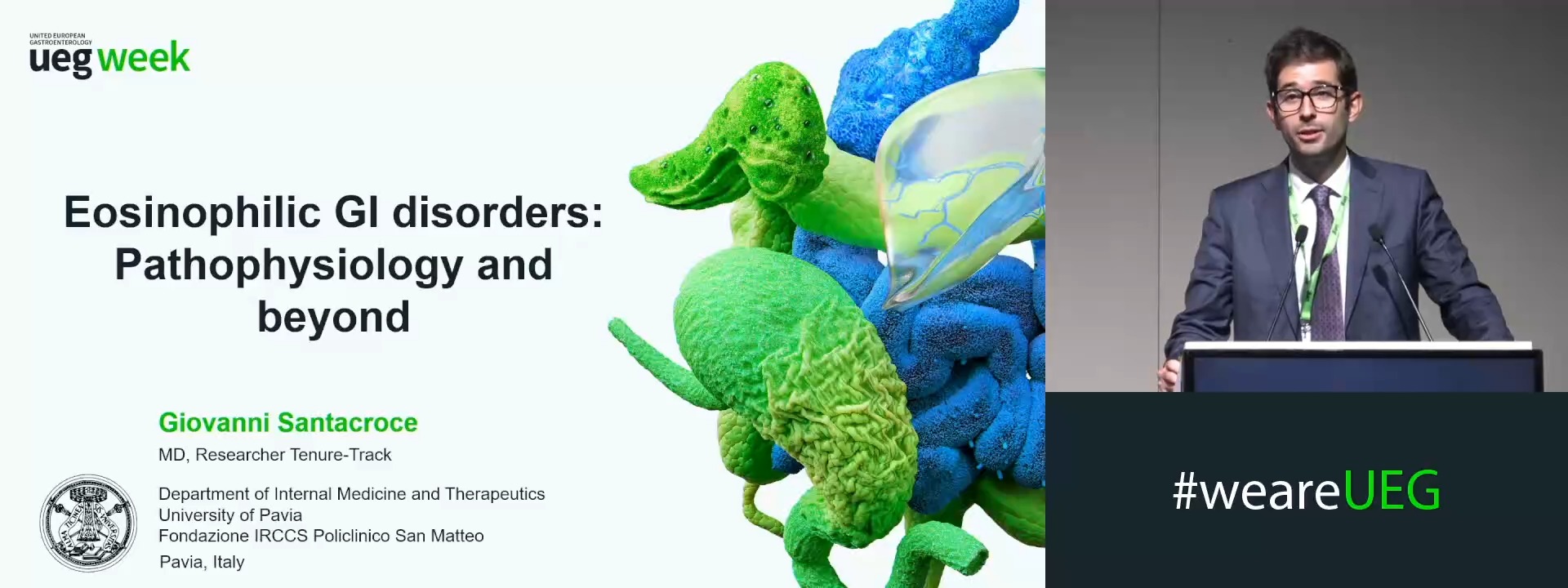
Eosinophilic GI disorders: Pathophysiology and beyond – are drugs for eosinophilia enough?
Affiliations
1 University of Pavia, Pavia, Italy
2 Amsterdam University Medical Center, Amsterdam, Netherlands
Log in to continue.
This content is part of Gutflix. Log in with your myUEG account, or create one free, to watch it.
Not sure what you can access? Learn more about account types.
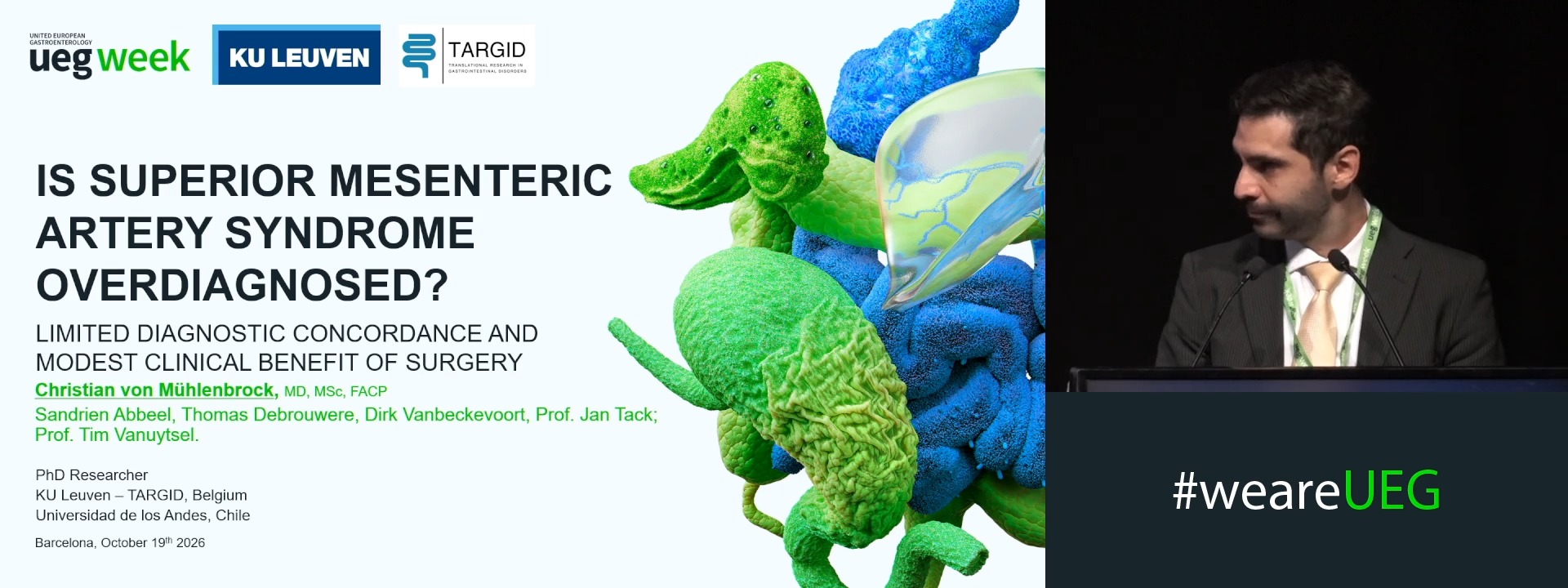
OVERDIAGNOSIS OF SUPERIOR MESENTERIC ARTERY SYNDROME: LIMITED DIAGNOSTIC CONCORDANCE BETWEEN IMAGING MODALITIES AND LIMITED BENEFIT OF SURGERY
Christian von Muhlenbrock 1,2,3, Sandrien Abbeel 4, Thomas Debrouwere 1, Dirk Vanbeckevoort 1, Jan Tack 1, Tim Vanuytsel 1
Affiliations
1 KU Leuven, Leuven, Belgium
2 Universidad de Chile, Santiago, Chile
3 Universidad de los Andes, Santiago, Chile
4 KU Leuven, Eppegem, Belgium
Log in to continue.
This content is part of Gutflix. Log in with your myUEG account, or create one free, to watch it.
Not sure what you can access? Learn more about account types.
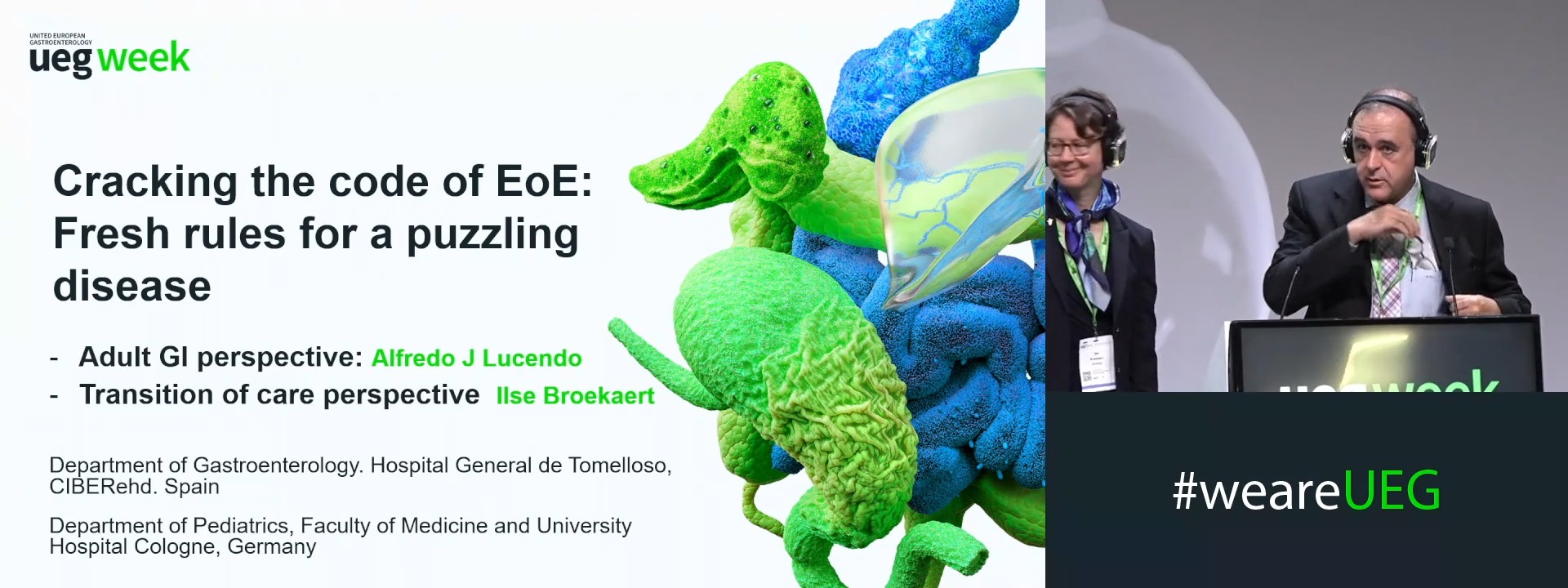
Cracking the code of EoE: Fresh rules for a puzzling disease – adult GI and transition of care perspectives
Affiliations
1 Hospital General de Tomelloso, Madrid, Spain
2 University Childrens Hospital Cologne, Cologne, Germany
Log in to continue.
This content is part of Gutflix. Log in with your myUEG account, or create one free, to watch it.
Not sure what you can access? Learn more about account types.
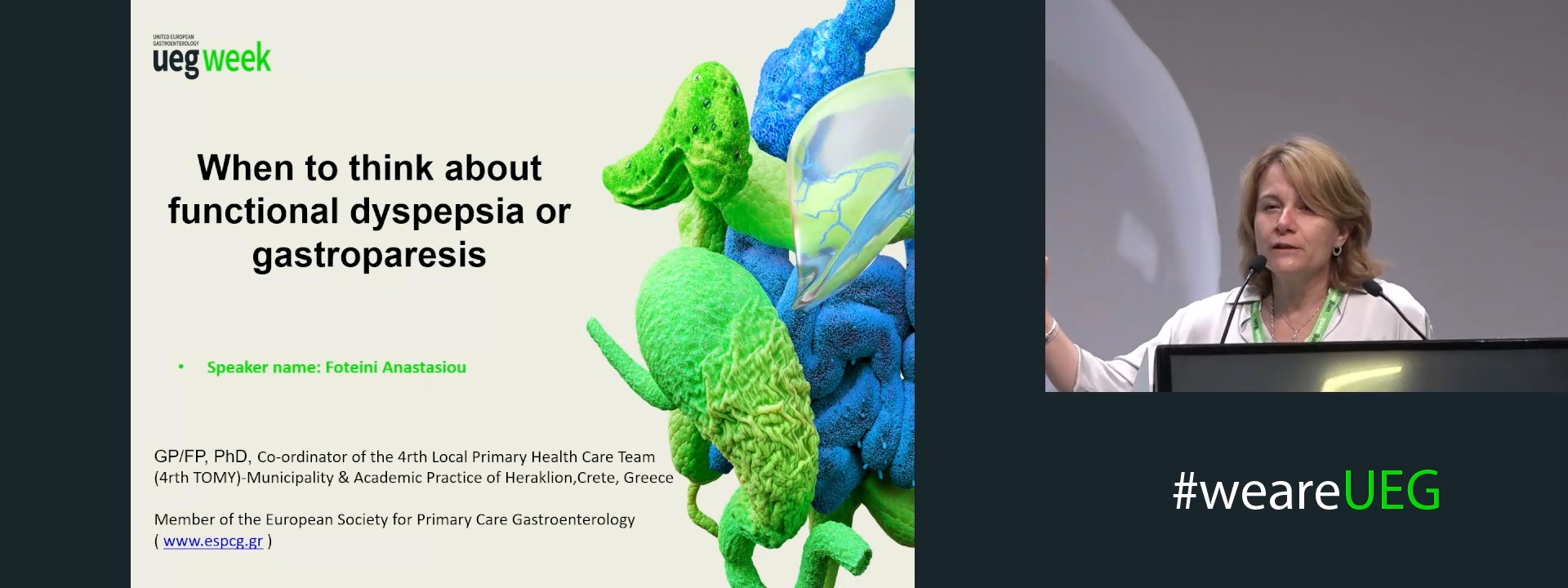
When to think about functional dyspepsia or gastroparesis
Affiliations
1 4rth Local Primary Health Care Team (TOMY) - Municipality Practice-Academic Practice of Heraklion, Crete, Heraklion, Crete, Greece
Log in to continue.
This content is part of Gutflix. Log in with your myUEG account, or create one free, to watch it.
Not sure what you can access? Learn more about account types.
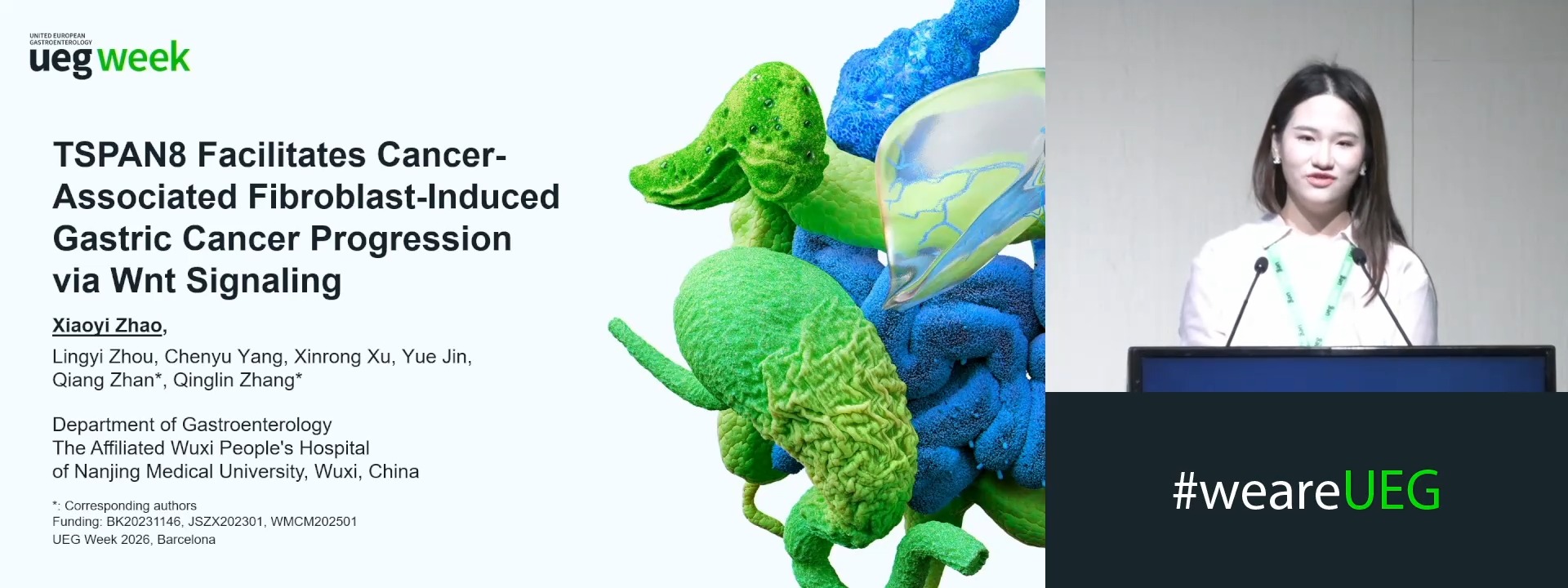
TSPAN8 FACILITATES CANCER-ASSOCIATED FIBROBLAST-INDUCED GASTRIC CANCER PROGRESSION VIA WNT SIGNALING
Affiliations
1 Wuxi People's Hospital Affiliated to Nanjing Medical University, Wuxi, China