UEG's content platform for gastroenterology education bringing recordings, courses, guidelines, and more together in one place.
Trending on Gutflix
Rate for better recommendations!
Your feedback helps us show you more of what you like and less of what you dislike!
Log in to continue.
This content is part of Gutflix. Log in with your myUEG account, or create one free, to watch it.
Not sure what you can access? Learn more about account types.
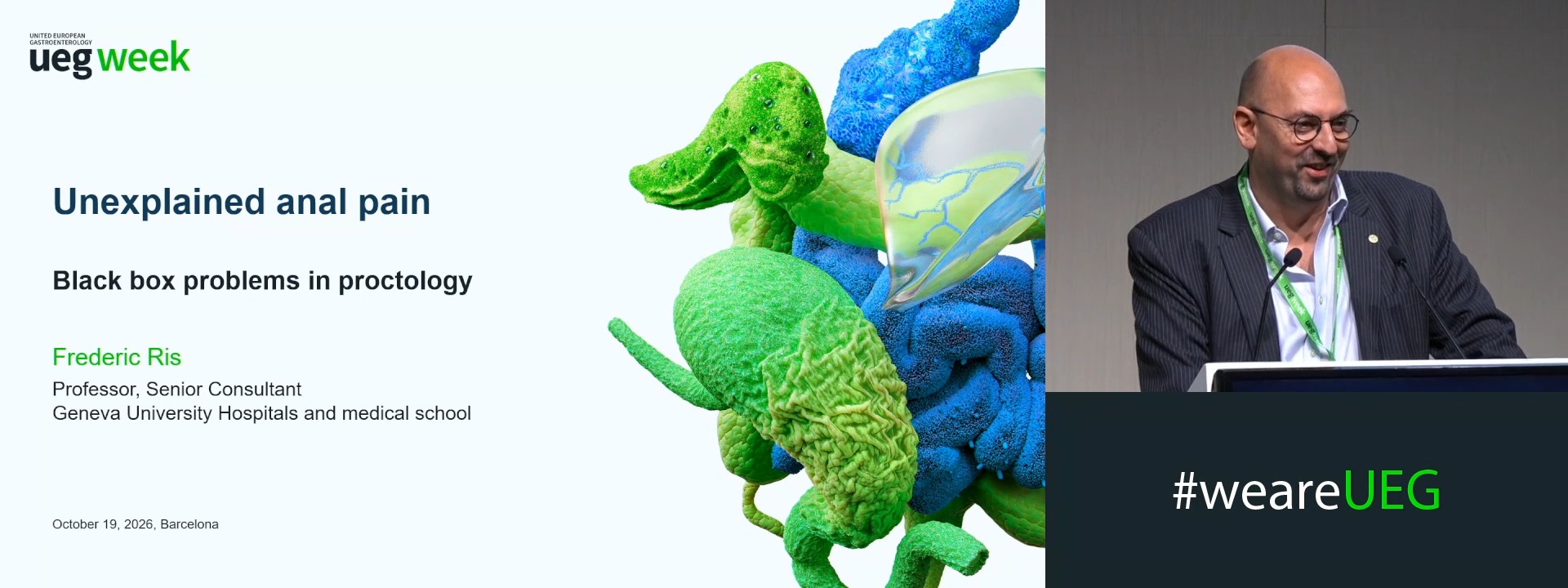
Unexplained anal pain
Affiliations
1 Geneva University Hospitals, Geneva, Switzerland
Log in to continue.
This content is part of Gutflix. Log in with your myUEG account, or create one free, to watch it.
Not sure what you can access? Learn more about account types.
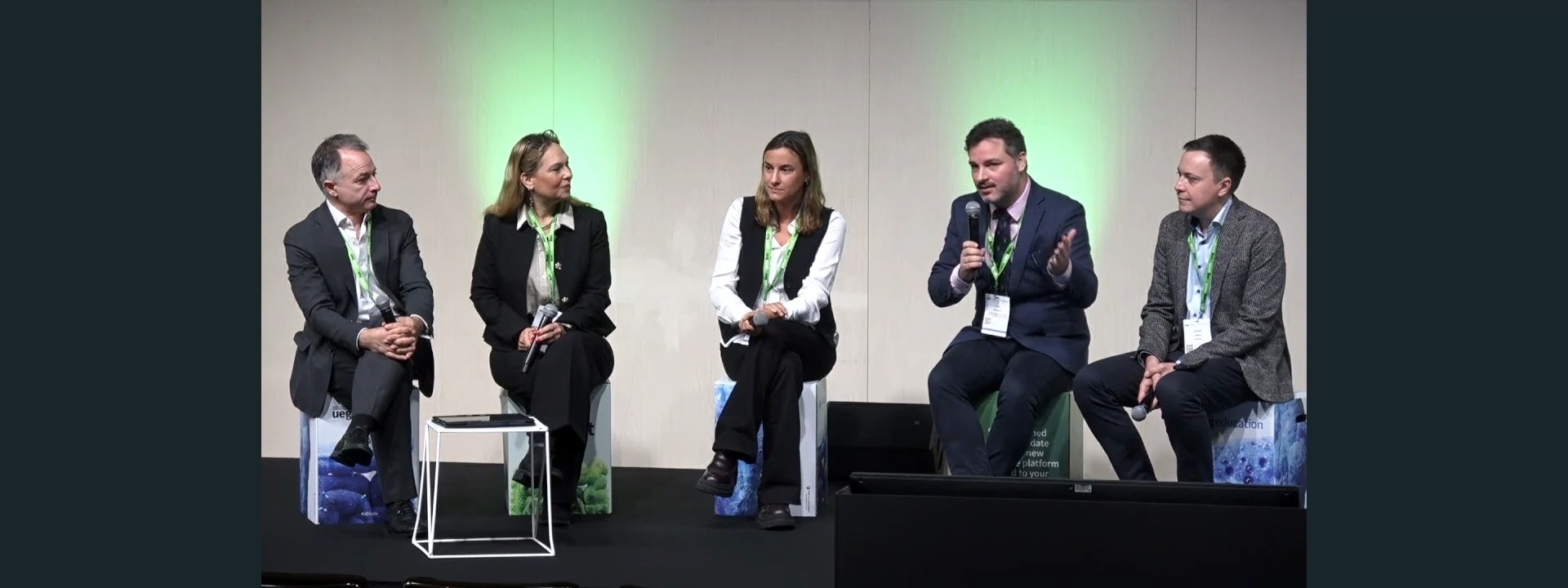
Panel discussion: Does SLD matter to you in your practice?
Log in to continue.
This content is part of Gutflix. Log in with your myUEG account, or create one free, to watch it.
Not sure what you can access? Learn more about account types.
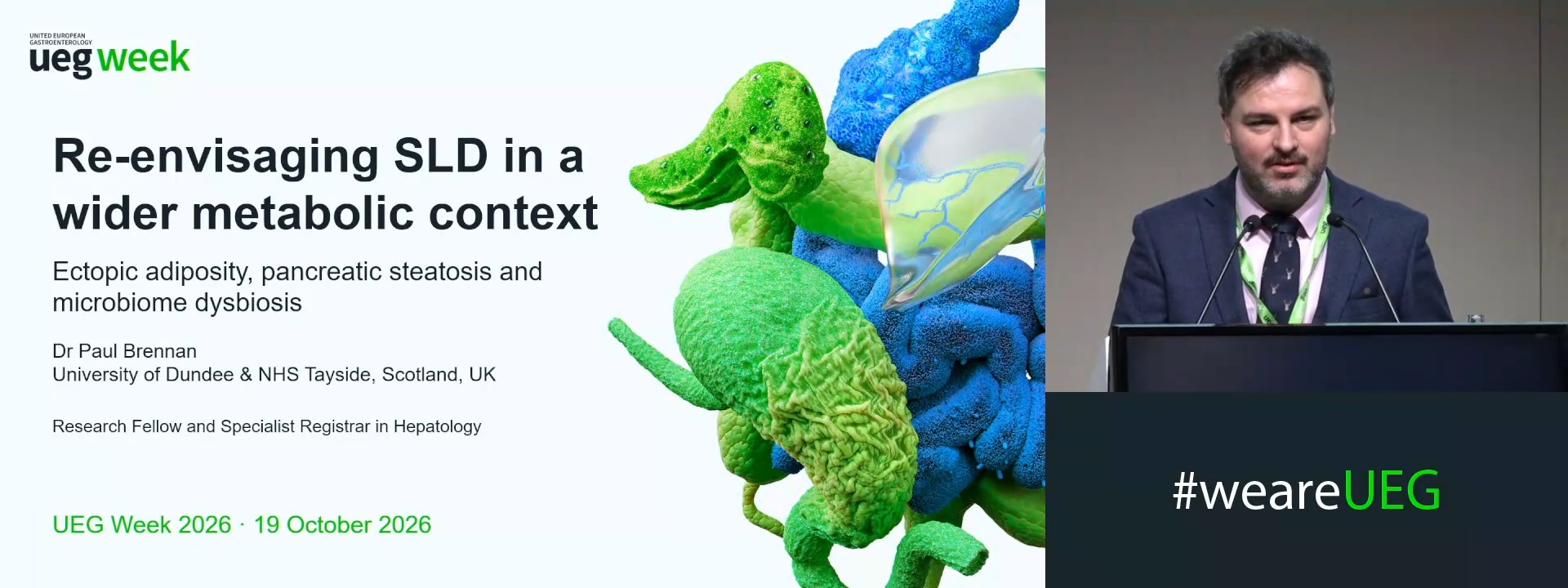
Re‑envisaging SLD in a wider metabolic context: ectopic adiposity, pancreatic steatosis and microbiome dysbiosis
Affiliations
1 Royal Infirmary of Edinburgh, Edinburgh, United Kingdom
Log in to continue.
This content is part of Gutflix. Log in with your myUEG account, or create one free, to watch it.
Not sure what you can access? Learn more about account types.
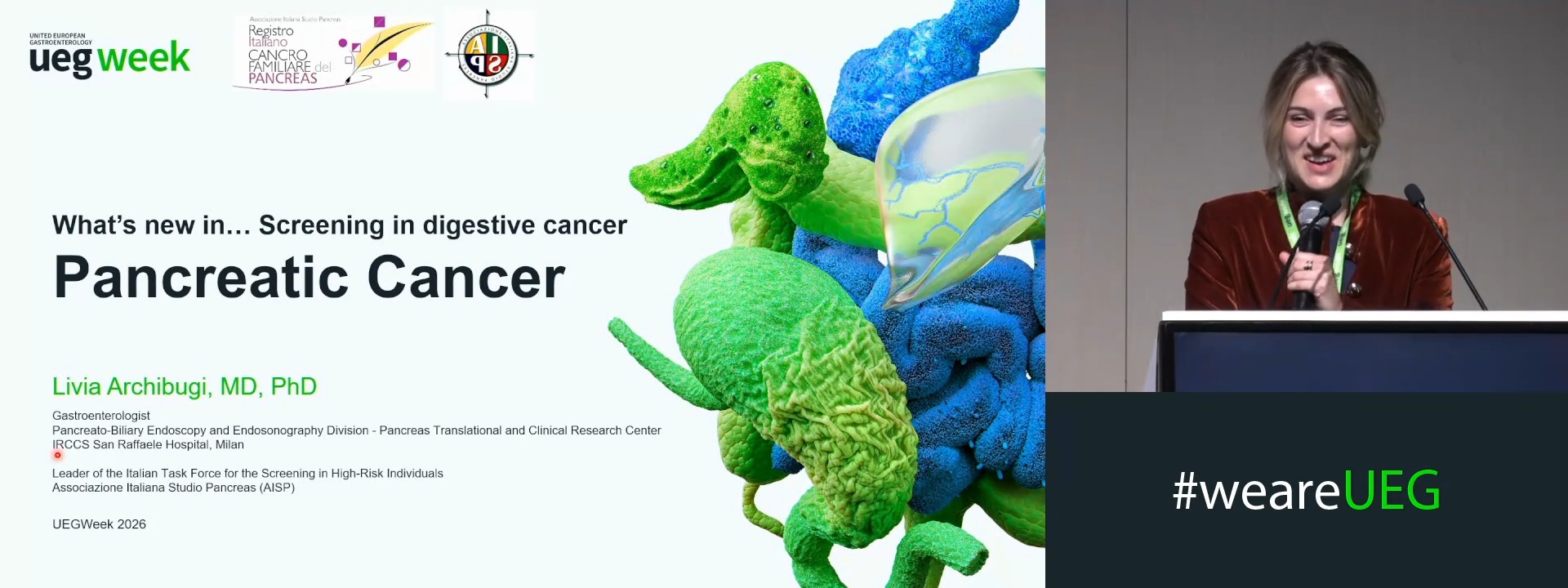
Pancreatic cancer
Affiliations
1 Hospital San Raffaele, Milan, Italy
Log in to continue.
This content is part of Gutflix. Log in with your myUEG account, or create one free, to watch it.
Not sure what you can access? Learn more about account types.
Medical management of pouchitis
Affiliations
1 Rabin Medical Center, Petah Tikva, Israel
Log in to continue.
This content is part of Gutflix. Log in with your myUEG account, or create one free, to watch it.
Not sure what you can access? Learn more about account types.
The floppy pouch: An emerging problem
Affiliations
1 Academisch Medisch centrum Dept. of Surgery - Department of Surgery, Academisch Medisch centrum Dept, Amsterdam, Netherlands