UEG's content platform for gastroenterology education bringing recordings, courses, guidelines, and more together in one place.
Trending on Gutflix
Rate for better recommendations!
Your feedback helps us show you more of what you like and less of what you dislike!
Log in to continue.
This content is part of Gutflix. Log in with your myUEG account, or create one free, to watch it.
Not sure what you can access? Learn more about account types.
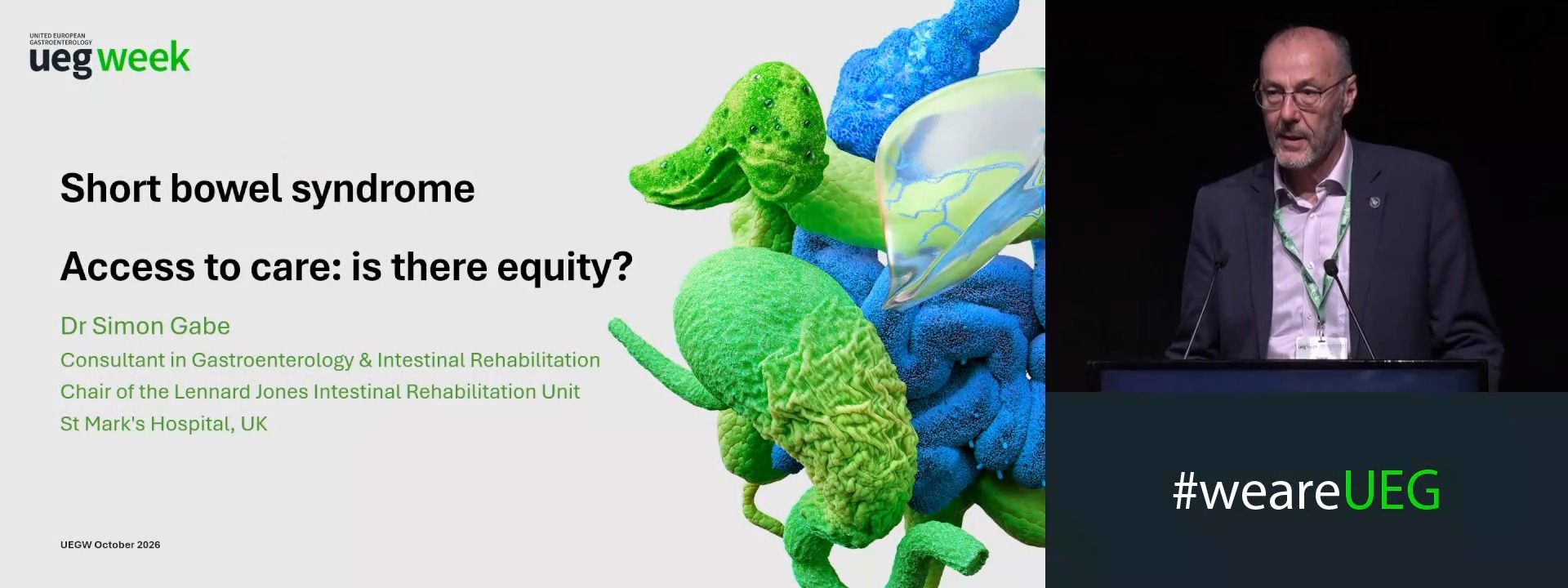
Access to care: Is there equity?
Affiliations
1 St. Mark's Hospital, Harrow, United Kingdom
Log in to continue.
This content is part of Gutflix. Log in with your myUEG account, or create one free, to watch it.
Not sure what you can access? Learn more about account types.
Introduction: Mistakes in… Upper GI
Affiliations
1 Stadtspital Triemli, Zürich, Switzerland
Log in to continue.
This content is part of Gutflix. Log in with your myUEG account, or create one free, to watch it.
Not sure what you can access? Learn more about account types.
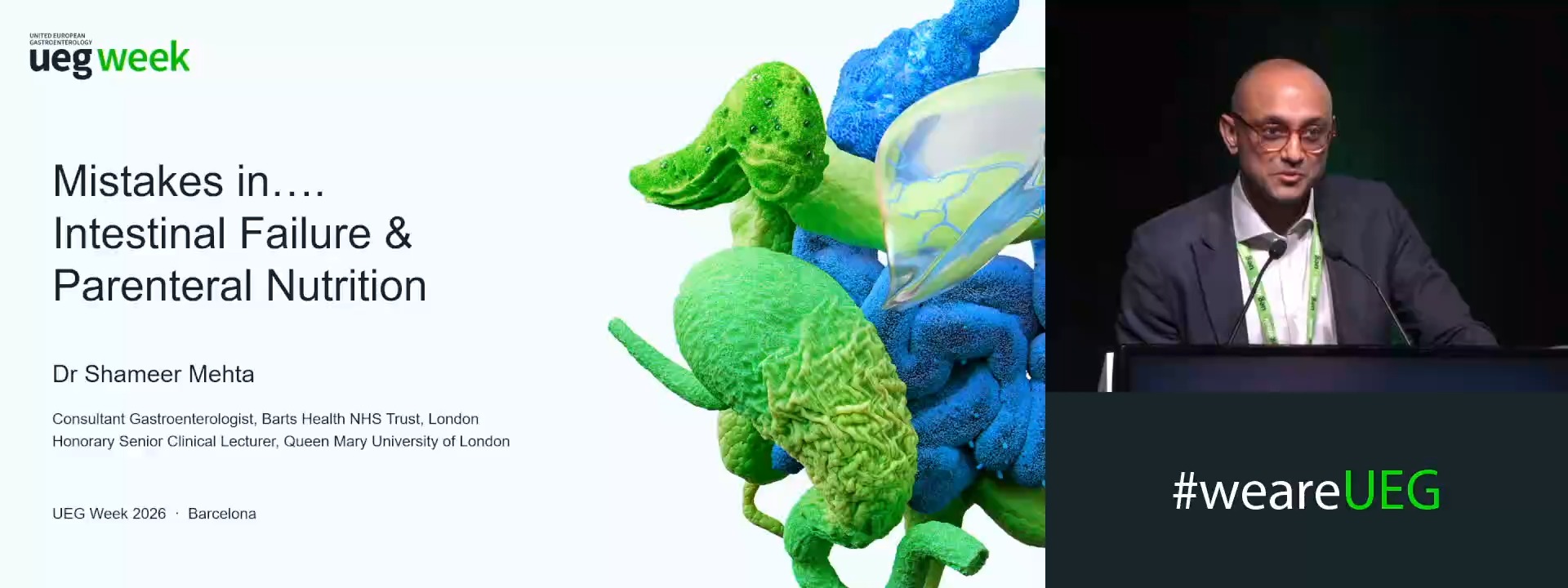
Intestinal failure and parenteral nutrition
Affiliations
1 UCL, London, United Kingdom
Log in to continue.
This content is part of Gutflix. Log in with your myUEG account, or create one free, to watch it.
Not sure what you can access? Learn more about account types.
Conclusion: Mistakes in… Upper GI
Affiliations
1 University of Genoa., Genoa, Italy
Log in to continue.
This content is part of Gutflix. Log in with your myUEG account, or create one free, to watch it.
Not sure what you can access? Learn more about account types.
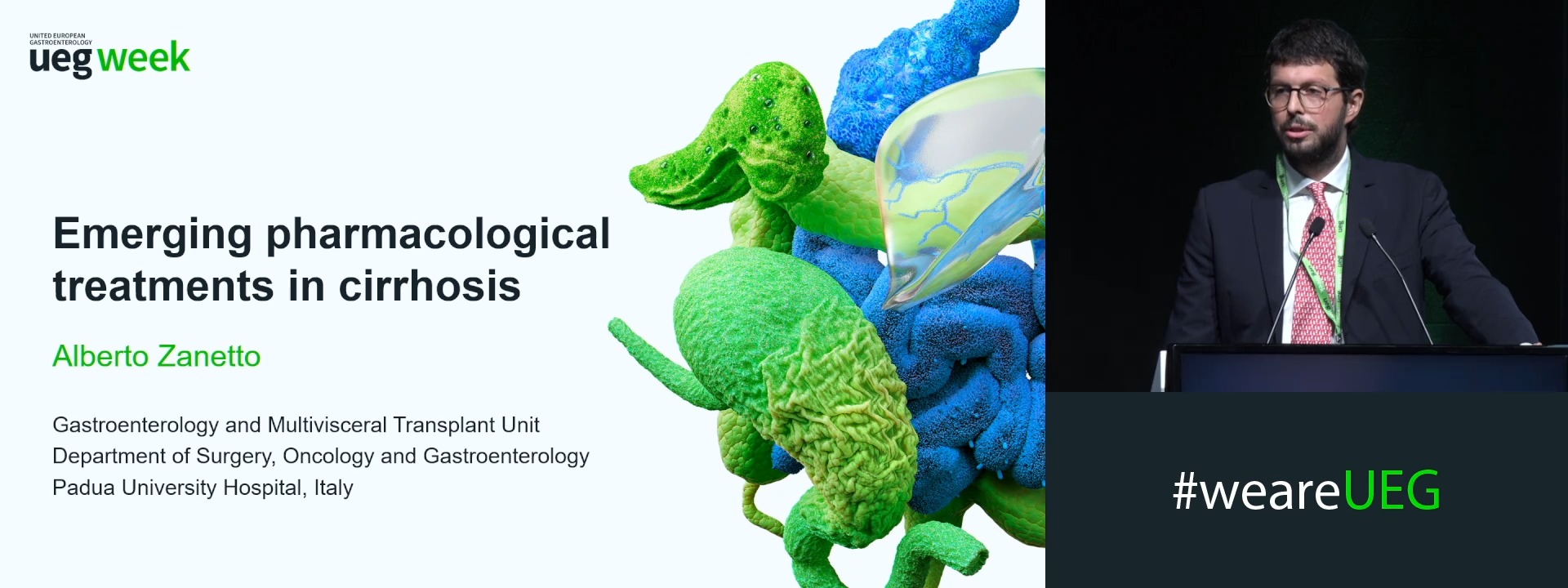
Emerging pharmacological treatments in cirrhosis
Affiliations
1 Department of Surgery, Oncology and Gastroenterology, University of Padua, Padua, Italy
Log in to continue.
This content is part of Gutflix. Log in with your myUEG account, or create one free, to watch it.
Not sure what you can access? Learn more about account types.
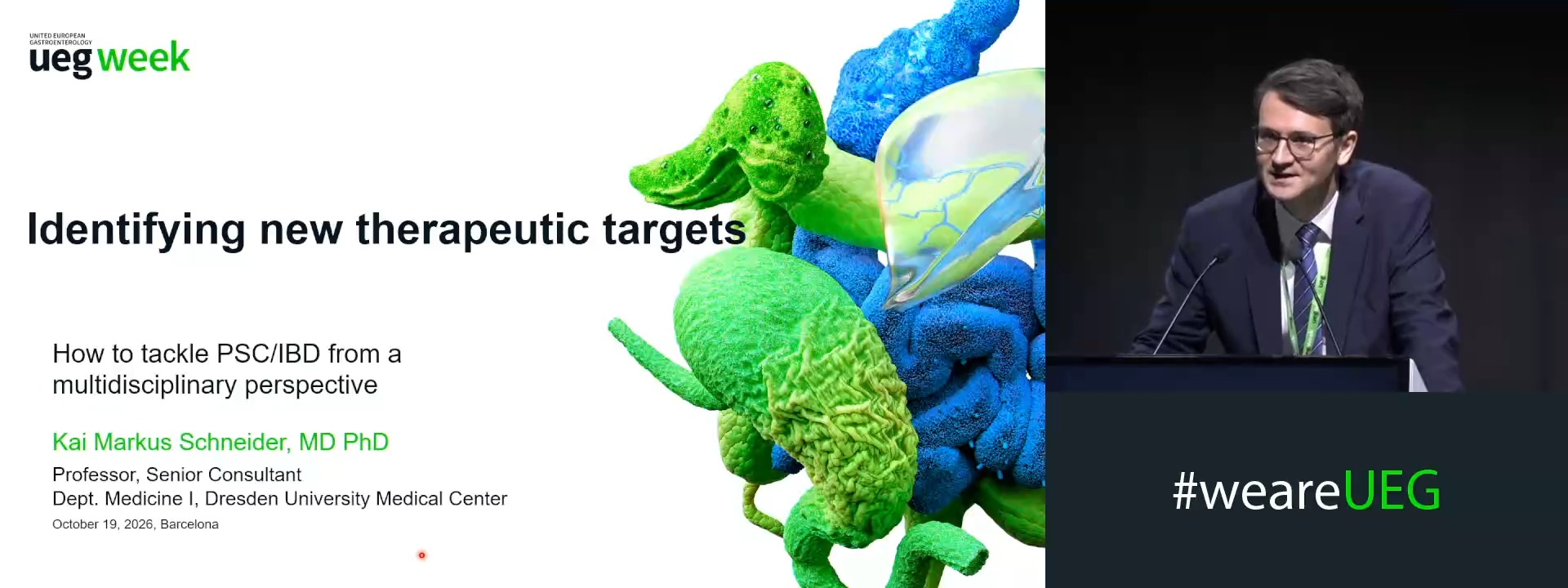
Identifying new therapeutic targets
Affiliations
1 Dresden University Medical Center, Dresden, Germany