UEG's educational platform for gastroenterology education bringing recordings, courses, guidelines, and more together in one place.
Most popular content
Rate for better recommendations!
Your feedback helps us show you more of what you like and less of what you dislike!
Log in to access this content.
Free for all myUEG account holders. Your access level is set automatically based on your occupation. Medical professionals get full access to all content. If you are a non-medical user, you can only access UEG Week content from congresses you attended.
Not sure what you can access? Learn more about account types.
IMPACT OF INTERMITTENT FASTING ON LABORATORY, RADIOLOGICAL, AND ANTHROPOMETRIC PARAMETERS IN NAFLD PATIENTS
Maha Elsabaawy 1, Maha Elsabaawy 1, Ahmed Sakr 2, Maha Elsabaawy 1, Maha Elsabaawy 3, Maha Elsabaawy 4, Maha Elsabaawy 1
1 National Liver Institute, Menoufia University, Shebin El-Kom, Menoufia, Egypt
2 National Liver Institute, Menoufia University, Shebin El-Kom, Menoufia, Egypt|||Gemeinschaftsklinikum Mittelrhein, Mayen, Germany
3 Faculty of Pharmacy, Modern University for Technology and Information, Cairo, Egypt
4 Faculty of Pharmacy, Menoufia University, Shebin El-Kom, Menoufia, Egypt
Conference
Topics
Submission format
Citation
Published
Log in to access this content.
Free for all myUEG account holders. Your access level is set automatically based on your occupation. Medical professionals get full access to all content. If you are a non-medical user, you can only access UEG Week content from congresses you attended.
Not sure what you can access? Learn more about account types.
Ten commandments of the colon
1 Center of hepatology, gastroenterology and dietetics, Vilnius university Santaros Klinikos, Lithuania
2 Humanitas University, Rome, Italy
Topics
Published
Log in to access this content.
Free for all myUEG account holders. Your access level is set automatically based on your occupation. Medical professionals get full access to all content. If you are a non-medical user, you can only access UEG Week content from congresses you attended.
Not sure what you can access? Learn more about account types.
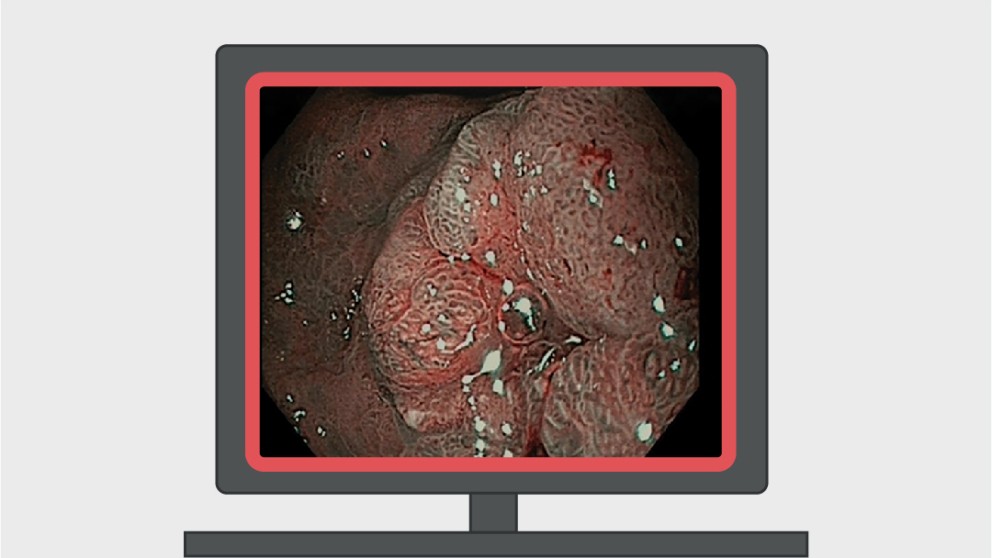
Mistakes in endoscopy and how to avoid them
Topics
Published
Log in to access this content.
Free for all myUEG account holders. Your access level is set automatically based on your occupation. Medical professionals get full access to all content. If you are a non-medical user, you can only access UEG Week content from congresses you attended.
Not sure what you can access? Learn more about account types.

Endoscopic surveillance after colonic polyps and colorectal cancer resection. 2018 update.
Carolina Mangas-Sanjuan, Rodrigo Jover, Joaquín Cubiella, Mercè Marzo-Castillejo, Francesc Balaguer, Xavier Bessa, Luis Bujanda Fernández de Piérola, Marco Bustamante, Antoni Castells, José B. Díaz-Tasende, Pilar Diez Redondo, Maite Herraiz Bayod, Juanjo Mascort-Roca, Maria Pellisé Urquiza, Enrique Quintero
Guideline
Citation
Published
Log in to access this content.
Free for all myUEG account holders. Your access level is set automatically based on your occupation. Medical professionals get full access to all content. If you are a non-medical user, you can only access UEG Week content from congresses you attended.
Not sure what you can access? Learn more about account types.
LONG-TERM OUTCOMES OF MAINTENANCE THERAPY IN ADULT AND PEDIATRIC EOSINOPHILIC ESOPHAGITIS: A SYSTEMATIC REVIEW AND METANALYSIS
Alberto Barchi 1, Francesco Vito Mandarino 1, Giuseppe Dell'Anna 1, Ernesto Fasulo 1, Mona-Rita Yacoub 2, Luca Albarello 2, Luca Massimino 1, Federica Ungaro 1, Edoardo Vincenzo Savarino 3, Sandro Passaretti 1, Silvio Danese 1, Edoardo Vespa 1
1 IRCCS Ospedale San Raffaele, Milano, Italy
2 IRCCS San Raffaele Scientific Institute, Milan, Italy
3 University of Padua, Division of Gastroenterology, Padua, Italy
Conference
Topics
Submission format
Citation
Published
Log in to access this content.
Free for all myUEG account holders. Your access level is set automatically based on your occupation. Medical professionals get full access to all content. If you are a non-medical user, you can only access UEG Week content from congresses you attended.
Not sure what you can access? Learn more about account types.
RISK FACTORS FOR HEPATIC ENCEPHALOPATHY AFTER UPPER GASTROINTESTINAL BLEEDING: A PROSPECTIVE SINGLE-CENTER STUDY
Ana Lancho Munoz 1, Jose Maria Lopez Tobaruela 1, Eva Julissa Ortega-Suazo 2, Cristina Tendero Peinado 1, RAUL FERNANDEZ GARCIA 1, Manuel López-Vico 2, Juan Gabriel Martínez-Cara 1, Eduardo Redondo-Cerezo 2, Rita Jiménez-Rosales 3
1 Hospital Virgen de las Nieves, Granada, Spain
2 Hospital Universitario Virgen de las Nieves, Granada, Spain
3 Hospital Universitario Virgen de Las Nieves, Granada, Spain
Conference
Topics
Submission format
Citation
Published
Log in to access this content.
Free for all myUEG account holders. Your access level is set automatically based on your occupation. Medical professionals get full access to all content. If you are a non-medical user, you can only access UEG Week content from congresses you attended.
Not sure what you can access? Learn more about account types.
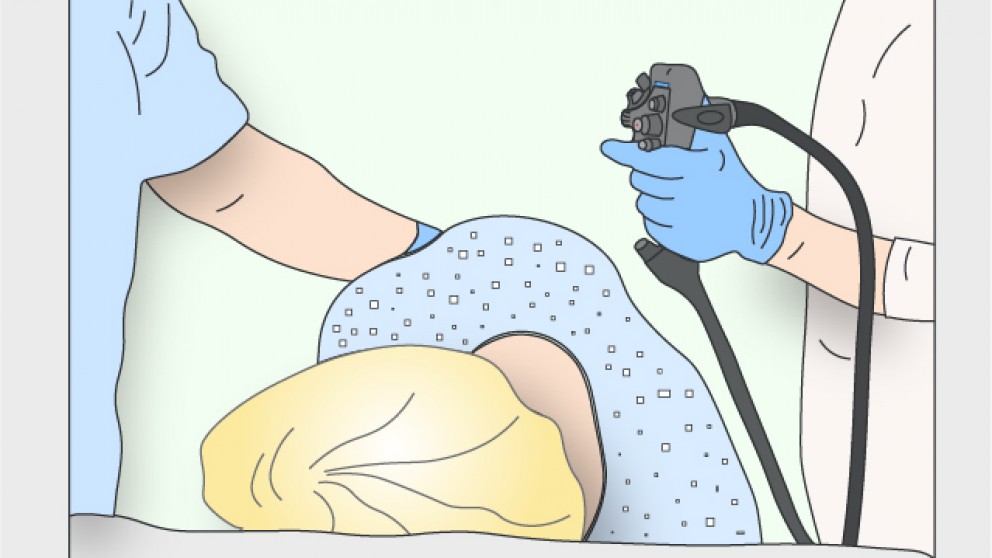
Mistakes in colonoscopy and how to avoid them
Topics