UEG's educational platform for gastroenterology education bringing recordings, courses, guidelines, and more together in one place.
Most popular content
Rate for better recommendations!
Your feedback helps us show you more of what you like and less of what you dislike!
Log in to access this content.
Free for all myUEG account holders. Your access level is set automatically based on your occupation. Medical professionals get full access to all content. If you are a non-medical user, you can only access UEG Week content from congresses you attended.
Not sure what you can access? Learn more about account types.

EFFECT FOR COMPLETION TIME OF BOWEL PREPARATION ON BOWEL CLEANSING EFFICACY: A PROSPECTIVE RANDOMIZED COMPARISON OF 2-4 HOURS VS 4-8 HOURS BEFORE COLONOSCOPY
1 The Catholic University of Korea, College of Medicine/Bucheon St. Mary’s Hospital, Bucheon-si, Korea, Republic of
Conference
Topics
Submission format
Citation
Published
Log in to access this content.
Free for all myUEG account holders. Your access level is set automatically based on your occupation. Medical professionals get full access to all content. If you are a non-medical user, you can only access UEG Week content from congresses you attended.
Not sure what you can access? Learn more about account types.
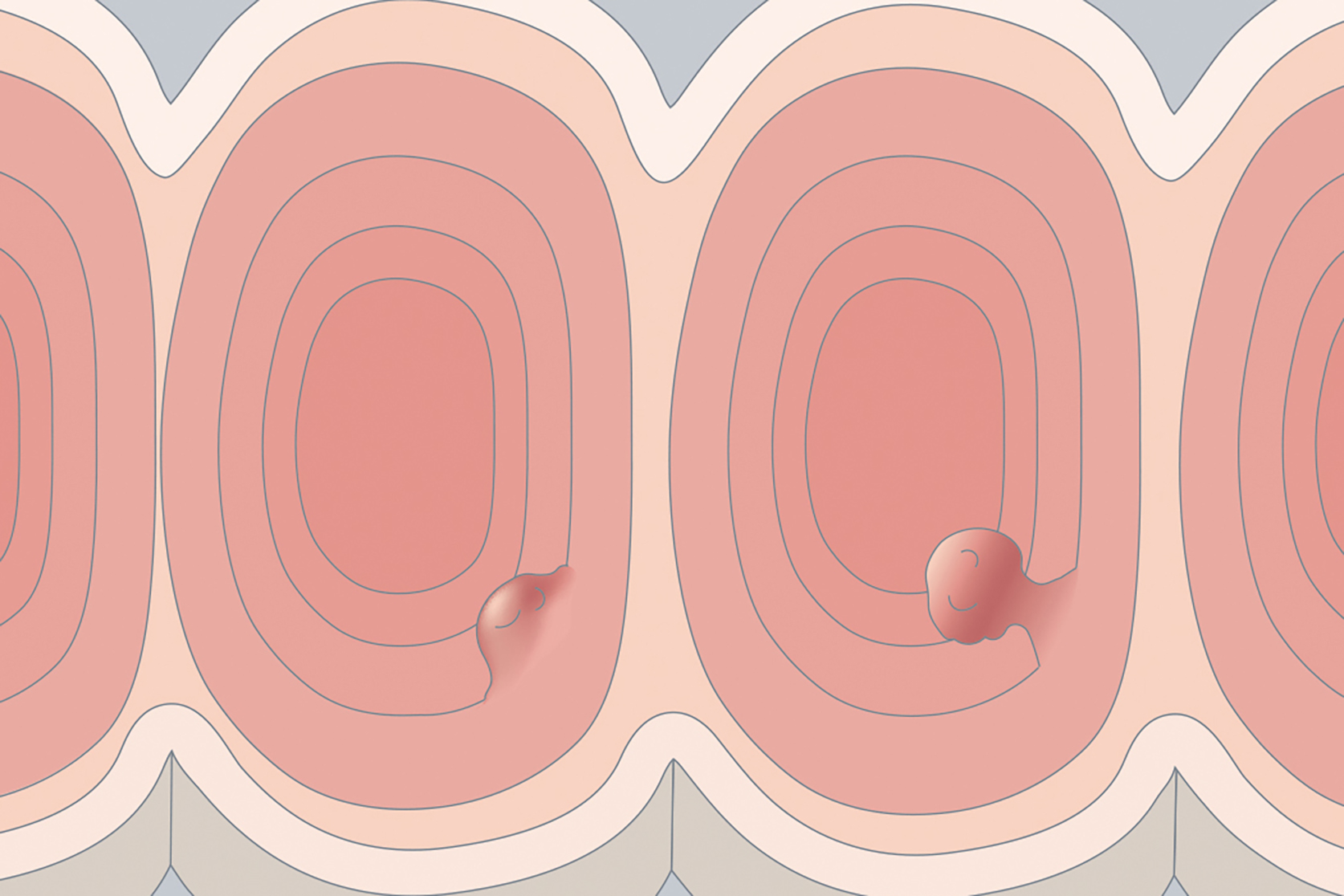
Clinical introduction to colorectal polyps
Event
Topics
Accreditation status
Duration
Published
Log in to access this content.
Free for all myUEG account holders. Your access level is set automatically based on your occupation. Medical professionals get full access to all content. If you are a non-medical user, you can only access UEG Week content from congresses you attended.
Not sure what you can access? Learn more about account types.
A COST ANALYSIS OF PROPOFOL SEDATION FOR OUTPATIENT ENDOSCOPY IN THE ITALIAN HEALTHCARE SYSTEM
Francesco Vito Mandarino 1, Giorgia Gribaudo 2, Lorella Fanti 1, Noemi Salmeri 1, Alberto Barchi 1, Ernesto Fasulo 1, Giuseppe Dell'Anna 1, Edi Viale 1, Dario Esposito 1, Maria Napolitano 1, Luca Massimino 1, Francesco Azzolini 1, Lorenzo Quario 1, Massimo Agostoni 1, Lorenzo Giovanni Mantovani 2, Paolo Angelo Cortesi 2, Silvio Danese 1
1 San Raffaele Hospital, Milan, Italy
2 University of Milan-Bicocca, Monza, Italy
Conference
Submission format
Session
Citation
Published
Log in to access this content.
Free for all myUEG account holders. Your access level is set automatically based on your occupation. Medical professionals get full access to all content. If you are a non-medical user, you can only access UEG Week content from congresses you attended.
Not sure what you can access? Learn more about account types.
GASTRIC CANCER RISK ASSESSMENT OF GASTRITIS IN CLINICAL PRACTICE BY USING THE HISTOLOGICAL INFORMATION RECOMMENDED BY THE UPDATED SYDNEY SYSTEM: THE OLGIMA SYSTEM
Pedro Genaro Delgado-Guillena 1, Eva Barreiro Alonso 2, Javier Tejedor-Tejada 3, Alain Huerta Madrigal 4, ADRIANA ORTEGA LARRODE 5, Oliver Patrón 6, Diana Zaffalon 7, Raquel Vicente Lidón 8, Nayra Felipez Varela 9, Carolina Mangas-Sanjuan 10, PATRICIA GONÇALVES DA CUNHA 11, Luis Hernández Villalba 12, ROSA MARIA SAIZ CHUMILLAS 13, Sheyla Montori Pina 9, Joan Llach 14, Miriam Cuatrecasas 15, Maria Gloria Fernández-Esparrach 15, Leticia Moreira Ruiz 16, Eduardo Albéniz-Arbizu 17
1 Hospital de Mérida, Mérida, Spain
2 HOSPITAL DE CABUEÑES, Gijon, Spain
3 Hospital Universitario Río Hortega, Valladolid, Spain
4 H. Galdakao-Usansolo, Galdakao, Spain
5 Hospital Comarcal de Inca, Mallorca, Spain
6 Hospital Llevant, Islas Baleares, Spain
7 Hospital Clinic, Barcelona, Spain
8 H. U. MIGUEL SERVET, Zaragoza, Spain
9 Hospital Universitario de Navarra, Pamplona, Spain
10 Hospital General Universitario de Alicante, Alicante, Spain
11 SERVIDIGEST CLINIC, Barcelona, Spain
12 Santos Reyes, Aranda de Duero, Spain
13 Hospital Universitario de Burgos, Burgos, Spain
14 HOSPITAL CLINIC OF BARCELONA, Barcelona, Spain
15 Hospital Clinic de Barcelona, Barcelona, Spain
16 Hospital Clinic de Barcelona, Gava, Spain
17 COMPLEJO HOSPITALARIO DE NAVARRA, Pamplona, Spain
Conference
Topics
Submission format
Citation
Published
Log in to access this content.
Free for all myUEG account holders. Your access level is set automatically based on your occupation. Medical professionals get full access to all content. If you are a non-medical user, you can only access UEG Week content from congresses you attended.
Not sure what you can access? Learn more about account types.
LONG-TERM (MINIMUM 1 YEAR) OUTCOMES AFTER GASTRIC PERORAL ENDOSCOPIC MYOTOMY FOR REFRACTORY GASTROPARESIS: A SYSTEMATIC REVIEW AND META-ANALYSIS
Francesco Vito Mandarino 1, Alberto Barchi 1, Francesco Azzolini 1, Noemi Salmeri 1, Ernesto Fasulo 1, Edoardo Vespa 1, Emanuele Sinagra 2, Giuseppe Dell'Anna 1, Jérémie Jacques 3, Silvio Danese 1
1 San Raffaele Hospital, Milan, Italy
2 HSR Giglio, Cefalù, Italy
3 CHU Limoges - Hepato-Gastro-Enterology, CHU Limoges; Limoges/FR, Limoges, France
Conference
Topics
Submission format
Citation
Published
Log in to access this content.
Free for all myUEG account holders. Your access level is set automatically based on your occupation. Medical professionals get full access to all content. If you are a non-medical user, you can only access UEG Week content from congresses you attended.
Not sure what you can access? Learn more about account types.
ENDOSCOPIC VACUUM THERAPY (EVT) VERSUS SELF-EXPANDING METAL STENT (SEMS) IN THE TREATMENT OF NON-LARGE ANASTOMOTIC DEHISCENCES AFTER ONCOLOGIC IVOR-LEWIS ESOPHAGECTOMY: A MATCHED CASE-CONTROL STUDY
Francesco Vito Mandarino 1, Alberto Barchi 1, Lorenzo Leone 1, Lorella Fanti 1, Francesco Azzolini 1, Riccardo Rosati 1, Ugo Elmore 1, Silvio Danese 1
1 IRCCS San Raffaele Scientific Institute, Milan, Italy
Conference
Topics
Submission format
Citation
Published
Log in to access this content.
Free for all myUEG account holders. Your access level is set automatically based on your occupation. Medical professionals get full access to all content. If you are a non-medical user, you can only access UEG Week content from congresses you attended.
Not sure what you can access? Learn more about account types.
ENDOSCOPIC SUBMUCOSAL DISSECTION IN SCARRED COLO-RECTAL LESIONS: A RETROSPECTIVE MULTICENTRIC STUDY WITH LONG-TERM FOLLOW-UP
Francesco Vito Mandarino 1, Ernesto Fasulo 1, Alberto Barchi 1, Francesco Azzolini 1, Lorella Fanti 1, Edi Viale 1, Dario Esposito 1, Paolo Cecinato 2, Simone Grillo 2, Romano Sassatelli 2, Silvio Danese 1
1 IRCCS San Raffaele Scientific Institute, Milan, Italy
2 Arcispedale Santa Maria Nuova - Reggio Emilia, Reggio Emilia, Italy
Conference
Topics