UEG's educational platform for gastroenterology education bringing recordings, courses, guidelines, and more together in one place.
Most popular content
Rate for better recommendations!
Your feedback helps us show you more of what you like and less of what you dislike!
Log in to access this content.
Free for all myUEG account holders. Your access level is set automatically based on your occupation. Medical professionals get full access to all content. If you are a non-medical user, you can only access UEG Week content from congresses you attended.
Not sure what you can access? Learn more about account types.
COMPACT VISION-LANGUAGE MODEL FOR EXPLAINABLE CLASSIFICATION OF NEOPLASTIC LESIONS IN GI ENDOSCOPY
1 AI Medical Service Inc., Tokyo, Japan
2 The University of Tokyo, Tokyo, Japan
Conference
Topics
Submission format
Citation
Published
Log in to access this content.
Free for all myUEG account holders. Your access level is set automatically based on your occupation. Medical professionals get full access to all content. If you are a non-medical user, you can only access UEG Week content from congresses you attended.
Not sure what you can access? Learn more about account types.
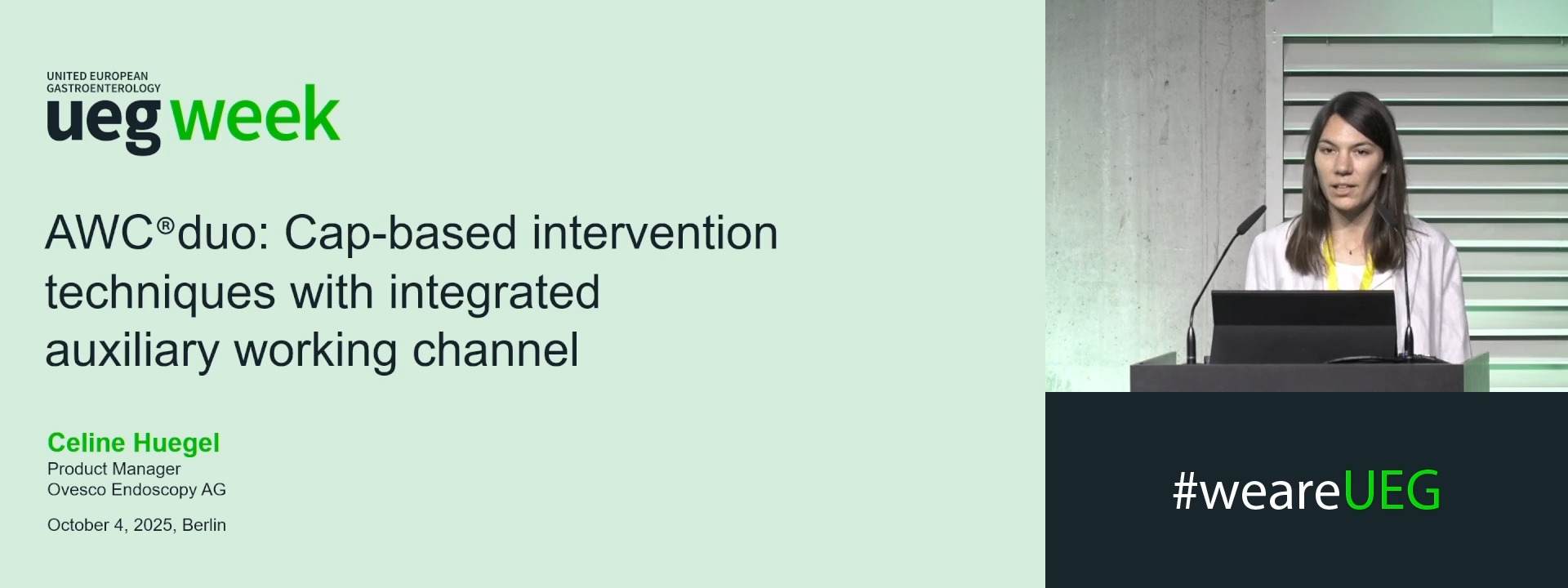
AWC®duo: Cap-based intervention techniques with integrated auxiliary working channel
1 Ovesco Endoscopy AG, Tübingen, Germany
Event
Topics
Citation
Published
Log in to access this content.
Free for all myUEG account holders. Your access level is set automatically based on your occupation. Medical professionals get full access to all content. If you are a non-medical user, you can only access UEG Week content from congresses you attended.
Not sure what you can access? Learn more about account types.
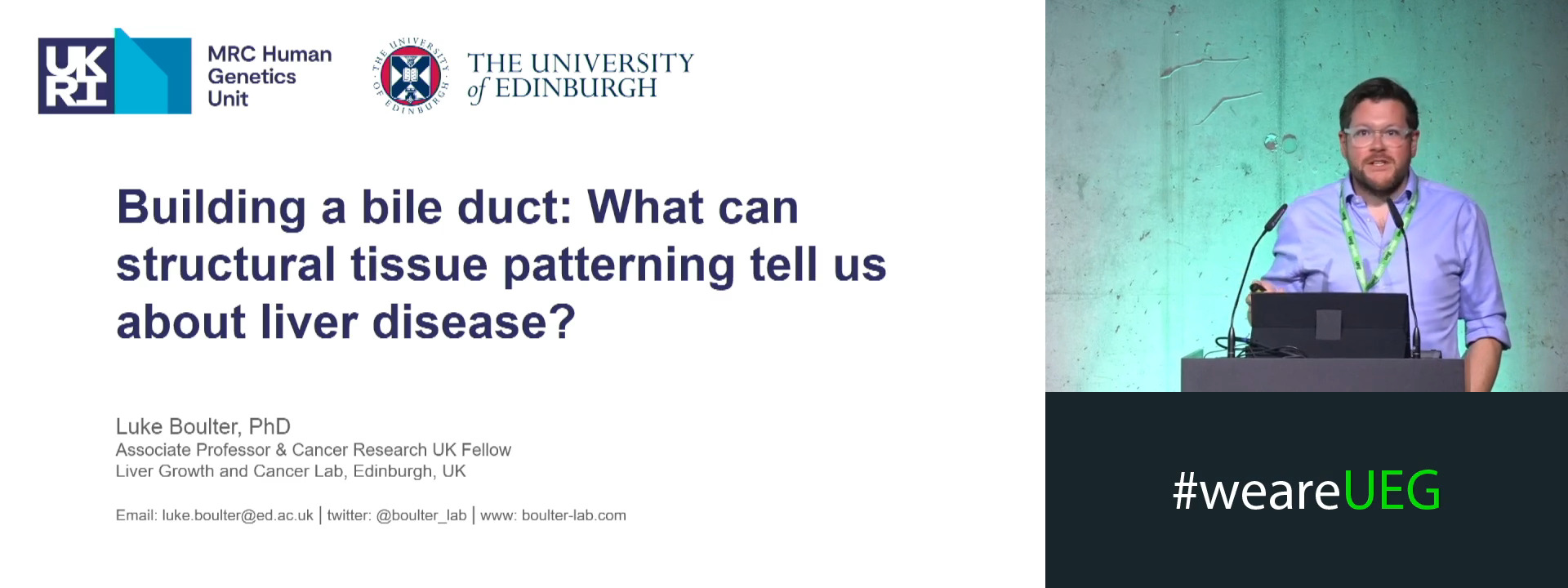
Building a bile duct: What can structural tissue patterning tell us about liver disease?
1 University of Edinburgh, Edinburgh, United Kingdom
Event
Session
Citation
Published
Log in to access this content.
Free for all myUEG account holders. Your access level is set automatically based on your occupation. Medical professionals get full access to all content. If you are a non-medical user, you can only access UEG Week content from congresses you attended.
Not sure what you can access? Learn more about account types.
Discussion: New trends and developments in hygiene and infection control
Event
Topics
Citation
Published
Log in to access this content.
Free for all myUEG account holders. Your access level is set automatically based on your occupation. Medical professionals get full access to all content. If you are a non-medical user, you can only access UEG Week content from congresses you attended.
Not sure what you can access? Learn more about account types.
Endoscopic hemostasis with Nexpowder™* : Clinical applications
1 Medtronic AB, Kista, Sweden
Event
Topics
Citation
Published
Log in to access this content.
Free for all myUEG account holders. Your access level is set automatically based on your occupation. Medical professionals get full access to all content. If you are a non-medical user, you can only access UEG Week content from congresses you attended.
Not sure what you can access? Learn more about account types.
INSIGHTS INTO TRAINEE ENDOSCOPIST-CADX ARTIFICIAL INTELLIGENCE INTERACTION AND INFLUENCES ON DIAGNOSTIC COMPETENCY – EXPLORATORY ANALYSIS OF DATA FROM A PROSPECTIVE OBSERVATIONAL STUDY OF CADX-SUPPORTED TRAINEE ENDOSCOPIST DIAGNOSTIC COMPETENCY
Viktoriia Marko 1, Julian Prosenz 2, Sebastian Bernhofer 2, David Venturi 2, Florian Koutny 2, Andreas Maieron 2
1 Danylo Halytsky Lviv National Medical University (LNMU), Lviv, Ukraine
2 Karl Landsteiner University of Health Sciences, Krems, Austria|||University Hospital St. Pölten, St. Pölten, Austria
Conference
Topics
Submission format
Session
Citation
Published
Log in to access this content.
Free for all myUEG account holders. Your access level is set automatically based on your occupation. Medical professionals get full access to all content. If you are a non-medical user, you can only access UEG Week content from congresses you attended.
Not sure what you can access? Learn more about account types.
GENDER DISPARITIES IN FIRST AND SENIOR AUTHORSHIP IN GASTROINTESTINAL ENDOSCOPY: A DECADE OF PUBLICATIONS IN LEADING JOURNALS
1 Feevale University, Novo Hamburgo, Brazil
2 Hospital Regina, Novo Hamburgo, Brazil