UEG's content platform for gastroenterology education bringing recordings, courses, guidelines, and more together in one place.
Trending on Gutflix
Rate for better recommendations!
Your feedback helps us show you more of what you like and less of what you dislike!
Log in to continue.
This content is part of Gutflix. Log in with your myUEG account, or create one free, to watch it.
Not sure what you can access? Learn more about account types.
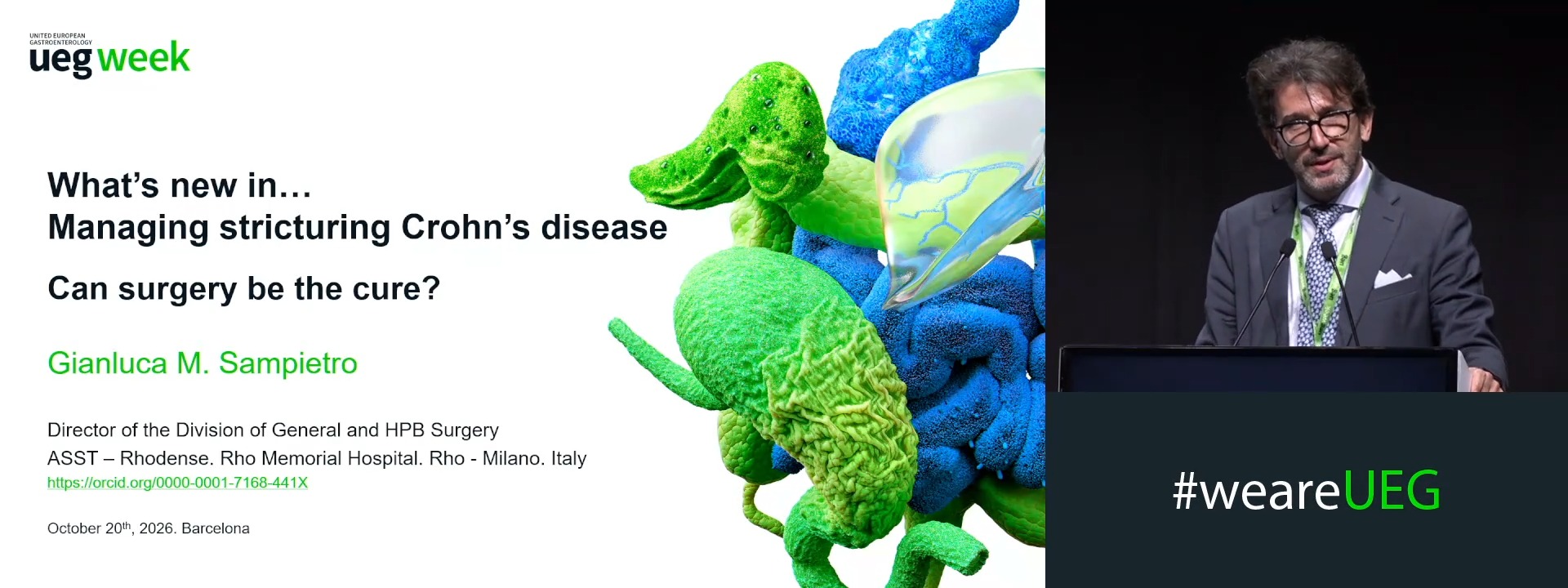
Can surgery be the cure?
Affiliations
1 ASST Fatebenefratelli Sacco - Ospedale Luigi Sacco Polo Universitario, Milano, Italy
Log in to continue.
This content is part of Gutflix. Log in with your myUEG account, or create one free, to watch it.
Not sure what you can access? Learn more about account types.
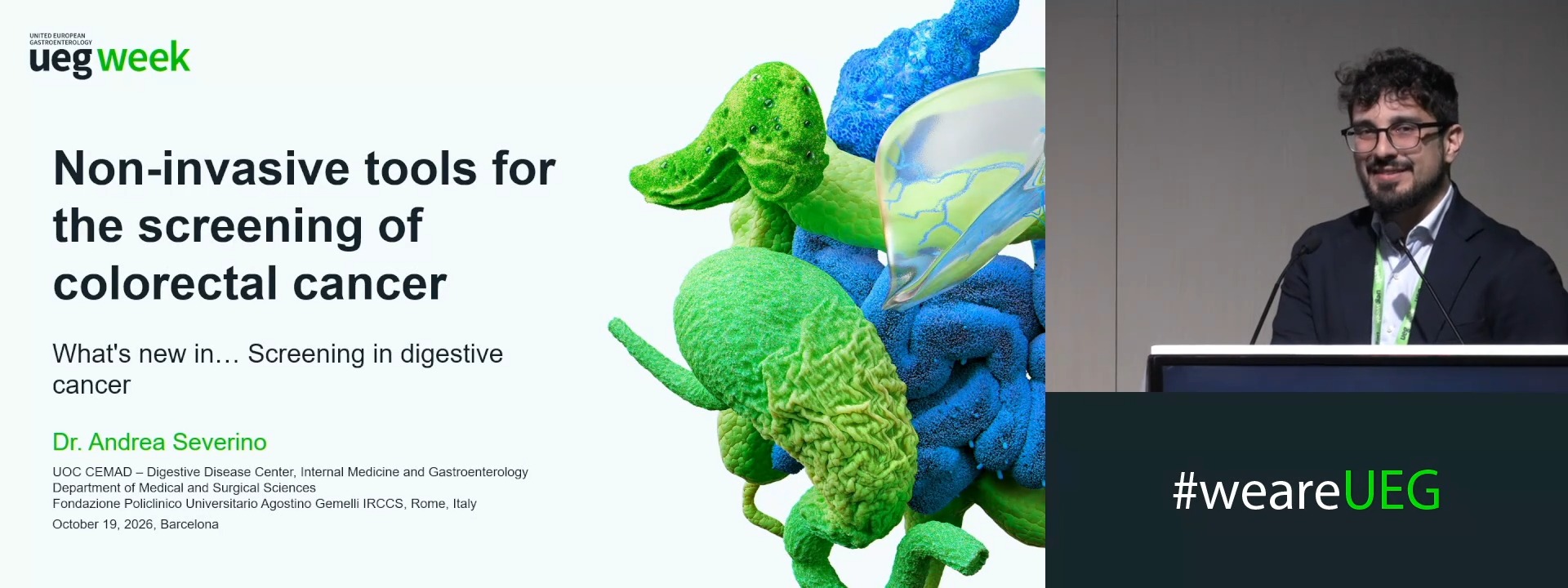
Non-invasive tools for the screening of colorectal cancer
Affiliations
1 Fondazione Policlinico Universitario, Rome, Italy
Log in to continue.
This content is part of Gutflix. Log in with your myUEG account, or create one free, to watch it.
Not sure what you can access? Learn more about account types.
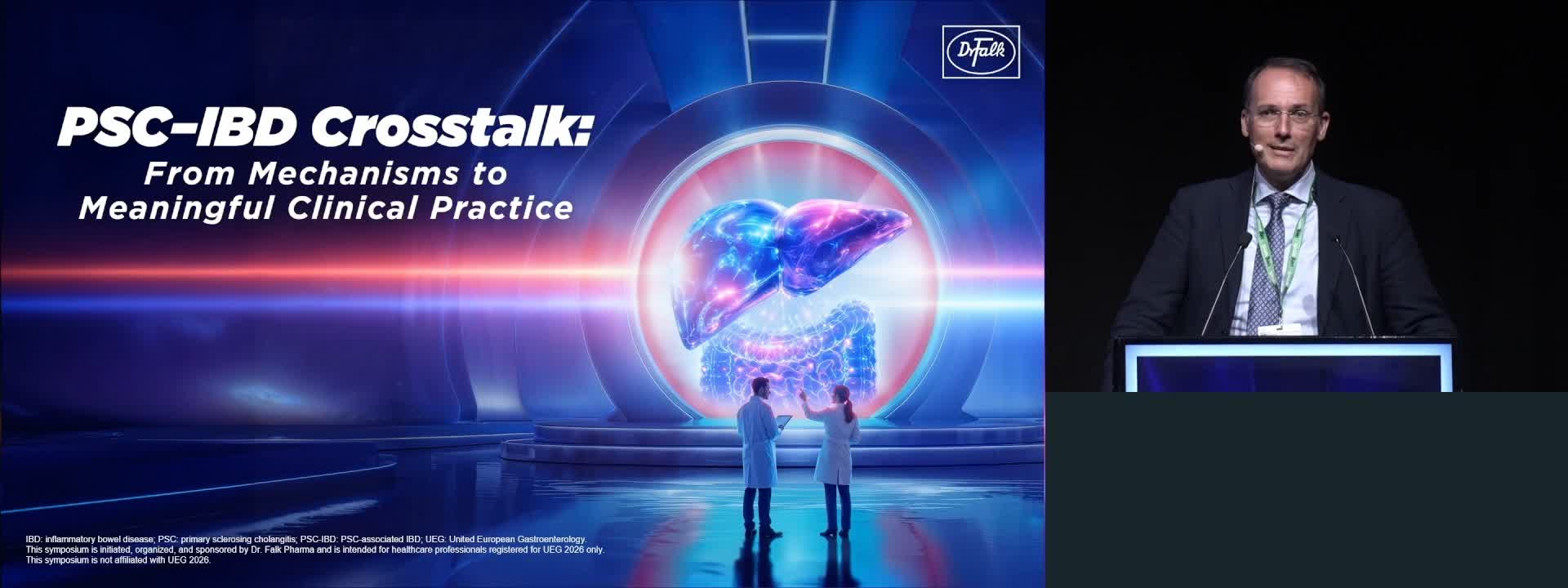
PSC-IBD crosstalk: From mechanisms to meaningful clinical practice (Dr. Falk Pharma) (Complete Session)
Affiliations
1 Charité - Universitätsmedizin, Berlin, Germany
2 Medical University of Vienna, Vienna, Austria
3 John Radcliffe Hospital, Oxford, Oxford, United Kingdom
4 University of Birmingham, Birmingham, United Kingdom
Log in to continue.
This content is part of Gutflix. Log in with your myUEG account, or create one free, to watch it.
Not sure what you can access? Learn more about account types.
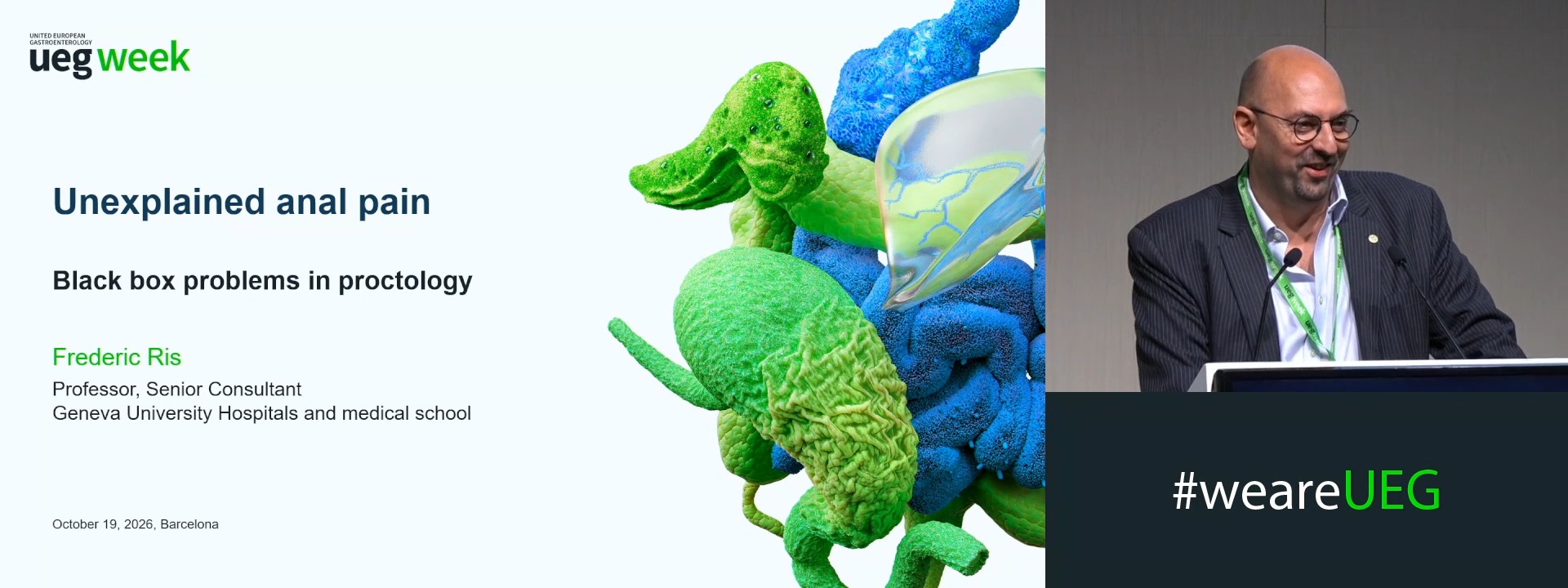
Unexplained anal pain
Affiliations
1 Geneva University Hospitals, Geneva, Switzerland
Log in to continue.
This content is part of Gutflix. Log in with your myUEG account, or create one free, to watch it.
Not sure what you can access? Learn more about account types.
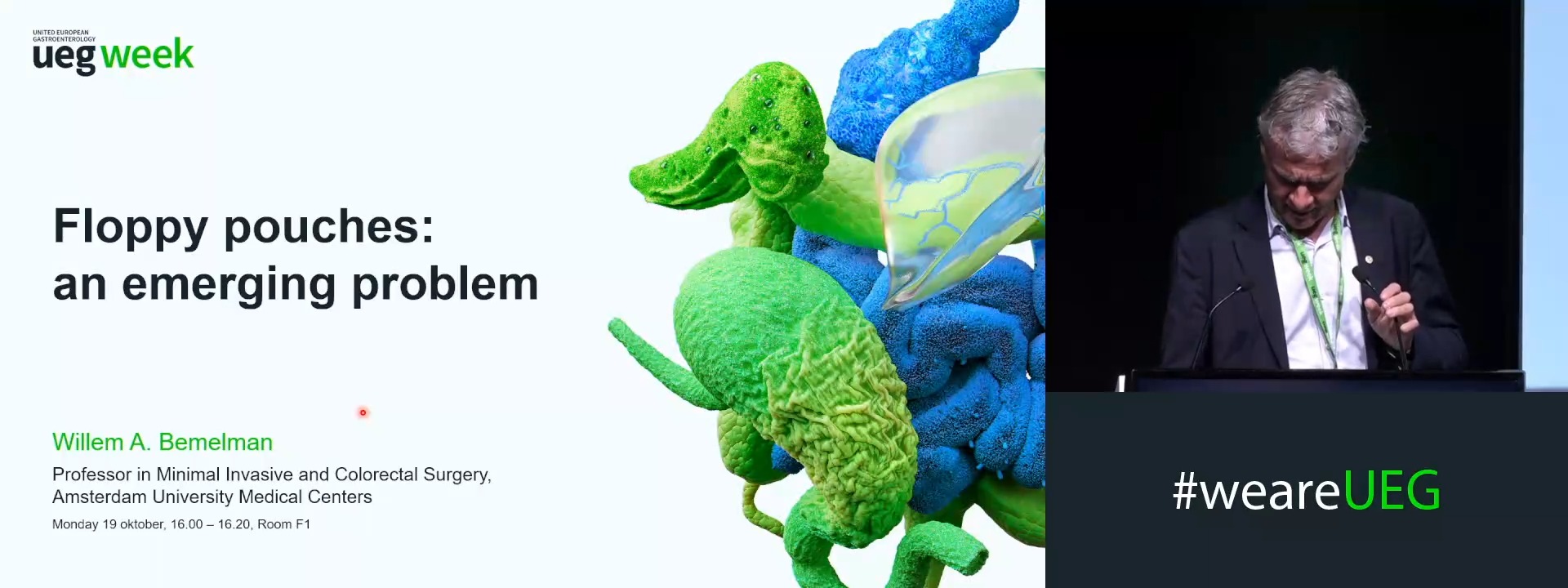
The floppy pouch: An emerging problem
Affiliations
1 Academisch Medisch centrum Dept. of Surgery - Department of Surgery, Academisch Medisch centrum Dept, Amsterdam, Netherlands
Log in to continue.
This content is part of Gutflix. Log in with your myUEG account, or create one free, to watch it.
Not sure what you can access? Learn more about account types.
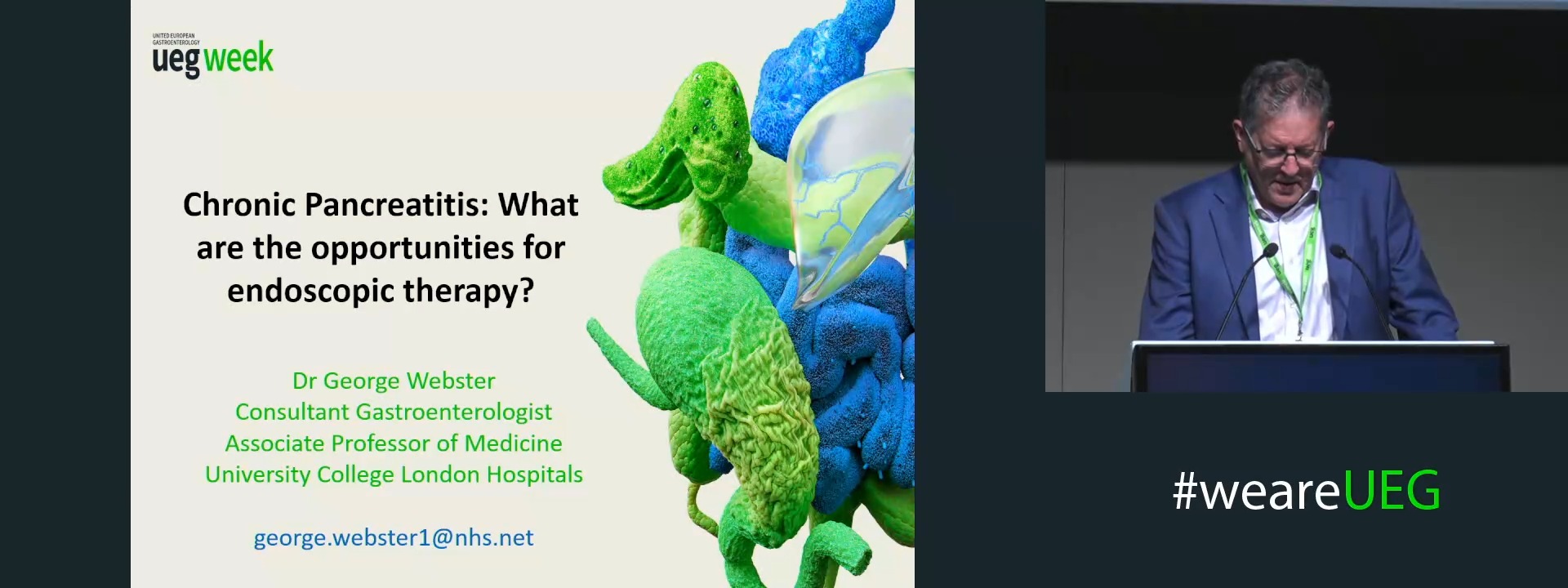
What are the opportunities for endoscopic therapy?
Affiliations
1 University College Hospital, London, United Kingdom