UEG's content platform for gastroenterology education bringing recordings, courses, guidelines, and more together in one place.
Trending on Gutflix
Rate for better recommendations!
Your feedback helps us show you more of what you like and less of what you dislike!
Log in to continue.
This content is part of Gutflix. Log in with your myUEG account, or create one free, to watch it.
Not sure what you can access? Learn more about account types.
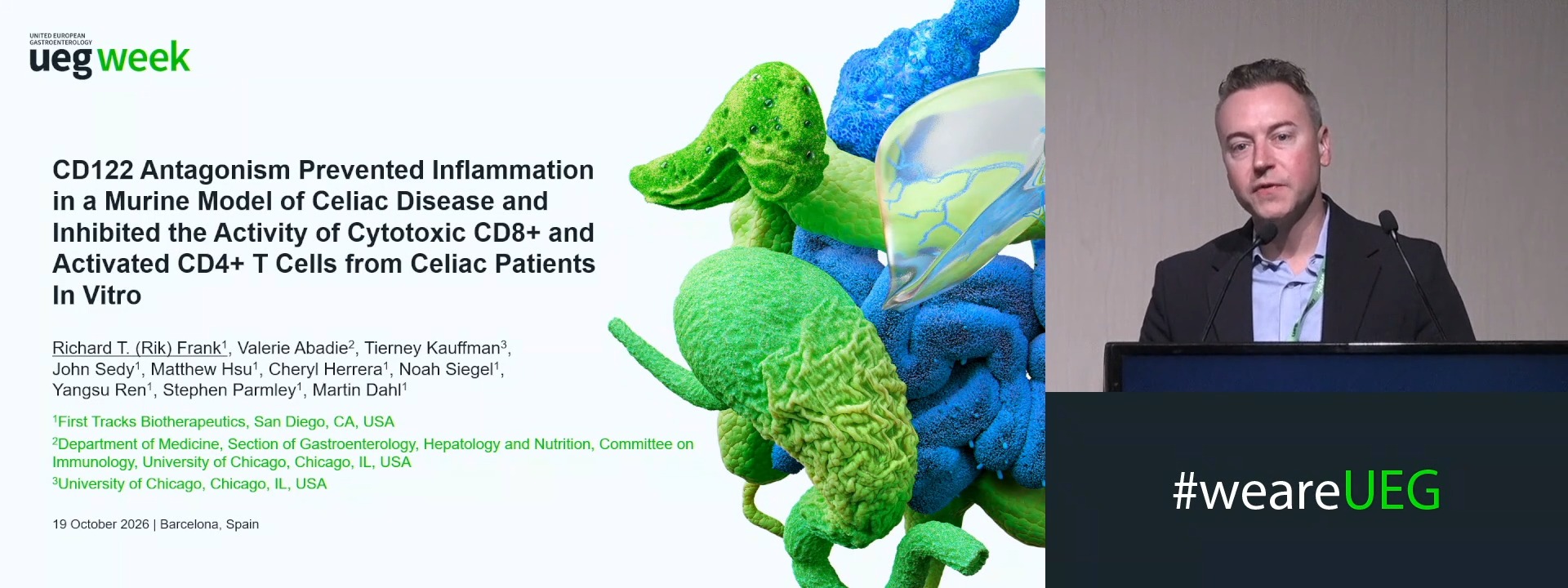
CD122 ANTAGONISM PREVENTED INFLAMMATION IN A MURINE MODEL OF CELIAC DISEASE AND INHIBITED THE ACTIVITY OF CYTOTOXIC CD8+ AND ACTIVATED CD4+ T CELLS FROM CELIAC PATIENTS IN VITRO, SUPPORTING THE EVALUATION OF ANB033 IN AN ONGOING PHASE 1B STUDY IN CELIAC D
Richard T Frank 1, Valerie Abadie 2, Tierney Kauffman 2, John Sedy 1, Matthew Hsu 1, Cheryl Herrera 1, Noah Siegel 1, Yangsu Ren 1, Stephen Parmley 1, Martin Dahl 1
Affiliations
1 First Tracks Biotherapeutics, Inc., San Diego, United States
2 The University of Chicago, Chicago, United States
Log in to continue.
This content is part of Gutflix. Log in with your myUEG account, or create one free, to watch it.
Not sure what you can access? Learn more about account types.
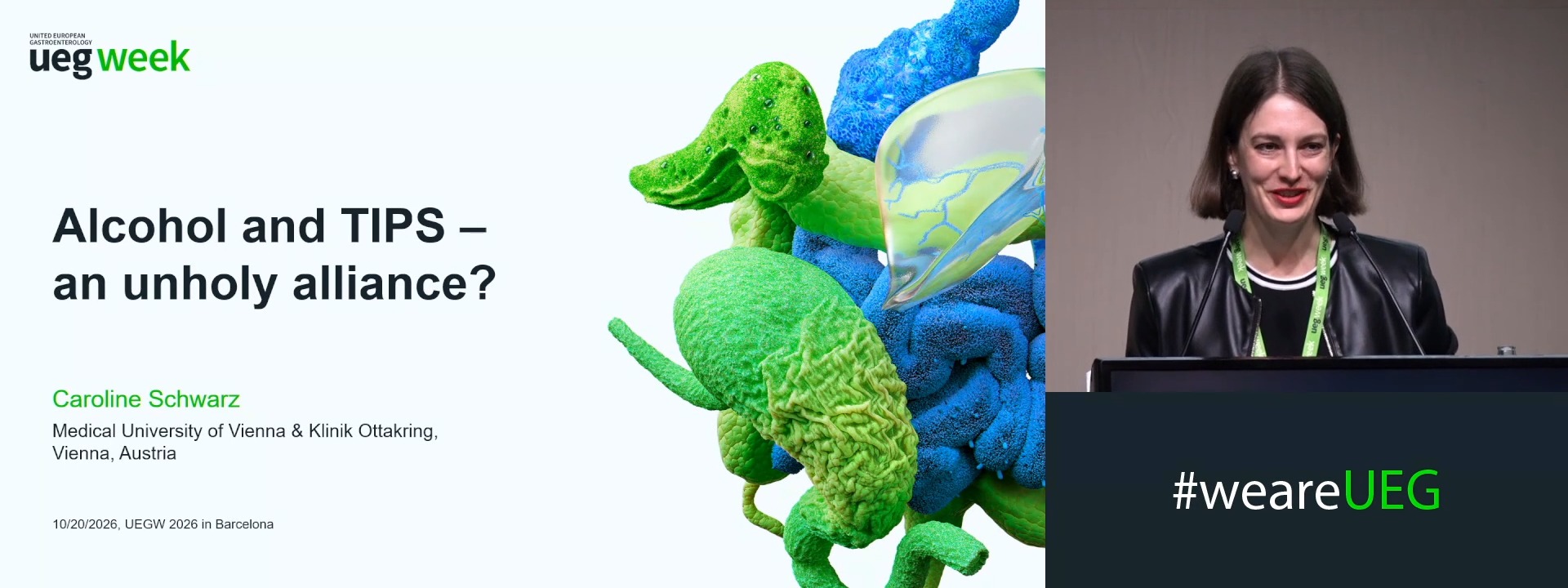
Alcohol and TIPS - an unholy alliance?
Affiliations
1 Klinik Ottakring, Vienna, Austria
Log in to continue.
This content is part of Gutflix. Log in with your myUEG account, or create one free, to watch it.
Not sure what you can access? Learn more about account types.
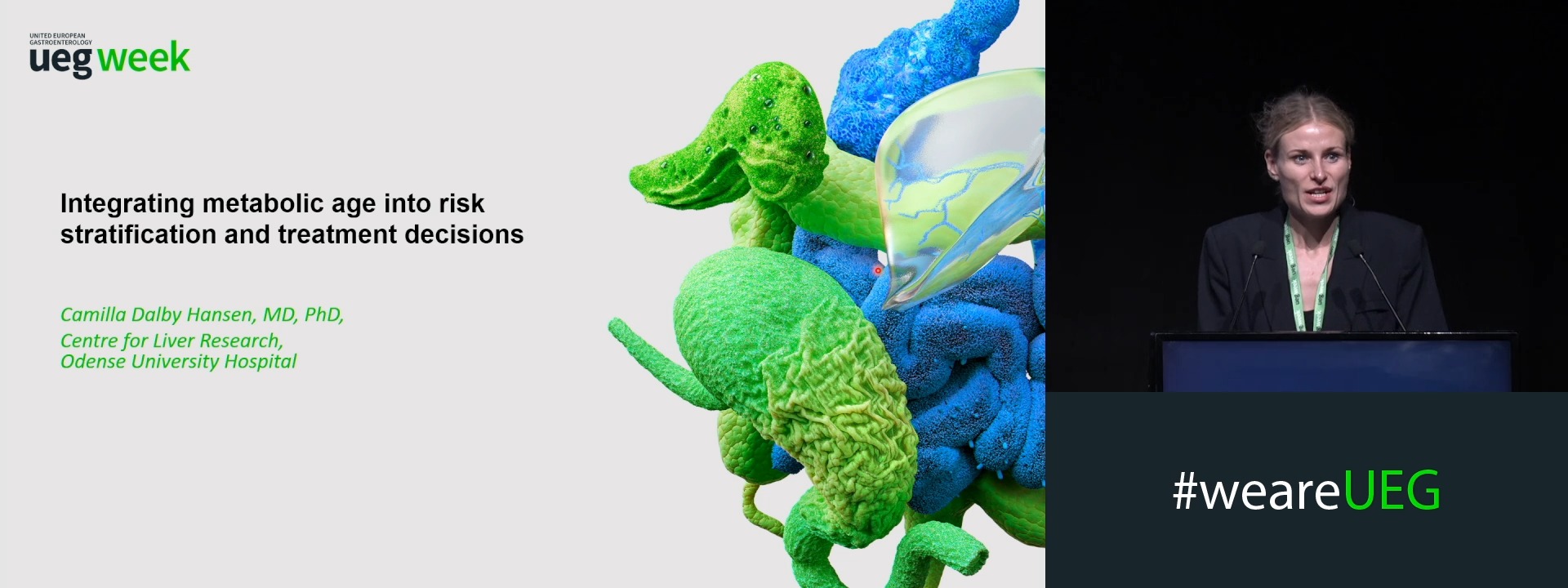
Integrating metabolic age into risk stratification and treatment decisions
Affiliations
1 Odense University Hospital, Odense, Denmark
Log in to continue.
This content is part of Gutflix. Log in with your myUEG account, or create one free, to watch it.
Not sure what you can access? Learn more about account types.
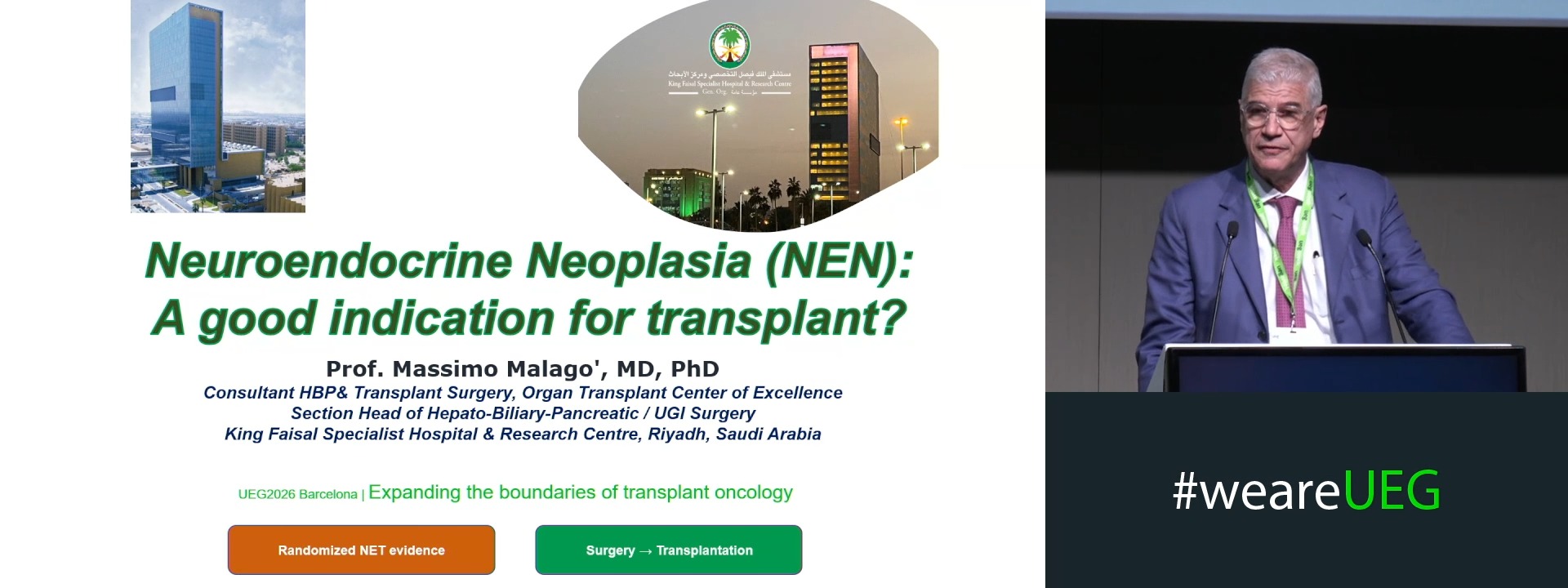
Neuroendocrine cancer: A good indication for transplant?
Affiliations
1 King Faisal Specialist Hospital and Research Center, Riyadh, Saudi Arabia
Log in to continue.
This content is part of Gutflix. Log in with your myUEG account, or create one free, to watch it.
Not sure what you can access? Learn more about account types.
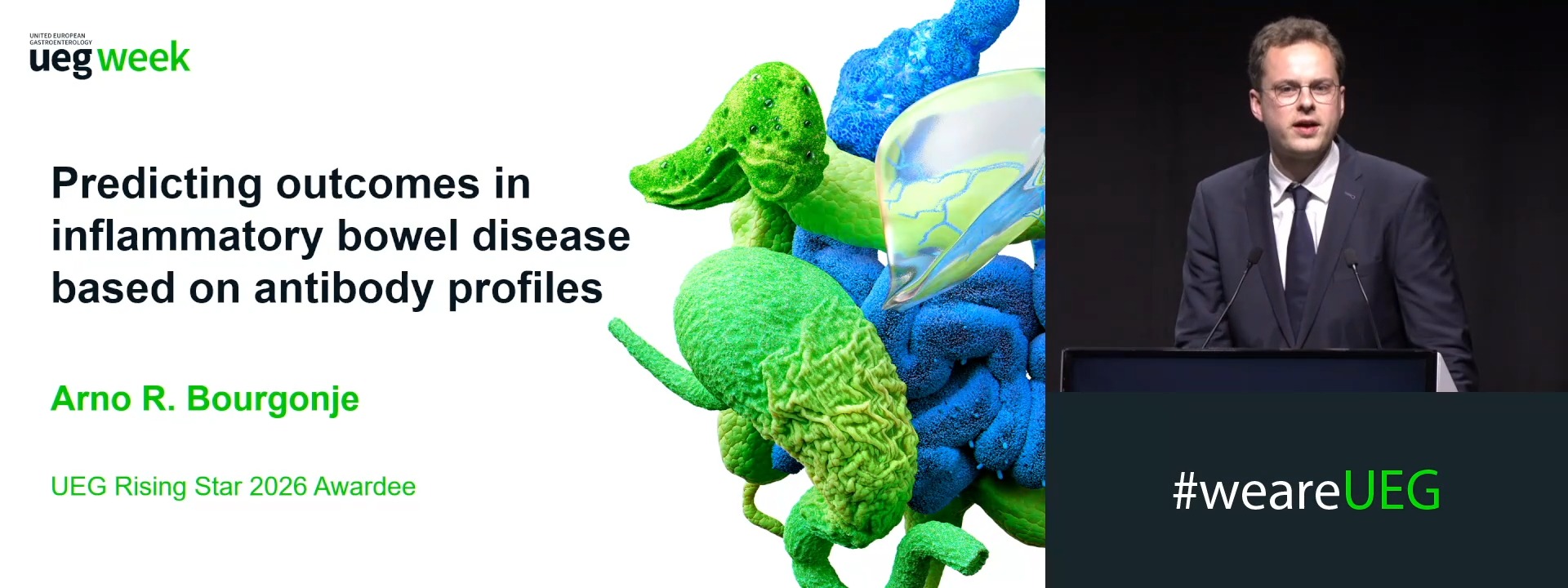
Predicting outcomes based on B-cell profiles
Affiliations
1 University Medical Center of Groningen, Groningen, Netherlands