UEG's content platform for gastroenterology education bringing recordings, courses, guidelines, and more together in one place.
Trending on Gutflix
Rate for better recommendations!
Your feedback helps us show you more of what you like and less of what you dislike!
Log in to continue.
This content is part of Gutflix. Log in with your myUEG account, or create one free, to watch it.
Not sure what you can access? Learn more about account types.
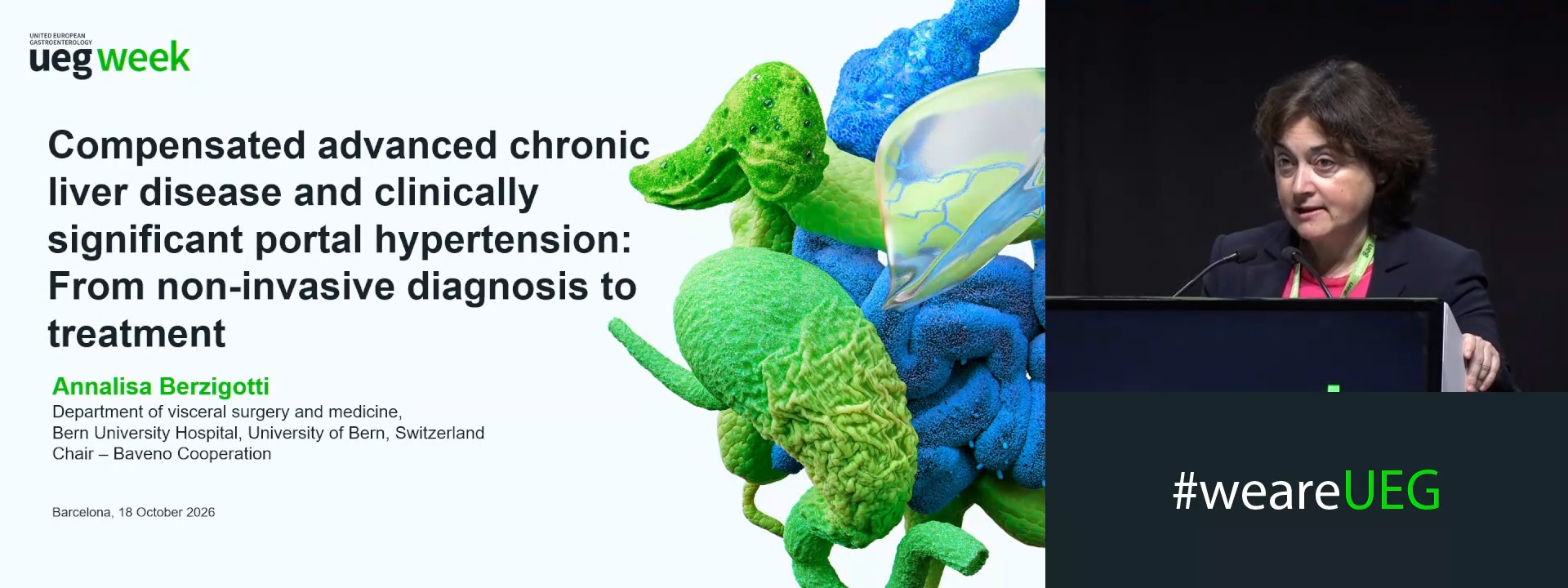
Compensated advanced chronic liver disease and clinically significant portal hypertension: From non-invasive diagnosis to treatment
Affiliations
1 Inselspital, University Hospital of Berne, Berne, Switzerland
Log in to continue.
This content is part of Gutflix. Log in with your myUEG account, or create one free, to watch it.
Not sure what you can access? Learn more about account types.
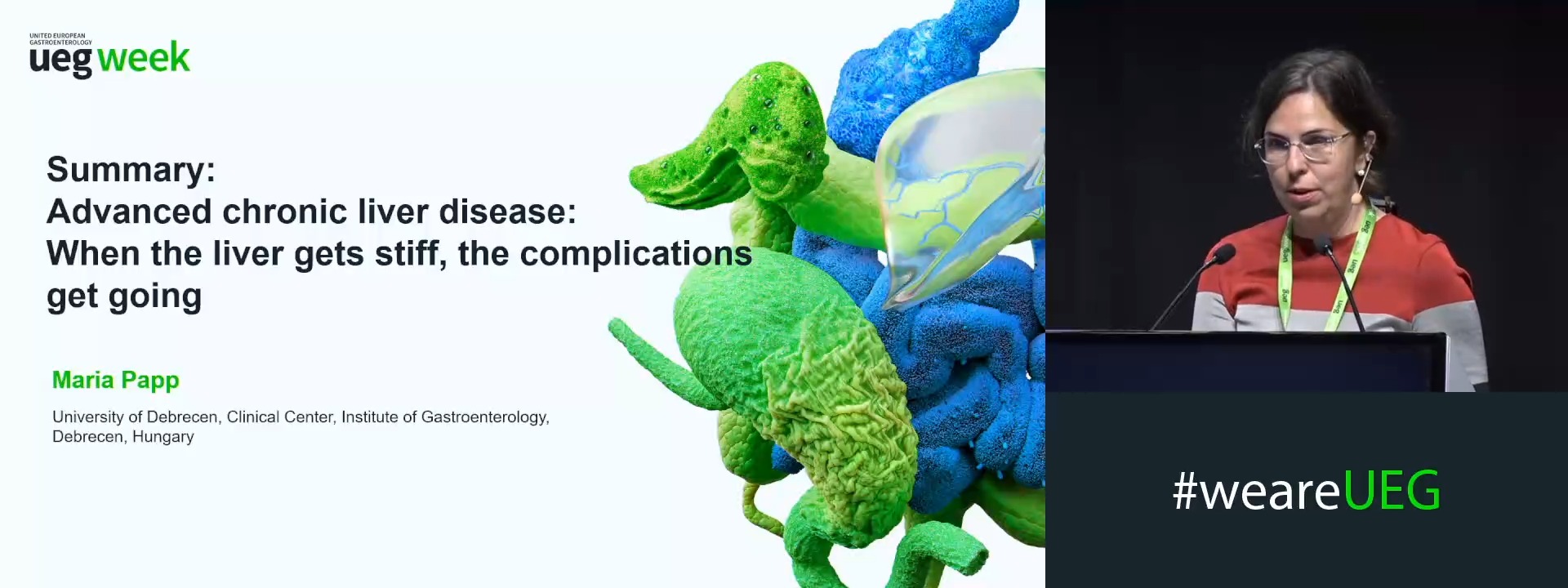
Summary: Advanced chronic liver disease: When the liver gets stiff, the complications get going
Affiliations
1 University of Debrecen, Debrecen, Hungary
Log in to continue.
This content is part of Gutflix. Log in with your myUEG account, or create one free, to watch it.
Not sure what you can access? Learn more about account types.
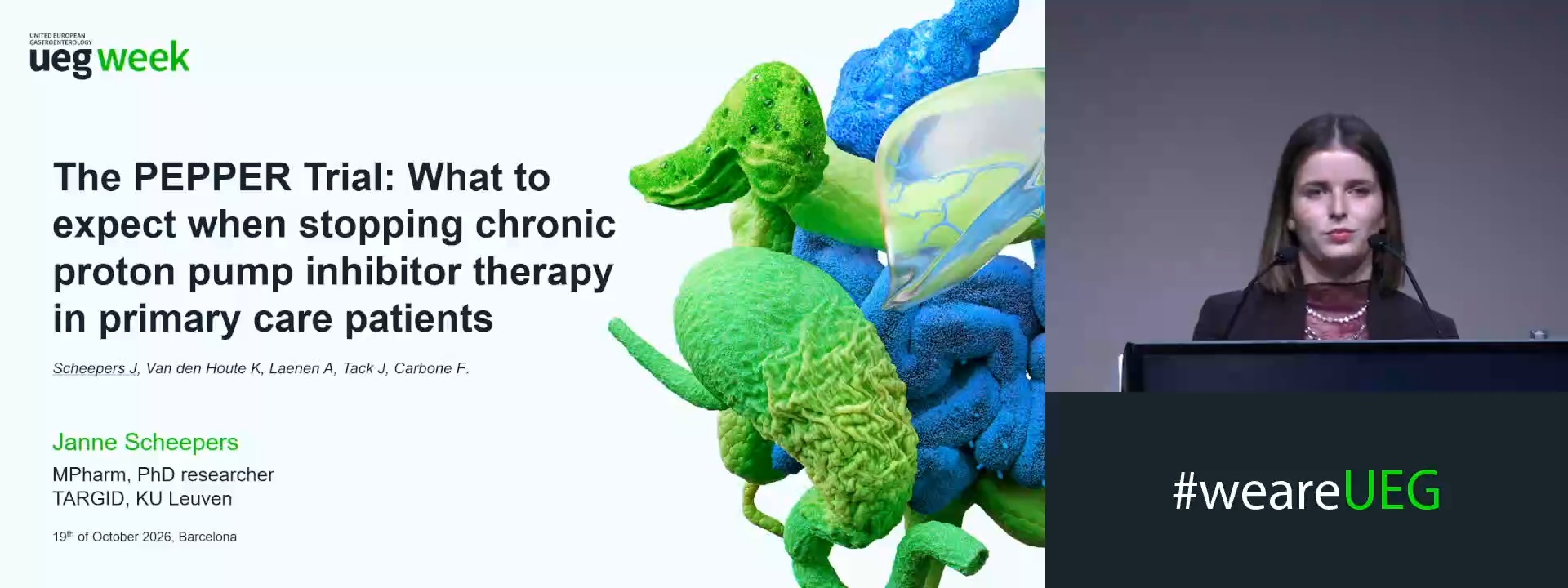
THE PEPPER TRIAL: WHAT TO EXPECT WHEN STOPPING CHRONIC PROTON PUMP INHIBITOR THERAPY IN PRIMARY CARE PATIENTS
Affiliations
1 KU Leuven, Leuven, Belgium
2 University of Leuven, University Hospital Gasthuisberg, Leuven, Belgium

Log in to continue.
This content is part of Gutflix. Log in with your myUEG account, or create one free, to watch it.
Not sure what you can access? Learn more about account types.
Panel discussion: Advanced chronic liver disease: When the liver gets stiff, the complications get going