UEG's content platform for gastroenterology education bringing recordings, courses, guidelines, and more together in one place.
Trending on Gutflix
Rate for better recommendations!
Your feedback helps us show you more of what you like and less of what you dislike!
Log in to continue.
This content is part of Gutflix. Log in with your myUEG account, or create one free, to watch it.
Not sure what you can access? Learn more about account types.
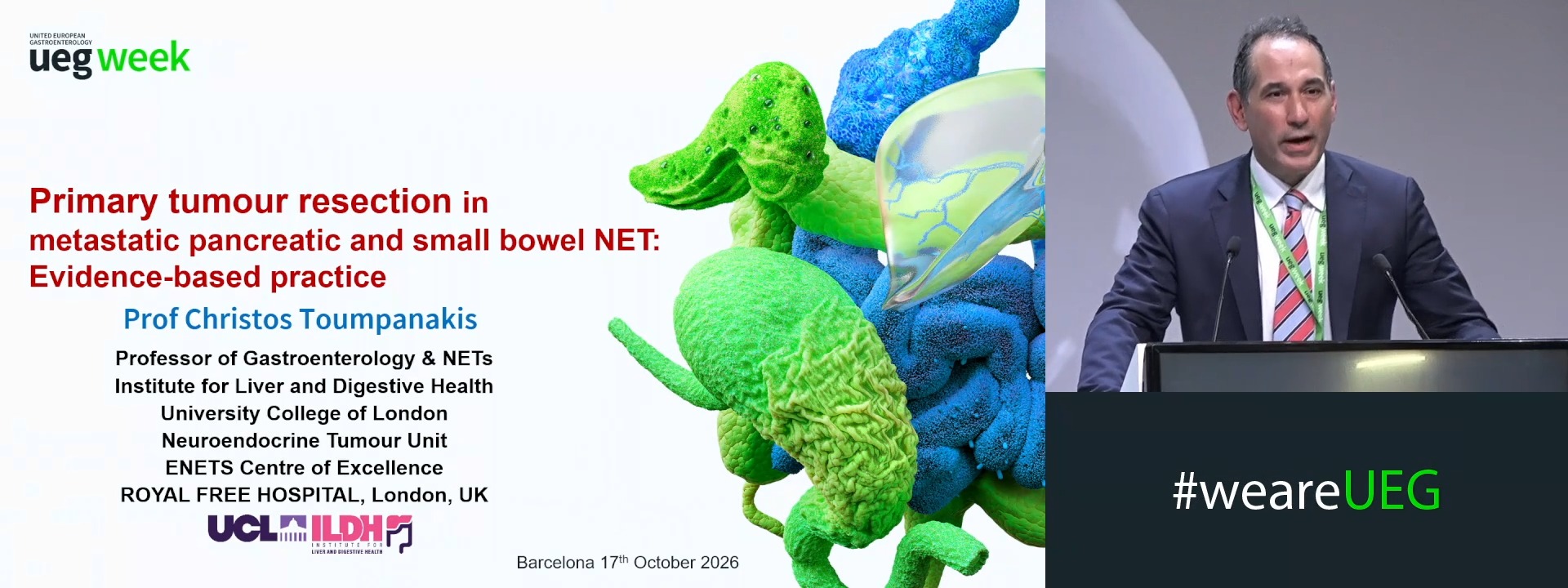
Primary tumour resection in metastatic pancreatic and small bowel NET: Evidence-based practice or surgical tradition?
Affiliations
1 Royal Free Hospital Centre for Gastroenterology, London, United Kingdom
2 Klinikum Rechts Der Isar, Technical University of Munich, Munich, Germany
Log in to continue.
This content is part of Gutflix. Log in with your myUEG account, or create one free, to watch it.
Not sure what you can access? Learn more about account types.
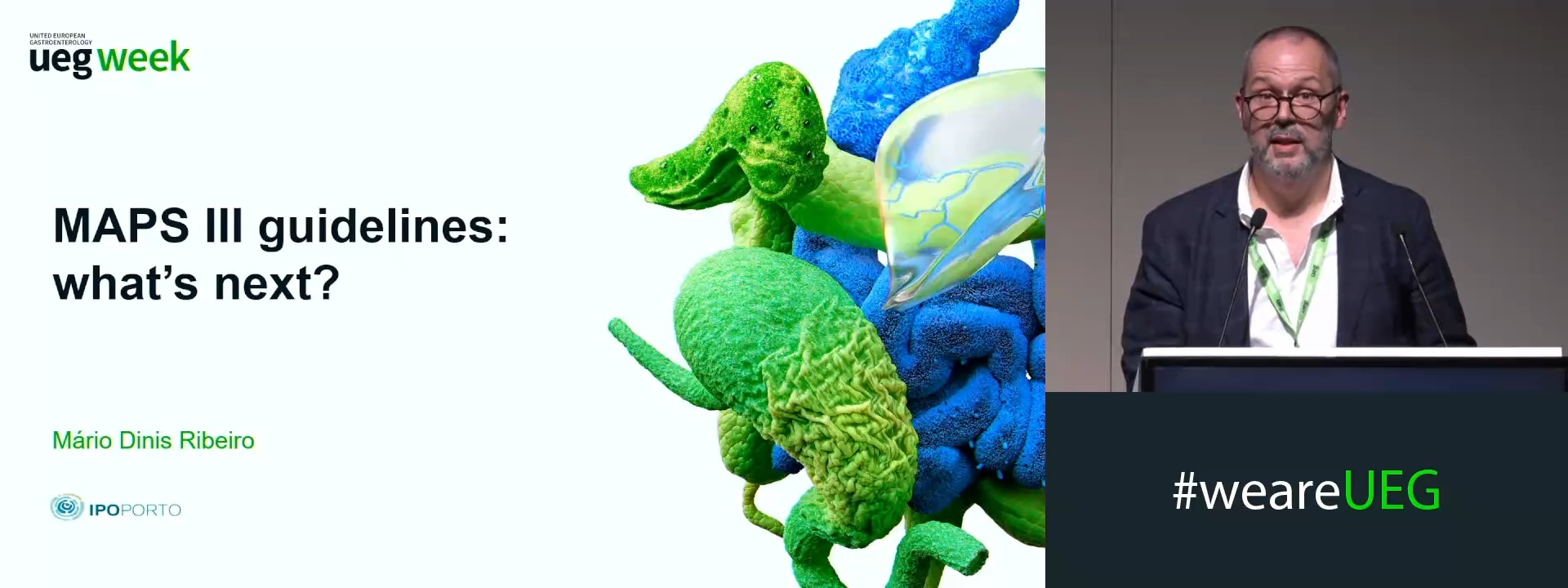
MAPS III guidelines: What’s next?
Affiliations
1 IPO Porto, Porto, Portugal
Log in to continue.
This content is part of Gutflix. Log in with your myUEG account, or create one free, to watch it.
Not sure what you can access? Learn more about account types.
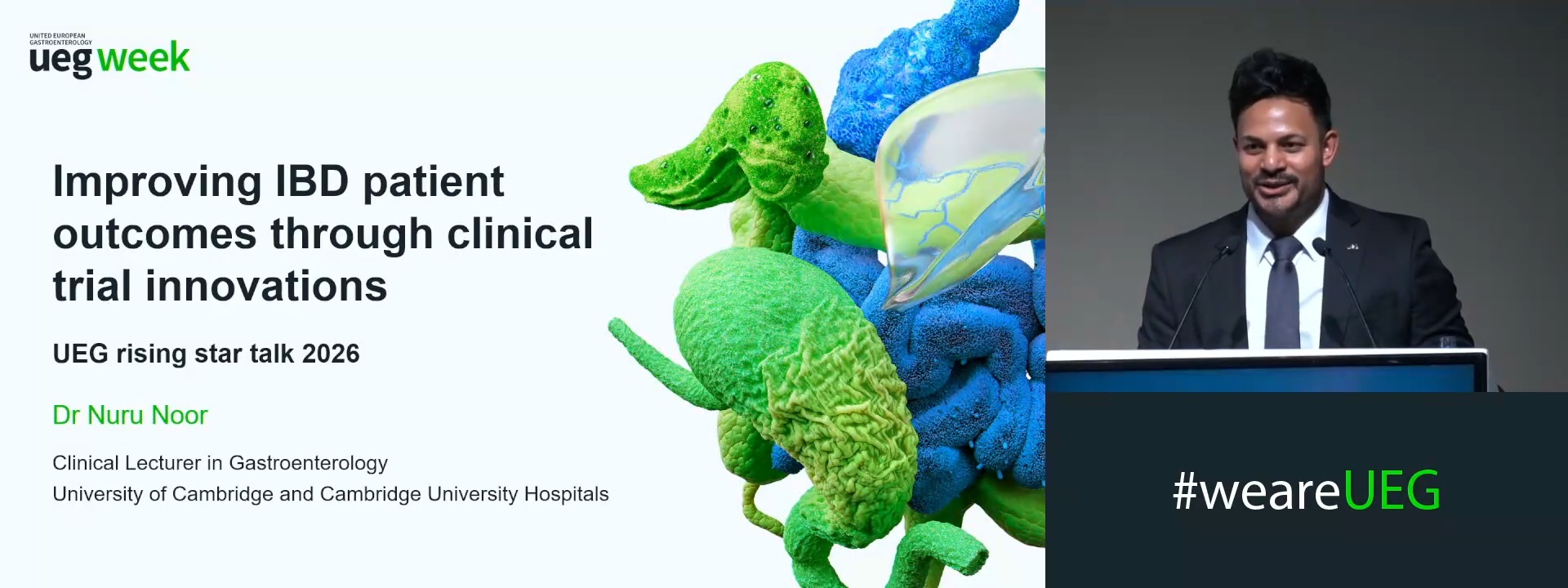
Improving patient outcomes through clinical trial innovations
Affiliations
1 Cambridge University Hospitals, Cambridge, United Kingdom
Log in to continue.
This content is part of Gutflix. Log in with your myUEG account, or create one free, to watch it.
Not sure what you can access? Learn more about account types.
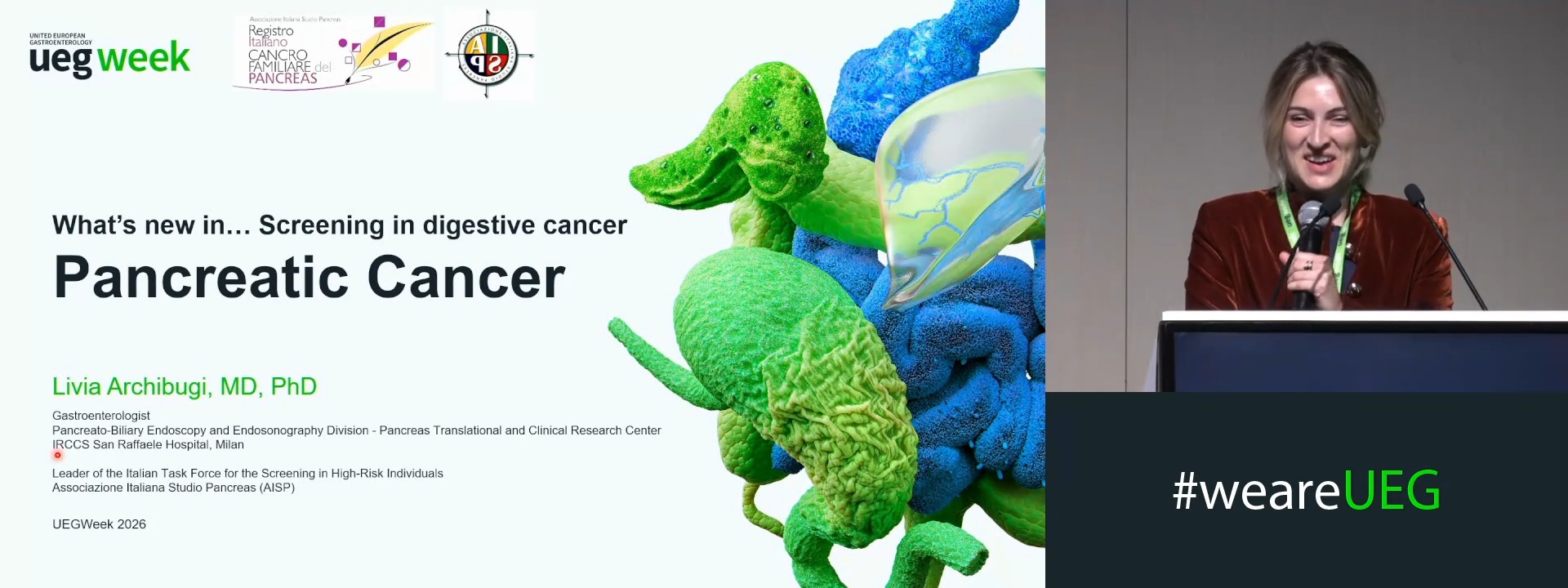
Pancreatic cancer
Affiliations
1 Hospital San Raffaele, Milan, Italy
Log in to continue.
This content is part of Gutflix. Log in with your myUEG account, or create one free, to watch it.
Not sure what you can access? Learn more about account types.
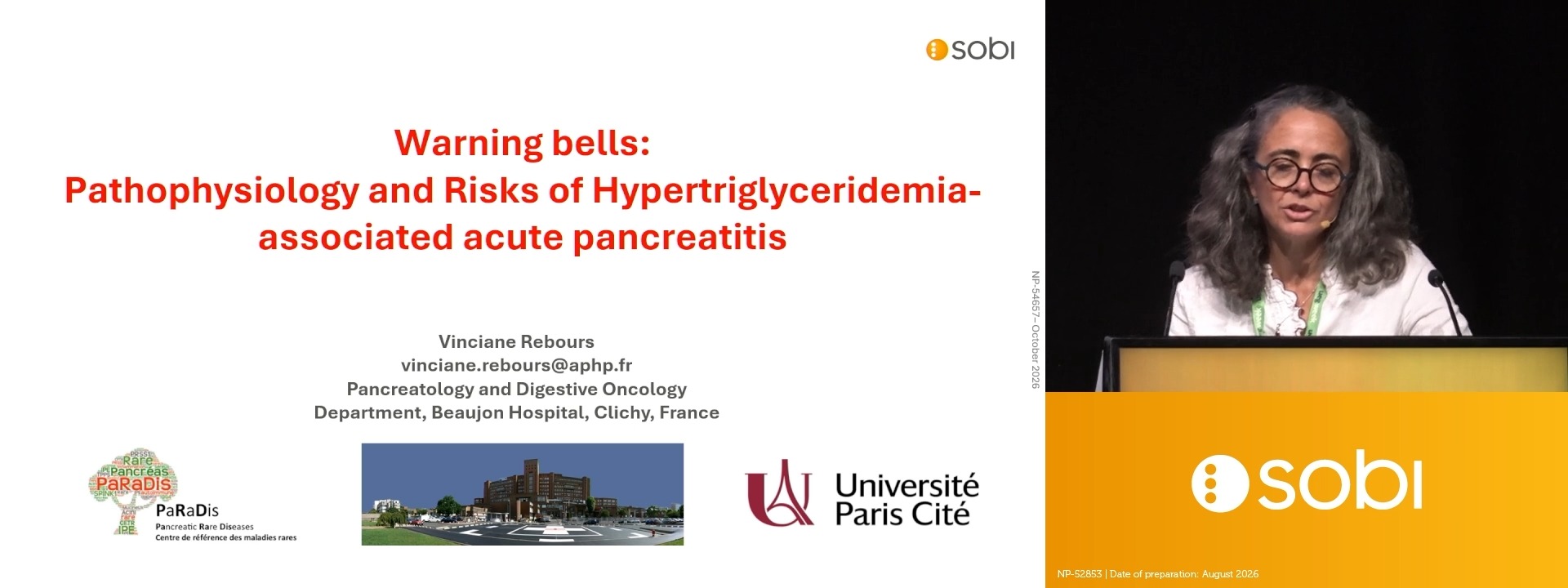
Guiding the care of hypertriglyceridemia-induced acute pancreatitis: Multidisciplinary care and the role of new therapies through apoC-III inhibition (Sobi (Swedish Orphan Biovitrum)) (Complete Session)
Affiliations
1 Hopital Beaujon, Clichy, France
2 San Raffaele Scientific Institute Irccs, Rome, Italy
3 Clínic Barcelona, Barcelona, Spain
Log in to continue.
This content is part of Gutflix. Log in with your myUEG account, or create one free, to watch it.
Not sure what you can access? Learn more about account types.
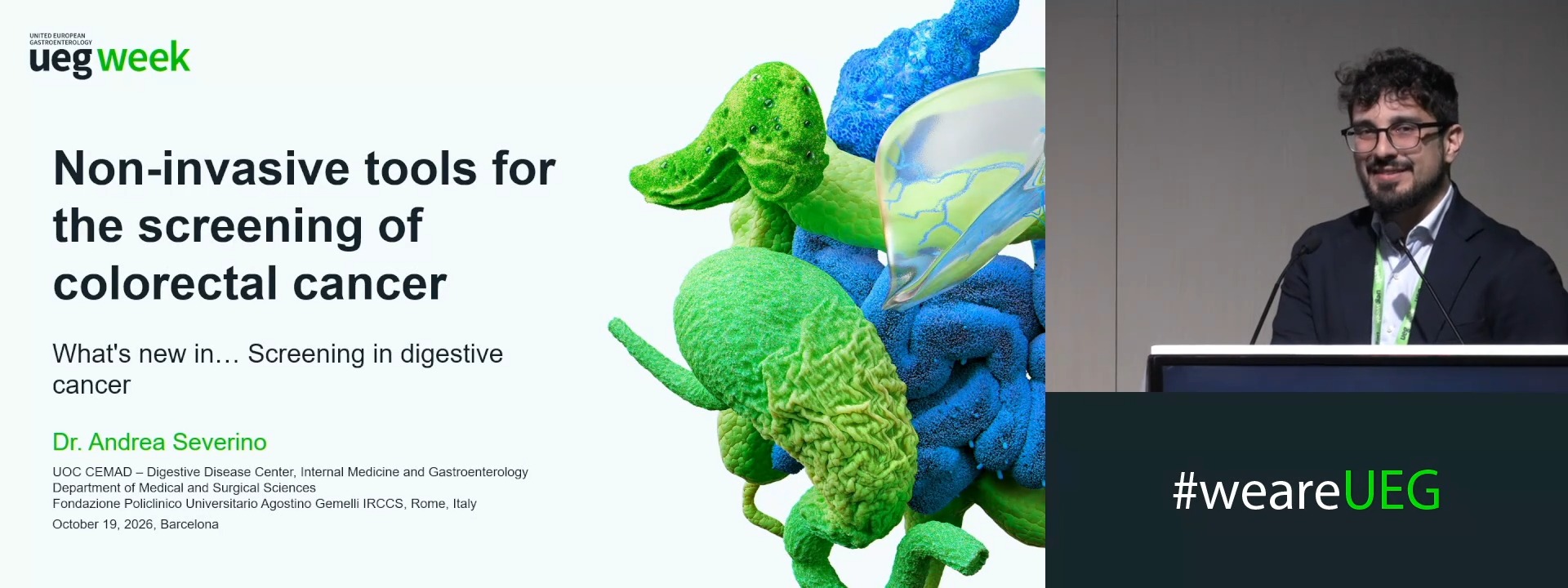
Non-invasive tools for the screening of colorectal cancer
Affiliations
1 Fondazione Policlinico Universitario, Rome, Italy
Log in to continue.
This content is part of Gutflix. Log in with your myUEG account, or create one free, to watch it.
Not sure what you can access? Learn more about account types.
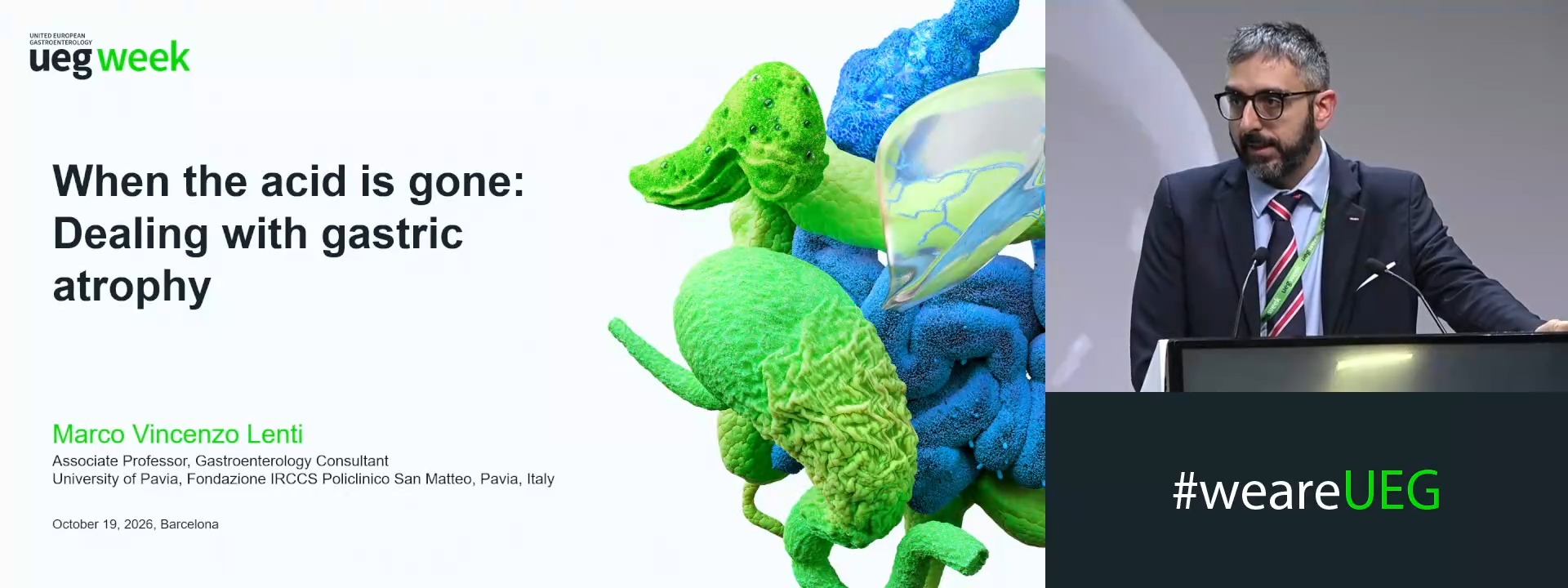
When the acid is gone: Dealing with gastric atrophy
Affiliations
1 Fondazione IRCCS Policlinico San Matteo, University of Pavia, Pavia, Italy