UEG's content platform for gastroenterology education bringing recordings, courses, guidelines, and more together in one place.
Trending on Gutflix
Rate for better recommendations!
Your feedback helps us show you more of what you like and less of what you dislike!
Log in to continue.
This content is part of Gutflix. Log in with your myUEG account, or create one free, to watch it.
Not sure what you can access? Learn more about account types.
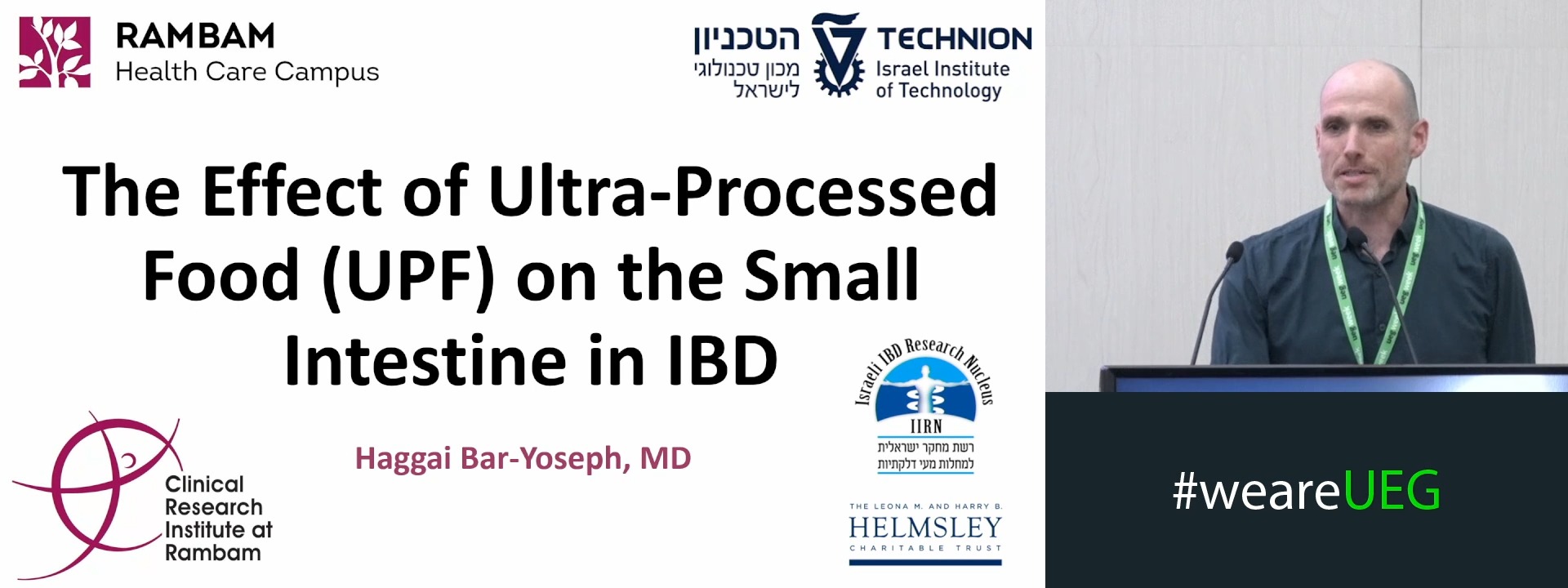
GOING DEEP: THE EFFECT OF ULTRA-PROCESSED FOODS ON THE SMALL INTESTINE, A PILOT STUDY ON ILEOSTOMY PATIENTS
Haggai Bar-Yoseph 1,2, Zohar Leshinsky 1, Yuval Molcho 1, Jonathan Sahar 2, Julia Belansky 2, Neta Milman 2, Tal Gefen 2, Alexandra Blatt 1, Sigal Pressman 1, Tarek Arraf 1, Rabiaa Fared 1, Inbar Kesten 1, Haim Gilshtein 1, Timothy Cooper 2, Maria Postnikov 1, Naama Geva-Zatorsky 2, Shai Shen-Orr 2, Yehuda Chowers 3
Affiliations
1 Rambam Health Care Campus, Haifa, Israel
2 Technion - Israel Institute of Technology, Haifa, Israel
3 CytoReason, Tel Aviv, Israel
Log in to continue.
This content is part of Gutflix. Log in with your myUEG account, or create one free, to watch it.
Not sure what you can access? Learn more about account types.
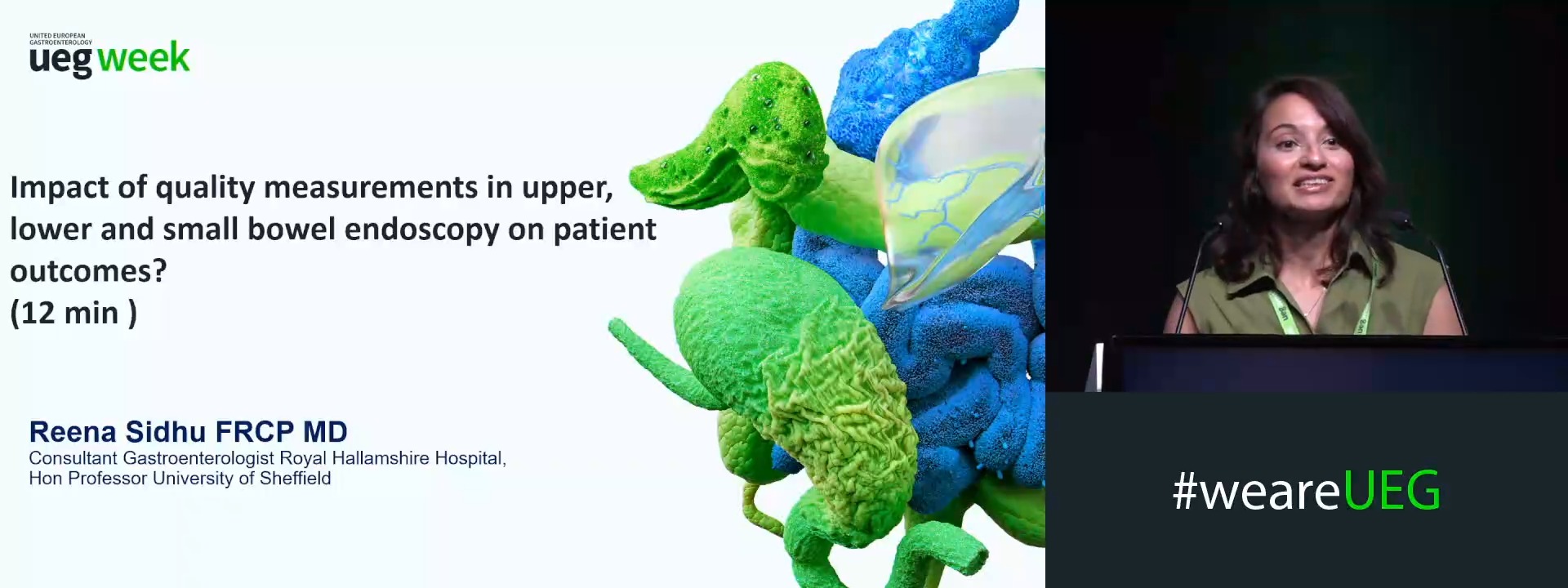
Impact of quality measurements in upper, lower and small bowel endoscopy on patient outcomes?
Affiliations
1 Royal Hallamshire Hospital , Sheffield Teaching Hospitals, Sheffield, United Kingdom
Log in to continue.
This content is part of Gutflix. Log in with your myUEG account, or create one free, to watch it.
Not sure what you can access? Learn more about account types.
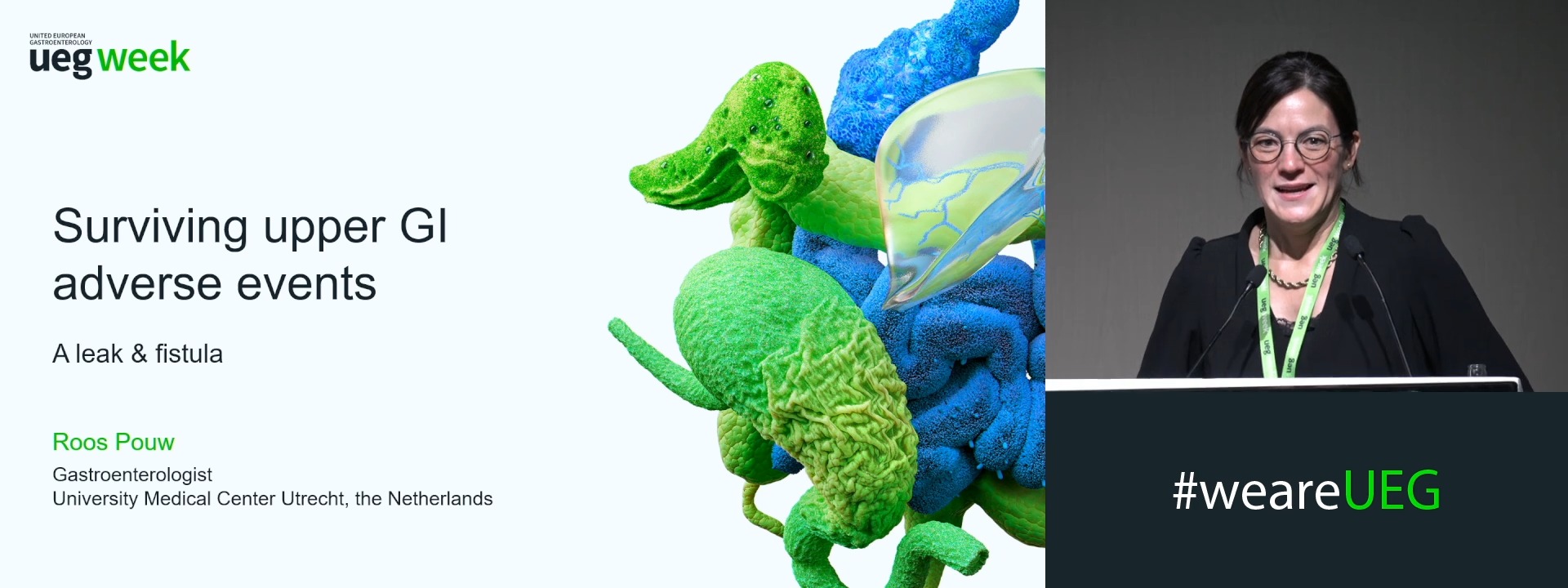
Surviving upper GI adverse events (Complete Session)
Log in to continue.
This content is part of Gutflix. Log in with your myUEG account, or create one free, to watch it.
Not sure what you can access? Learn more about account types.
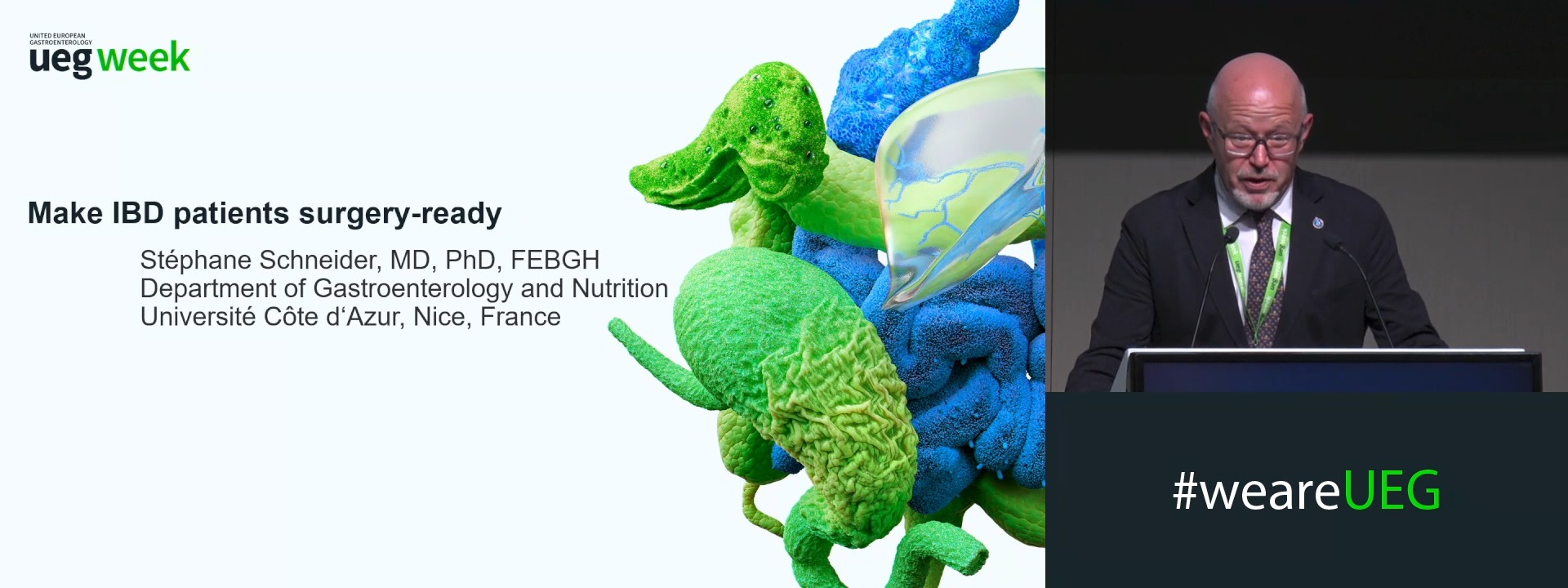
Make IBD patients surgery ready
Affiliations
1 CHU de Nice - Archet, Nice, France