UEG's content platform for gastroenterology education bringing recordings, courses, guidelines, and more together in one place.
Trending on Gutflix
Rate for better recommendations!
Your feedback helps us show you more of what you like and less of what you dislike!
Log in to continue.
This content is part of Gutflix. Log in with your myUEG account, or create one free, to watch it.
Not sure what you can access? Learn more about account types.
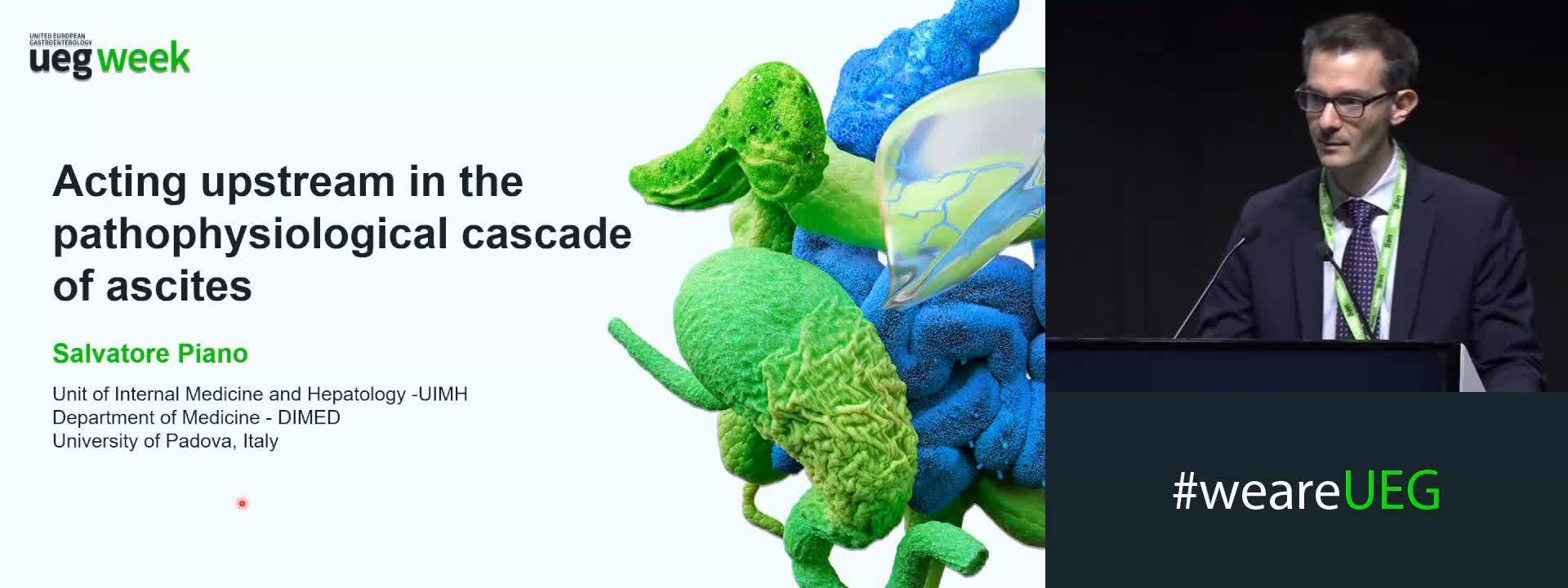
Acting upstream in the pathophysiological cascade of ascites and managing recurrent ascites and its consequences: From TAPS to TIPS
Affiliations
1 University of Padova, Padova, Italy
2 CONSORCI INSTITUT D'INVESTIGACIONS BIOMEDIQUES AUGUST PI I SUNYER, Barcelona, Spain
Log in to continue.
This content is part of Gutflix. Log in with your myUEG account, or create one free, to watch it.
Not sure what you can access? Learn more about account types.
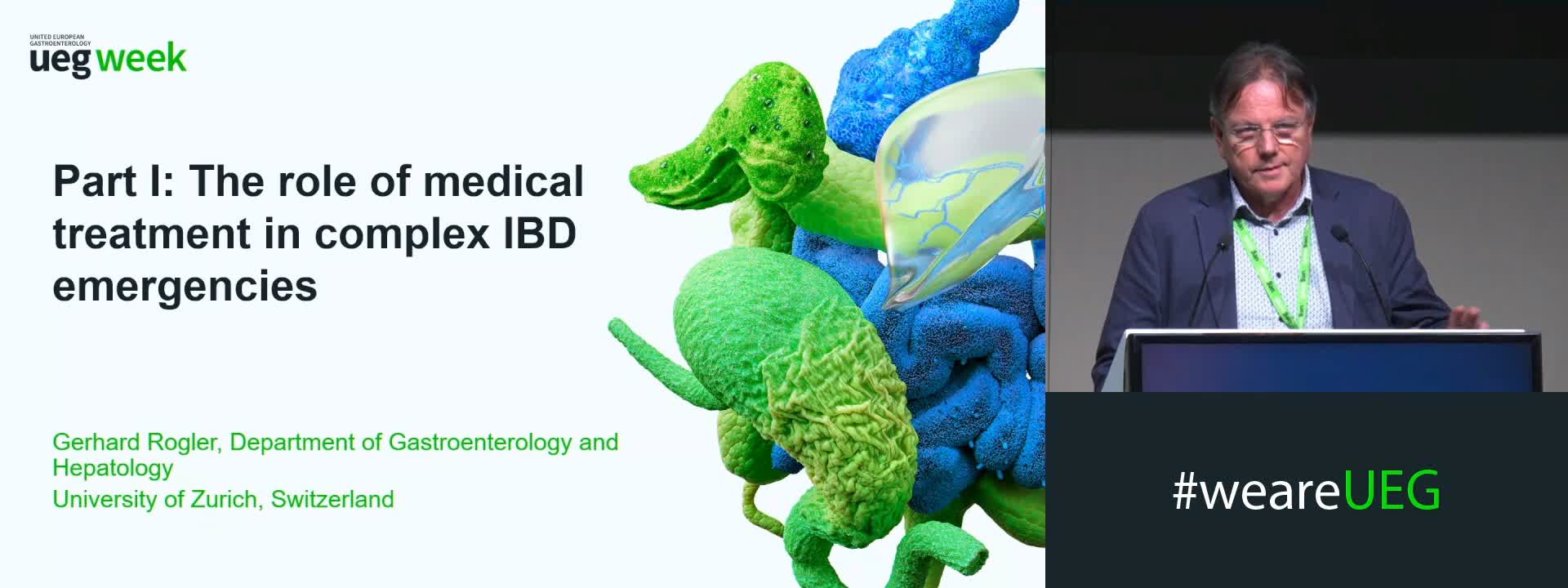
Medical treatment or surgery: What is the solution to complex IBD emergencies?
Affiliations
1 UniversitätsSpital Zürich, Zurich, Switzerland
2 IJsselland Hospital, Capell a/d IJssel, Netherlands
Log in to continue.
This content is part of Gutflix. Log in with your myUEG account, or create one free, to watch it.
Not sure what you can access? Learn more about account types.
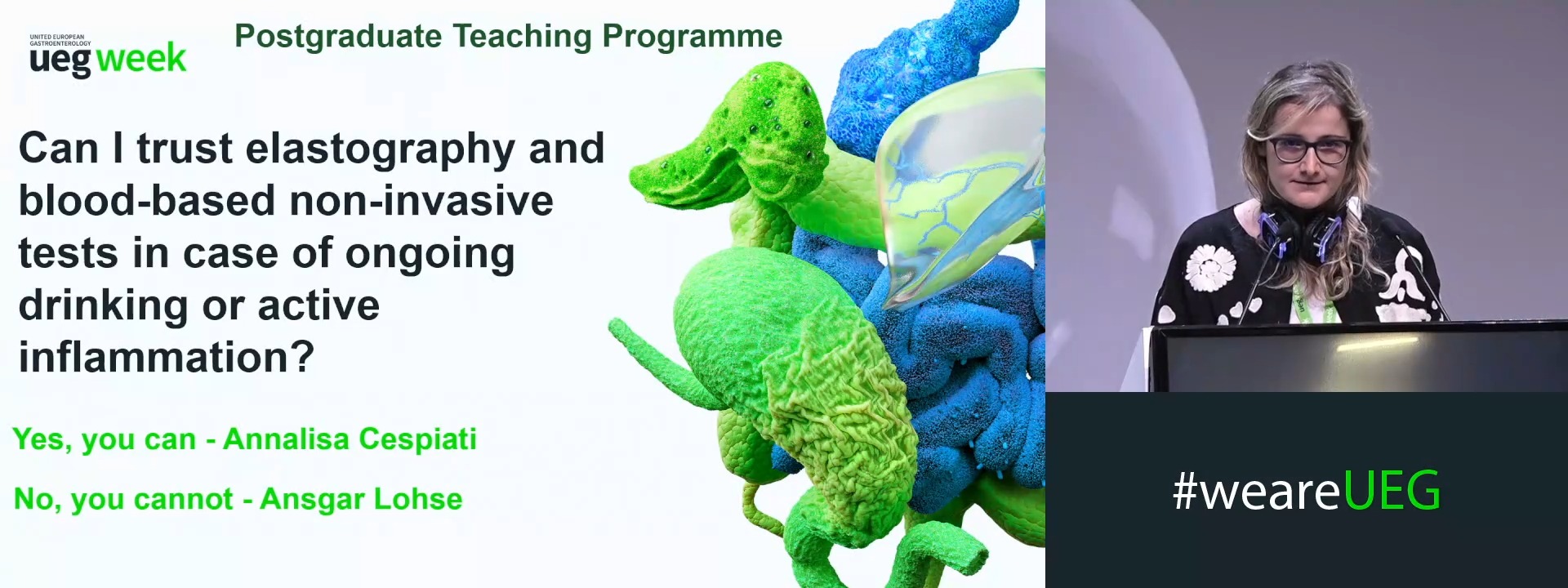
Can I trust elastography and blood-based non-invasive tests in case of ongoing drinking or active inflammation? Yes or no?
Affiliations
1 Fondazione IRCCS Ca' Granda Ospedale Maggiore Policlinico, Milan, Italy
2 University Medical Centre Hamburg-Eppendorf, Hamburg, Germany
Log in to continue.
This content is part of Gutflix. Log in with your myUEG account, or create one free, to watch it.
Not sure what you can access? Learn more about account types.
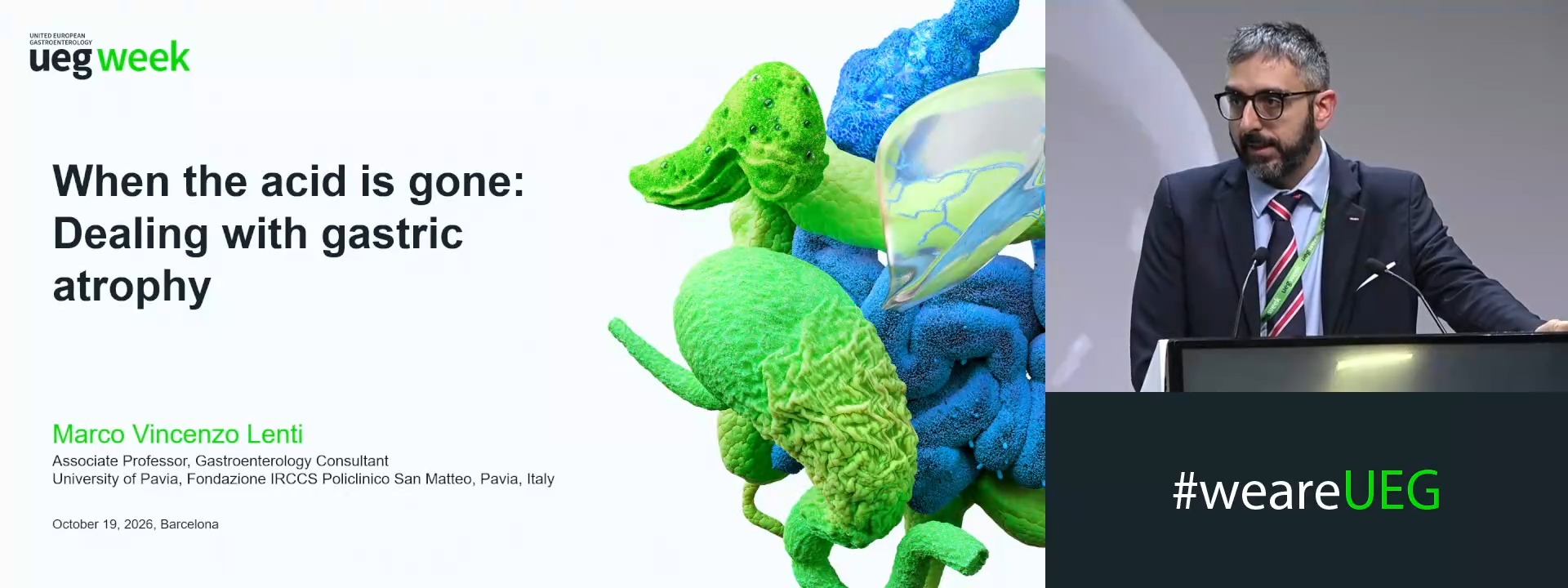
When the acid is gone: Dealing with gastric atrophy
Affiliations
1 Fondazione IRCCS Policlinico San Matteo, University of Pavia, Pavia, Italy
Log in to continue.
This content is part of Gutflix. Log in with your myUEG account, or create one free, to watch it.
Not sure what you can access? Learn more about account types.
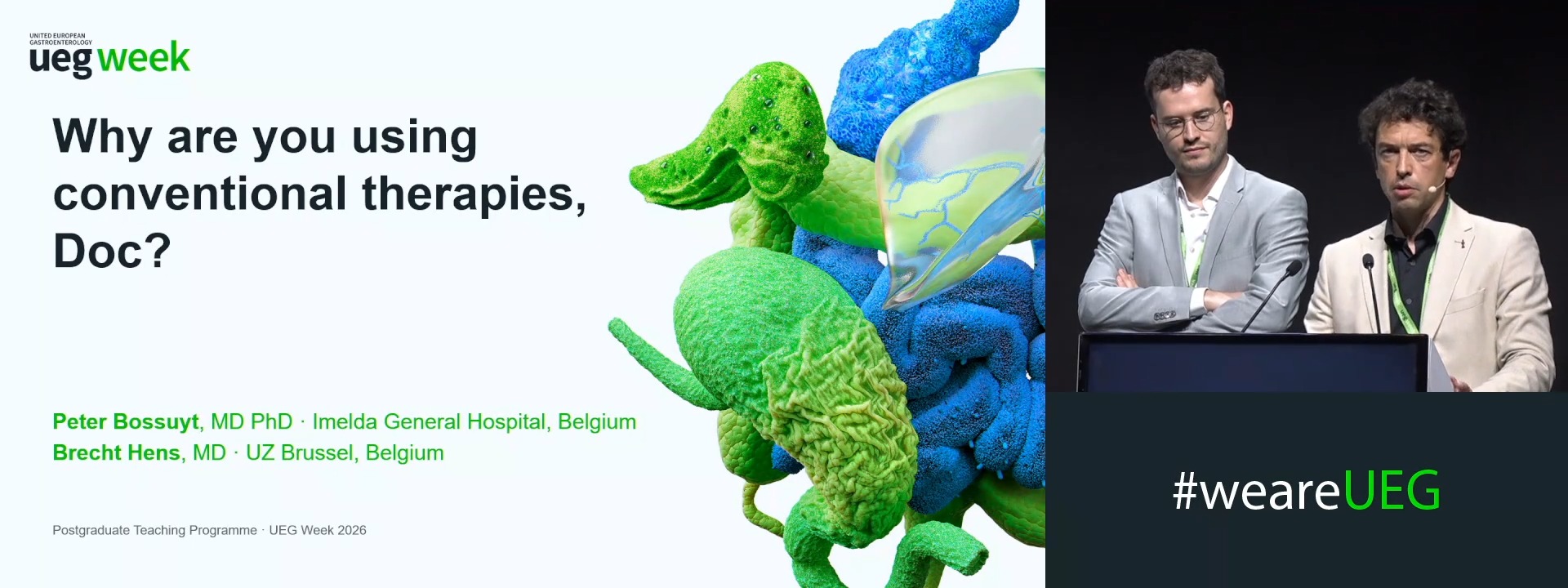
Why are you using conventional therapies, doc? A case-based perspective and state-of-the-art overview
Affiliations
1 Imelda General Hospital, Bonheiden, Belgium
2 UZ Brussel, Brussels, Belgium
Log in to continue.
This content is part of Gutflix. Log in with your myUEG account, or create one free, to watch it.
Not sure what you can access? Learn more about account types.
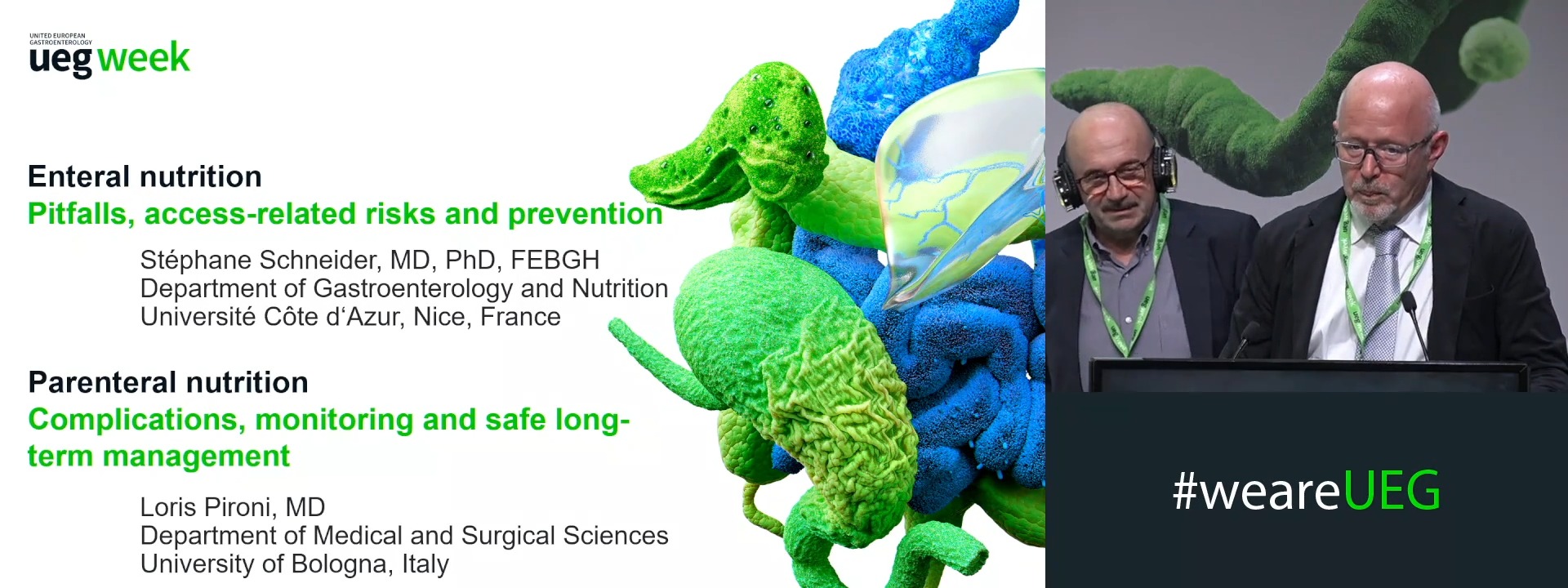
Complications in enteral and parenteral nutrition: Pitfalls, monitoring and safe long-term management
Affiliations
1 University of Bologna S. Orsola-Malpighi Hospital, Bologna, Italy
2 CHU de Nice - Archet, Nice, France
Log in to continue.
This content is part of Gutflix. Log in with your myUEG account, or create one free, to watch it.
Not sure what you can access? Learn more about account types.
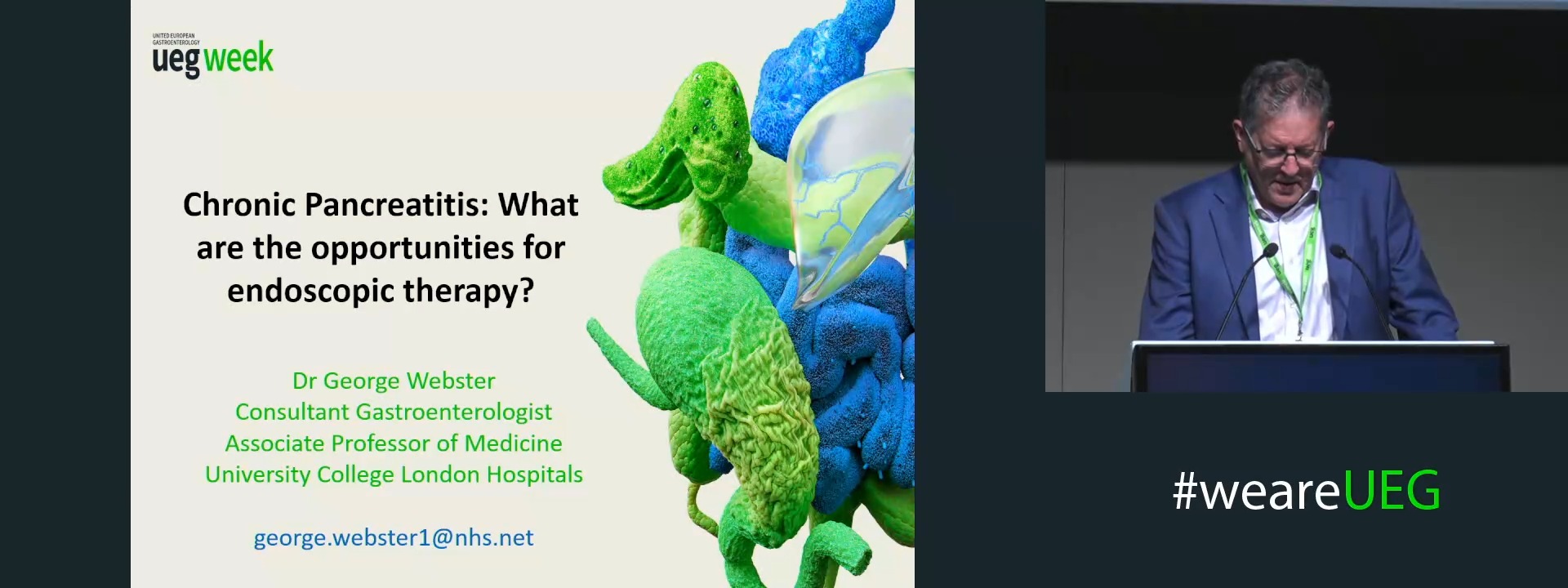
What are the opportunities for endoscopic therapy?
Affiliations
1 University College Hospital, London, United Kingdom