UEG's content platform for gastroenterology education bringing recordings, courses, guidelines, and more together in one place.
Trending on Gutflix
Rate for better recommendations!
Your feedback helps us show you more of what you like and less of what you dislike!
Log in to continue.
This content is part of Gutflix. Log in with your myUEG account, or create one free, to watch it.
Not sure what you can access? Learn more about account types.
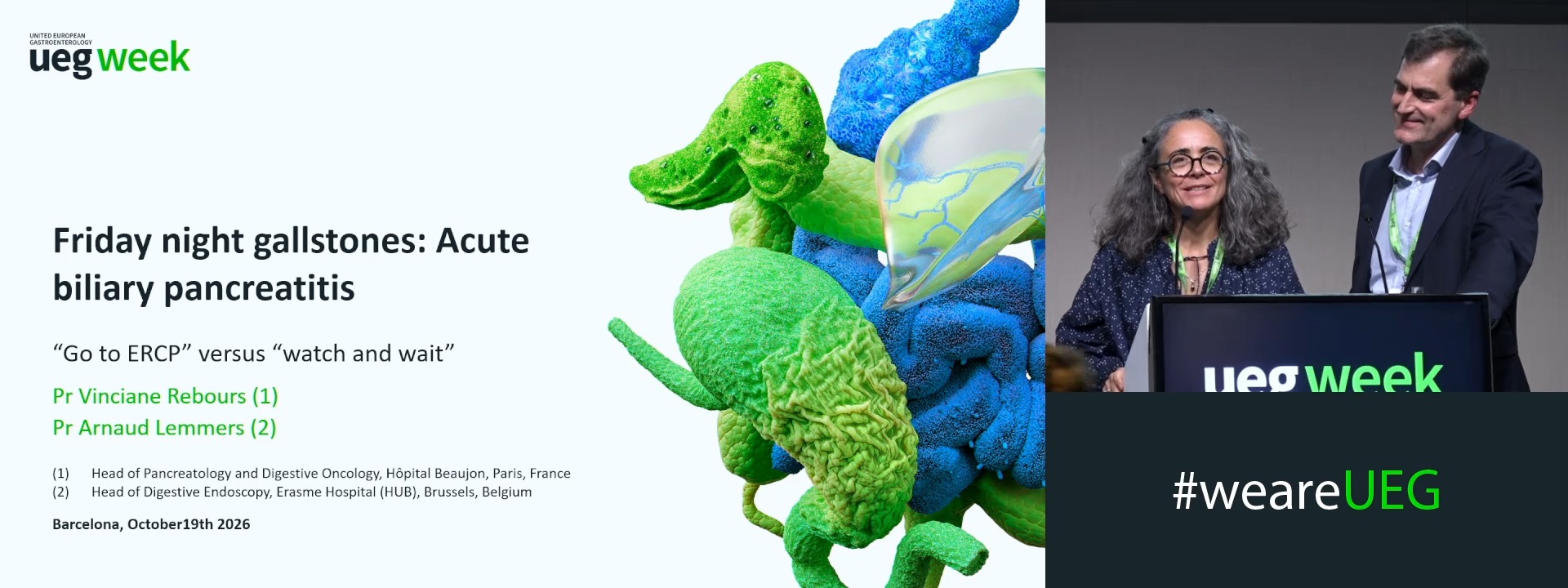
HBP – Friday night gallstones: Acute biliary pancreatitis – go to ERCP or watch and wait?
Affiliations
1 Hopital Beaujon, Clichy, France
2 Hôpital Univ. Erasme (Gastro), Bruxelles, Belgium
Log in to continue.
This content is part of Gutflix. Log in with your myUEG account, or create one free, to watch it.
Not sure what you can access? Learn more about account types.
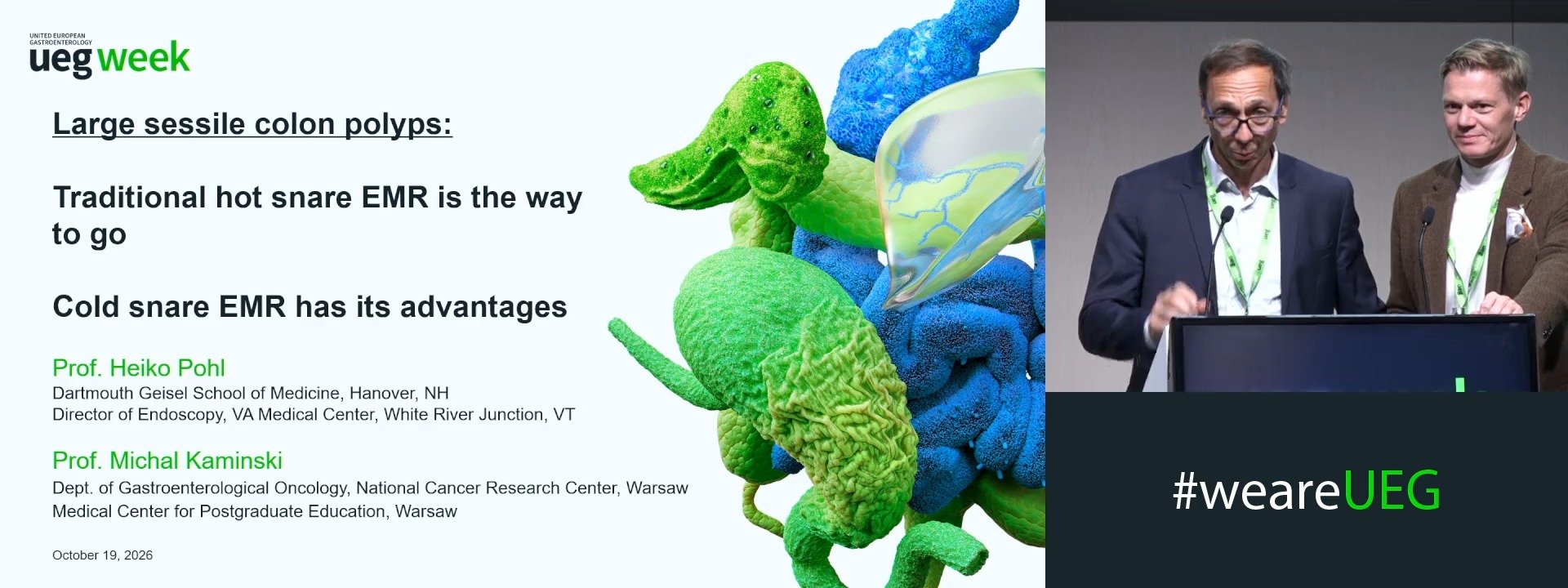
Lower GI: Traditional hot snare EMR or cold snare EMR for large sessile colon polyps?
Affiliations
1 White River Junction VA Medical Center, Hartford, United States of America
2 Maria Sklodowska-Curie Memorial Center and Institute of Oncology, Warsaw, Poland
Log in to continue.
This content is part of Gutflix. Log in with your myUEG account, or create one free, to watch it.
Not sure what you can access? Learn more about account types.
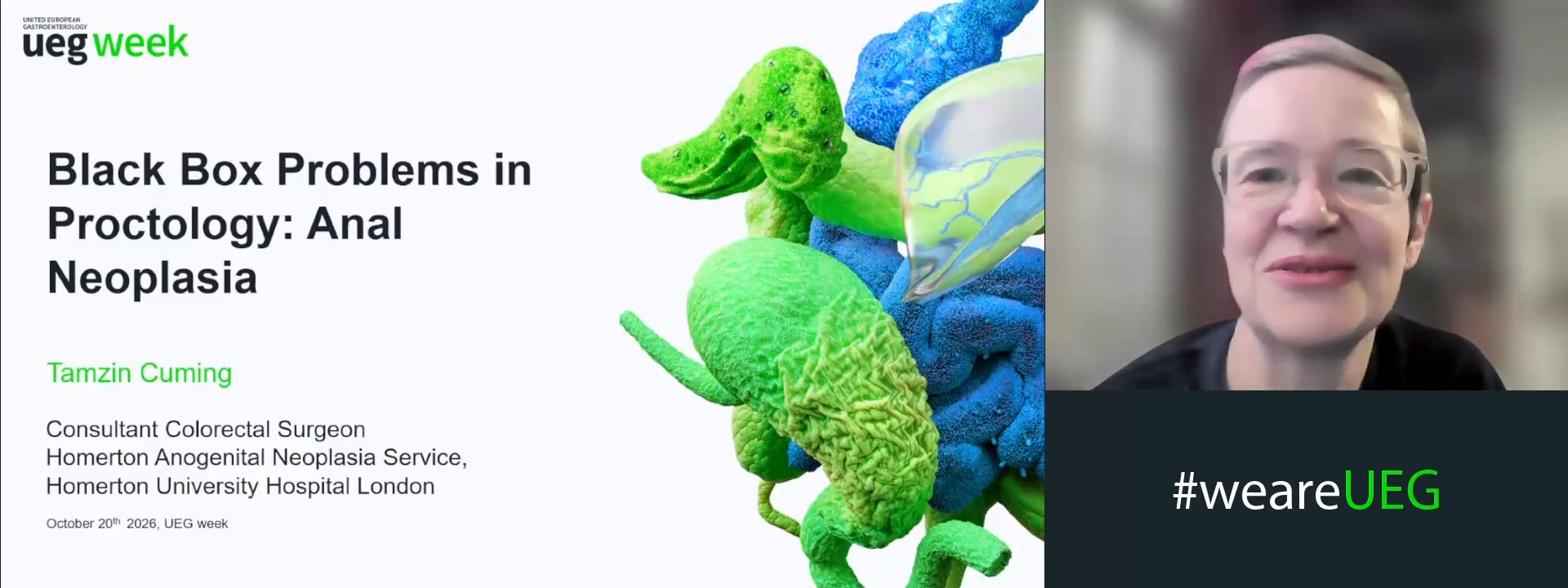
Anal intraepithelial neoplasia
Affiliations
1 Homerton Healthcare NHS Foundation Trust, London, United Kingdom
Log in to continue.
This content is part of Gutflix. Log in with your myUEG account, or create one free, to watch it.
Not sure what you can access? Learn more about account types.
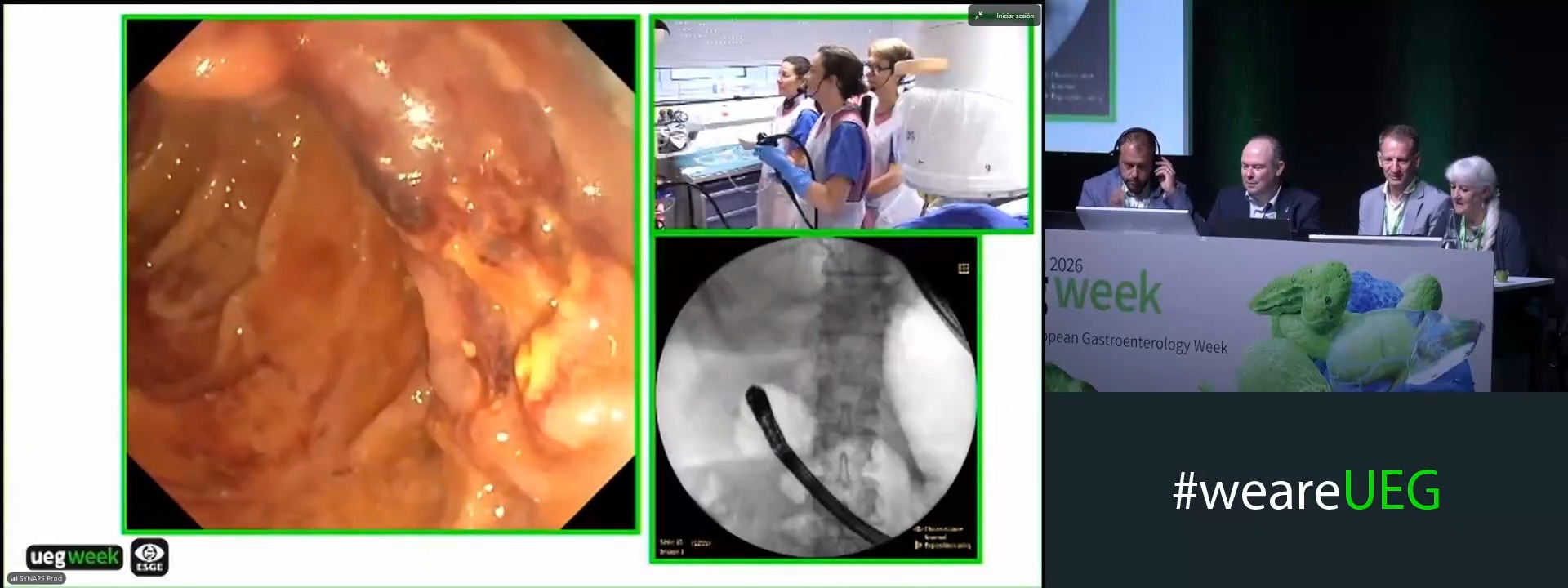
ESGE live endoscopy II (Complete Session)
Log in to continue.
This content is part of Gutflix. Log in with your myUEG account, or create one free, to watch it.
Not sure what you can access? Learn more about account types.
MACHINE-LEARNING-POWERED ENDOSCOPIC ULTRASOUND DETECTS MORPHOLOGICAL FEATURES FOR PREDICTING MALIGNANCY IN IPMNS: RESULTS FROM THE “IMAGE” STUDY FROM A TERTIARY REFERRAL CENTER
Matteo Tacelli 1, Piera Zaccari 1, Alessandro Mannucci 1, Maria Chiara Petrone 1, Giulio Belfiori 1, Gabriele Capurso 1, Massimo Falconi 1, Michele Reni 1, Federica Pedica 1, Stefano Crippa 1, Paolo Giorgio Arcidiacono 1
Affiliations
1 San Raffaele Scientific Institute IRCCS, Milano, Italy