UEG's content platform for gastroenterology education bringing recordings, courses, guidelines, and more together in one place.
Trending on Gutflix
Rate for better recommendations!
Your feedback helps us show you more of what you like and less of what you dislike!
Log in to continue.
This content is part of Gutflix. Log in with your myUEG account, or create one free, to watch it.
Not sure what you can access? Learn more about account types.
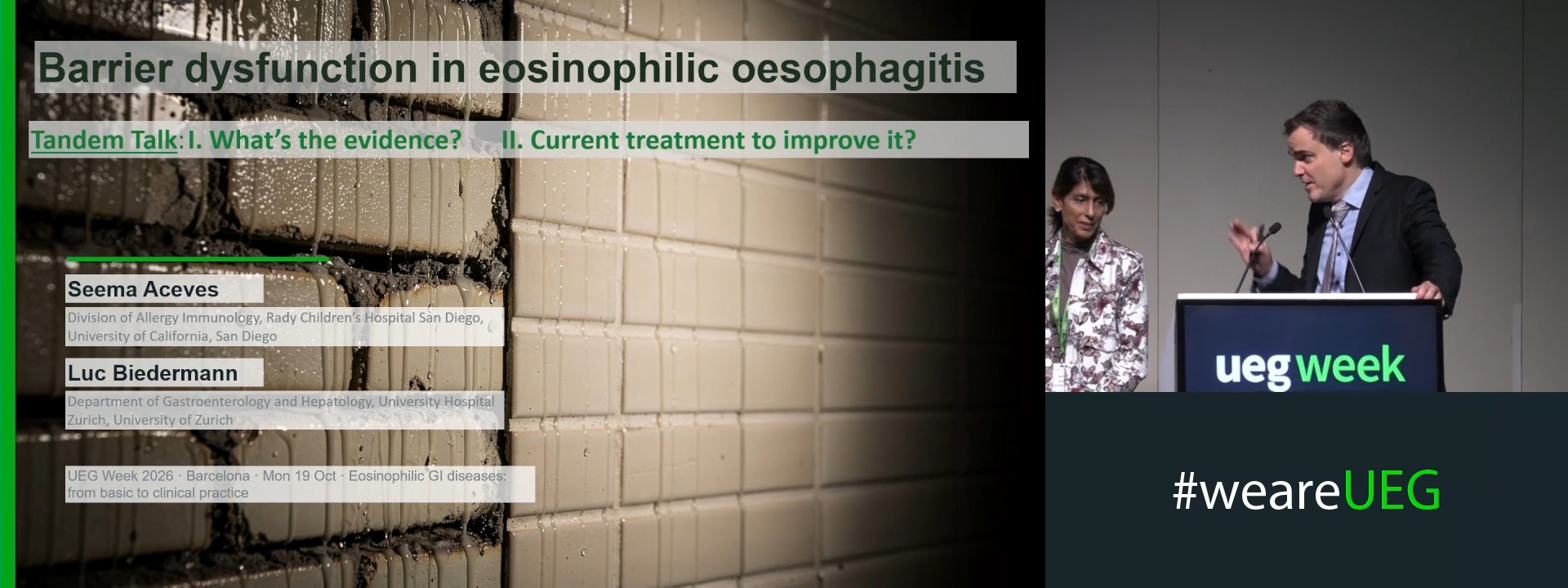
Barrier dysfunction in eosinophilic oesophagitis: What's the evidence and current treatment to improve it
Affiliations
1 Pediatrics and Medicine University of California San Diego, San Diego, United States of America
2 USZ Zürich, Zurich, Switzerland
Log in to continue.
This content is part of Gutflix. Log in with your myUEG account, or create one free, to watch it.
Not sure what you can access? Learn more about account types.
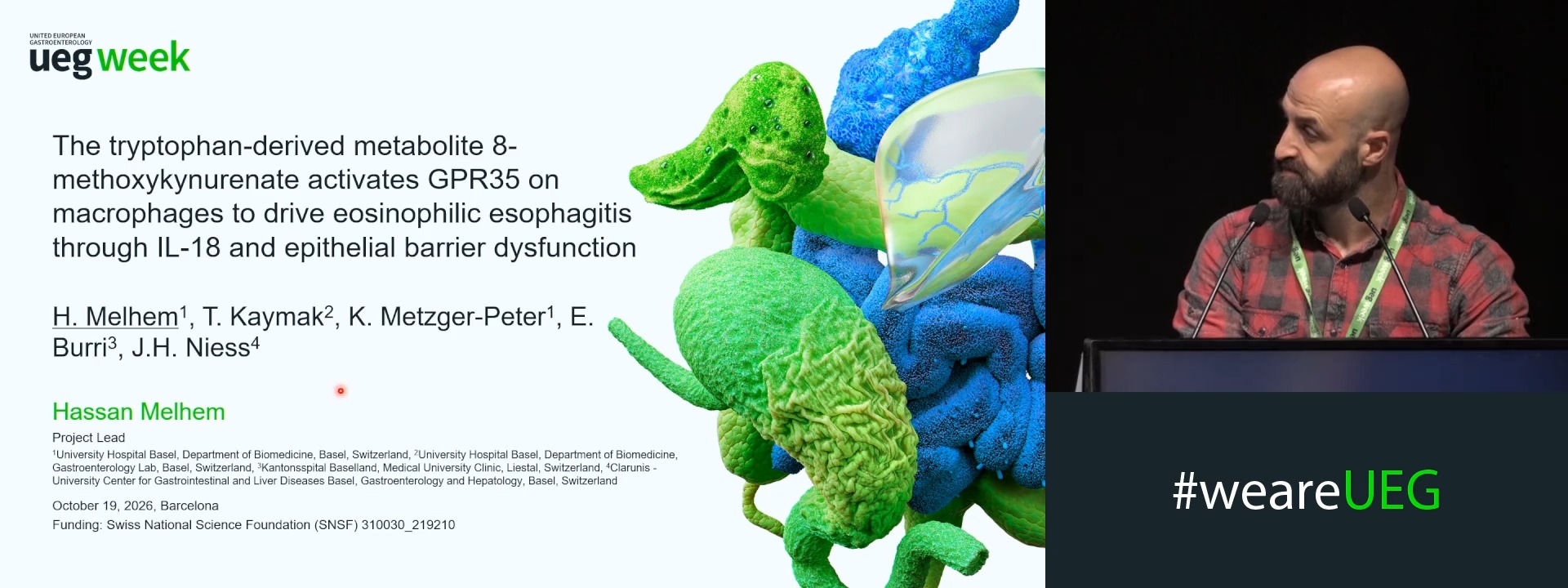
THE TRYPTOPHAN-DERIVED METABOLITE 8-METHOXYKYNURENATE ACTIVATES GPR35 ON MACROPHAGES TO DRIVE EOSINOPHILIC ESOPHAGITIS THROUGH IL-18 AND EPITHELIAL BARRIER DYSFUNCTION
Affiliations
1 University Hospital Basel, Basel, Switzerland
2 Kantonsspital Baselland, Liestal, Switzerland
3 Clarunis - University Center for Gastrointestinal and Liver Diseases Basel, Basel, Switzerland
Log in to continue.
This content is part of Gutflix. Log in with your myUEG account, or create one free, to watch it.
Not sure what you can access? Learn more about account types.
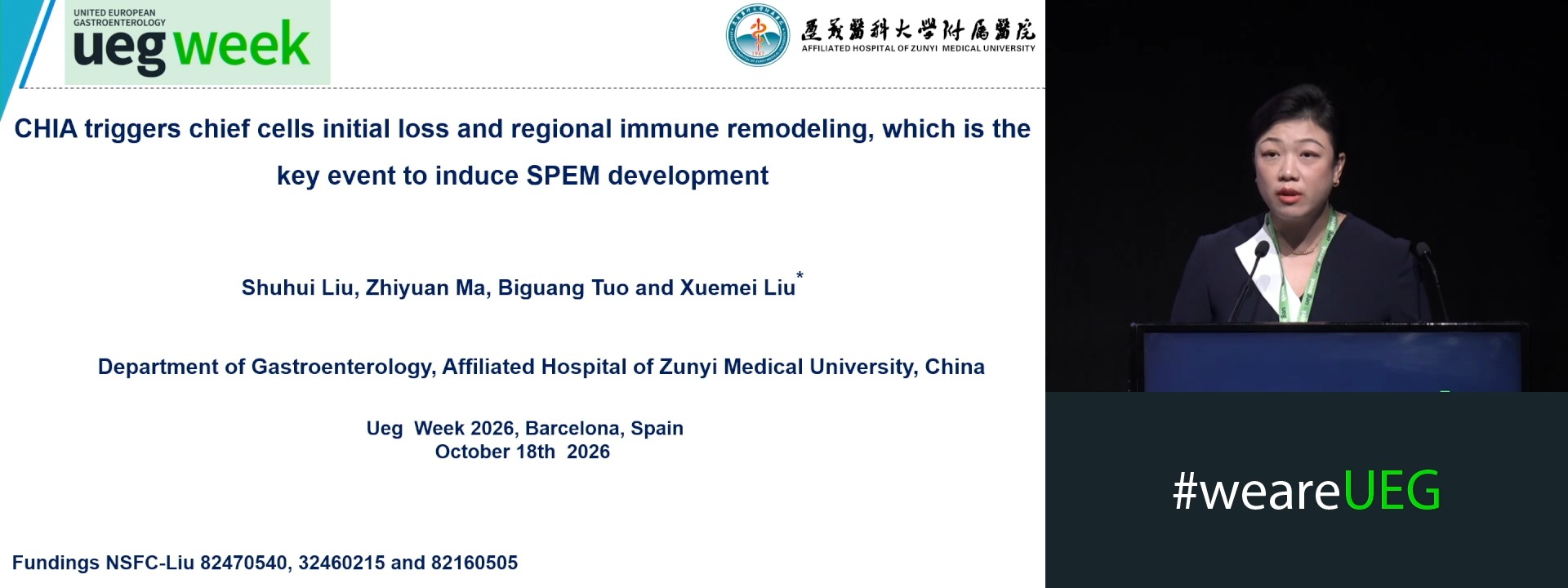
NON-ENZYMATIC ACTIVITY OF CHIA TRIGGERS CHIEF CELL INITIAL LOSS AND REGIONAL IMMUNE REMODELING, WHICH IS THE KEY EVENT TO INDUCE SPEM DEVELOPMENT
Affiliations
1 Department of Gastroenterology, Digestive Disease Hospital, Affiliated Hospital of Zunyi Medical University, Zunyi, China
2 Department of General Surgery, Department of Thyroid and Breast Surgery, Affiliated Hospital of Zunyi Medical University, Zunyi, China
Log in to continue.
This content is part of Gutflix. Log in with your myUEG account, or create one free, to watch it.
Not sure what you can access? Learn more about account types.
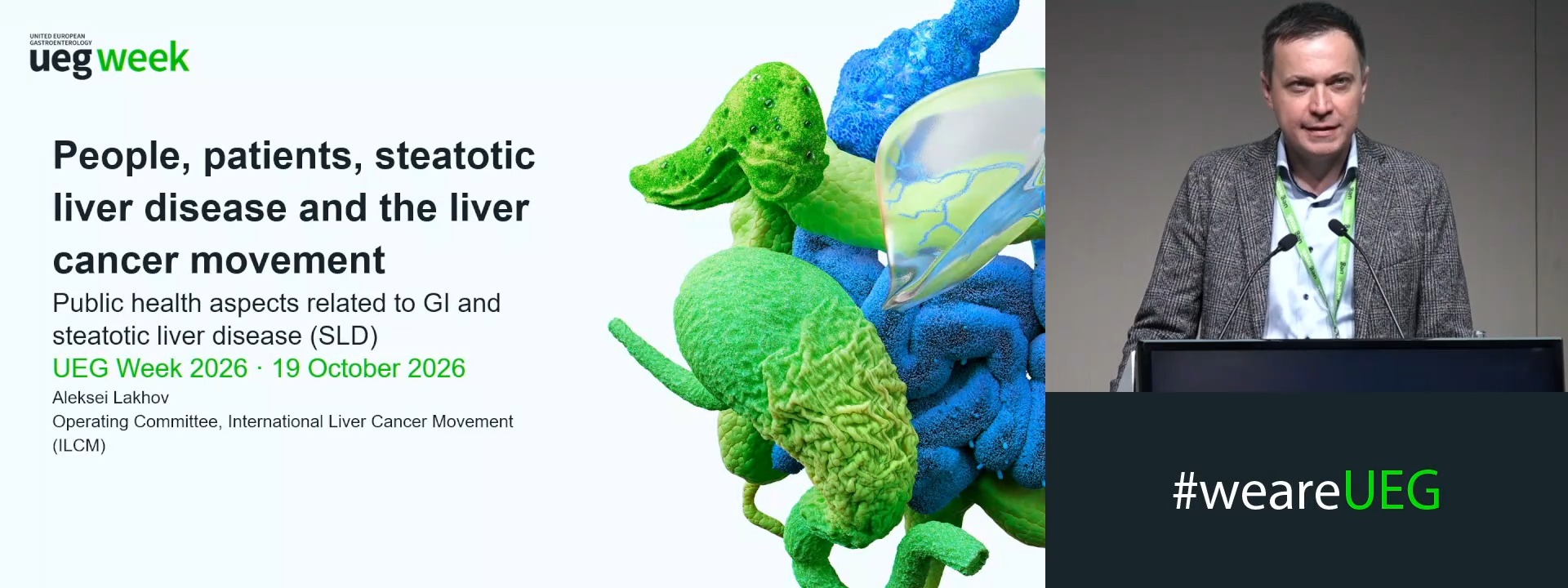
People, patients, steatotic liver disease and the liver cancer movement
Affiliations
1 International Liver Cancer Movement, None, Germany
Log in to continue.
This content is part of Gutflix. Log in with your myUEG account, or create one free, to watch it.
Not sure what you can access? Learn more about account types.
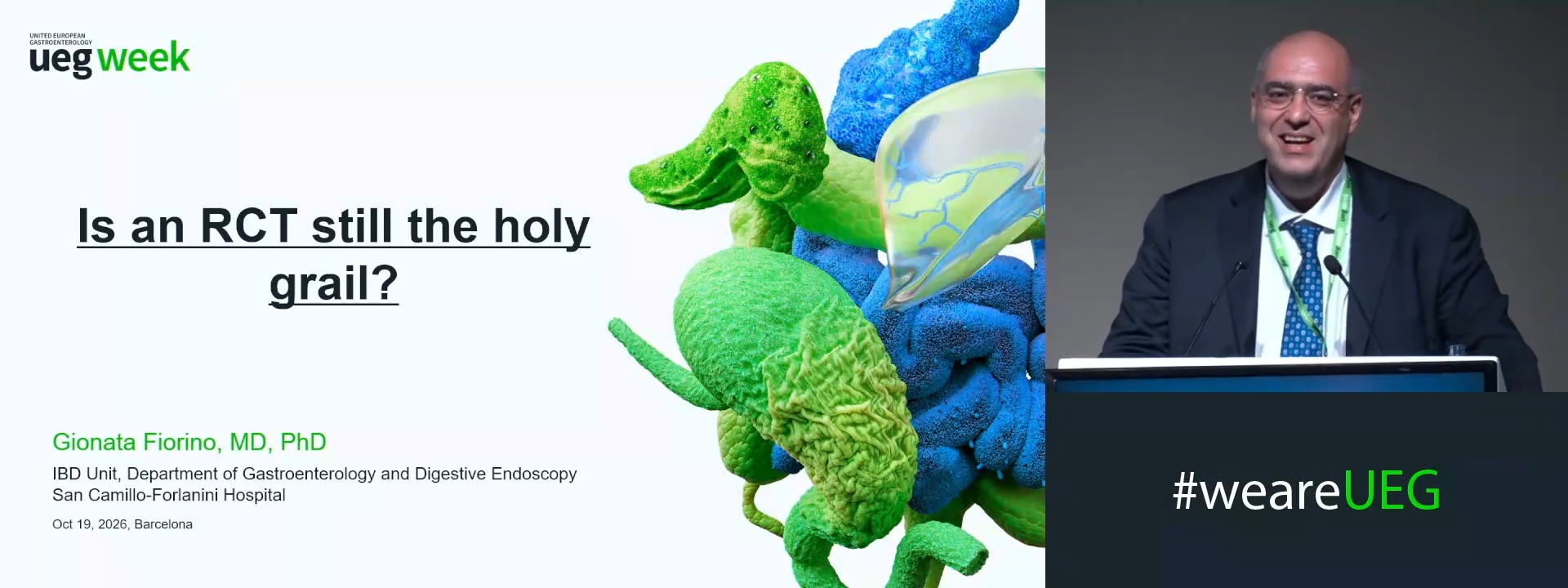
Is an RCT still the holy grail?
Affiliations
1 IRCCS Humanitas, Milan, Italy
Log in to continue.
This content is part of Gutflix. Log in with your myUEG account, or create one free, to watch it.
Not sure what you can access? Learn more about account types.
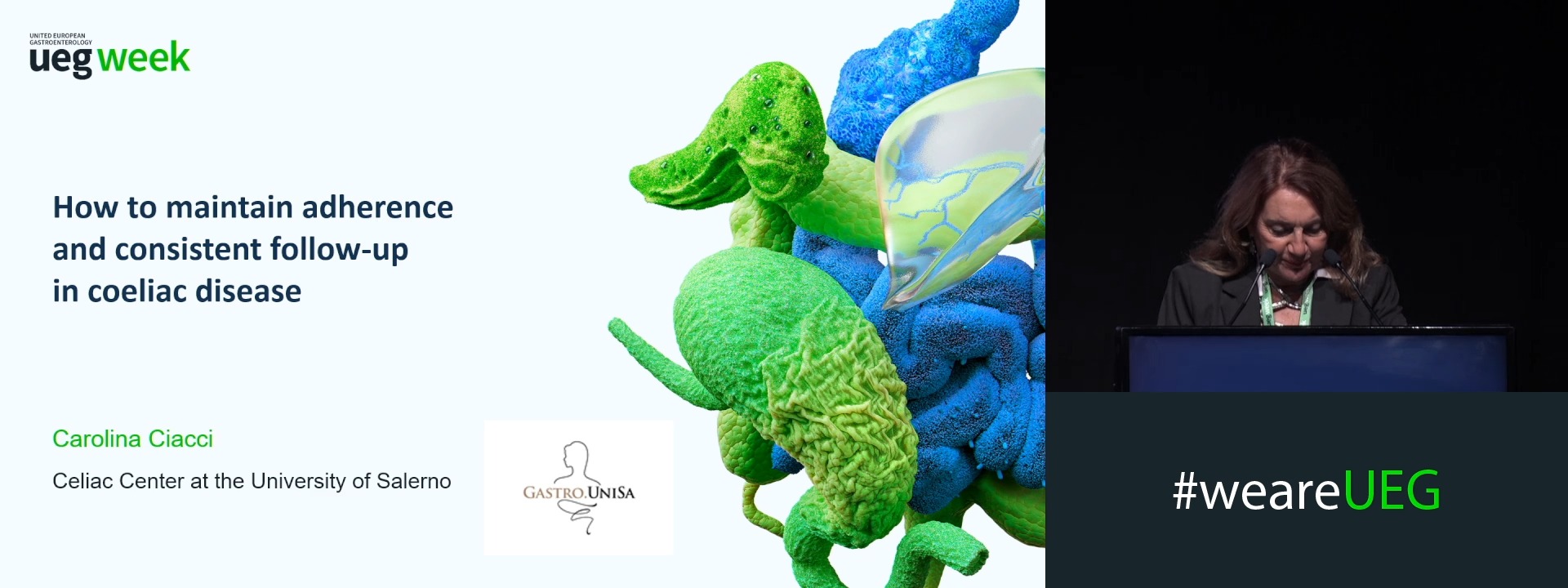
How to maintain adherence and consistent follow-up in coeliac disease
Affiliations
1 University of Salerno, Salerno, Italy
Log in to continue.
This content is part of Gutflix. Log in with your myUEG account, or create one free, to watch it.
Not sure what you can access? Learn more about account types.
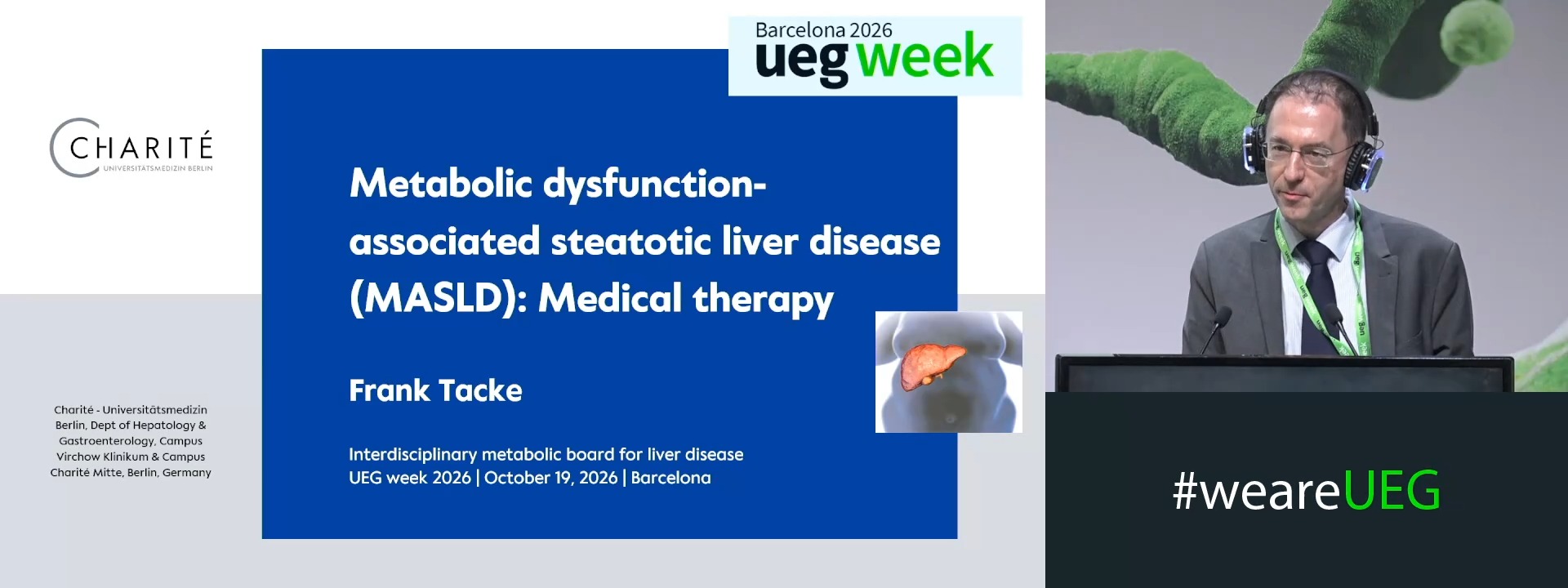
Role of medical therapy
Affiliations
1 Charité Universitaetsmedizin Berlin, Dept of Hepatology & Gastroenterology, Berlin, Germany