UEG's content platform for gastroenterology education bringing recordings, courses, guidelines, and more together in one place.
Trending on Gutflix
Rate for better recommendations!
Your feedback helps us show you more of what you like and less of what you dislike!
Log in to continue.
This content is part of Gutflix. Log in with your myUEG account, or create one free, to watch it.
Not sure what you can access? Learn more about account types.
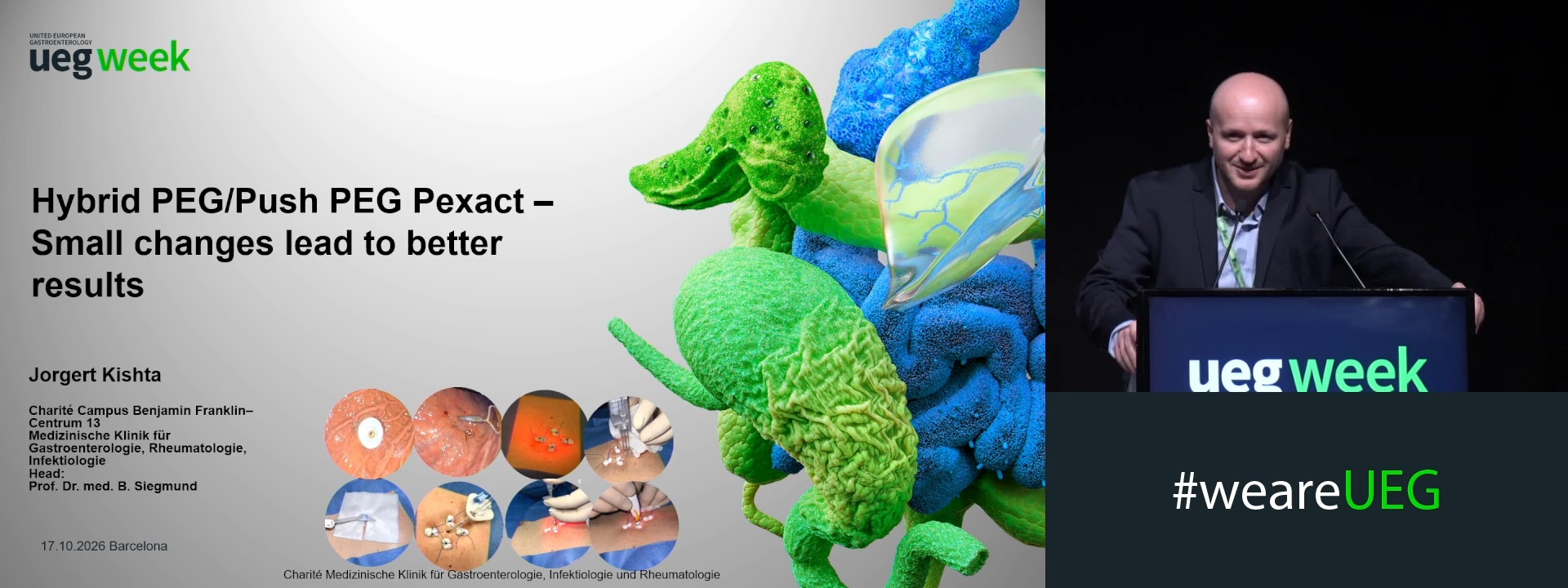
Gastropexy and hybrid PEG/Push PEG Pexact – Small changes lead to better results (Fresenius Kabi MedTech)
Log in to continue.
This content is part of Gutflix. Log in with your myUEG account, or create one free, to watch it.
Not sure what you can access? Learn more about account types.
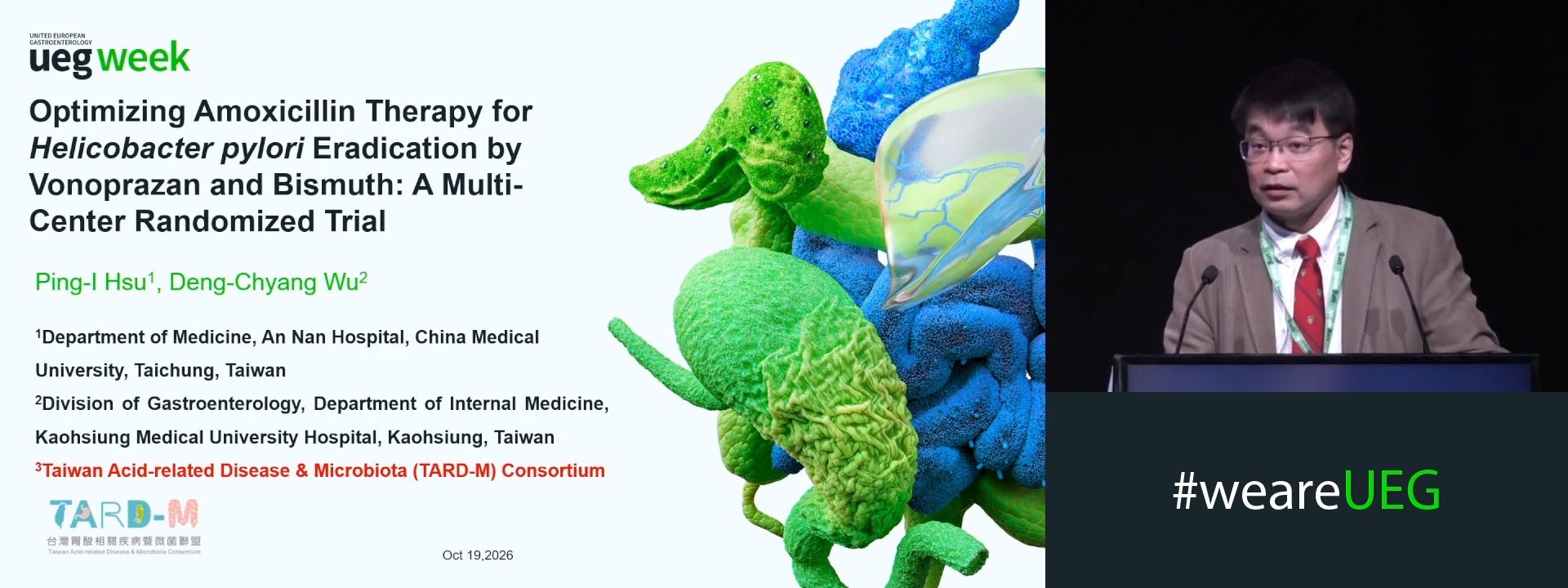
OPTIMIZING AMOXICILLIN THERAPY FOR HELICOBACTER PYLORI ERADICATION BY VONOPRAZAN AND BISMUTH: A MULTI-CENTER RANDOMIZED TRIAL
Affiliations
1 An Nan Hospital, China Medical University, Tainan, Taiwan, Province of China
2 Kaohsiung Medical University Hospital, Kaohsiung, Taiwan, Province of China
Log in to continue.
This content is part of Gutflix. Log in with your myUEG account, or create one free, to watch it.
Not sure what you can access? Learn more about account types.
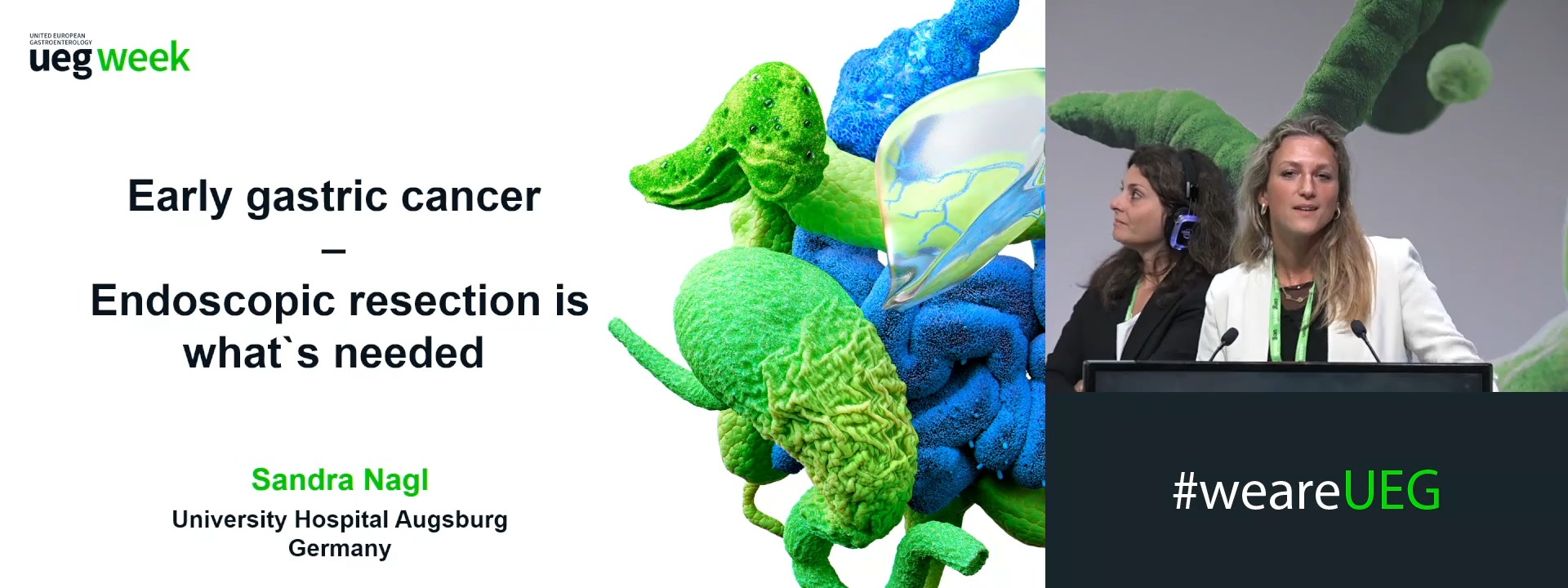
Early gastric cancer: Endoscopic resection or surgery – what's needed?
Affiliations
1 Universitätsklinikum Augsburg, Augsburg, Germany
2 Verona University, Verona, Italy
Log in to continue.
This content is part of Gutflix. Log in with your myUEG account, or create one free, to watch it.
Not sure what you can access? Learn more about account types.
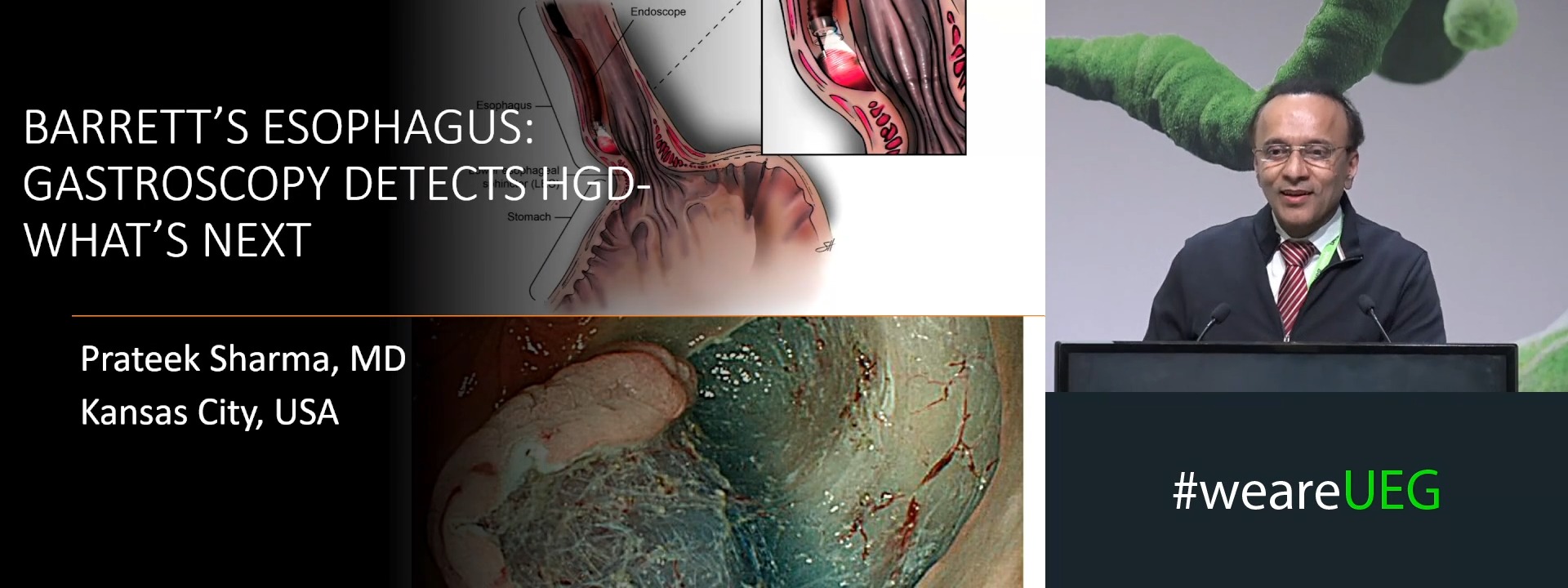
Barrett's oesophagus: Surveillance gastroscopy detects high-grade dysplasia – what's next, and when tissue is the issue
Affiliations
1 University of Kansas School of Medicine Dept. of Gastroenterology, Leawood, United States of America
2 Southampton University Hospital NHS Trust, Southampton, United Kingdom
Log in to continue.
This content is part of Gutflix. Log in with your myUEG account, or create one free, to watch it.
Not sure what you can access? Learn more about account types.
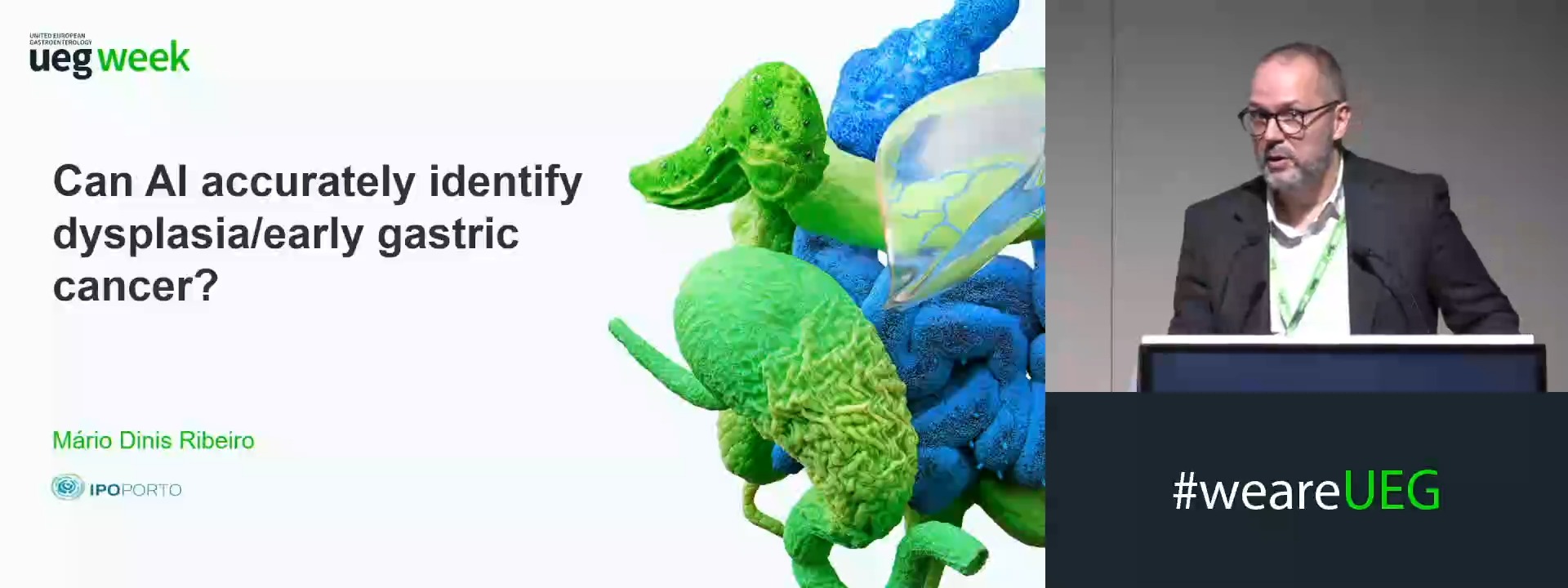
Can AI accurately identify dysplasia/early gastric cancer?
Affiliations
1 IPO Porto, Porto, Portugal
Log in to continue.
This content is part of Gutflix. Log in with your myUEG account, or create one free, to watch it.
Not sure what you can access? Learn more about account types.
Introduction: Mistakes in… Hepatobiliary and pancreas
Affiliations
1 Stadtspital Triemli, Zürich, Switzerland