UEG's educational platform for gastroenterology education bringing recordings, courses, guidelines, and more together in one place.
Most popular content
Rate for better recommendations!
Your feedback helps us show you more of what you like and less of what you dislike!
Log in to access this content.
Free for all myUEG account holders. Your access level is set automatically based on your occupation. Medical professionals get full access to all content. If you are a non-medical user, you can only access UEG Week content from congresses you attended.
Not sure what you can access? Learn more about account types.

AI-BASED QUANTIFICATION OF SEGMENTAL MAYO ENDOSCOPIC SCORES FOR GRANULAR DISEASE GRADING IN ULCERATIVE COLITIS TRIALS
Adam Juhasz 1, Janos Szalma 1, Joel Schaerer 2, Kenneth Gaither 3, Alessandro Delmonte 4, Marcela Vieira 3
1 Clario Inc., Budapest, Hungary
2 Clario Inc., Lausanne, Switzerland
3 Clario Inc., Philadelphia, United States
4 Clario Inc., Lyon, France
Conference
Topics
Submission format
Session
Citation
Published
Log in to access this content.
Free for all myUEG account holders. Your access level is set automatically based on your occupation. Medical professionals get full access to all content. If you are a non-medical user, you can only access UEG Week content from congresses you attended.
Not sure what you can access? Learn more about account types.
For the endoscopist
1 Westmead Hospital Sydney, Westmead, Australia
Event
Topics
Citation
Published
Log in to access this content.
Free for all myUEG account holders. Your access level is set automatically based on your occupation. Medical professionals get full access to all content. If you are a non-medical user, you can only access UEG Week content from congresses you attended.
Not sure what you can access? Learn more about account types.
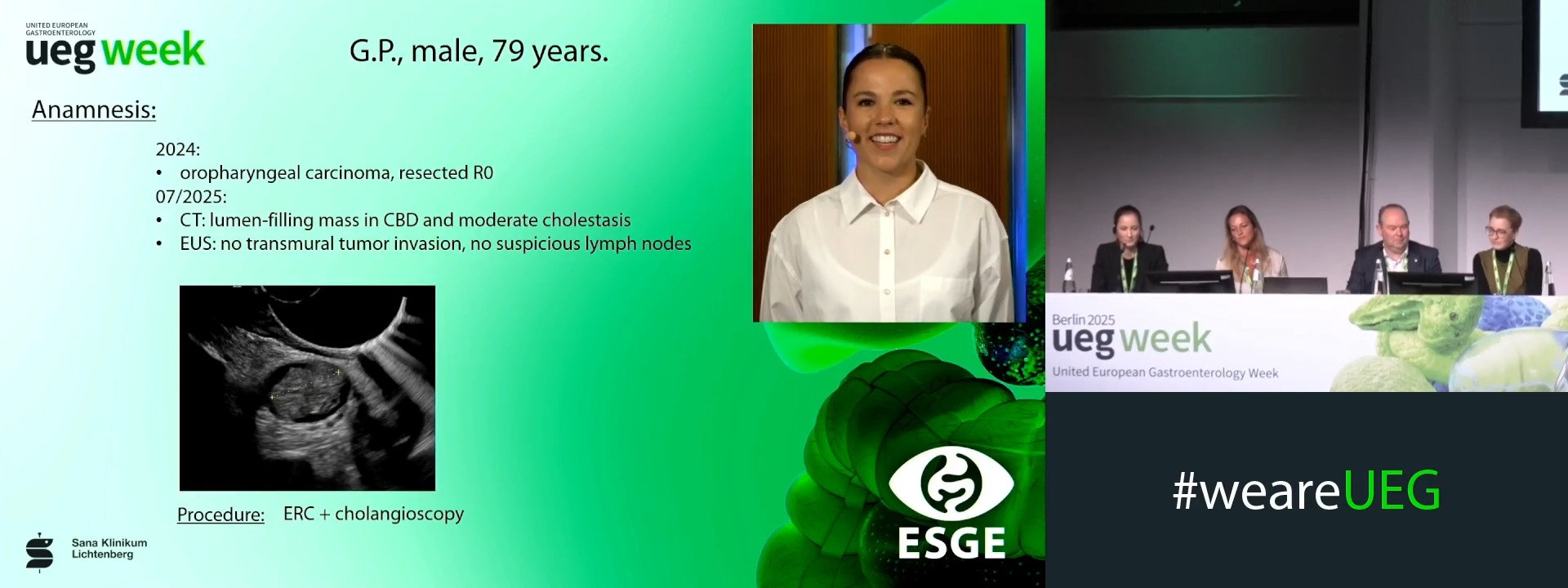
ESGE Live Endoscopy III (Complete Session)
Event
Session
Citation
Published
Log in to access this content.
Free for all myUEG account holders. Your access level is set automatically based on your occupation. Medical professionals get full access to all content. If you are a non-medical user, you can only access UEG Week content from congresses you attended.
Not sure what you can access? Learn more about account types.
Quality parameters in upper-GI: How good are they?
1 Medical University Vienna, Wien, Austria
Event
Citation
Published
Log in to access this content.
Free for all myUEG account holders. Your access level is set automatically based on your occupation. Medical professionals get full access to all content. If you are a non-medical user, you can only access UEG Week content from congresses you attended.
Not sure what you can access? Learn more about account types.
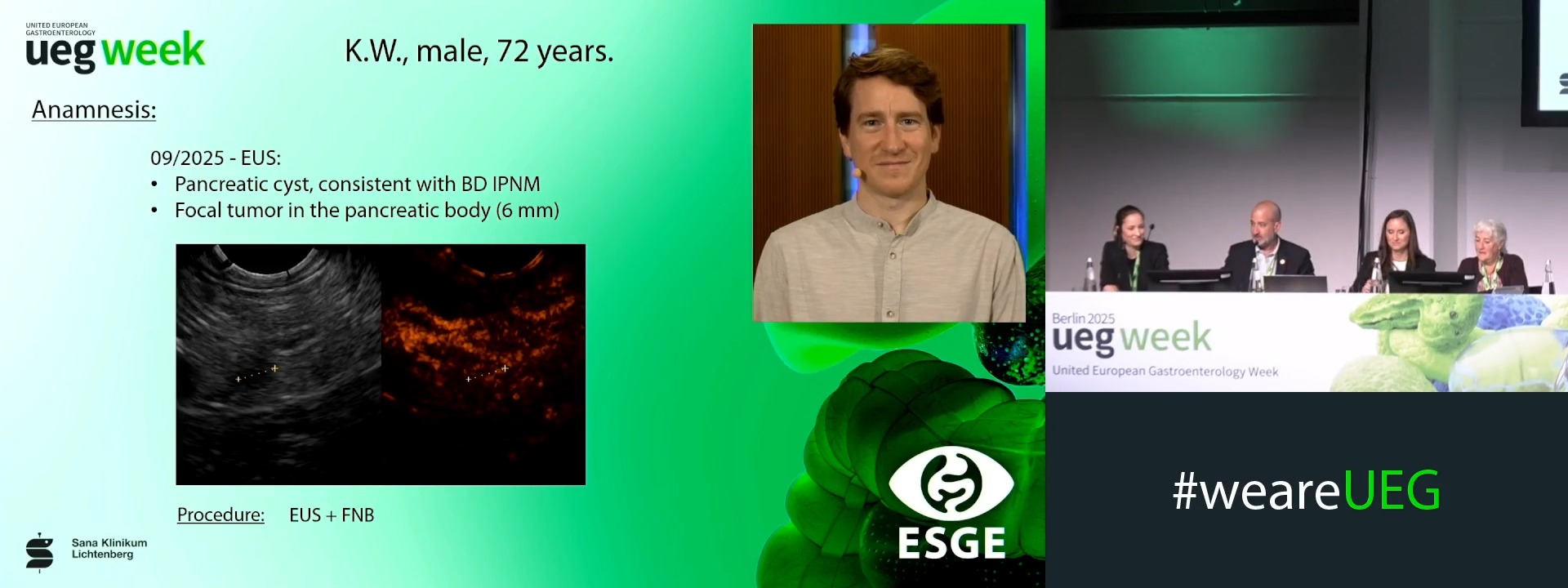
ESGE Live Endoscopy II (Complete Session)
Event
Session
Citation
Published
Log in to access this content.
Free for all myUEG account holders. Your access level is set automatically based on your occupation. Medical professionals get full access to all content. If you are a non-medical user, you can only access UEG Week content from congresses you attended.
Not sure what you can access? Learn more about account types.
REVISITING CRP THRESHOLDS IN TUMOR-RELATED CHOLANGITIS: TOWARD A CONTEXT-SPECIFIC DIAGNOSTIC APPROACH
Youness Dendane 1, Anas Azarkan 1, Ouiam Elmqaddem 1, Hajar Koulali 1, Ghizlane Kharrasse 1, Zazour Abdelkrim 1, Zahi Ismaili 1
1 Faculty of Medicine and Pharmacy/University Hospital Center Mohammed VI, Oujda, Morocco
Conference
Topics
Submission format
Session
Citation
Published
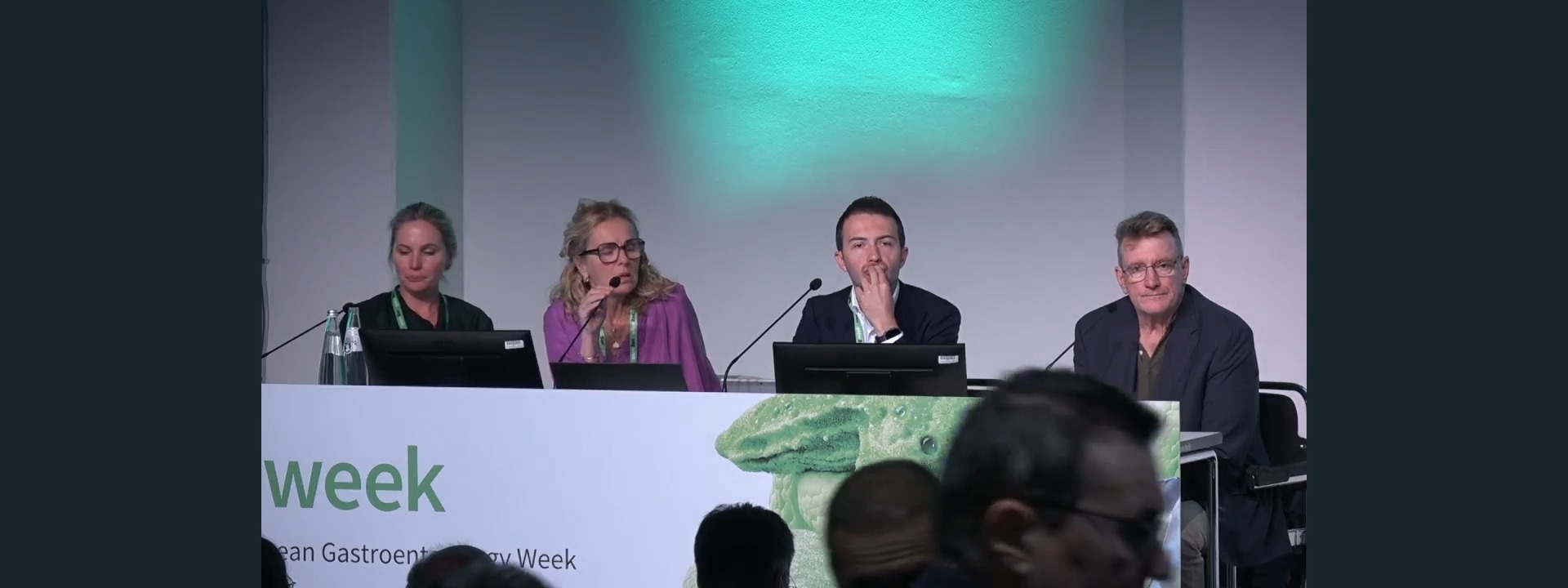
Log in to access this content.
Free for all myUEG account holders. Your access level is set automatically based on your occupation. Medical professionals get full access to all content. If you are a non-medical user, you can only access UEG Week content from congresses you attended.
Not sure what you can access? Learn more about account types.