UEG's educational platform for gastroenterology education bringing recordings, courses, guidelines, and more together in one place.
Most popular content
Rate for better recommendations!
Your feedback helps us show you more of what you like and less of what you dislike!
Log in to access this content.
Free for all myUEG account holders. Your access level is set automatically based on your occupation. Medical professionals get full access to all content. If you are a non-medical user, you can only access UEG Week content from congresses you attended.
Not sure what you can access? Learn more about account types.

PHENOTYPICAL CHANGES IN PAEDIATRIC INFLAMMATORY BOWEL DISEASE AT DIAGNOSIS THROUGH THE PAST FOUR DECADES: THE PAEDIATRIC NORDIBD COHORT
Mads Lie 1, Søren Raunsgaard Skjernaa 1, Karoline Mathilde Mose Klitgaard 1, Helene Sass Michno 1, Klaus Birkelund Johansen 2, Lone Larsen 3, Tine Jess 3
1 PREDICT, Aalborg University, Copenhagen SV, Denmark
2 Aalborg University Hospital, Aalborg, Denmark
3 PREDICT, Aalborg University, Copenhagen SV, Denmark|||Aalborg University Hospital, Aalborg, Denmark
Conference
Topics
Submission format
Citation
Published
Log in to access this content.
Free for all myUEG account holders. Your access level is set automatically based on your occupation. Medical professionals get full access to all content. If you are a non-medical user, you can only access UEG Week content from congresses you attended.
Not sure what you can access? Learn more about account types.
The diagnosis
1 Icahn School of Medicine at Mount Sinai, New York, United States of America
Event
Topics
Citation
Published
Log in to access this content.
Free for all myUEG account holders. Your access level is set automatically based on your occupation. Medical professionals get full access to all content. If you are a non-medical user, you can only access UEG Week content from congresses you attended.
Not sure what you can access? Learn more about account types.
JAK2 INHIBITION ATTENUATES PORTAL HYPERTENSION IN METABOLIC DYSFUNCTION-ASSOCIATED LIVER
1 Zhongshan Hospital, Fudan University, Shanghai, China
Event
Submission format
Session
Citation
Published
Log in to access this content.
Free for all myUEG account holders. Your access level is set automatically based on your occupation. Medical professionals get full access to all content. If you are a non-medical user, you can only access UEG Week content from congresses you attended.
Not sure what you can access? Learn more about account types.
Approaching the design of low prevalence diseases
1 University of Pavia, Pavia, Italy
Event
Citation
Published
Log in to access this content.
Free for all myUEG account holders. Your access level is set automatically based on your occupation. Medical professionals get full access to all content. If you are a non-medical user, you can only access UEG Week content from congresses you attended.
Not sure what you can access? Learn more about account types.
Innovations in IBD Therapy: The Story of TL1A - from Discovery to Potential Future Care (F. Hoffmann-La Roche Ltd) (Complete Session)
1 Icahn School of Medicine at Mount Sinai, USA, United States of America
2 Hospital Universitario Reina Sofia, Cordoba, Spain
3 University of Calgary, Calgary, Canada
Publisher
Event
Citation
Published
Log in to access this content.
Free for all myUEG account holders. Your access level is set automatically based on your occupation. Medical professionals get full access to all content. If you are a non-medical user, you can only access UEG Week content from congresses you attended.
Not sure what you can access? Learn more about account types.
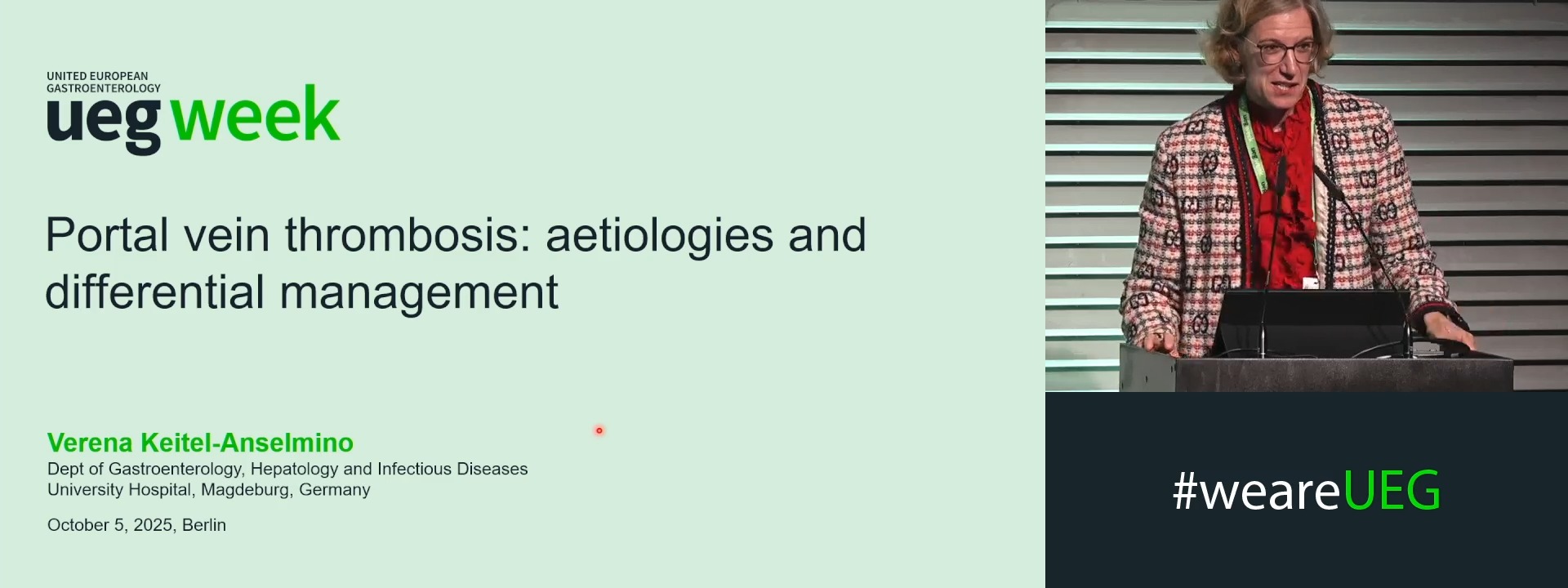
Portal vein thrombosis: Aetiologies and differential management
1 University Hospital Magdeburg, Magdeburg, Germany
Event
Topics
Citation
Published
Log in to access this content.
Free for all myUEG account holders. Your access level is set automatically based on your occupation. Medical professionals get full access to all content. If you are a non-medical user, you can only access UEG Week content from congresses you attended.
Not sure what you can access? Learn more about account types.
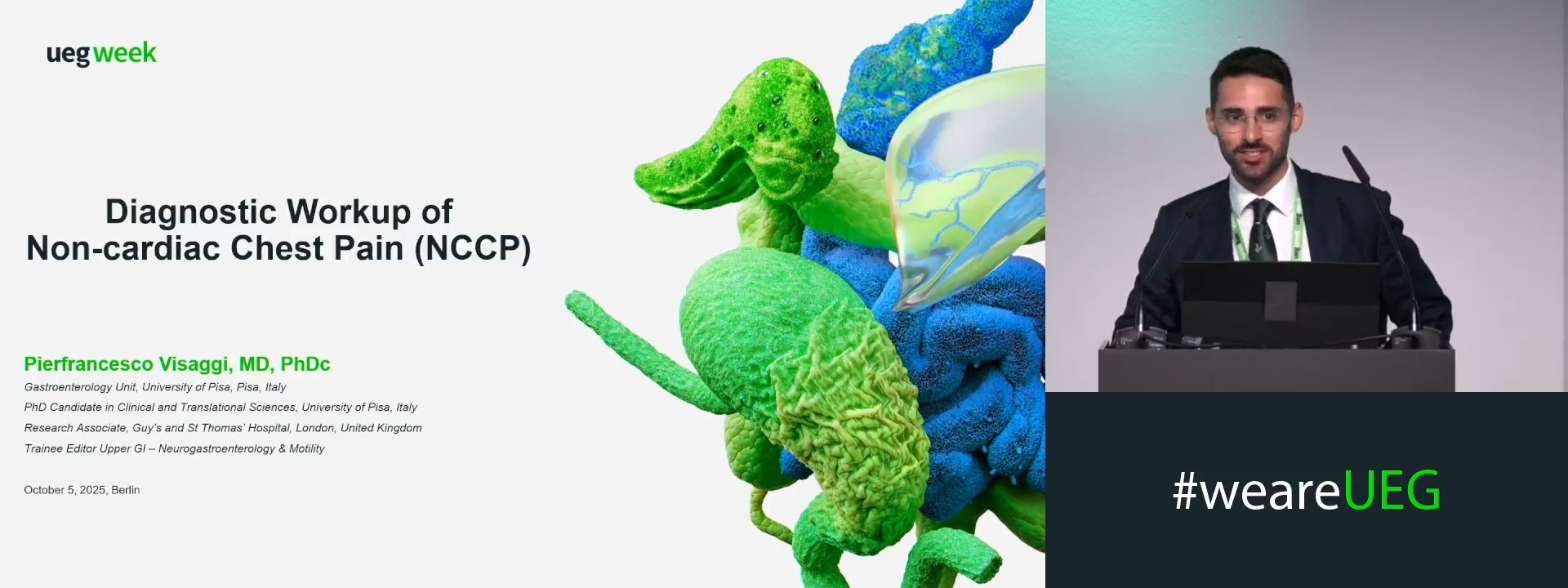
Diagnostic workup of non-cardiac chest pain
1 Gastroenterology Unit, University of Pisa, Pisa, Italy
Event
Topics