UEG's content platform for gastroenterology education bringing recordings, courses, guidelines, and more together in one place.
Trending on Gutflix
Rate for better recommendations!
Your feedback helps us show you more of what you like and less of what you dislike!
Log in to continue.
This content is part of Gutflix. Log in with your myUEG account, or create one free, to watch it.
Not sure what you can access? Learn more about account types.
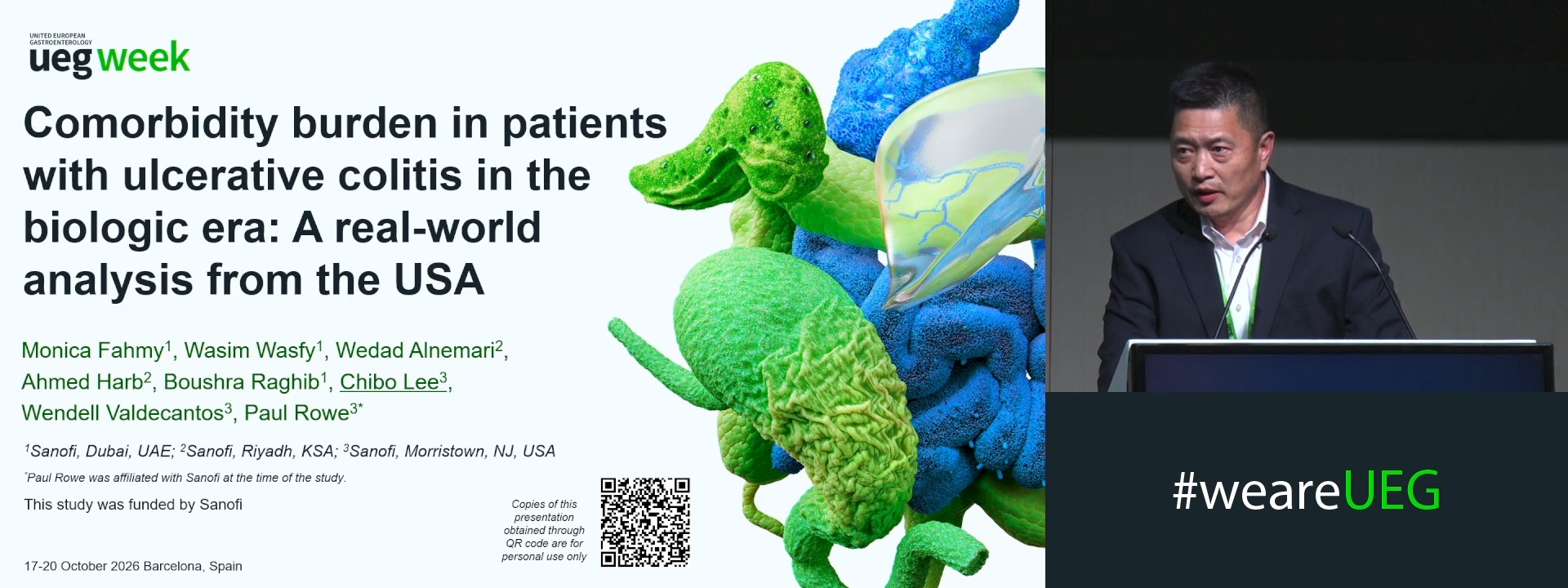
COMORBIDITY BURDEN IN PATIENTS WITH ULCERATIVE COLITIS IN THE BIOLOGIC ERA: A REAL-WORLD ANALYSIS FROM THE USA
Monica Fahmy 1, Wassem Wasfy 1, Wedad Alnemari 2, Ahmed Harb 2, Boushra Raghib 1, Chibo Lee 3, Wendell Valdecantos 3, Paul Rowe 3
Affiliations
1 Sanofi, Dubai, United Arab Emirates
2 Sanofi, Riyadh, Saudi Arabia
3 Sanofi, Morristown, United States
Log in to continue.
This content is part of Gutflix. Log in with your myUEG account, or create one free, to watch it.
Not sure what you can access? Learn more about account types.
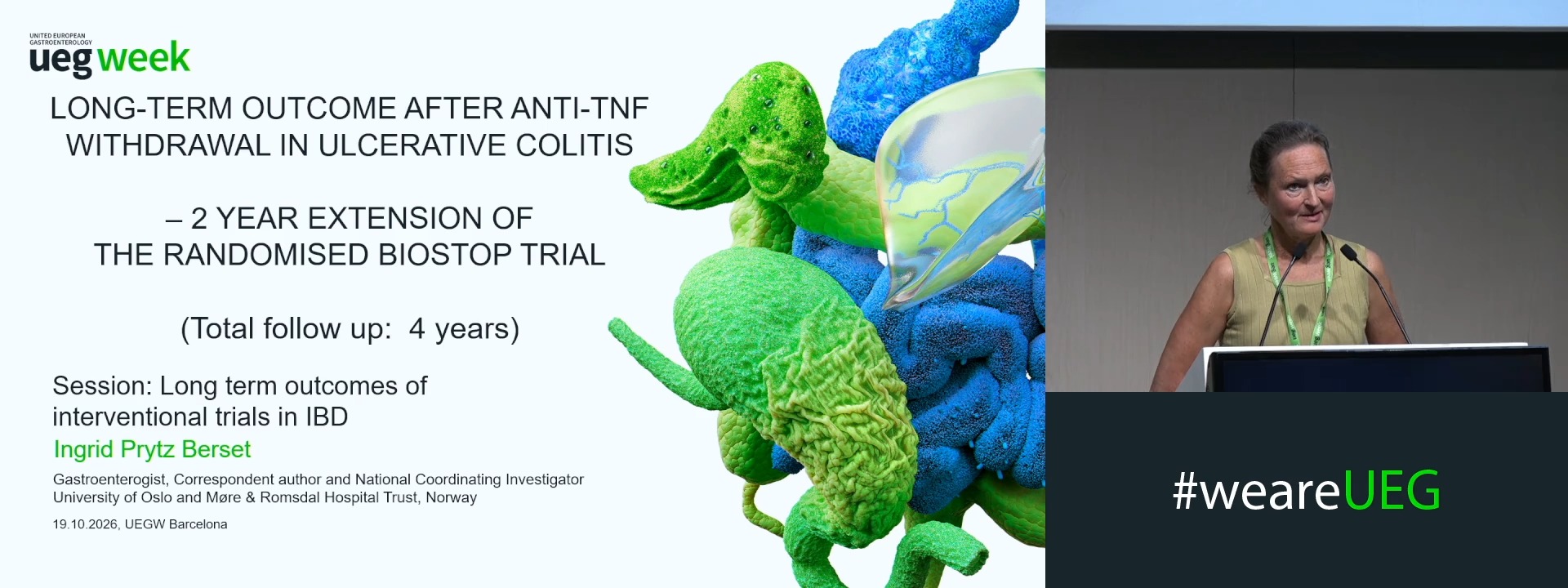
LONG-TERM OUTCOME AFTER ANTI-TNF WITHDRAWAL IN ULCERATIVE COLITIS – 2 YEAR EXTENSION OF THE RANDOMISED BIOSTOP STUDY
Ingrid Prytz Berset 1, Knut E.A. Lundin 2, Dag Arne Lihaug Hoff 3, Frode Lerang 4, Tor Åge Myklebust 5
Affiliations
1 Gastroenterology Aalesund, Alesund, Norway
2 Norwegian Coeliac Disease Research Centre, University of Oslo and Oslo University Hospital, Oslo, Norway
3 Aalesund Hospital, Møre & Romsdal Hospital trust, Aalesund, Norway
4 Central Hospital of Ostfold, Grålum, Norway
5 Aalesund Hospital, Møre & Romsdal Hospital Trust, Aalesund, Norway
Log in to continue.
This content is part of Gutflix. Log in with your myUEG account, or create one free, to watch it.
Not sure what you can access? Learn more about account types.
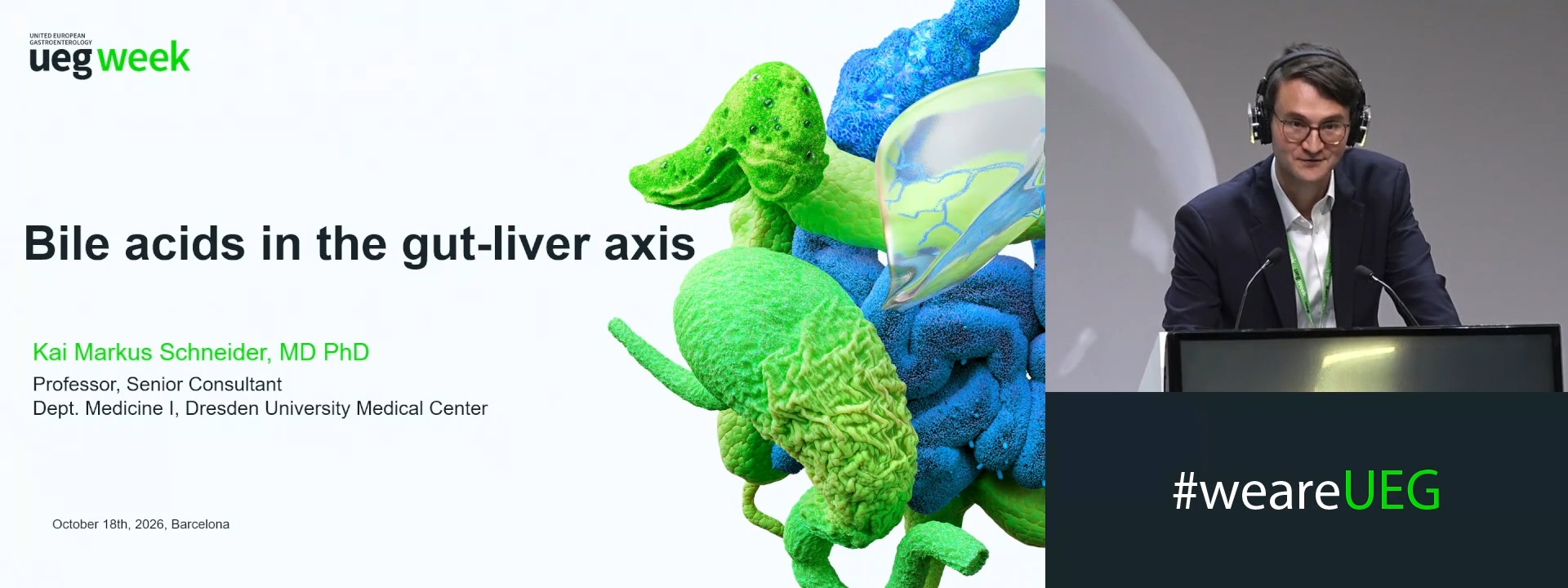
Bile acids in the gut-liver axis
Affiliations
1 Dresden University Medical Center, Dresden, Germany