UEG's educational platform for gastroenterology education bringing recordings, courses, guidelines, and more together in one place.
Most popular content
Rate for better recommendations!
Your feedback helps us show you more of what you like and less of what you dislike!
Log in to access this content.
Free for all myUEG account holders. Your access level is set automatically based on your occupation. Medical professionals get full access to all content. If you are a non-medical user, you can only access UEG Week content from congresses you attended.
Not sure what you can access? Learn more about account types.

REDO TRANSORAL OUTLET REDUCTION (RE-TORE): TECHNICAL FEASIBILITY AND MEDIUM-TERM OUTCOMES
Maria Valeria Matteo 1, Giorgio Carlino 1, Vincenzo Bove 1, Valerio Pontecorvi 1, Martina De Siena 1, Giulia Giannetti 1, Nausicaa Antonini 1, Chiara Massari 1, Laila Vinti 1, Giulia Polidori 1, Giulia Palumbo 1, Cristiano Spada 1, Guido Costamagna 1, Ivo Boskoski 1
1 Fondazione Policlinico Universitario A. Gemelli IRCCS, Rome, Italy
Conference
Topics
Submission format
Session
Citation
Published
Log in to access this content.
Free for all myUEG account holders. Your access level is set automatically based on your occupation. Medical professionals get full access to all content. If you are a non-medical user, you can only access UEG Week content from congresses you attended.
Not sure what you can access? Learn more about account types.

DISTINCTIVE MICROBIOTA AND DENDRITIC CELL ACTIVATION CHARACTERIZE THE APPENDIX OF ULCERATIVE COLITIS PATIENTS
Melania Scarpa 1, Ignazio CASTAGLIUOLO 2, Astghik Stepanyan 3, Ilaria Patuzzi 4, Claudia Armellin 3, Andromachi Kotsafti 5, Edoardo Vincenzo Savarino 6, Fabiana Zingone 7, Cesare Ruffolo 3, Romeo Bardini 8, Salvatore Pucciarelli 3, Gaya Spolverato 3, Marco Scarpa 3, Imerio Angriman 3
1 Veneto Institute of Oncology IOV-IRCCS, Mestre VE, Italy
2 University of Padova, Padova, Italy
3 Azienda Ospedale Università di Padova, Padova, Italy
4 EuBiome, Padova, Italy
5 Veneto Institute of Oncology (IOV-IRCCS), Padova, Italy
6 University of Padua, Division of Gastroenterology, Padua, Italy
7 University of Padua, Padua, Italy
8 Chirurgia Generale, Padova, Italy
Conference
Topics
Submission format
Session
Citation
Published
Log in to access this content.
Free for all myUEG account holders. Your access level is set automatically based on your occupation. Medical professionals get full access to all content. If you are a non-medical user, you can only access UEG Week content from congresses you attended.
Not sure what you can access? Learn more about account types.

RANDOMIZED CONTROLLED TRIAL OF EFFICACY OF MOSAPRIDE ON RECOVERY OF INTESTINAL MOTILITY AFTER ELECTIVE COLORECTAL CANCER SURGERY
Bensita Saengsawang 1, Tharin Thampongsa 1, Chairat Supasmutchai 1, Chumpon Wilasrusmee 1, JAKRAPAN JIRASIRITHAM 1, Puvee Punmeechao 1, Visarat Palitnonkiat 1, Napaphat Poprom 1, Pattawia Choikrua 1, chalermpol suriwan 1
1 Faculty of Medicine Ramathibodi Hospital, Mahidol University, Bangkok, Thailand
Conference
Topics
Submission format
Citation
Published
Log in to access this content.
Free for all myUEG account holders. Your access level is set automatically based on your occupation. Medical professionals get full access to all content. If you are a non-medical user, you can only access UEG Week content from congresses you attended.
Not sure what you can access? Learn more about account types.
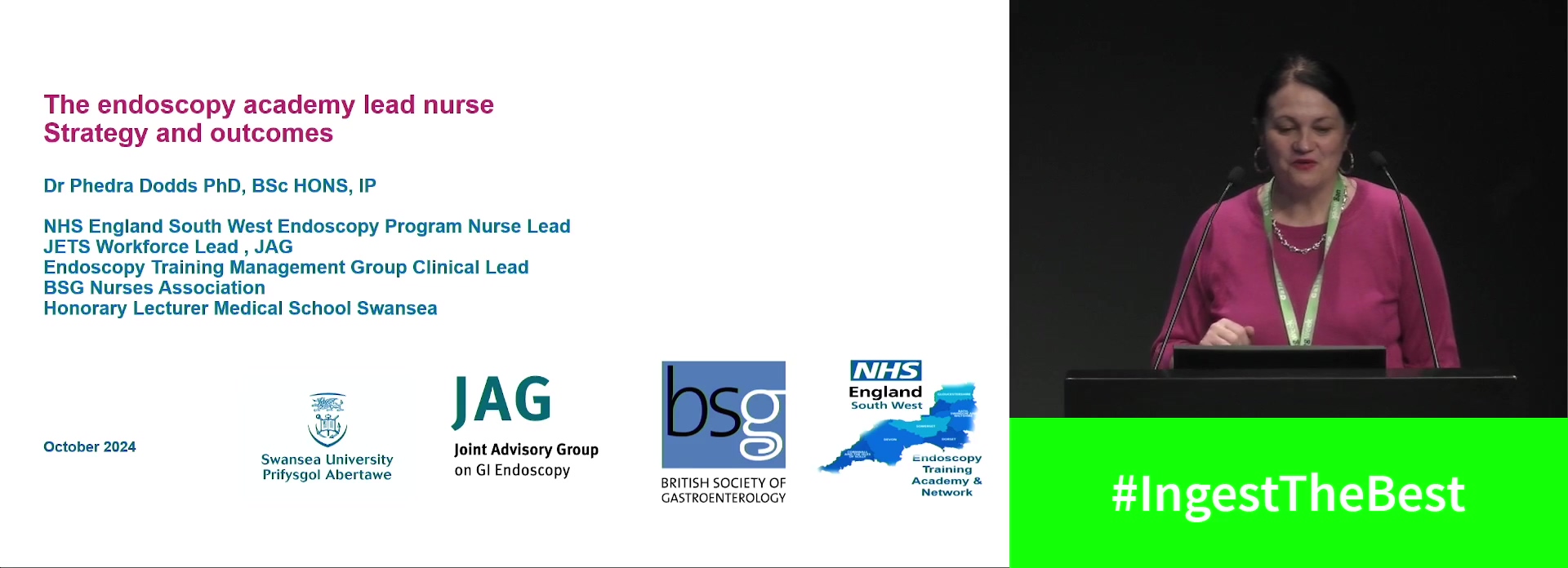
The endoscopy academy lead nurse–strategy and outcomes
1 JAG, London, United Kingdom
Event
Topics
Published
Log in to access this content.
Free for all myUEG account holders. Your access level is set automatically based on your occupation. Medical professionals get full access to all content. If you are a non-medical user, you can only access UEG Week content from congresses you attended.
Not sure what you can access? Learn more about account types.

BENEFITS OF BOWEL PREPARATION FOR URGENT COLONOSCOPY IN PATIENTS WITH COLONIC DIVERTICULAR BLEEDING: A MULTICENTER RETROSPECTIVE STUDY WITH PROPENSITY SCORE MATCHING ANALYSIS
Takahiro Gonai 1, Yosuke Toya 2, Norihiko Kudara 3, Keinosuke Abe 4, Sera Sawaguchi 4, Takao Fujiwara 5, Makoto Eizuka 6, Minami Hirai 6, Manami Miura 7, Jun Urushikubo 7, Shun Yamada 8, Tomo Kumei 8, Satoko Yamaguchi 9, Kyohei Sugai 10, Kensuke Asakura 11, Shunsuke Orikasa 12, Takayuki Matsumoto 2
1 Iwate Medical University School of Medicine, Shiwa-gun, Japan|||Iwate Prefectural Kuji Hospital, Kuji, Japan
2 Iwate Medical University School of Medicine, Shiwa-gun, Japan
3 Iwate Prefectural Ofunato Hospital, Ofunato, Japan
4 Iwate Prefectural Miyako Hospital, Miyako, Japan
5 Morioka Red Cross Hospital, Morioka, Japan
6 Iwate Medical University School of Medicine, Shiwa-gun, Japan|||Hachinohe Red Cross Hospital, Hachinohe, Japan
7 Iwate Prefectural Ninohe Hospital, Ninohe, Japan
8 Iwate Medical University School of Medicine, Shiwa-gun, Japan|||Noshiro Kosei Medical Center, Noshiro, Japan
9 Kazuno Kosei Hospital, Kazuno, Japan
10 Iwate Medical University School of Medicine, Shiwa-gun, Japan|||Kazuno Kosei Hospital, Kazuno, Japan
11 Iwate Prefectural Kuji Hospital, Kuji, Japan
12 Kitakami Saiseikai Hospital, Kitakami, Japan
Conference
Topics
Submission format
Citation
Published
Log in to access this content.
Free for all myUEG account holders. Your access level is set automatically based on your occupation. Medical professionals get full access to all content. If you are a non-medical user, you can only access UEG Week content from congresses you attended.
Not sure what you can access? Learn more about account types.
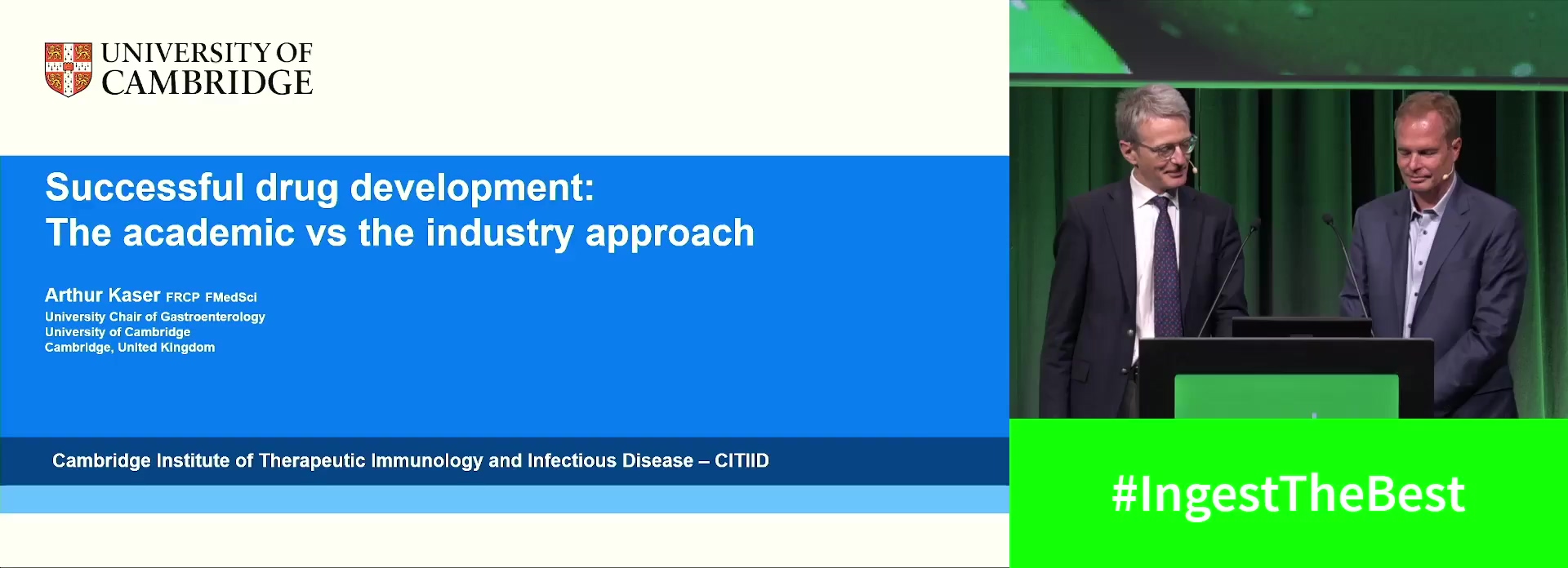
Successful drug development: Academic approach vs industry approach
1 University of Cambridge Gastroenterology and Hepatology, Cambridge, United Kingdom
2 University of California San Diego, San Diego, United States
Log in to access this content.
Free for all myUEG account holders. Your access level is set automatically based on your occupation. Medical professionals get full access to all content. If you are a non-medical user, you can only access UEG Week content from congresses you attended.
Not sure what you can access? Learn more about account types.

ENDOSCOPIC BALLOON DILATION COMBINED WITH STEROID INJECTION VERSUS RADIAL INCISION AND CUTTING COMBINED WITH STEROID INJECTION FOR REFRACTORY ANASTOMOTIC STRICTURE AFTER ESOPHAGECTOMY: A MULTICENTER RANDOMIZED CONTROLLED PHASE II/III STUDY, JCOG1207
Ikuo Aoyama 1, Kohei Takizawa 2, Gakuto Ogawa 3, Yusuke Sano 3, Yoshinobu Yamamoto 4, Tsutomu Tanaka 5, Takeshi Setoyama 6, Tomohiro Kadota 7, Yutaka Saito 3, Yasuaki Nagami 8, Takuto Hikichi 9, Seiichiro Abe 3, Tomonori Yano 7, Manabu Muto 10
1 Japanese Red cross Otsu hospital, Otsu, Japan
2 Sapporo Kinentou Hospital, Sapporo, Japan
3 National Cancer Center Hospital, Tokyo, Japan
4 Hyogo Cancer Center, Akashi, Japan
5 Aichi Cancer Center Hospital, Nagoya, Japan
6 Japanese Red Cross Osaka Hospital, Osaka, Japan
7 National Cancer Center Hospital East, Kashiwa, Japan
8 Osaka Metropolitan University Graduate School of Medicine, Osaka, Japan
9 Fukushima Medical University Hospital, Fukushima, Japan
10 Graduate School of Medicine, Kyoto University, Kyoto, Japan
Conference
Topics
Submission format
Session