UEG's content platform for gastroenterology education bringing recordings, courses, guidelines, and more together in one place.
Trending on Gutflix
Rate for better recommendations!
Your feedback helps us show you more of what you like and less of what you dislike!
Log in to continue.
This content is part of Gutflix. Log in with your myUEG account, or create one free, to watch it.
Not sure what you can access? Learn more about account types.
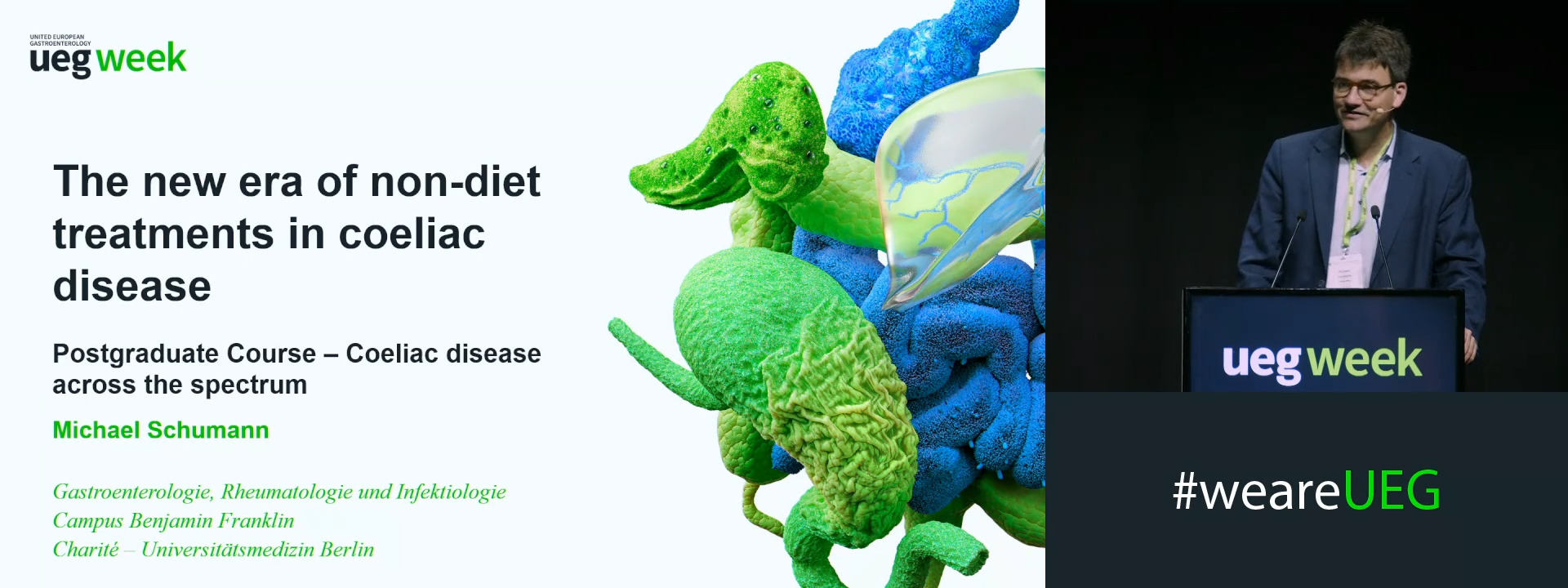
The new era of non-diet treatments in coeliac disease
Affiliations
1 Charité – Universitätsmedizin Berlin, Berlin, Germany
Log in to continue.
This content is part of Gutflix. Log in with your myUEG account, or create one free, to watch it.
Not sure what you can access? Learn more about account types.
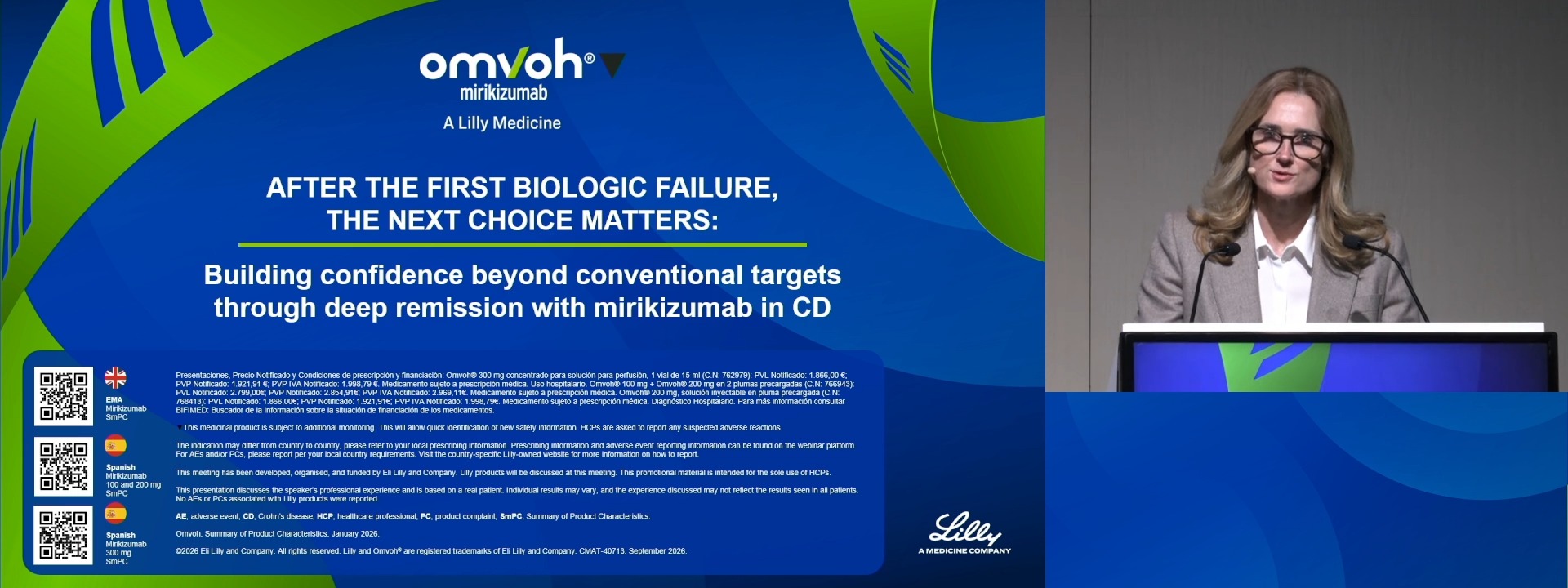
After the first biologic failure, the next choice matters: Building confidence beyond conventional targets through deep remission with mirikizumab in CD (Eli Lilly and Company) (Complete Session)
Affiliations
1 Translational Gastroenterology Unit, Oxford University Hospital, Oxford, United Kingdom
2 University Hospitals Leuven, Leuven, Belgium
3 Department of Internal Medicine I, University Hospital Schleswig-Holstein, Kiel University, Kiel, Germany

Log in to continue.
This content is part of Gutflix. Log in with your myUEG account, or create one free, to watch it.
Not sure what you can access? Learn more about account types.
COST-EFFECTIVENESS OF RISK-STRATIFIED COLORECTAL CANCER SCREENING BASED ON POLYGENIC RISK FOR DIFFERENT ETHNIC/ RACIAL POPULATIONS
Affiliations
1 Erasmus MC, Rotterdam, Netherlands
2 Fred Hutch Cancer Center, Seattle, United States

Log in to continue.
This content is part of Gutflix. Log in with your myUEG account, or create one free, to watch it.
Not sure what you can access? Learn more about account types.
A NOVEL MULTI-EPITOPE BASED VACCINE AGAINST HELICOBACTER PYLORI
Behnam Kalali 1,2, Hassan Moeini 1,2, Amrollah Mostafazadeh 3, Abbas Yadegar 4, Volker Wedershoven 1, Christian Schulz 2, Peter Malfertheiner 2
Affiliations
1 Iguana Biotechnology, Munich, Germany
2 Ludwig Maximilian University, Munich, Germany
3 Babol University of Medical Sciences, Babol, Iran, Islamic Republic of
4 Shahid Beheshti Medical University, Tehran, Iran, Islamic Republic of
Log in to continue.
This content is part of Gutflix. Log in with your myUEG account, or create one free, to watch it.
Not sure what you can access? Learn more about account types.
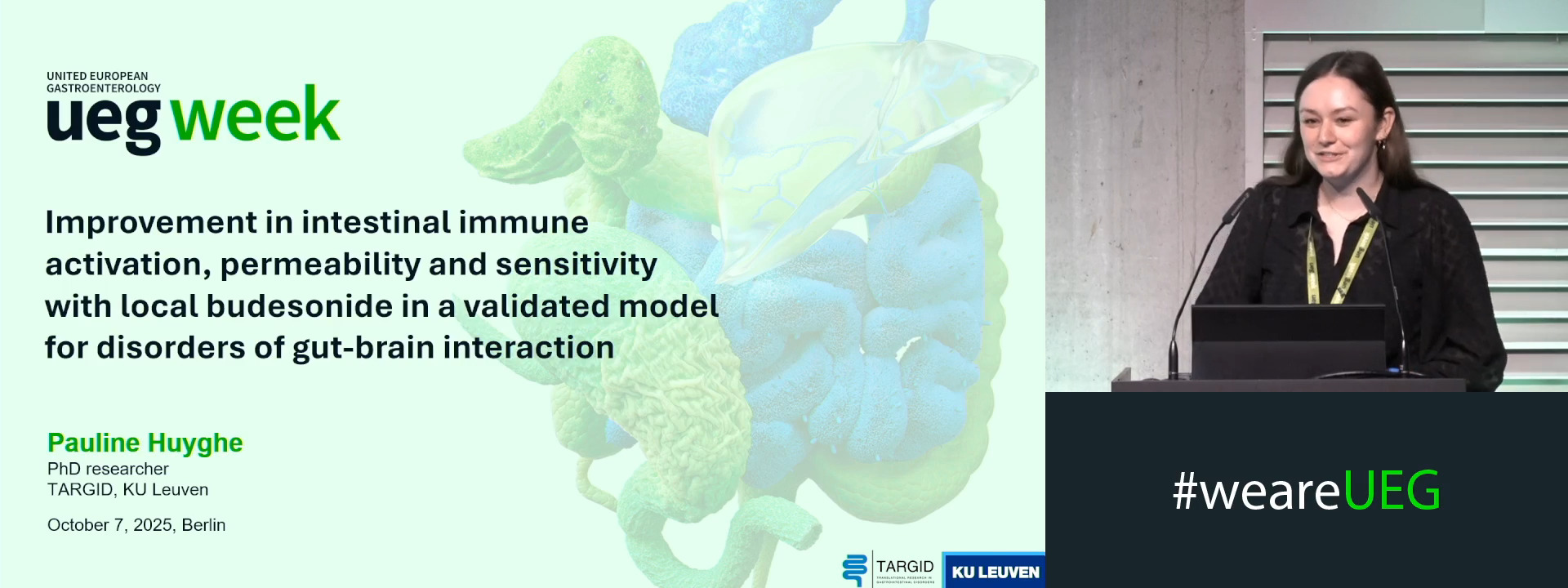
IMPROVEMENT IN INTESTINAL IMMUNE ACTIVATION, PERMEABILITY AND SENSITIVITY WITH LOCAL BUDESONIDE IN A VALIDATED MODEL FOR DISORDERS OF GUT-BRAIN INTERACTION
Pauline Huyghe 1, Alison Accarie 1, Mathieu Meleine 1, Karen Van den Houte 1, Joran Toth 1, Lucas Wauters 2,1, Jan Tack 2,1, Ricard Farré 1, Tim Vanuytsel 2,1
Affiliations
1 KU Leuven, Leuven, Belgium
2 University of Leuven, University Hospital Gasthuisberg, Leuven, Belgium
Log in to continue.
This content is part of Gutflix. Log in with your myUEG account, or create one free, to watch it.
Not sure what you can access? Learn more about account types.
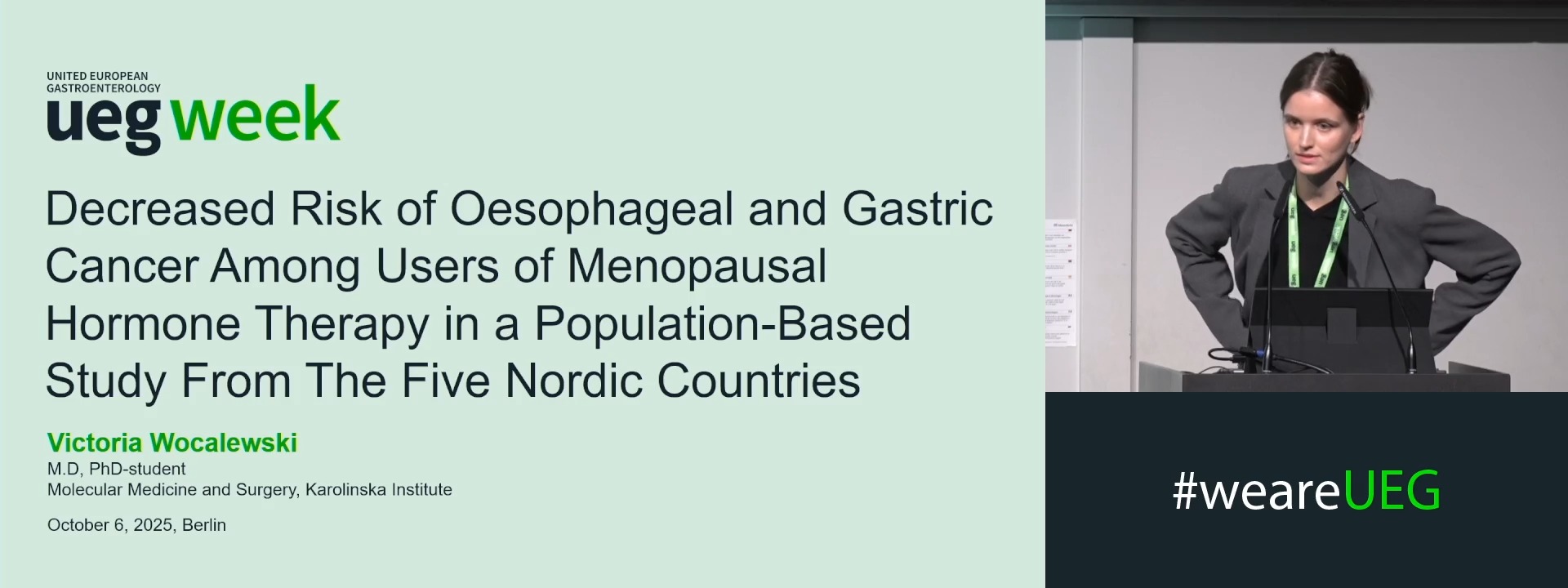
DECREASED RISK OF OESOPHAGEAL AND GASTRIC CANCER AMONG USERS OF MENOPAUSAL HORMONE THERAPY IN A POPULATION-BASED STUDY FROM THE FIVE NORDIC COUNTRIES
Victoria Wocalewski 1, Giola Santoni 1, Helgi Birgisson 2, My von Euler-Chelpin 3, Joonas Kauppila 1,4, Eivind Ness-Jensen 1,5,6, Shao-Hua Xie 1, Jesper Lagergren 1,7
Affiliations
1 Karolinska Institutet, Stockholm, Sweden
2 The Icelandic Cancer Registry, Reykjavik, Iceland
3 University of Copenhagen, Copenhagen, Denmark
4 Oulu University Hospital and University of Oulu, Oulu, Finland
5 Levanger Hospital, Levanger, Norway
6 NTNU, Norwegian University of Science and Technology, Levanger, Norway
7 Kings College London, London, United Kingdom