UEG's content platform for gastroenterology education bringing recordings, courses, guidelines, and more together in one place.
Trending on Gutflix
Rate for better recommendations!
Your feedback helps us show you more of what you like and less of what you dislike!
Log in to continue.
This content is part of Gutflix. Log in with your myUEG account, or create one free, to watch it.
Not sure what you can access? Learn more about account types.
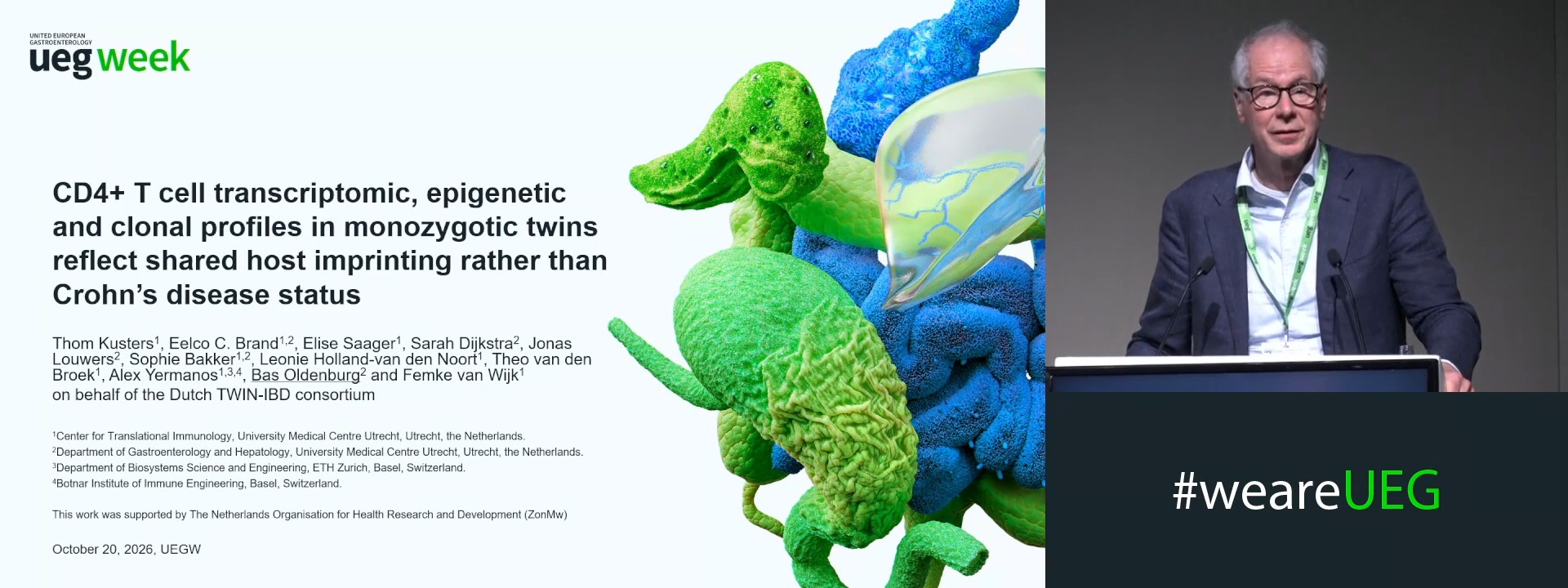
CD4+ T CELL TRANSCRIPTOMIC, EPIGENETIC AND CLONAL PROFILES IN MONOZYGOTIC TWINS REFLECT SHARED HOST IMPRINTING RATHER THAN CROHN’S DISEASE STATUS
Thom Kusters 1, Eelco C. Brand 1, Elise Saager 1, Sarah Dijkstra 1, Jonas Louwers 1, Sophie Bakker 1, Leonie Holland-van den Noort 1, Theo van den Broek 1, Alex Yermanos 1,2, Bas Oldenburg 1, Femke van Wijk 1
Affiliations
1 University Medical Centre Utrecht, Utrecht, Netherlands
2 Botnar Institute of Immune Engineering, Basel, Switzerland
Log in to continue.
This content is part of Gutflix. Log in with your myUEG account, or create one free, to watch it.
Not sure what you can access? Learn more about account types.
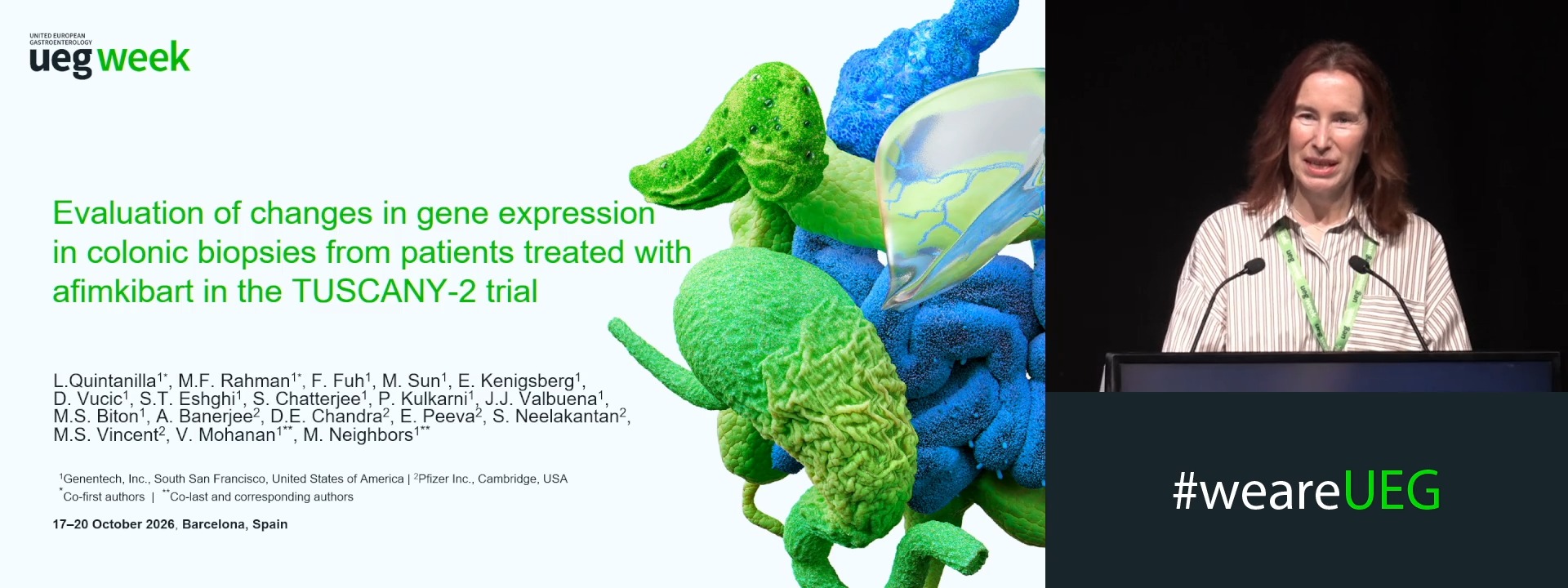
EVALUATION OF CHANGES IN GENE EXPRESSION IN COLONIC BIOPSY SAMPLES FROM PATIENTS TREATED WITH AFIMKIBART IN THE TUSCANY-2 TRIAL
Luis Quintanilla 1, Mouly Rahman 2, Franklin Fuh 1, Meng Sun 1, Ephraim Kenigsberg 1, Domagoj Vucic 1, Shadi Toghi Eshghi 1, Sharmila Chatterjee 1, Priyanka Kulkarni 1, Judit Jané Valbuena 1, Michal Slyper Biton 1, Anindita Banerjee 3, Deepa E. Chandra 3, Elena Peeva 3, Srividya Neelakantan 3, Michael S. Vincent 3, Vishnu Mohanan 2, Margaret Neighbors 1
Affiliations
1 Genentech, Inc., South San Francisco, United States
2 F. Hoffmann‑La Roche Ltd., Basel, Switzerland
3 Pfizer Inc., Cambridge, United States
Log in to continue.
This content is part of Gutflix. Log in with your myUEG account, or create one free, to watch it.
Not sure what you can access? Learn more about account types.
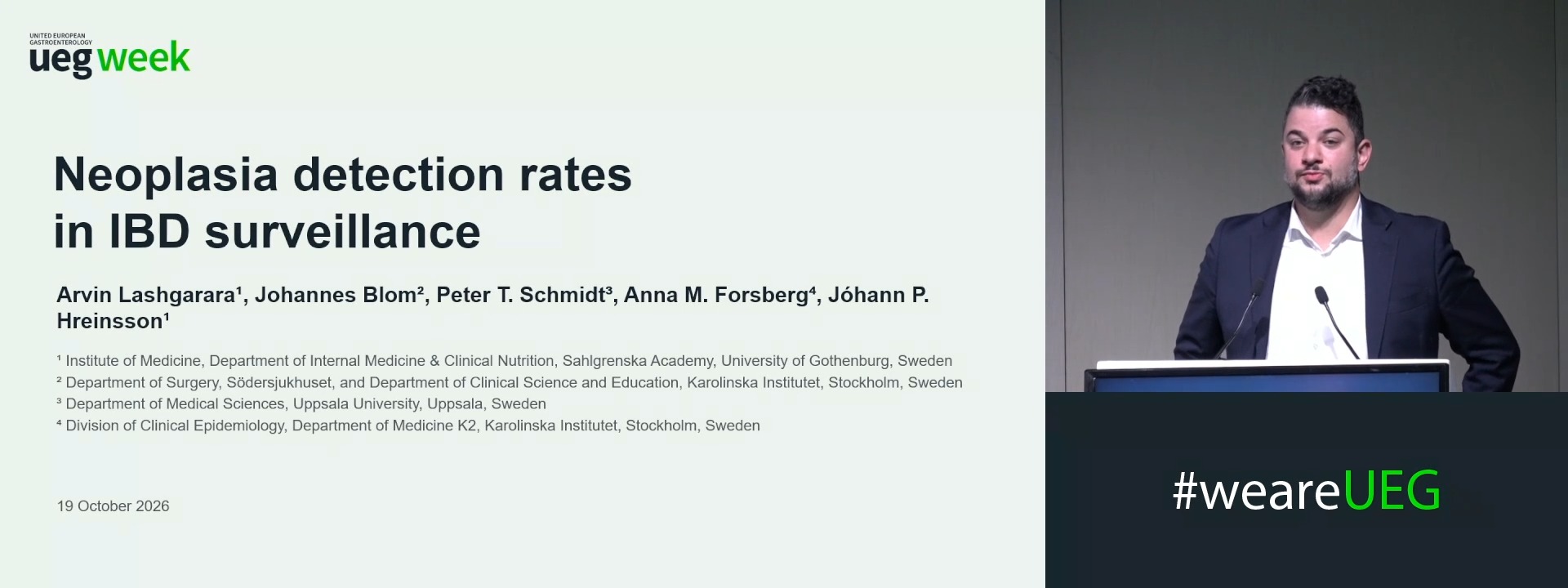
NEOPLASIA DETECTION RATES IN IBD SURVEILLANCE
Arvin Lashgarara 1,2, Johannes Blom 3,4, Peter Thelin Schmidt 5, Anna Forsberg 6, Jóhann Hreinsson 1,2
Affiliations
1 Sahlgrenska University Hospital, Gothenburg, Sweden
2 Gothenburg University, Sahlgrenska Academy, Institute of Medicine, Gothenburg, Sweden
3 Södersjukhuset, Stockholm, Sweden
4 Karolinska Institutet, Stockholm, Sweden
5 Uppsala University Hospital, Uppsala University, Uppsala, Sweden
6 Karolinska Institutet, Institute of Medicine, Stockholm, Sweden
Log in to continue.
This content is part of Gutflix. Log in with your myUEG account, or create one free, to watch it.
Not sure what you can access? Learn more about account types.
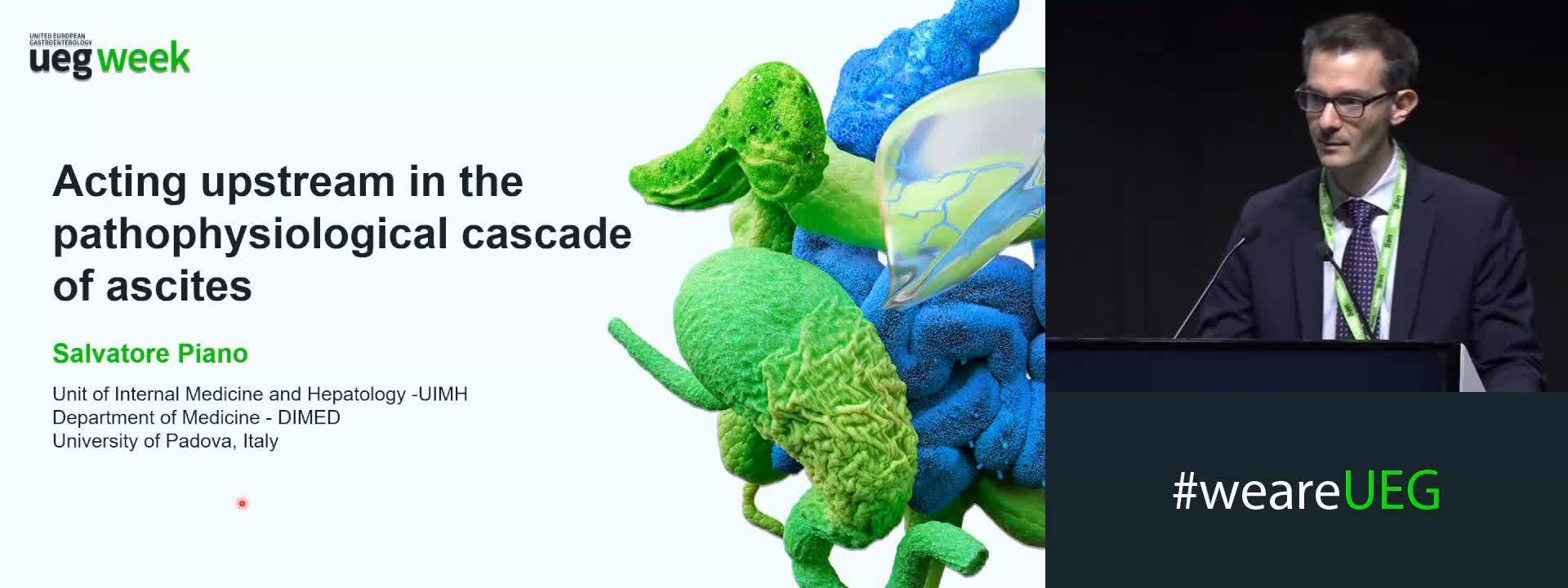
Acting upstream in the pathophysiological cascade of ascites and managing recurrent ascites and its consequences: From TAPS to TIPS
Affiliations
1 University of Padova, Padova, Italy
2 CONSORCI INSTITUT D'INVESTIGACIONS BIOMEDIQUES AUGUST PI I SUNYER, Barcelona, Spain