UEG's content platform for gastroenterology education bringing recordings, courses, guidelines, and more together in one place.
Trending on Gutflix
Rate for better recommendations!
Your feedback helps us show you more of what you like and less of what you dislike!
Log in to continue.
This content is part of Gutflix. Log in with your myUEG account, or create one free, to watch it.
Not sure what you can access? Learn more about account types.
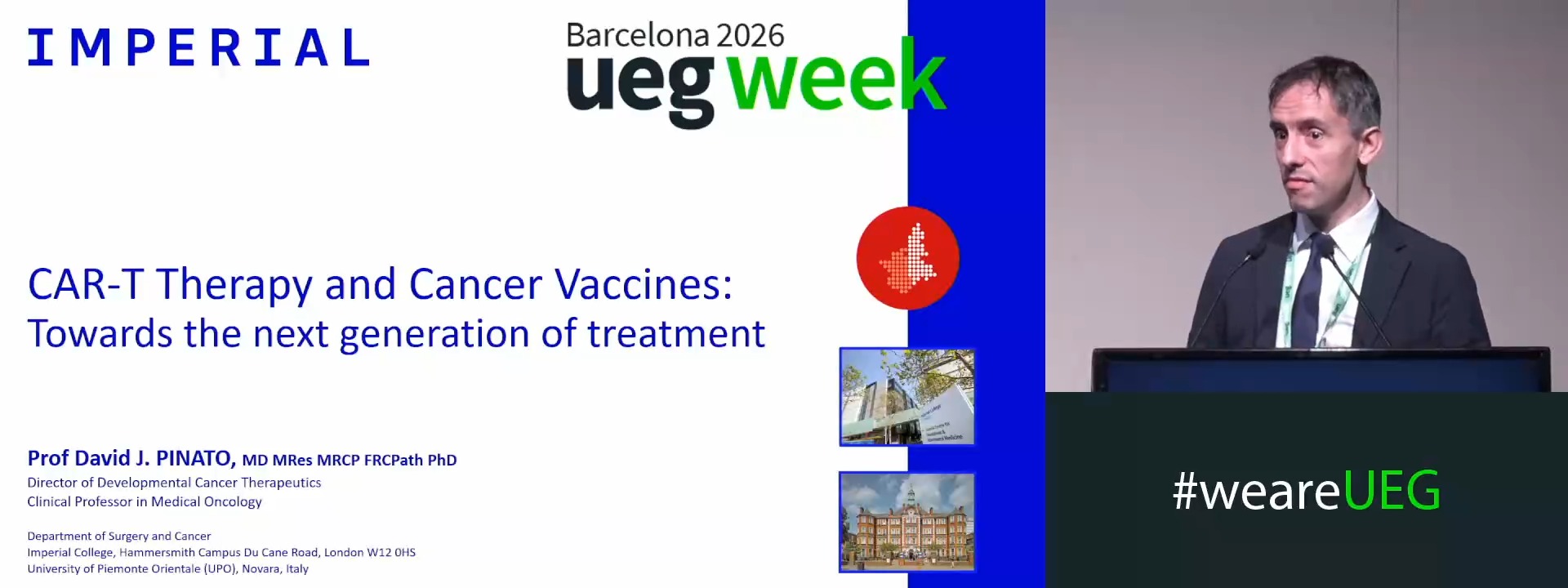
CAR-T therapy and cancer vaccines: Towards the next generation of treatment
Affiliations
1 Imperial College London, London, United Kingdom
Log in to continue.
This content is part of Gutflix. Log in with your myUEG account, or create one free, to watch it.
Not sure what you can access? Learn more about account types.
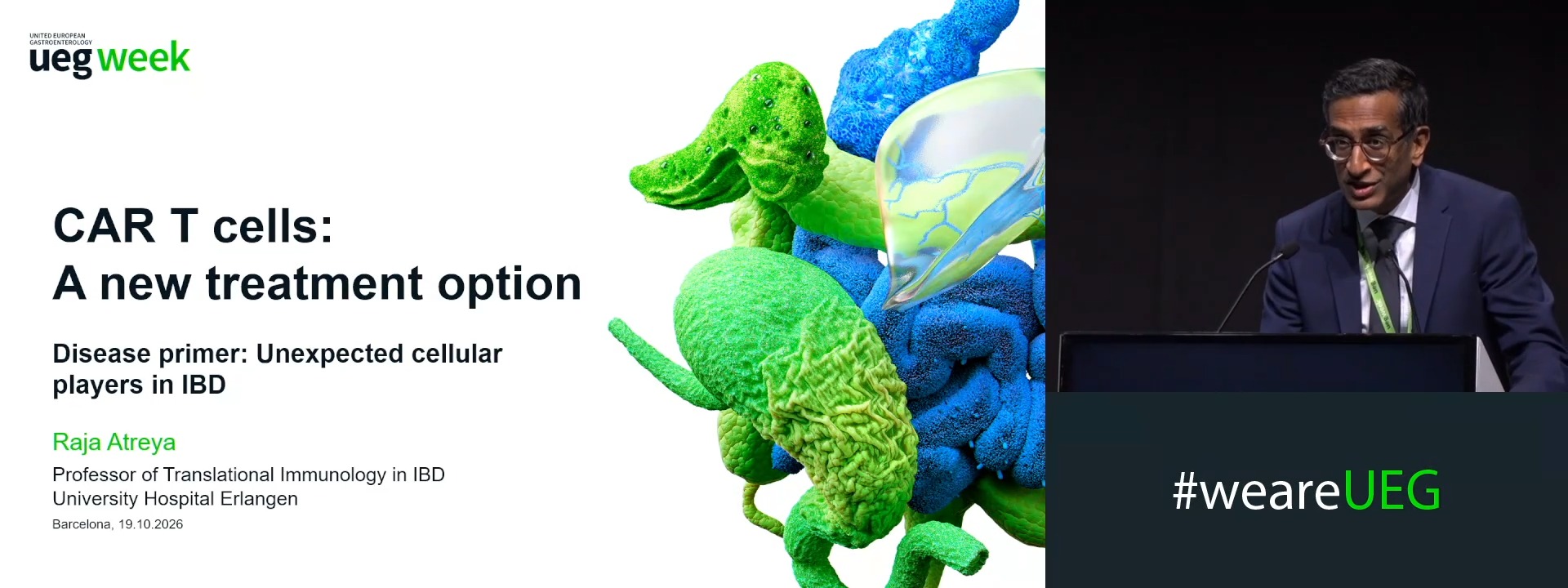
CAR T cells: A new treatment option
Affiliations
1 Friedrich-Alexander-Universität Erlangen-Nürnberg, Erlangen, Germany
Log in to continue.
This content is part of Gutflix. Log in with your myUEG account, or create one free, to watch it.
Not sure what you can access? Learn more about account types.
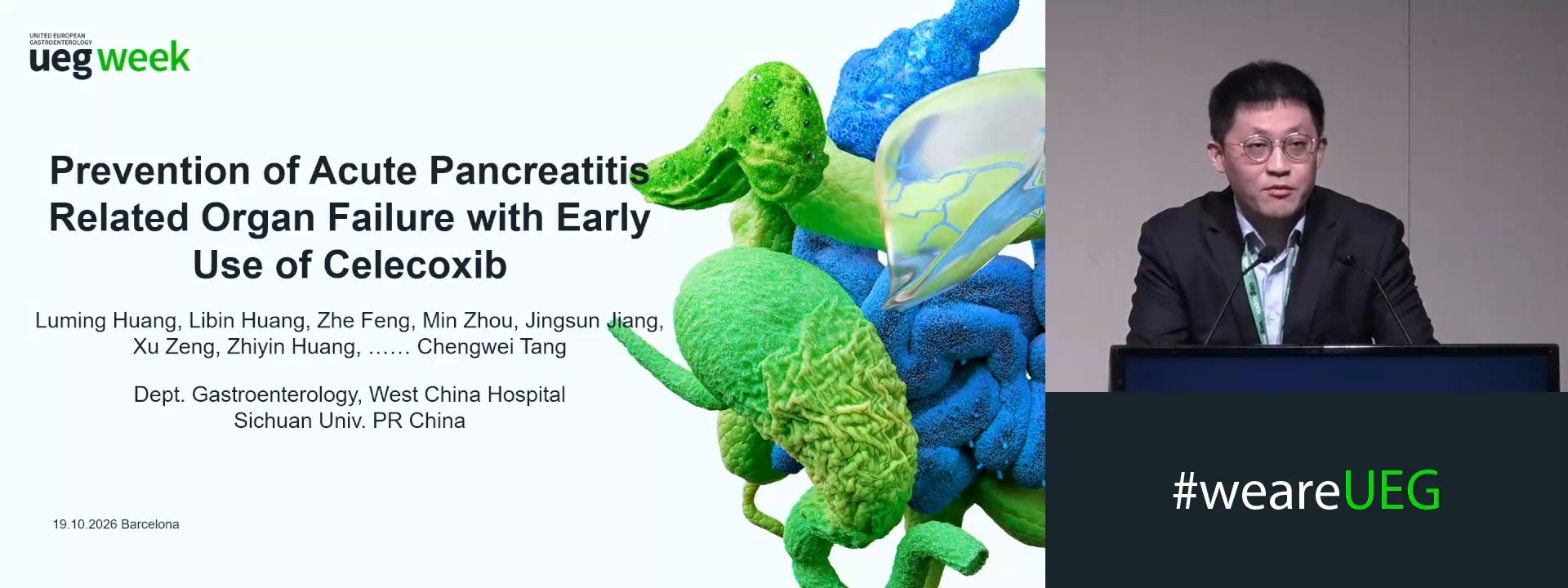
PREVENTION OF ACUTE PANCREATITIS RELATED ORGAN FAILURE WITH EARLY USE OF CELECOXIB -- AN INVESTIGATOR-INITIATED, PROSPECTIVE, MULTI-CENTER, DOUBLE-BLIND, RANDOMIZED, PLACEBO-CONTROLLED CLINICAL TRIAL
Luming Huang 1, Libin Huang 1, Zhe Feng 1, Min Zhou 1, jingsun jiang 1, Xu Zeng 1, Zhiyin Huang 1, Chengwei Tang 1
Affiliations
1 West China Hospital, Sichuan University, Chengdu, China
Log in to continue.
This content is part of Gutflix. Log in with your myUEG account, or create one free, to watch it.
Not sure what you can access? Learn more about account types.
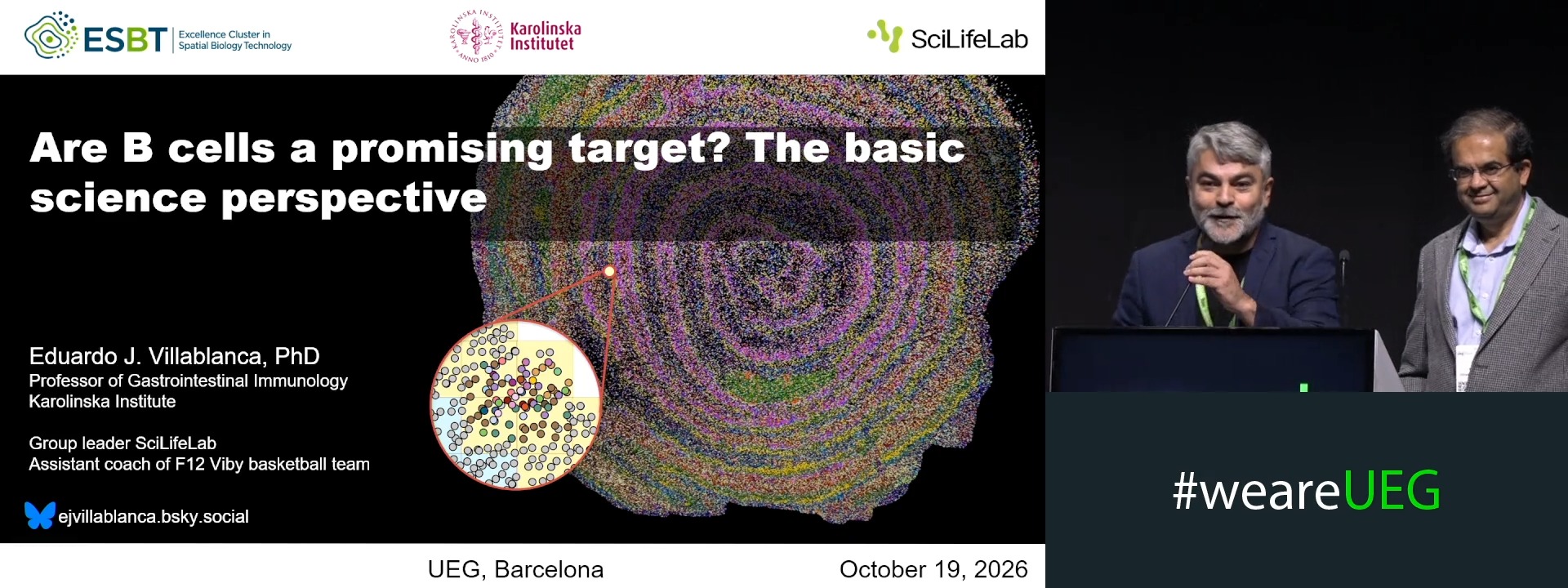
Are B cells a promising target? The clinical and basic science perspective
Affiliations
1 Icahn School of Medicine at Mount Sinai, New York, United States of America
2 Karolinska Institutet, Stockholm, Sweden
Log in to continue.
This content is part of Gutflix. Log in with your myUEG account, or create one free, to watch it.
Not sure what you can access? Learn more about account types.
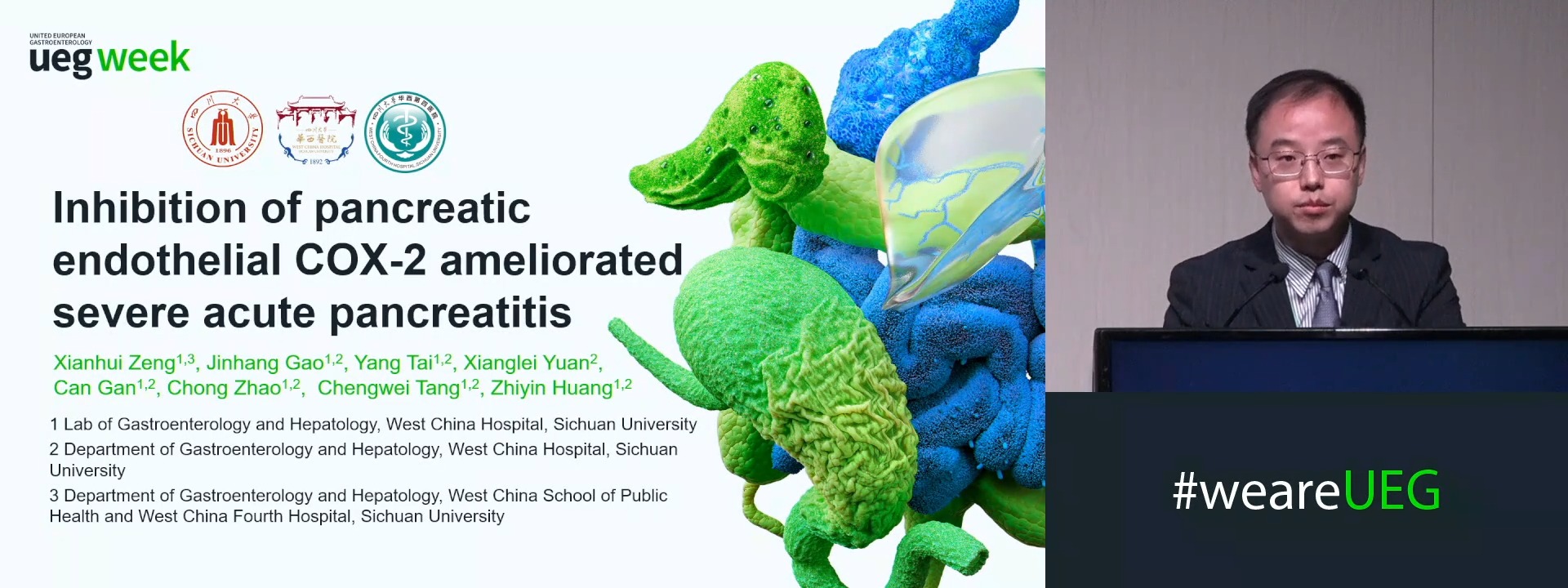
INHIBITION OF PANCREATIC ENDOTHELIAL CYCLOOXYGENASE-2 AMELIORATED SEVERE ACUTE PANCREATITIS
Xianhui Zeng 1,2, Jinhang Gao 1,3, Yang Tai 1,3, Xianglei Yuan 3, Can Gan 3,1, chong zhao 1,3, Chengwei Tang 1,3, Zhiyin Huang 1,3
Affiliations
1 Lab of Gastroenterology and Hepatology, West China Hospital, Sichuan University, Chengdu, China
2 Department of Gastroenterology and Hepatology, West China School of Public Health and West China Fourth Hospital, Sichuan University, Chengdu, China
3 Department of Gastroenterology and Hepatology, West China Hospital, Sichuan University, Chengdu, China
Log in to continue.
This content is part of Gutflix. Log in with your myUEG account, or create one free, to watch it.
Not sure what you can access? Learn more about account types.
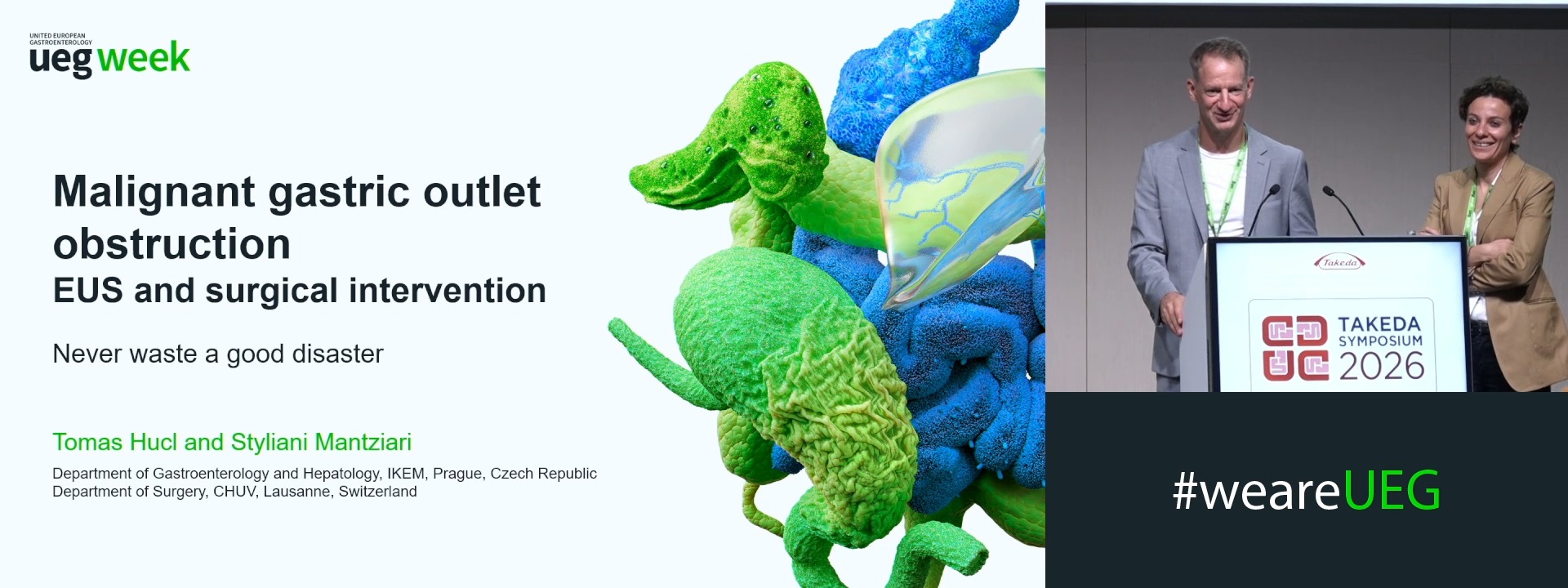
Upper GI: Malignant gastric outlet obstruction – EUS gastroenterostomy and surgical intervention
Affiliations
1 Institute for Clinical and Experimental Medicine (IKEM), Prague, Czech Republic
2 CHUV, Lausanne, Switzerland