UEG's content platform for gastroenterology education bringing recordings, courses, guidelines, and more together in one place.
Trending on Gutflix
Rate for better recommendations!
Your feedback helps us show you more of what you like and less of what you dislike!
Log in to continue.
This content is part of Gutflix. Log in with your myUEG account, or create one free, to watch it.
Not sure what you can access? Learn more about account types.
ESGE live endoscopy III (Complete Session)
Log in to continue.
This content is part of Gutflix. Log in with your myUEG account, or create one free, to watch it.
Not sure what you can access? Learn more about account types.
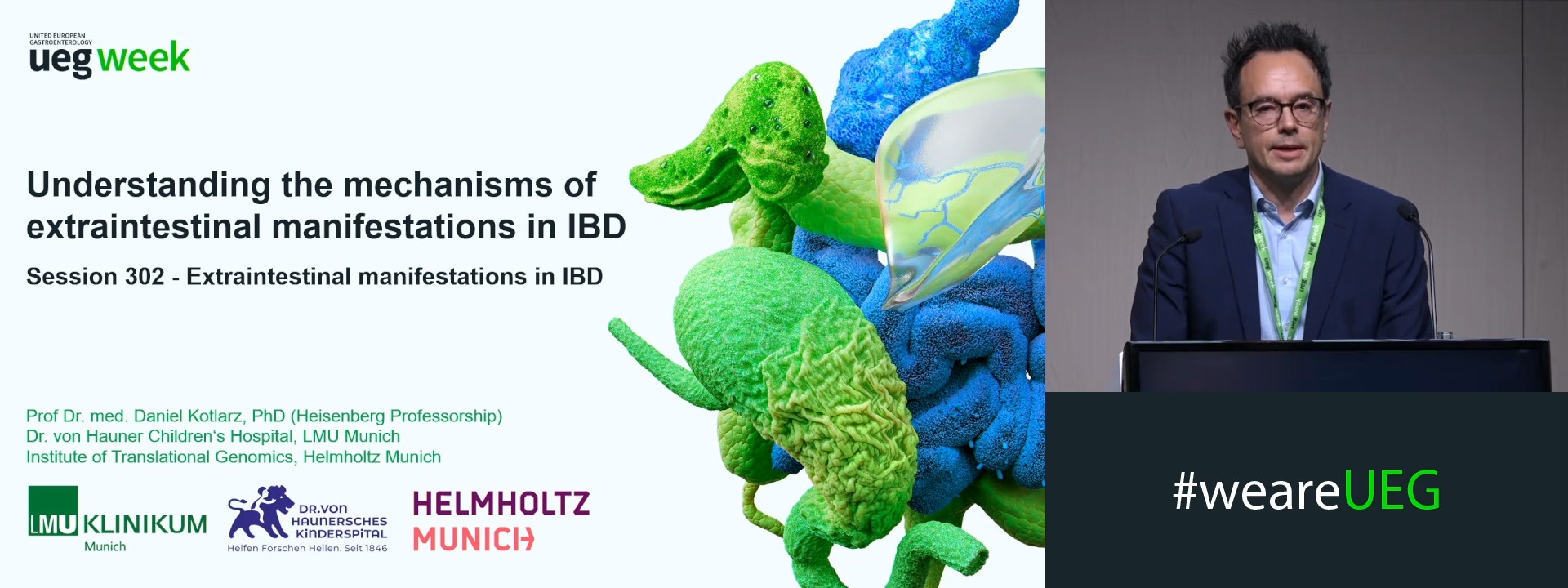
Understanding the mechanisms of extraintestinal manifestations of IBD
Affiliations
1 Ludwig-Maximilians-University of Munich, Muniche, Germany
Log in to continue.
This content is part of Gutflix. Log in with your myUEG account, or create one free, to watch it.
Not sure what you can access? Learn more about account types.
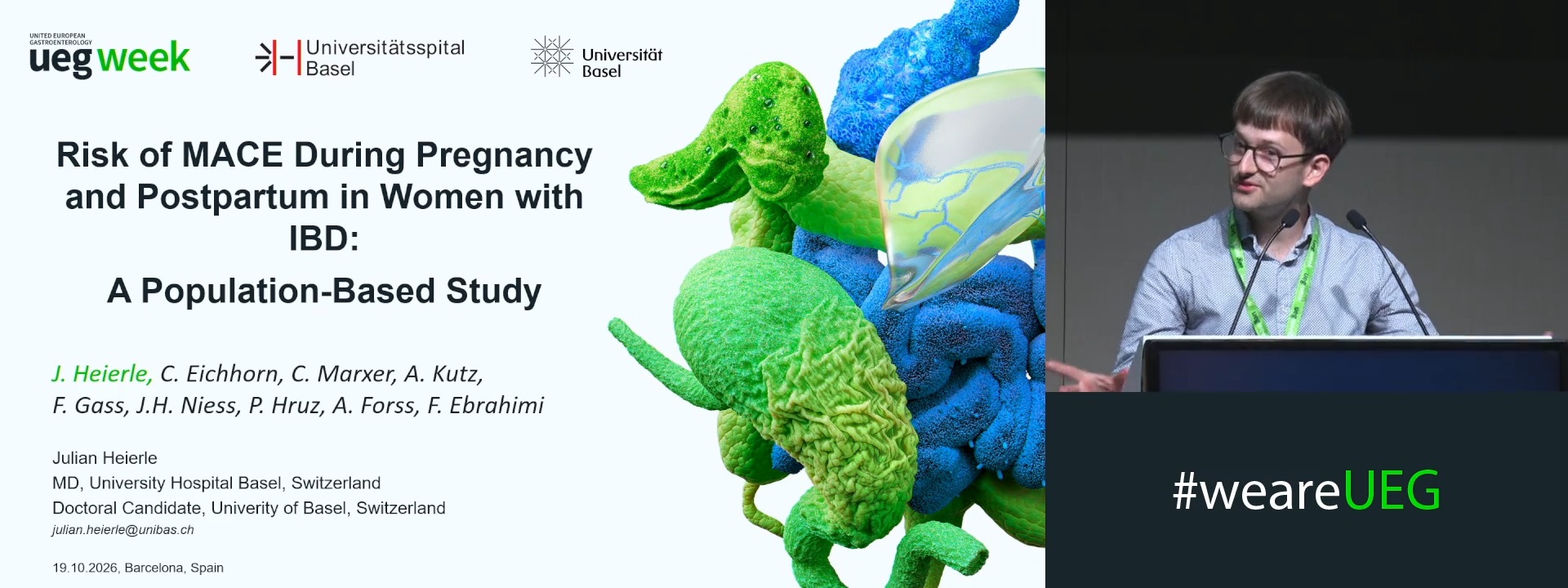
MAJOR ADVERSE CARDIOVASCULAR EVENTS DURING PREGNANCY AND POSTPARTUM IN WOMEN WITH INFLAMMATORY BOWEL DISEASE: A POPULATION-BASED COHORT AND CASE-CONTROL STUDY
Julian Heierle 1, Christian Eichhorn 1, Carole Marxer 2, Alexander Kutz 3,4, Flurina Gass 1, Jan Hendrik Niess 1,4, Petr Hruz 1, Anders Forss 2, Fahim Ebrahimi 1,2
Affiliations
1 University Hospital Basel, Basel, Switzerland
2 Karolinska Institutet, Stockholm, Sweden
3 Kantonsspital Aarau, Aarau, Switzerland
4 University of Basel, Basel, Switzerland
Log in to continue.
This content is part of Gutflix. Log in with your myUEG account, or create one free, to watch it.
Not sure what you can access? Learn more about account types.
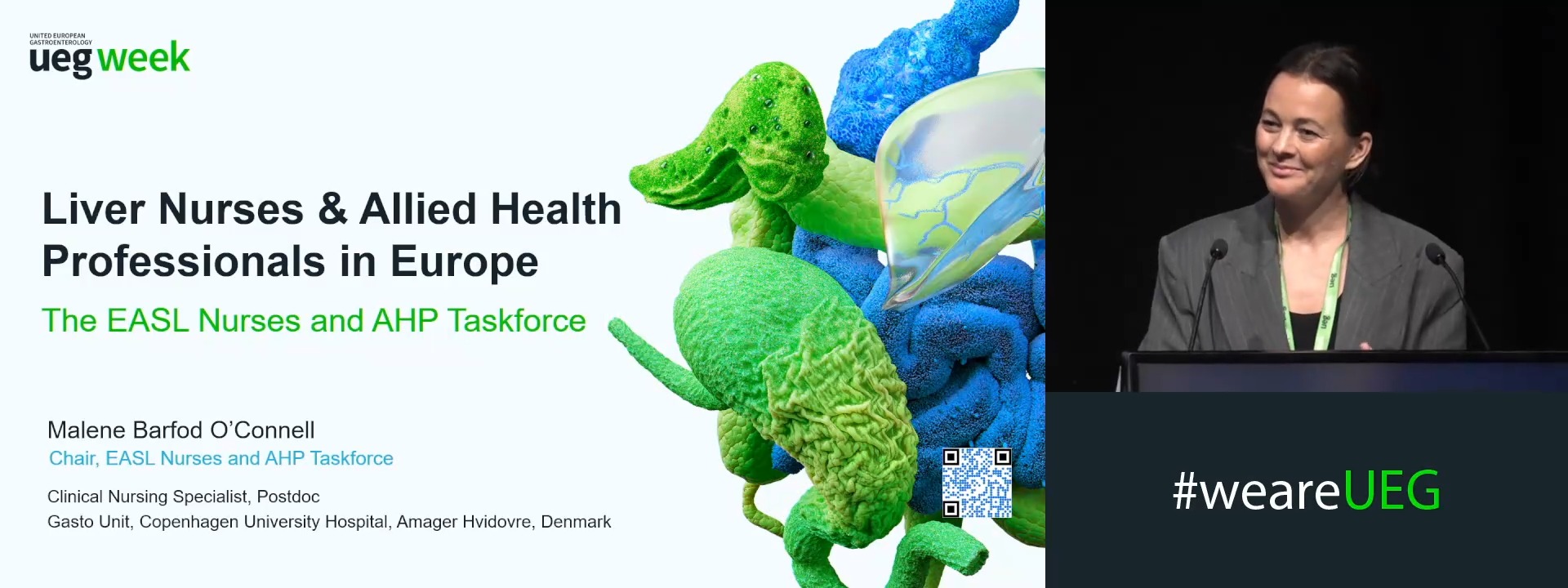
Liver nurses & allied health professions in Europe – the EASL Nurses and AHP Taskforce
Log in to continue.
This content is part of Gutflix. Log in with your myUEG account, or create one free, to watch it.
Not sure what you can access? Learn more about account types.
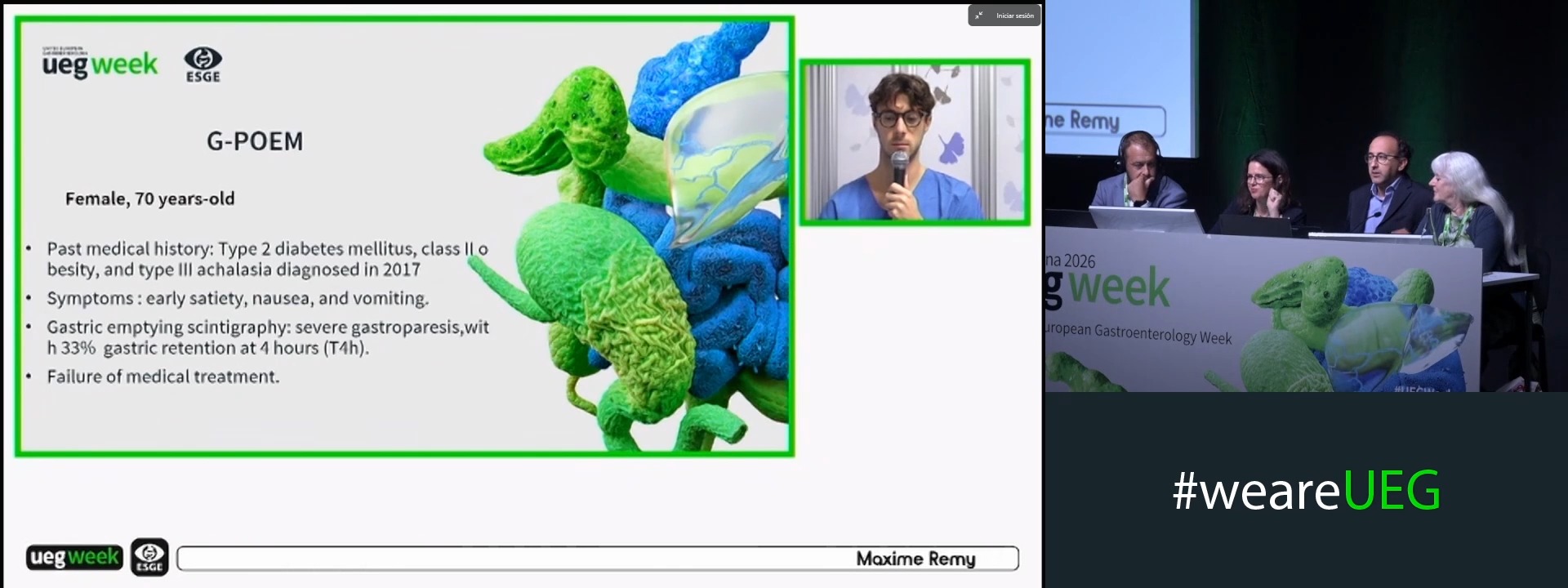
ESGE live endoscopy I (Complete Session)