UEG's content platform for gastroenterology education bringing recordings, courses, guidelines, and more together in one place.
Trending on Gutflix
Rate for better recommendations!
Your feedback helps us show you more of what you like and less of what you dislike!
Log in to continue.
This content is part of Gutflix. Log in with your myUEG account, or create one free, to watch it.
Not sure what you can access? Learn more about account types.
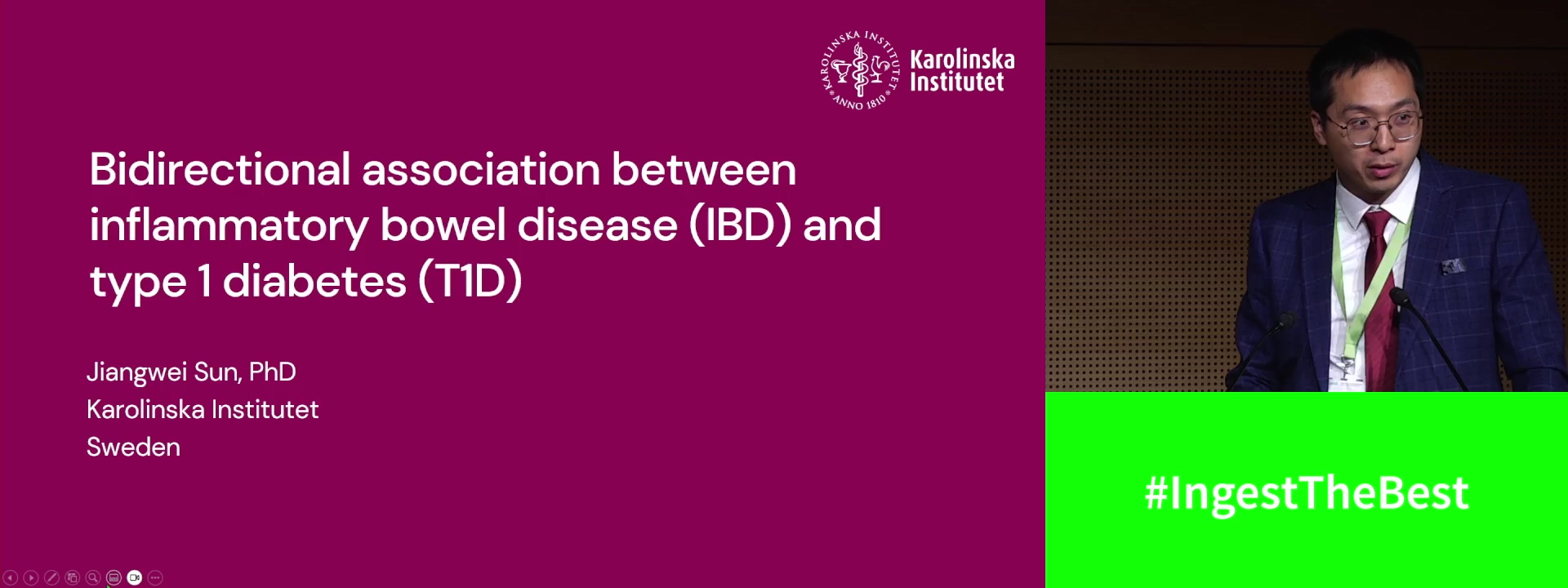
BIDIRECTIONAL ASSOCIATION BETWEEN INFLAMMATORY BOWEL DISEASE AND TYPE 1 DIABETES: A NATIONWIDE COHORT AND MATCHED CASE-CONTROL STUDY
Jiangwei Sun 1, Jialu Yao 1, Ola Olén 1, Jonas Halfvarson 2, David Bergman 1, Fahim Ebrahimi 1, Sofia Carlsson 1, Johnny Ludvigsson 3, Jonas F Ludvigsson 1
Affiliations
1 Karolinska Institutet, Stockholm, Sweden
2 Örebro University, Örebro, Sweden
3 Crown Princess Victoria’s Children’s Hospital, Linköping, Sweden
Log in to continue.
This content is part of Gutflix. Log in with your myUEG account, or create one free, to watch it.
Not sure what you can access? Learn more about account types.
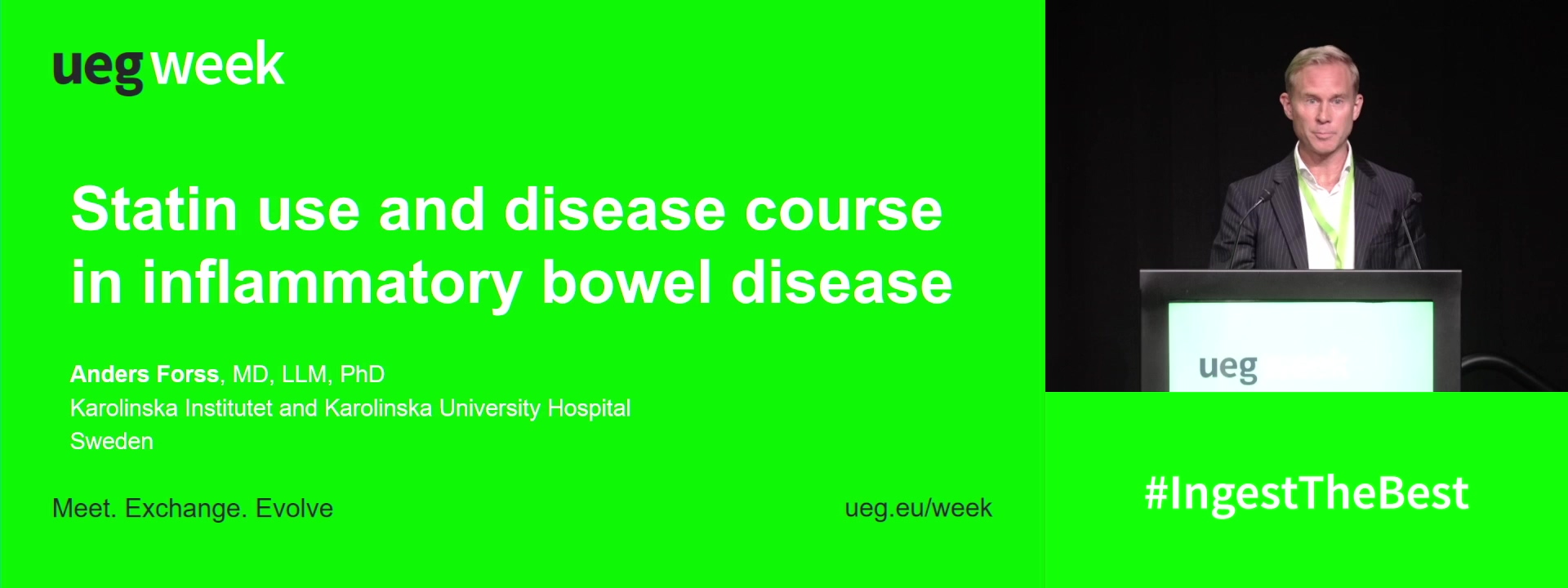
STATIN USE IS ASSOCIATED WITH A LESS SEVERE DISEASE COURSE IN INFLAMMATORY BOWEL DISEASE: A NATIONWIDE POPULATION-BASED COHORT STUDY 2006-2020
Hamed Khalili 1,2, Anders Forss 3,4, Jonas Söderling 3, Gabriella Broms 3,5, Carl Eriksson 3,6, Jiangwei Sun 3, Jonas F Ludvigsson 3,7,8, Ola Olén 9,3
Affiliations
1 Harvard Medical School, Boston, United States
2 Massachusetts General Hospital, Boston, United States
3 Karolinska Institutet, Stockholm, Sweden
4 Karolinska University Hospital, Stockholm, Sweden
5 Danderyd Hospital, Stockholm, Sweden
6 Faculty of Medicine and Health, Örebro University, Örebro, Sweden
7 Örebro University Hospital, Örebro, Sweden
8 Columbia University Medical Center, New York, United States
9 Sachs’ Children and Youth Hospital, Stockholm South General Hospital, Stockholm, Sweden